
When Every Hour Counts: Your Guide to Storm Damage Restoration Roof Hiring
Storm damage restoration roof work is time-sensitive — the longer you wait, the worse (and more expensive) the damage gets. When a severe weather system rolls through the Texas Hill Country, the immediate aftermath can be overwhelming. At Total Foundation & Roofing Repair, we understand that your home is your most significant investment, and protecting it from the elements is our top priority. Whether you are dealing with the aftermath of a massive hailstorm or high-velocity winds, taking immediate action is the only way to prevent secondary issues like mold growth, structural rot, and interior water damage. As we look toward the volatile weather patterns predicted for the 2026 season, having a plan in place is more critical than ever for homeowners in the Edwards Plateau region. Here’s what to do right now:
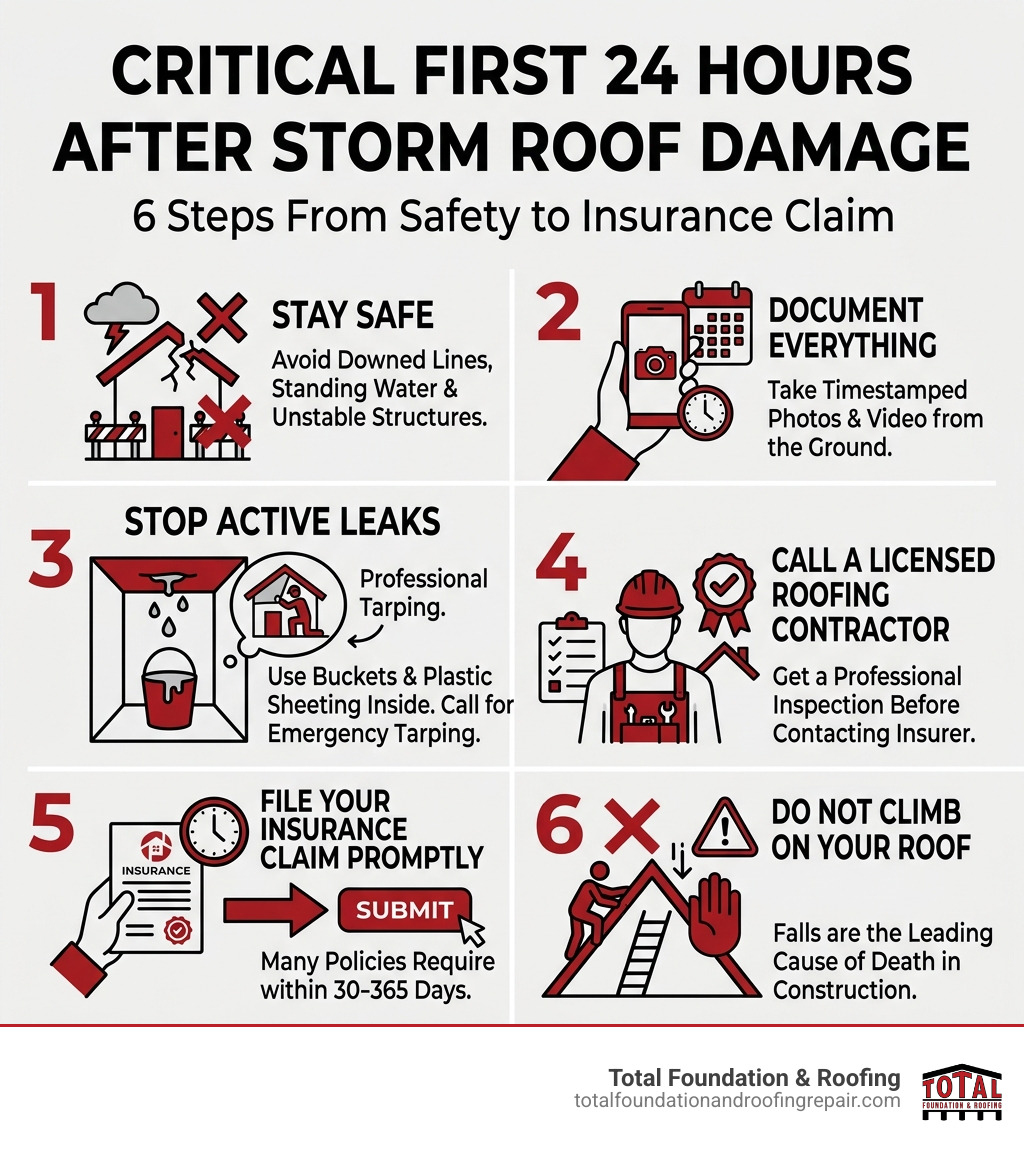
Quick Answer: What To Do After Storm Roof Damage
- Stay safe — avoid downed power lines, standing water, and unstable structures
- Document everything — take timestamped photos and video from the ground
- Stop active leaks — use buckets and plastic sheeting inside; call a pro for emergency tarping
- Call a licensed roofing contractor — get a professional inspection before contacting your insurer
- File your insurance claim promptly — many policies require notice within 30–365 days of the event
- Do not climb on your roof — falls are the leading cause of death in construction settings
If your home has just been hit by a storm, Total Foundation & Roofing Repair provides expert roofing and foundation repair services and 24/7 emergency storm response in the Texas Hill Country.
Storms across the Texas Hill Country — including hail, high winds, and flash flooding — are becoming more intense and frequent. Post-storm and hail roof repairs average $12,384, with costs ranging from $2,642 to over $22,000 depending on the extent of damage and the materials used. Yet many homeowners don’t know where to start, who to trust, or what their insurance actually covers. This guide cuts through the confusion. Whether your roof took a direct hit from hail or you’re seeing ceiling stains for the first time, you’ll find clear, actionable steps here.
I’m Daniel Sowell, owner of Total Foundation & Roofing Repair, LLC, with over 18 years of hands-on experience managing storm damage restoration roof projects across Kerrville and the surrounding Hill Country. Our team has helped hundreds of homeowners navigate everything from emergency tarping to full roof replacement — and we know exactly what it takes to get your home protected fast and your insurance claim handled right.
Managing a Storm Damage Restoration Roof Project in April 2026
Navigating the aftermath of a Texas Hill Country storm requires a blend of speed and strategy. In 2026, we are seeing more volatile weather patterns that demand high-performance roofing solutions. When a severe weather event hits Kerrville or Fredericksburg, the damage isn’t always as obvious as a fallen tree limb. Often, the most dangerous damage is the kind you can’t see from the driveway, such as micro-fractures in the shingle mat or compromised flashing seals. These “hidden” issues can lead to slow leaks that rot your decking over several months before appearing on your ceiling.
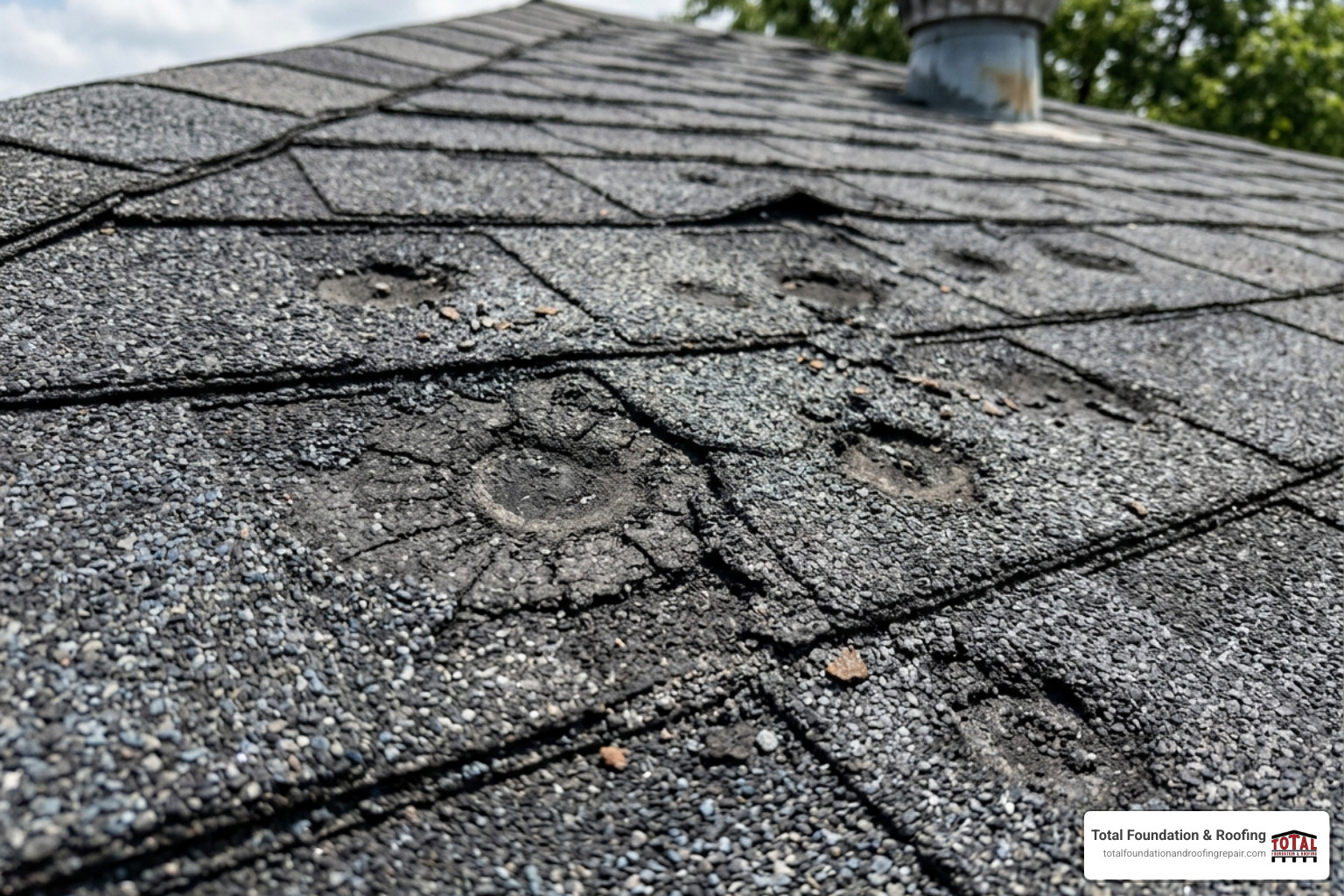
Identifying Signs of Storm Damage Restoration Roof Needs
Before you call your insurance company, you need to know what you’re looking at. While we always recommend a professional evaluation from a Storm Damage Roofing Company, you can spot several red flags from the safety of the ground. Understanding these signs can help you communicate more effectively with your adjuster and ensure that no legitimate damage is overlooked during the initial walkthrough.
Wind Uplift and Displacement Wind damage occurs when high-velocity gusts (gale-force at 39-54 mph or hurricane-force at 74+ mph) create pressure differentials. This can lift shingle tabs, breaking the water-tight sealant bond. Even if the shingle settles back down, the seal is gone, leaving your roof vulnerable to the next rain. Look for missing shingles, curled edges, or “flapping” materials. In some cases, wind can cause “creased shingles,” where the shingle has been folded back by the wind, creating a permanent line of weakness that will eventually lead to a leak. This is often referred to as “unsealed” shingles, which are a primary cause of insurance-approved replacements.
Hail Impact and Bruising Hail is the “silent killer” of roofs in Texas. Large stones can fracture the internal fiberglass mat of a shingle without leaving a visible hole. This is often called “bruising.” Over time, these soft spots lose their protective granules, leading to Minor Hail Damage Roof issues that eventually turn into major leaks. Check your gutters and downspouts; if they are filled with mineral granules that look like coarse sand, your shingles are shedding their protective layer. This granule loss accelerates UV degradation, significantly shortening the lifespan of your roof and leaving the asphalt substrate exposed to the harsh Texas sun.
Debris and Water Indicators Tree branches can puncture the roof deck, creating immediate entry points for water. Inside your home, check the attic and ceilings for water stains, peeling paint, or musty odors. Even a small brown spot on a ceiling can indicate a significant “ice dam” or wind-driven rain issue that has bypassed your shingles. Wind-driven rain is particularly insidious because it can push water upward under shingles or through soffit vents that are designed only for downward drainage. If you notice any dampness in your insulation, it is a sign that the thermal envelope of your home has been breached.
| Damage Type | Visual Indicators (Ground Level) | Internal Indicators |
|---|---|---|
| Wind | Missing shingles, lifted tabs, damaged fascia | Daylight visible in attic, whistling sounds |
| Hail | Dented gutters, “bald” spots on shingles | Soft spots on roof deck, granule piles |
| Debris | Visible branches on roof, cracked tiles | Punctures in decking, sudden heavy leaks |
| Water/Ice | Ice buildup at eaves, dripping gutters | Ceiling stains, wet insulation, mold |
Emergency Steps for Storm Damage Restoration Roof Safety
The first 24 hours after a storm are critical for “mitigation.” Most insurance policies actually require you to take reasonable steps to prevent further damage. If you fail to cover a hole and a second rainstorm ruins your hardwood floors, the insurance company might deny the interior portion of the claim because you failed to mitigate the loss. This is a standard clause in almost every homeowner’s policy in Texas.
Following Fast and Effective Emergency Storm Roof Repair Tips is essential. First, stay off the roof. Scientific research on post-storm safety confirms that falls are the leading cause of death in construction; adding wet, slippery shingles and wind to the mix is a recipe for disaster.
Instead, focus on these steps:
- Interior Protection: Place buckets under active drips. If a ceiling is sagging with water, carefully poke a small hole in the center to drain the water into a bucket; this prevents the entire ceiling from collapsing under the weight of trapped water.
- Professional Mitigation: Call us for Storm Damage Repair and emergency tarping. Professional tarps are secured with wooden “furring strips” to ensure they don’t blow away. These are temporary fixes designed to last 15 to 90 days while your claim is processed.
- Documentation: Take photos of everything from the ground. Use a coin or a ruler next to hail dents on your gutters to show scale. Ensure your camera’s EXIF timestamps are enabled so the insurance company can verify the date of the loss.
Navigating Insurance Claims and Documentation
Filing a claim for a storm damage restoration roof project can feel like a second job. Understanding the difference between Replacement Cost Value (RCV) and Actual Cash Value (ACV) is vital.
- RCV: The insurance pays to replace the roof at today’s market prices (minus your deductible).
- ACV: The insurance pays the depreciated value of the roof based on its age. If your 20-year-old roof is destroyed, an ACV policy might only pay a fraction of the replacement cost.
According to Scientific research on insurance documentation, you should aim to have your roofer present during the adjuster’s inspection. We act as your advocate, pointing out “collateral damage” on vents, flashing, and siding that an adjuster might overlook.
Use our Storm Damage Roof Replacement Guide to track your claim. Keep a log of every phone call, name, and claim number. In the Texas Hill Country, “supplements” are common—these are additional costs discovered during the actual repair (like rotted decking) that your contractor submits to the insurance company for approval. This ensures the job is done to code without you paying out of pocket for unforeseen structural issues.
Hiring a Qualified Restoration Professional
The “storm chaser” phenomenon is real. After a big hailstorm in Kerrville or Comfort, you’ll see out-of-state trucks with magnetic signs offering “free roofs.” Be cautious. A reputable storm damage restoration roof expert should have a permanent local address and a deep understanding of Texas Hill Country building codes, often evidenced by membership in professional organizations like the Roofing Contractors Association of Texas (RCAT). Local contractors are invested in the community and will be there to honor warranties years after the storm has passed. They also understand the specific permitting requirements of local municipalities.
Professional Inspection vs. DIY Assessments
While you can see missing shingles from the ground, a professional inspection is much more granular. At Total Foundation & Roofing, we often use drone imaging to capture high-resolution photos of steep or dangerous slopes. This provides undeniable proof for insurance carriers and ensures no detail is missed. Our Storm Damage Repair Contractors Guide emphasizes that pros look for:
- Adhesion Loss: Checking if wind has broken the sealant strip on shingles that look okay.
- Moisture Mapping: Using infrared or moisture meters to find water trapped in insulation.
- Structural Integrity: Ensuring the “rafters” and “trusses” haven’t been compromised by heavy debris.
Relying on a Storm Roof Repair Service ensures that the job is done safely with proper fall protection equipment, adhering to safety standards set by the Occupational Safety and Health Administration (OSHA).
Repair, Partial Replacement, or Full Restoration?
Do you need a patch or a whole new roof? The answer depends on the “extent of the loss” and the age of your materials.
- Repair: Best for isolated damage, like a single fallen limb on a relatively new roof.
- Partial Replacement: Sometimes an option if only one slope was hit, but matching shingle colors on a weathered roof is nearly impossible and can hurt your home’s resale value.
- Full Restoration: Often the best long-term value. If more than 25-30% of the roof is damaged, most local codes and insurance guidelines trigger a full replacement.
When we perform a Storm Damage Restoration Service, we don’t just put back what was there. We look to upgrade your home to FORTIFIED Roof™ standards. This includes using impact-resistant shingles, such as those certified by GAF or Owens Corning, that can withstand 2-inch hail and high-wind starter strips. These shingles are tested against high-speed impacts and are designed to maintain their integrity even in the harshest Texas weather. These upgrades often qualify you for significant discounts on your homeowners insurance premiums in Texas, effectively paying for themselves over time.
Long-Term Storm Preparedness and Warranties
Preparation is the best defense against the next Hill Country squall. We recommend bi-annual inspections and keeping trees trimmed at least 10 feet away from your roofline to prevent branch strikes. At Total Foundation & Roofing, we stand behind our work with robust workmanship guarantees. Whether you are in Kerrville, Fredericksburg, or Comfort, our local expertise means we use materials specifically rated for the heat and storm volatility of the Texas Hill Country. We understand the unique challenges of our climate, from the intense UV rays that can degrade shingles to the sudden temperature shifts that cause thermal expansion and contraction. Our goal is to ensure your roof remains a durable shield for your family.
If you suspect your roof has been compromised, don’t wait for the next leak to tell you. We offer comprehensive Emergency Roof Repair and restoration services tailored to your specific needs. Our goal is to provide peace of mind and a roof that will protect your family for decades to come.
Ready to protect your home? Our team is ready to help you navigate the restoration process from the first tarp to the final shingle.
CTA: Schedule Your Storm Damage Repair Assessment Now
Note: Total Foundation & Roofing Repair, LLC serves residential and commercial clients with certified, high-quality workmanship across the region. We are your neighbors, and we’re here to help you rebuild stronger.