
Why Choosing the Right Storm Damage Roofing Company Matters
When severe weather strikes, choosing the right storm damage roofing company is the most critical decision a homeowner can make. Act quickly to keep minor roof damage from escalating into structural failures. For Texas Hill Country residents, partnering with a trusted Texas Hill Country roofing company ensures expert triage, documentation, and insurance coordination from day one. A certified local storm damage repair team can prevent secondary losses and speed claim approval.
Top 5 Qualities of a Reliable Storm Damage Roofing Company:
- Local presence – Physical office address and local phone number
- Proper credentials – Bonded and insured in Texas (verify voluntary licensing via the Roofing Contractors Association of Texas (RCAT))
- Insurance expertise – Experience navigating wind and hail insurance claims and working with adjusters
- Manufacturer certifications – GAF Master Elite or Owens Corning Preferred status
- Transparent pricing – Detailed written estimates with no pressure tactics
Ignoring storm damage leads to cascading problems like water intrusion, mold growth, and weakening structural integrity. This guide cuts through the confusion of insurance claims and contractor vetting. With over 18 years of experience in the Texas Hill Country, we’ve seen how a trustworthy local roofer can protect your home and wallet from the predatory storm chasers who often follow major weather events. Learn more about industry standards at the Roofing Contractors Association of Texas.
Essential storm damage roofing company terms:
After the Storm: Your First Steps to Recovery
The wind dies down and the rain stops, but the worry is just beginning. For homeowners in Kerrville, Fredericksburg, and Comfort, the aftermath of a Texas Hill Country storm is a familiar feeling. At Total Foundation & Roofing, we’ve guided hundreds of families through these critical first steps toward recovery.
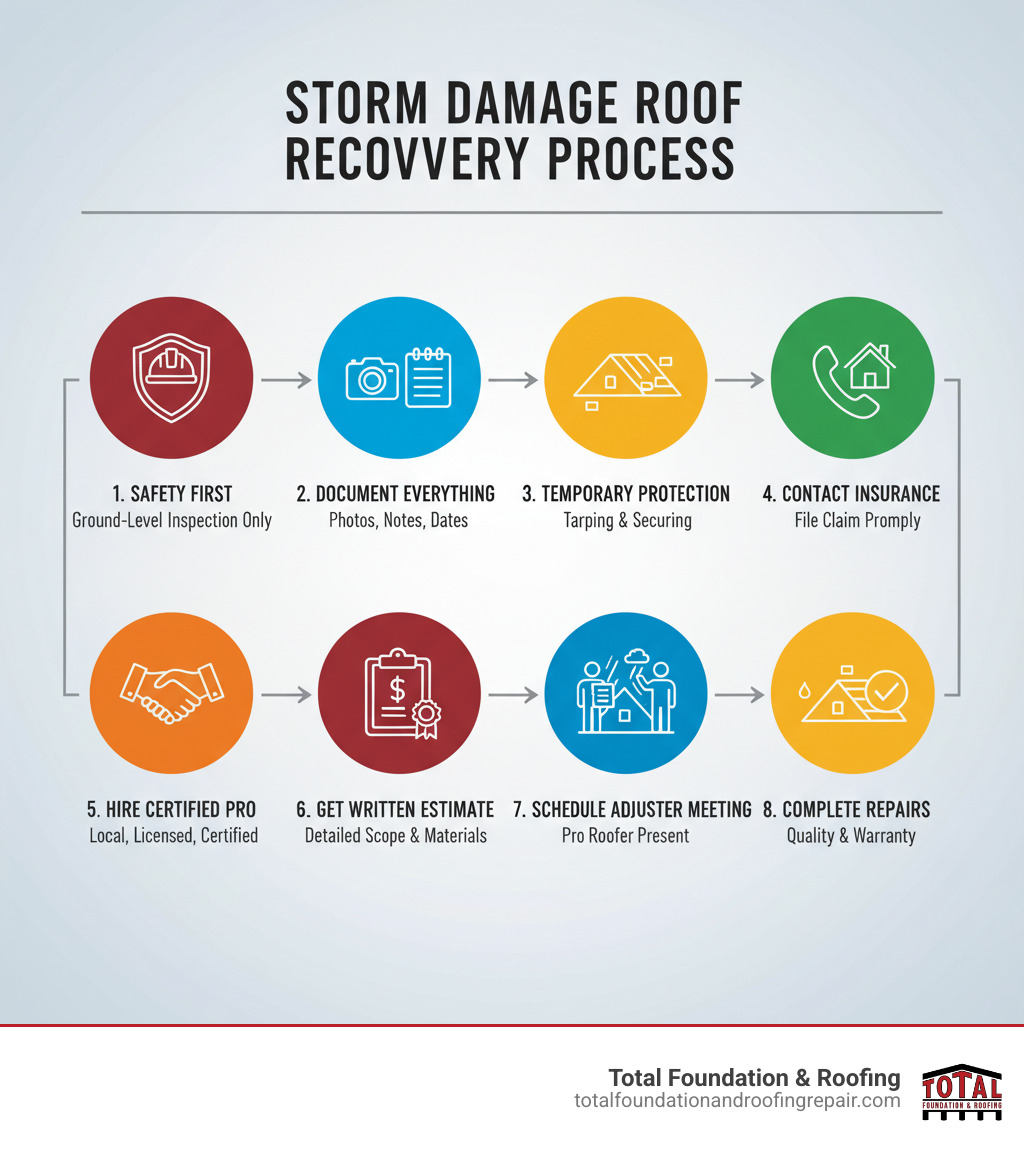
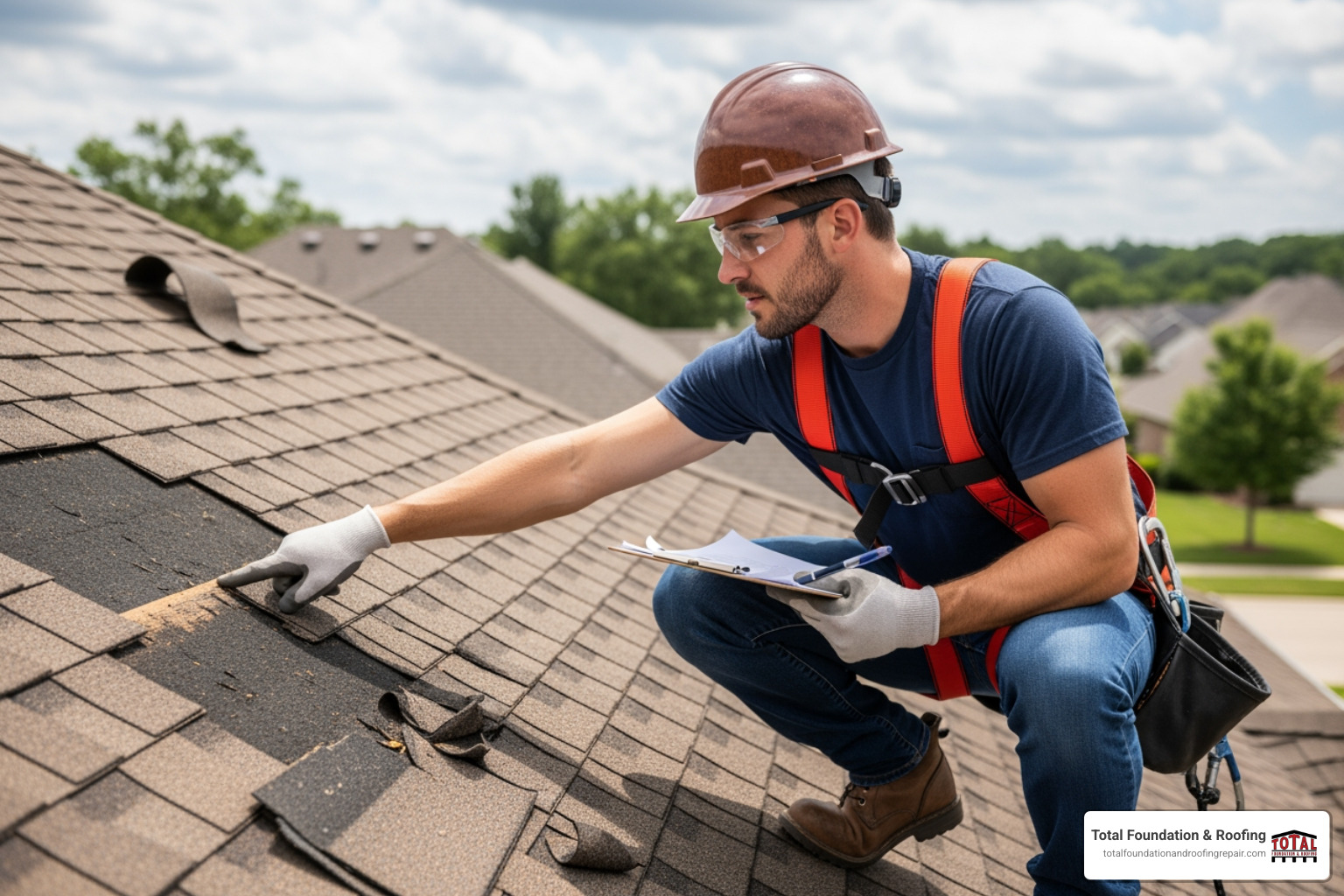
Step 1: Safely Identifying Roof Damage After a Storm
Your safety is the top priority. The National Roofing Contractors Association advises against homeowners climbing onto a potentially compromised roof. Instead, perform a safe, ground-level inspection:
- Scan the Roof: Use binoculars to look for missing, cracked, or curled shingles. High winds, especially hurricane-force winds over 74 mph, can easily lift and tear roofing materials.
- Check Gutters and Flashing: Look for dents on metal components around chimneys, skylights, and downspouts, which are clear signs of hail impact.
- Look for Granules: Finding sand-like shingle granules in your downspouts indicates your roof has sustained significant wear from hail or wind.
- Inspect the Attic: Use a flashlight to check for water stains, damp insulation, or active drips under the roof deck.
- Check Ceilings: Look for discolored spots or peeling paint inside your home, which signals a leak has penetrated your roof.
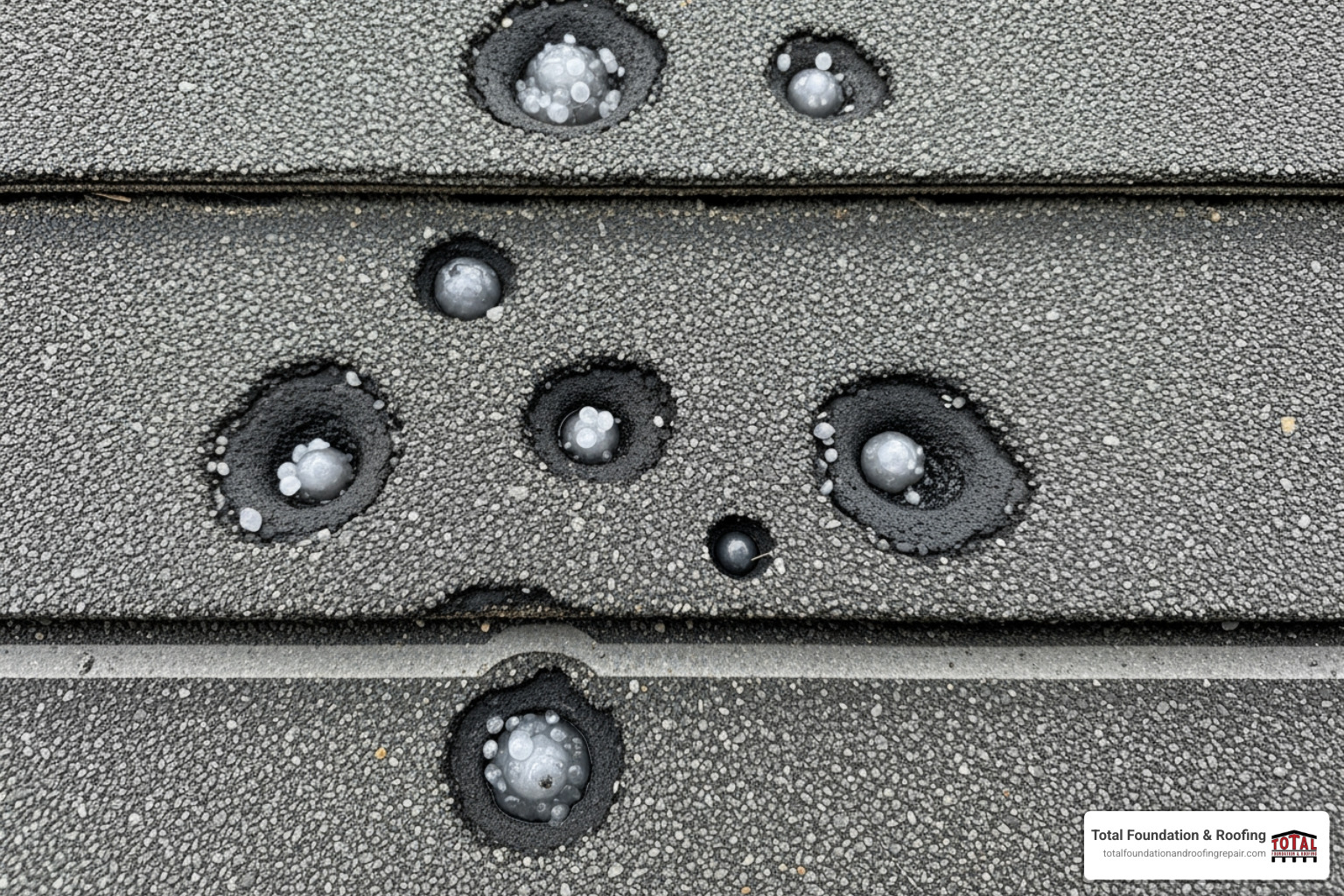
Early detection is key. If you see signs of a leak, our expert roof leak detection services can pinpoint the source without invasive exploratory work.
Step 2: Navigating the Roof Damage Insurance Claim Process
Navigating an insurance claim can be daunting, but a systematic approach simplifies the process.
- Document Everything: Use your phone to take extensive photos and videos of all damage, both exterior and interior. Note the date and time of the storm and your observations.
- Contact Your Insurer: File your claim promptly. Most Texas policies allow up to two years, but waiting can delay repairs. For a step-by-step overview, see this homeowners insurance claim checklist.
- Review Your Policy: Understand your coverage for wind and hail, and know your deductible amount.
- Schedule the Adjuster Meeting: Have a professional from your chosen storm damage roofing company present. An experienced roofer can identify subtle damage that an adjuster might miss, ensuring your claim covers the full scope of repairs.
A detailed estimate from a reputable contractor is crucial. Our complete roof repair estimate guide explains what to look for. We work with adjusters to provide comprehensive reports, helping ensure your claim is approved for all necessary work.
Step 3: The Importance of Emergency Roof Repair
An exposed roof is an open invitation for more damage. Emergency roof repair is critical to prevent a manageable problem from becoming a catastrophe.
- Prevent Further Damage: Temporary tarping creates an immediate weather barrier, stopping water intrusion that can damage your attic, insulation, and even your home’s foundation.
- Stop Active Leaks: Quick action prevents water from compromising electrical systems, destroying belongings, and weakening your home’s structure.
- Avoid Mold Growth: Mold can begin to grow within 24-48 hours of water exposure. Prompt emergency repairs are your best defense against this serious health hazard and costly remediation.
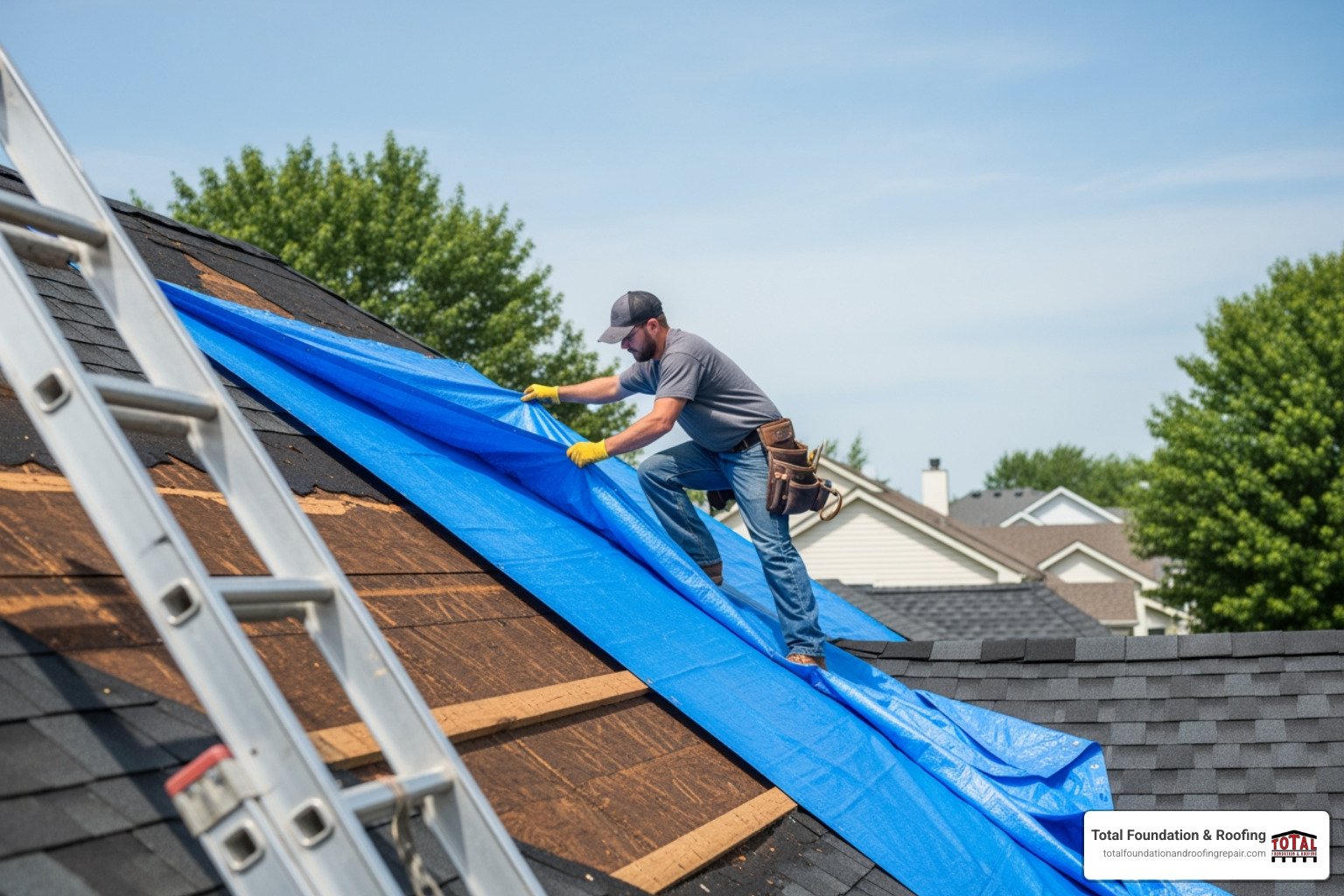
Our 24/7 Emergency Roof Repair services provide a rapid response throughout the Texas Hill Country. Acting fast protects your investment and your family’s safety.
How to Hire the Right Storm Damage Roofing Company and Avoid Scams
Finding a reliable contractor is the most critical step in your recovery journey. A qualified local company not only performs quality repairs but also acts as your advocate, ensuring the job is done right and your insurance claim is handled properly. This section will guide you through vetting professionals and steering clear of common post-storm scams.
Vetting Your Local Storm Damage Roofing Company
Choosing the right storm damage roofing company protects your investment and peace of mind. Heres how to vet a professional:
- Verify Local Presence: A legitimate company has a permanent physical office and a local phone number, ensuring accountability. A P.O. box is a red flag.
- Check Credentials: Ask for proof of license, bonding, and insurance (both general liability and workers’ compensation). In Texas, verify voluntary credentials via the RCAT Licensed Roofing Contractor program.
- Look for Certifications: Manufacturer certifications, like GAF Master Elite and Owens Corning Preferred, indicate a high level of training and quality.
- Read Online Reviews: Check Google and the Better Business Bureau (BBB) for consistent feedback on professionalism, quality, and insurance claim handling. Pay attention to how the company responds to both positive and negative reviews, as this can reveal their commitment to customer satisfaction.
- Demand a Detailed Estimate: A professional provides a written contract outlining the scope of work, materials, costs, and timeline.
- Ask About Warranties: A quality contractor offers a workmanship warranty in addition to the manufacturer’s material warranty (see GAF roofing warranties).
Our Kerrville roofing contractors guide offers more tips for selecting the best local pros.
Red Flags: Spotting and Avoiding ‘Storm Chaser’ Scams
After a storm, ‘storm chasers’out-of-state contractorsoften arrive to exploit anxious homeowners. Here are the warning signs:
- High-Pressure Tactics: Be wary of anyone pushing you to sign a contract immediately with “limited-time” offers.
- Unsolicited Door-to-Door Offers: Reputable companies don’t typically solicit door-to-door. Be skeptical of anyone you didn’t contact first (see FTC home improvement scam tips).
- Out-of-State Presence: Look for out-of-state license plates and temporary office setups. A local company has established roots.
- Large Upfront Payments: Demanding a large deposit before materials arrive is a classic scam. A reasonable deposit is typically 10-25%.
- Offers to Waive Your Deductible: This is insurance fraud in Texas (see the Texas Attorney General on roofing scams). Your deductible is your legal responsibility. A contractor offering to cover it is cutting corners elsewhere.
- Vague Contracts: Do not sign a contract that lacks specific details on materials, costs, and timelines. A legitimate contract, often called a scope of work, will itemize everything from the type of shingles and underlayment to be used to the cost of labor and debris removal.
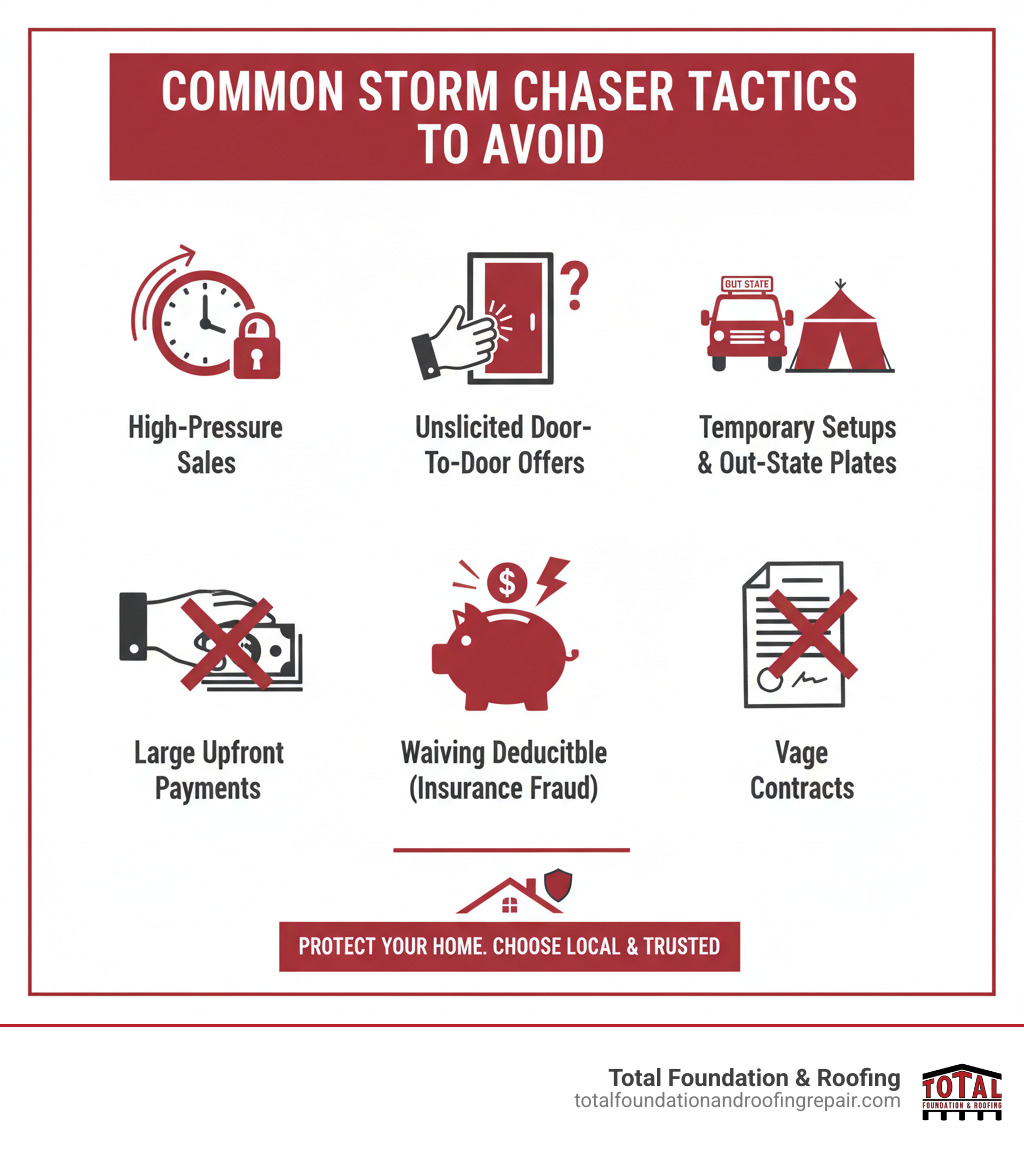
If an offer sounds too good to be true, it is. Politely decline and consult your trusted local roofer. Our storm damage repair guide provides more detail on avoiding these predatory practices.
Preparing for Your Roof Repair or Replacement
Once you’ve selected a reputable storm damage roofing company, the final phase is the repair or replacement.
Repair vs. Replacement: Your contractor should advise you based on the extent of the damage. Isolated missing shingles may only need a repair, but widespread granule loss, multiple leaks, or an older roof often warrant a full replacement.
Material Selection: In the Texas Hill Country, investing in storm-resistant materials is a wise choice.
- Asphalt Shingles: Modern impact-resistant shingles offer excellent durability. Our Durable Asphalt Shingle Roofing services use advanced options designed for high winds and hail.
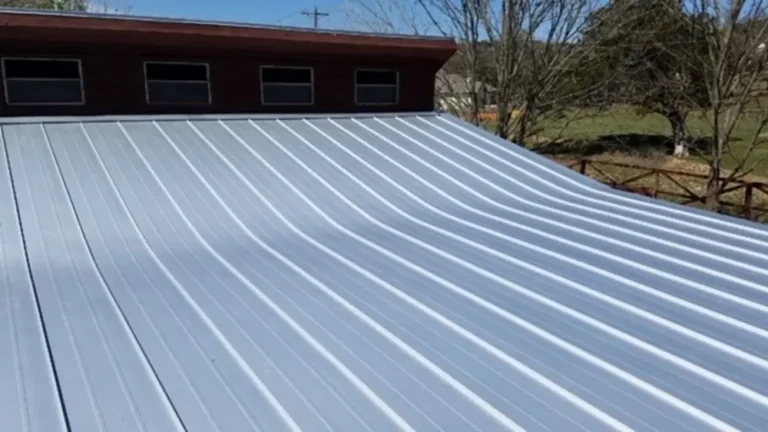
- Metal Roofing: Known for longevity and superior storm resistance, metal roofs can last 50 years or more. Explore our Resilient Metal Roofing options for a long-term solution.
The Project Process: A professional contractor will provide a clear timeline, protect your landscaping and property during work, and perform a meticulous final cleanup and inspection with you. We pride ourselves on leaving your property spotless.
Total Foundation & Roofing is dedicated to delivering certified, high-quality workmanship custom to the Texas Hill Country. If your home in Kerrville, Fredericksburg, or Comfort has been affected by a storm, we are here to help. Get expert storm damage repair and restore calm to your home.