
Roof Maintenance in Fredericksburg Starts Before the Next Storm
In Fredericksburg, TX, effective roof maintenance Fredericksburg TX homeowners can rely on means inspecting the roof twice a year and after hail or high-wind events, clearing gutters, checking flashing and sealants, trimming overhanging limbs, and fixing small leaks fast. Protect your roof with Total Foundation & Roofing before spring hail, intense summer UV, or wind-driven rain turns a minor weak spot into interior damage.
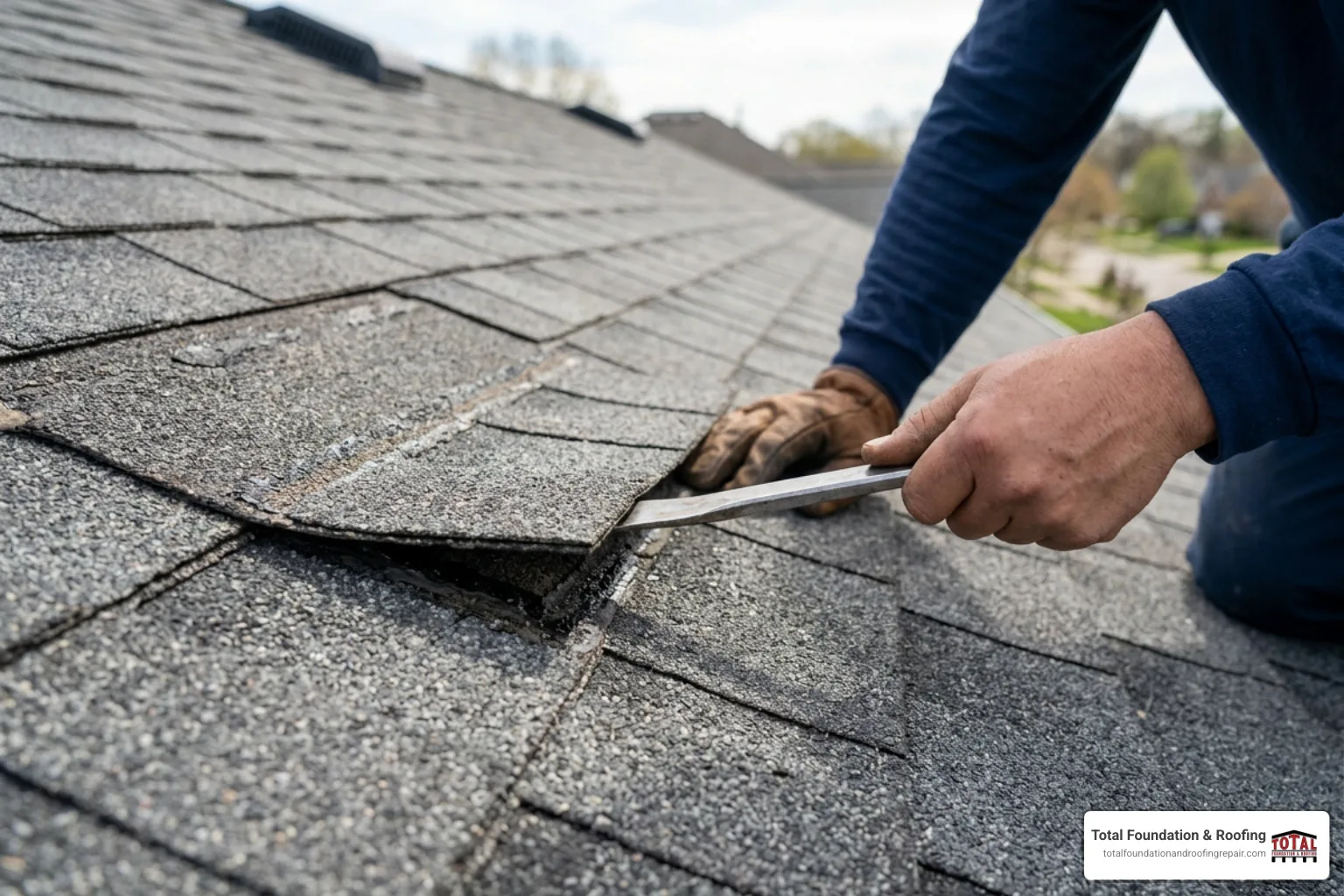
Texas Hill Country roofs face more than weather. Expansive clay, limestone bedrock, and drought-cycle soil movement can shift parts of a structure enough to stress roof decking, flashing, and seals. Regular checks catch loose shingles, lifted metal panels, granule loss, rust, separated flashing, and attic water stains early.
Fredericksburg properties should also confirm repair permit rules with the City of Fredericksburg Building Department, especially for larger repairs, replacements, or historic properties. Kerr County permit requirements apply to properties within that county’s jurisdiction, not to every Fredericksburg address.
I’m Daniel Sowell, owner and operator of Total Foundation & Roofing, with more than 18 years of Texas Hill Country construction experience. I use that hands-on background in roof maintenance Fredericksburg TX to help property owners spot weather and movement-related roof issues before they become costly repairs.
Roof maintenance Fredericksburg TX vocab explained:
Comprehensive Roof Maintenance Fredericksburg TX Homeowners Need for Severe Weather
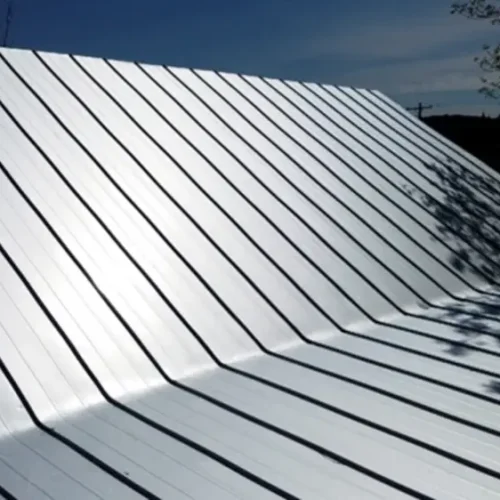
Routine upkeep protects your home against intense Hill Country climate extremes. Fredericksburg properties endure severe spring hailstorms, high-wind uplift, and relentless summer UV radiation that degrade standard roofing materials over time. Consistent preventative roof maintenance ensures your roof deck, fasteners, and waterproofing layers withstand seasonal weather shifts without compromising the structural envelope of your home.
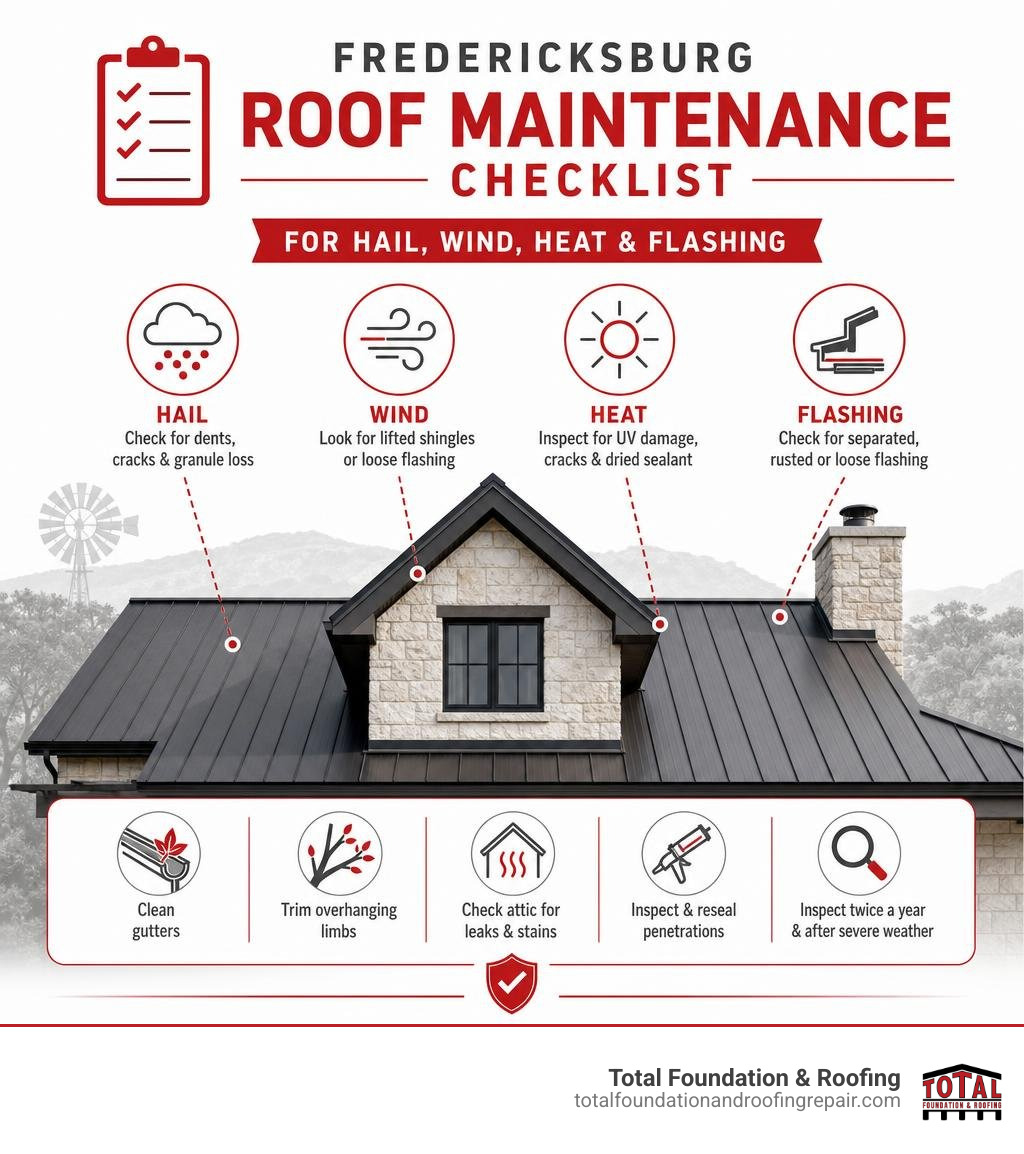
Seasonal Roof Maintenance Fredericksburg TX Checklist for Hail and Wind Protection
A comprehensive seasonal inspection schedule prepares your property for extreme weather transitions between spring storm fronts and scorching summer heat waves. Regular preventative assessments eliminate minor vulnerabilities before convective storm systems cause extensive interior water damage.
- Spring Preparation: Clear all gutters and downspouts of winter oak debris to prevent water backup along eaves and fascia boards. Check roof valleys, vents, and penetrations for signs of seal degradation before severe convective storm systems arrive in Gillespie County.
- Post-Storm Audits: Search for granule loss, bruised asphalt shingles, or dented metal panels immediately following spring hail events. Prompt professional storm damage assessments prevent minor punctures from saturating the underlying water-resistant underlayment.
- Summer Heat Defenses: Inspect attic ventilation systems to ensure radiant heat escapes efficiently. High attic temperatures bake asphalt shingles from underneath, accelerating thermal cracking, granule shedding, and premature adhesive strip failure.
- Autumn Clearance: Trim overhanging tree branches back at least six to ten feet from the roofline. High autumn winds sweep heavy live oak limbs across metal ridges and shingle surfaces, stripping factory protective coatings and protective mineral layers.
- Winter Envelope Verification: Check for early signs of moisture penetration in attic spaces and along roof decking joints. Specialized roof leak detection identifies hidden ceiling water tracks before freezing temperatures cause moisture trapped within roof layers to expand and crack decking seals.
Inspecting Roof Flashing and Decking Stressed by Texas Hill Country Soil Movement
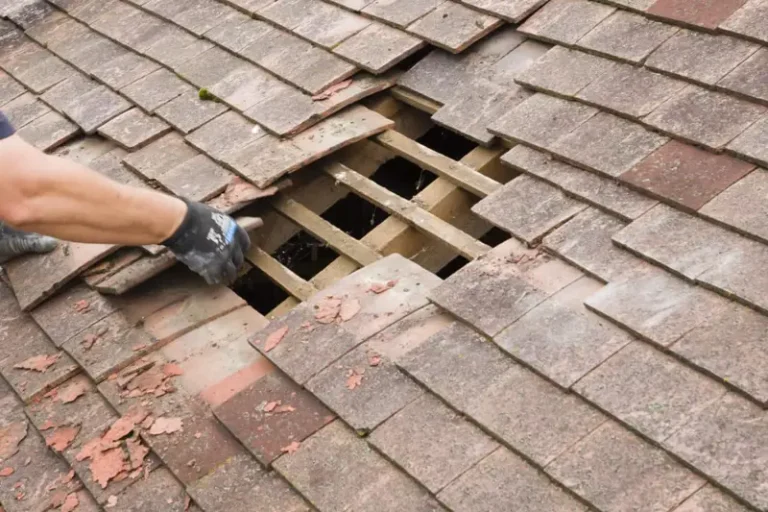
Fredericksburg sits atop a complex geological mix of limestone bedrock and expansive clay soils. During prolonged drought cycles, clay soils contract significantly, expanding again rapidly during heavy seasonal rains. This ongoing ground movement causes subtle structural settling throughout residential buildings.
When a home settles unevenly, roof framing and rafters experience structural racking. This movement forces metal flashing away from chimneys, dormers, and parapet walls. The resulting gaps break caulking seals and solder joints, creating direct pathways for wind-driven rain to bypass the primary roofing barrier. Routine maintenance must include close inspection of all perimeter flashing joints, side-wall transitions, and valley seams to ensure structural movement has not pulled waterproofing barriers away from the roof decking. When movement creates misalignments, professional roof repair restores these critical seals before moisture rots internal rafter tails and structural sheathing.
Material Care: Standing Seam Metal vs. Class 4 Impact-Resistant Shingles
Selecting and maintaining the right roofing material determines how well your home handles severe Hill Country weather conditions. Standing seam metal and Class 4 asphalt shingles engineered by leading manufacturers like Owens Corning offer superior resilience, but each requires distinct maintenance protocols.

| Material Feature | Standing Seam Metal Roofs | Class 4 Impact-Resistant Shingles |
|---|---|---|
| Typical Lifespan | 40 to 70 Years | 20 to 30 Years |
| Hail Resistance | Exceptional (resists puncturing and cracking) | High (rubberized SBS polymers resist hail impact) |
| Primary Stress Points | Thermal expansion clip fatigue, fastener torque, sealants | Granule loss, adhesive strip failure, edge lifting |
| Key Maintenance Needs | Inspecting concealed clips, boot seals, and ridge closures | Checking sealant tabs, clearing organic debris, replacing fractured shingles |
| Energy Performance | Reflects solar heat; reduces cooling loads up to 15% | Standard reflectivity unless coated with reflective granules |
Standing seam metal systems accommodate intense thermal expansion and contraction cycles through concealed clip designs. For traditional architectural profiles, modern residential roofing systems utilizing Class 4 impact shingles deliver durable protection against large hail. When aging systems suffer widespread material breakdown from years of extreme exposure, investing in a full roof replacement ensures complete structural protection under updated building codes.
Professional vs. DIY Roof Care and City Permitting Standards
Homeowners can safely handle simple ground-level maintenance tasks, such as clearing perimeter ground drains and using binoculars to spot missing shingles. However, climbing onto steep-pitch roofs presents severe fall hazards and risks damaging roofing materials through improper foot placement. Professional roofers utilize OSHA-compliant fall arrest systems, specialized footwear, and diagnostic tools to evaluate roof integrity safely and thoroughly without compromising material warranties.
When to Hire Professional Roof Maintenance Fredericksburg TX Contractors
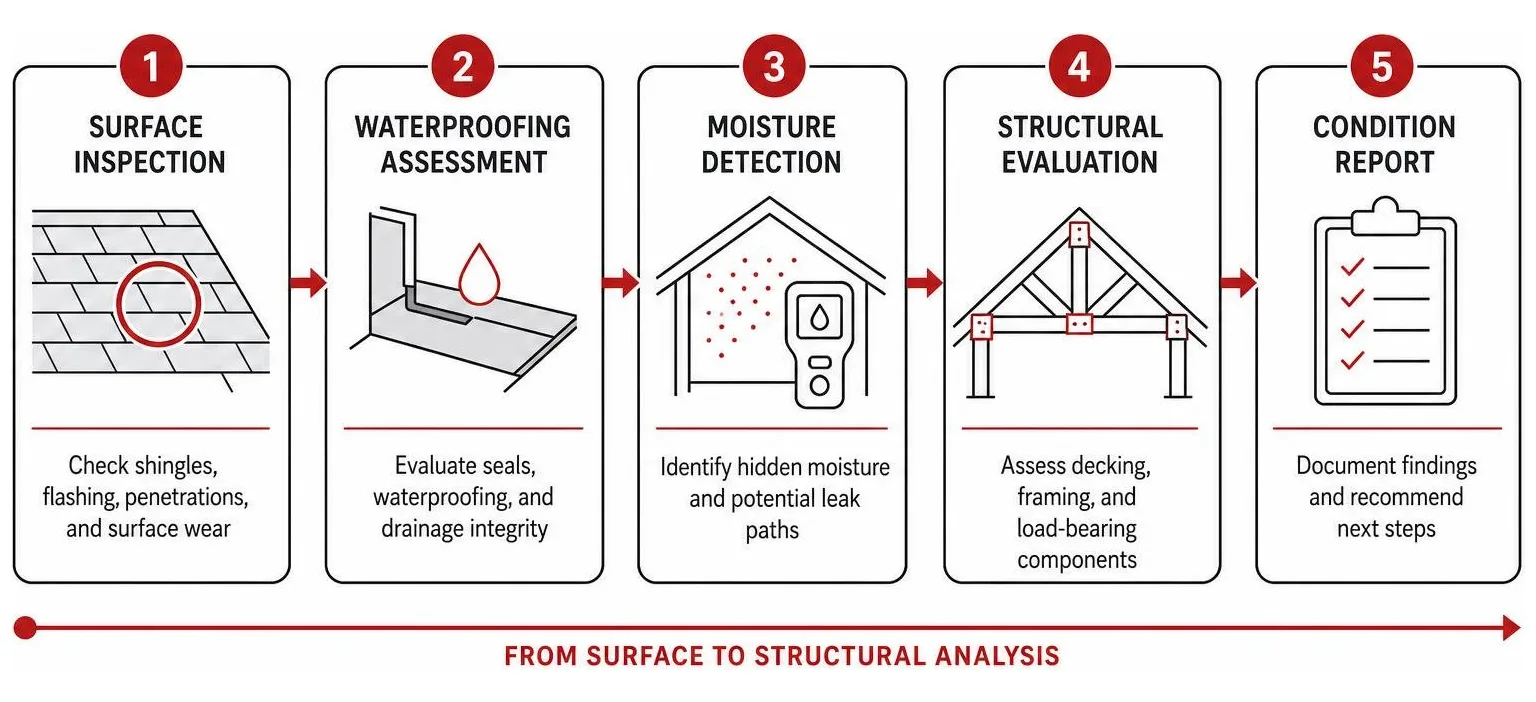
Professional evaluations become necessary whenever a roof sustains direct hail impacts, persistent interior moisture spots occur, or structural racking dislodges flashings. Certified roofing technicians utilize thermal imaging cameras and non-invasive moisture meters to identify hidden moisture trapped beneath underlayment layers without tearing apart sound roofing materials.
Professional maintenance records also protect your property investments against denied insurance claims. Insurance carriers and shingle manufacturers require documented maintenance history from licensed professionals when reviewing hail or wind claims. For properties recovering from recent Hill Country storms, navigating your roof insurance claim in Fredericksburg with thorough professional documentation ensures full financial recovery for all damaged structural components.
Fredericksburg Permitting, Building Codes, and Emergency Storm Protocols
Roofing work across the region must comply with established municipal and regional building standards:
- City Permit Requirements: The City of Fredericksburg Building Department requires official permits for structural roof modifications, re-roofs exceeding specific square footage, and exterior alterations to historic district properties.
- Regional Compliance Standards: Projects located in unincorporated rural parcels must adhere to Kerr County permit requirements and regional wind uplift standards based on International Building Code (IBC) and International Residential Code (IRC) criteria.
- Historic District Protocols: Historic district properties require specialized profiles, seam dimensions, and non-reflective finishes that preserve historic authenticity while meeting modern impact ratings.
- Emergency Response Protocols: When severe hailstorms puncture roof decking or tear away metal panels, rapid mitigation is critical. Certified emergency crews install secure structural tarps to stop interior water intrusion immediately while permanent repair permits and materials are processed.
For property owners throughout Fredericksburg, Kerrville, Boerne, and Comfort, Total Foundation & Roofing delivers complete roofing maintenance, inspection, and restoration services designed for the Texas Hill Country climate. Reach out to our team today for expert roofing solutions in Fredericksburg to schedule your comprehensive roof evaluation.