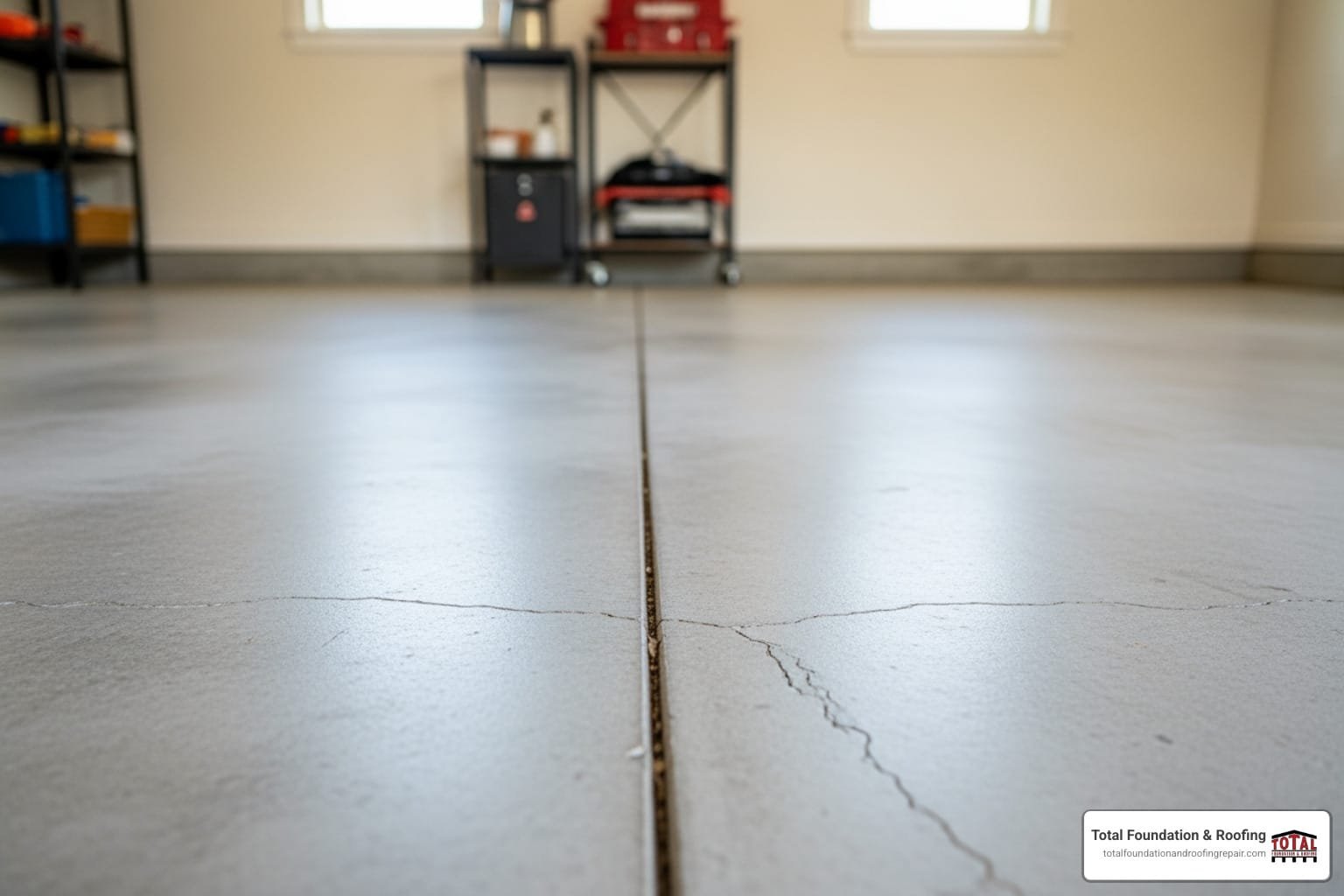

Why Foundation Repair Concrete Slab Issues Demand Immediate Attention
Foundation repair concrete slab problems affect thousands of Texas homes every year, threatening structural integrity and property values. When your concrete slab foundation starts to sink, crack, or settle unevenly, you’re dealing with a structural issue that gets more expensive the longer it’s ignored. For homeowners who want a contractor-led diagnosis and a permanent stabilization plan, start with our Texas Hill Country foundation repair team for inspection and repair guidance.
Quick Answer: Essential Concrete Slab Repair Methods
- Slab Jacking (Mudjacking) – Injecting cement-based slurry beneath settled slabs to lift and level them
- Polyurethane Foam Injection (Polyjacking) – Using expanding polymer foam for fast, lightweight lifting
- Piering Systems – Installing steel push piers, helical piers, or concrete piers to stabilize foundations on unstable soil
- Underpinning – Adding deep support beneath existing foundations to reach stable soil layers
- Crack Repair – Sealing structural cracks with epoxy or polyurethane injection to prevent water intrusion (see our foundation crack repair service)
Average repair costs range from $2,000 to $8,000, with severe cases reaching $20,000. The method you need depends on soil conditions, damage severity, and the underlying cause.
Most homeowners first notice problems when doors start sticking, floors feel uneven, or cracks appear in walls and ceilings. These warning signs indicate your foundation is moving—and in the Texas Hill Country, where expansive clay soils and limestone bedrock create unique challenges, even small cracks can signal serious settlement issues.
The good news? Modern repair techniques can stabilize your foundation without the massive disruption of full replacement. Methods like polyurethane foam injection and precision piering systems offer long-term solutions that address the root cause: unstable soil beneath your slab. For a full overview of what we do end-to-end, visit our foundation repair services.
Here in the Hill Country, soil movement from moisture changes causes most slab problems. During dry periods, clay soils shrink and pull away from foundations. When heavy rains return, that same soil expands and pushes against your home. This constant cycle creates stress that eventually leads to cracks, settlement, and structural damage.
When to call a professional:
- Cracks wider than 1/4 inch
- Doors or windows that stick or won’t close properly
- Visible gaps between walls and floors
- Floors that slope or feel uneven
- Multiple hairline cracks appearing suddenly
Don’t wait for small issues to become major structural failures. While minor hairline cracks from initial settling are normal in the first year after construction, any cracks appearing later—or growing wider—require professional assessment.
I’m Daniel Sowell, owner of Total Foundation & Roofing, and I’ve been repairing foundation repair concrete slab issues throughout the Texas Hill Country since 2007. Over 18 years, I’ve seen how quickly minor settlement can escalate into expensive structural damage when homeowners delay repairs.
Original field data (Texas Hill Country, 2007–2025): In our service area, the most common homeowner “first notice” triggers are (1) sticking interior doors, (2) diagonal drywall cracking at openings, and (3) tile/grout separation over a low spot. These three symptoms account for the majority of first calls we receive for slab movement.
Understanding your repair options helps you make informed decisions. Whether you need simple crack sealing or comprehensive foundation stabilization, the right approach depends on accurate diagnosis of why your slab is failing—not just treating visible symptoms.
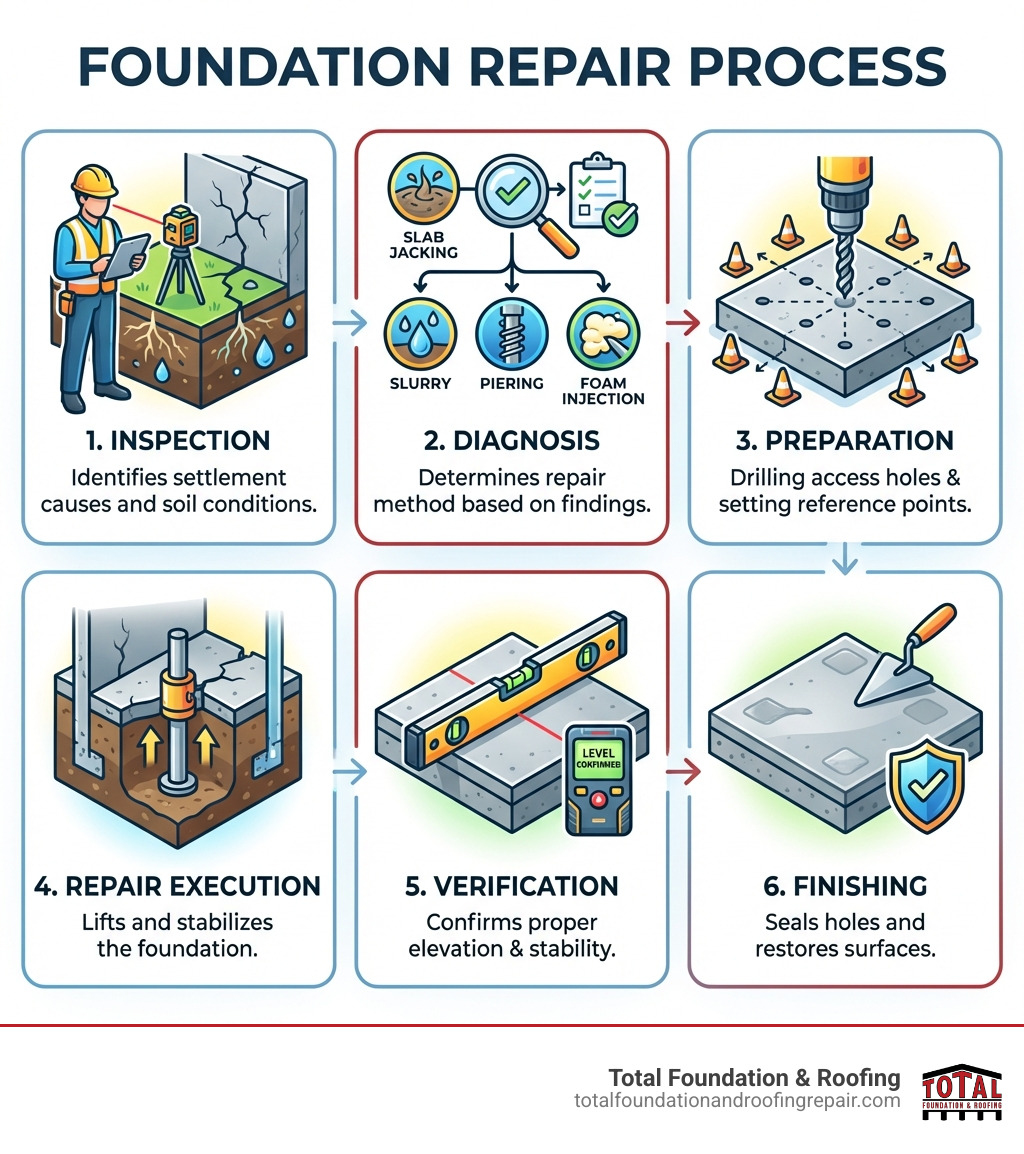
The sections ahead will walk you through identifying problems, understanding what causes concrete slabs to fail, comparing repair methods, and choosing the right solution for your home. You’ll also learn what repairs typically cost and how to prevent future foundation issues through proper maintenance.
Let’s start by examining how to spot foundation problems before they compromise your home’s structural integrity.
Foundation repair concrete slab terms to know:
Identifying and Fixing Your Foundation Repair Concrete Slab Issues
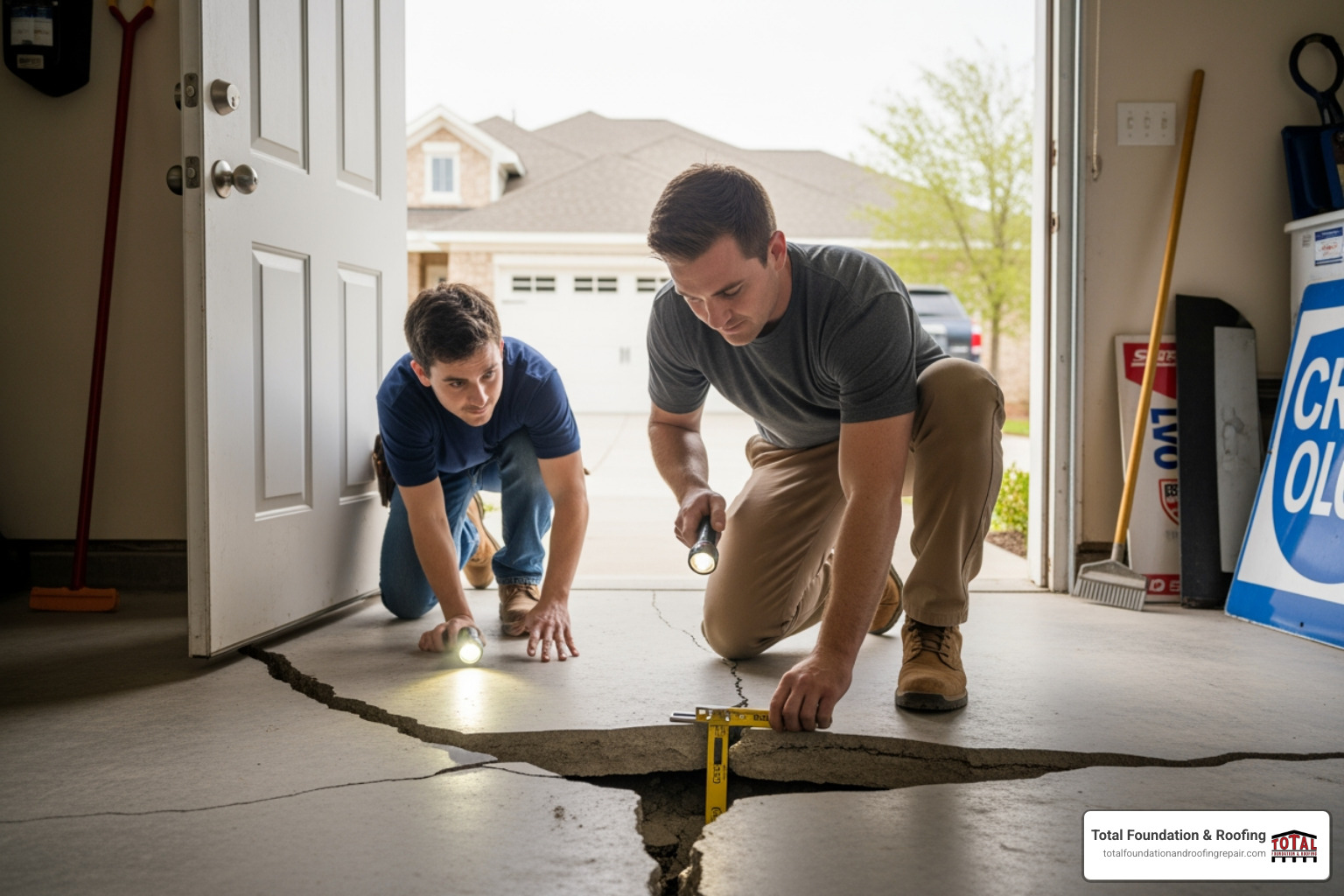
When we talk about foundation repair concrete slab issues, we are often dealing with “differential settlement.” This occurs when one part of your home’s concrete base sinks faster or further than the rest. This uneven movement puts immense tension on the concrete, which is strong under compression but brittle when pulled apart.
In our service areas like Kerrville and Fredericksburg, the primary culprit is often expansive clay soil. This soil acts like a sponge; it swells when wet and shrinks when dry. Over time, this constant “heaving” and “shrinking” creates voids beneath your slab. Without consistent support from the ground, the heavy concrete eventually cracks and follows the path of least resistance–downward.
A professional structural assessment is vital because “fixing” a slab without understanding the soil behavior is like putting a bandage on a broken bone. We utilize scientific research on concrete repair procedures to ensure that the methods we use–whether it’s lifting the slab or stabilizing the soil–meet the highest engineering standards. For more details on why your floor might be dipping, check out our guide on concrete settling solutions.
Signs You Need Foundation Repair for a Concrete Slab
How do you know if that crack in the garage is just “normal” or a sign of a looming disaster? While concrete naturally shrinks and may develop hairline cracks within the first year of being poured, structural failure looks different.
Key warning signs include:
- Sticking Doors and Windows: When the slab shifts, the rectangular frames of your doors and windows become parallelograms. If you find yourself “shaving” the top of a door to make it close, you likely have a foundation issue.
- Stair-Step Cracks: In brick exteriors, cracks that follow the mortar lines in a zigzag pattern are classic signs of foundation settlement.
- Interior Wall Cracks: Look for diagonal cracks starting at the corners of door frames or windows.
- Uneven Floors: If a ball rolls across your “level” kitchen floor on its own, the slab has shifted.
- Gaps in Trim: If your baseboards or crown molding are pulling away from the wall, the structure is moving.
While it is tempting to try how to fix foundation cracks by yourself, DIY kits are usually only suitable for cosmetic hairline fractures. Structural cracks–those wider than a business card–require professional repairing cracks in concrete foundation to prevent water from reaching the rebar and causing internal corrosion.
Why Concrete Slabs Sink or Crack
The Texas Hill Country presents a unique geological challenge. We often have a thin layer of highly expansive clay sitting directly on top of limestone bedrock. This creates a “slip plane” where moisture can cause the soil to move dramatically.
Common causes of slab failure include:
- Soil Erosion: Poor drainage can wash away the soil supporting the edges of your slab.
- Poor Compaction: If the lot wasn’t properly “benched” or compacted before the pour, the house’s weight will eventually compress the loose dirt.
- Tree Root Intrusion: Large oaks can drink hundreds of gallons of water a day, sucking the moisture out of the clay beneath your home and causing it to shrink.
- Plumbing Leaks: Since many slab foundations have pipes embedded within or beneath them, a “slab leak” can saturate the soil, leading to localized heaving or erosion.
If you are noticing these issues in specific areas like your garage, see our specialized post on cracked slab in garage issues. We always ensure our repairs align with International Code Council building code compliance to protect your home’s resale value. For local expertise, we provide specialized foundation repair in Kerrville tailored to these exact conditions.
Top Methods for Foundation Repair Concrete Slab Stabilization
Once we’ve diagnosed the problem, we choose a repair method based on your soil type and the severity of the settlement. There is no “one size fits all” in foundation repair concrete slab work.
- Slab Jacking (Mudjacking): A traditional method where we pump a slurry of sand, cement, and water under the slab to fill voids and lift the concrete.
- Polyurethane Injection: A modern, lightweight alternative that uses expanding foam to lift slabs with minimal disruption.
- Piering/Underpinning: For deep-seated issues, we drive steel or concrete piers deep into the earth until they hit stable strata or bedrock.
- Soil Stabilization: Using chemical injections to “lock” the clay soil so it no longer expands or shrinks with moisture changes.
Most residential repairs can be completed in 1 to 5 days, depending on the number of piers required. You can find a deeper dive into these techniques on our concrete repair methods page or view our full list of foundation repair services.
Slab Jacking vs. Polyurethane Foam Injection
Many homeowners ask us about the difference between “mudjacking” and “polyjacking.” While both aim to level the concrete, the materials and results differ significantly.
| Feature | Mudjacking (Slab Jacking) | Polyjacking (Polyurethane) |
|---|---|---|
| Material | Heavy cement/soil slurry | Lightweight high-density polymer |
| Hole Size | Large (1.5 to 2 inches) | Tiny (5/8 inch–about the size of a penny) |
| Cure Time | 24-72 hours | 15-30 minutes |
| Weight | Adds 100+ lbs per cubic foot | Adds only 3-5 lbs per cubic foot |
| Durability | Can wash away over time | Waterproof and permanent |
We often recommend concrete leveling with foam injection for interior floors and patios because it is much cleaner and faster. Because the foam is so light, it doesn’t add extra weight to already burdened soil. To see the tech behind this, read about our concrete slab lifting equipment.
When to Choose Piering Systems
If your home is built on deep layers of soft clay, simply “floating” the slab with foam might not be enough. In these cases, we need to bypass the unstable soil entirely using piers.
- Push Piers: We use the weight of the house itself to hydraulically drive steel tubes down to bedrock.
- Helical Piers: These look like giant screws and are “threaded” into the ground. They are excellent for lighter structures like porches or where soil is very sandy.
- Slab Piers: These are specifically designed to tie into the concrete slab and the underlying piers to provide a unified support system.
Deciding between repair and full slab replacement is usually a matter of cost and effectiveness. Replacement is incredibly intrusive and, crucially, does not fix the soil problem. If you pour a new slab on the same bad soil, it will crack again. Piering provides a permanent solution by anchoring your home to the earth’s stable layers. Learn more in our sinking concrete guide 2025 or explore our concrete leveling services.
Cost and Prevention Strategies
The cost of foundation repair concrete slab work is determined by several factors:
- Number of Piers: This is usually the biggest cost driver.
- Accessibility: Is the repair outside, or do we need to remove flooring to work inside?
- Method: Foam injection is often cheaper than deep steel piering.
- Regional Factors: In the Hill Country, drilling through limestone can sometimes increase labor costs.
On average, most of our clients spend between $3,000 and $7,000 for stabilization. For a detailed breakdown, see our concrete repair cost complete guide and concrete lifting cost analysis.
How to Prevent Future Issues:
- Maintain Consistent Moisture: Use soaker hoses during Texas droughts to keep the clay around your foundation from shrinking.
- Manage Drainage: Ensure gutters and downspouts direct water at least 5 to 10 feet away from the house.
- Root Barriers: If you have large trees close to the house, consider installing root barriers to prevent them from sucking moisture from under the slab.
- Fix Leaks Fast: Monitor your water bill. A sudden spike could mean a pipe has burst under your slab, which will quickly lead to foundation movement.
Conclusion
A sinking slab is a stressful problem, but it doesn’t have to be a permanent one. By catching the signs early–like sticking doors or those tell-tale stair-step cracks–you can save thousands in structural repairs. Whether your home in Fredericksburg needs high-tech polyurethane lifting or your commercial building in Comfort requires heavy-duty steel piering, Total Foundation & Roofing is your local expert.
When hiring a contractor, always look for:
- Local Experience: We understand the Hill Country’s unique limestone and clay mix.
- Licensing and Insurance: Never let an uninsured crew work on your home’s skeleton.
- Warranties: We provide high-quality workmanship backed by reliable service.
Don’t let a small crack turn into a major collapse. We serve Kerrville, Fredericksburg, Comfort, and the surrounding Texas Hill Country with prompt, certified service.
Ready to stabilize your home? Call us today at 830-331-0001 for a professional assessment and quote. Let’s get your home back on solid ground.
For more information on our specific service areas, visit our Kerrville, Fredericksburg, or Comfort location pages. You can also browse our full range of foundation repair services to find the right fit for your property.