

When Every Minute Counts: Why a Leaking Roof Demands Immediate Action
The fastest way to fix a leaking roof temporarily is to choose one of these four methods based on what you have available right now. For urgent storm damage help in the Hill Country, a trusted Texas roofing and foundation repair contractor can assess whether a temporary patch is safe before permanent repairs begin:
- Heavy-duty tarp — Drape over the damaged area and run it past the roof ridge. Secure with 2×4 boards and cap nails. Most reliable DIY option. Lasts 30–90 days.
- Roofing cement + tar paper — Spread roofing cement over the damaged area with a putty knife, then press tar paper over it. Good for localized shingle damage.
- Self-adhesive roofing tape — Peel, clean the surface, and press firmly over cracks or small holes. Can also be applied from inside the attic.
- Plastic sheeting — Lay over the damaged area, secure with roofing nails or weights. Budget option for very small damage.
Water damage moves fast. Within 24 to 48 hours of a roof leak, mold begins growing and structural wood starts to degrade. A small drip that costs a few hundred dollars to fix today can spiral into a $50,000 disaster within days if left unaddressed — that’s not an exaggeration, it’s a documented pattern seen repeatedly in real emergency cases.
If your ceiling is already sagging or water is near electrical fixtures, this is an emergency. Homeowners facing sudden water intrusion need to act fast and reach out to our emergency roof repair services team or a trusted Texas roofing and foundation repair contractor before the damage compounds further.
I’m Daniel Sowell, owner of Total Foundation & Roofing Repair in Kerrville, Texas, with over 18 years of hands-on experience helping Texas Hill Country homeowners fix leaking roofs temporarily while permanent repairs are arranged. In this guide, I’ll walk you through exactly what to do — step by step — starting right now.
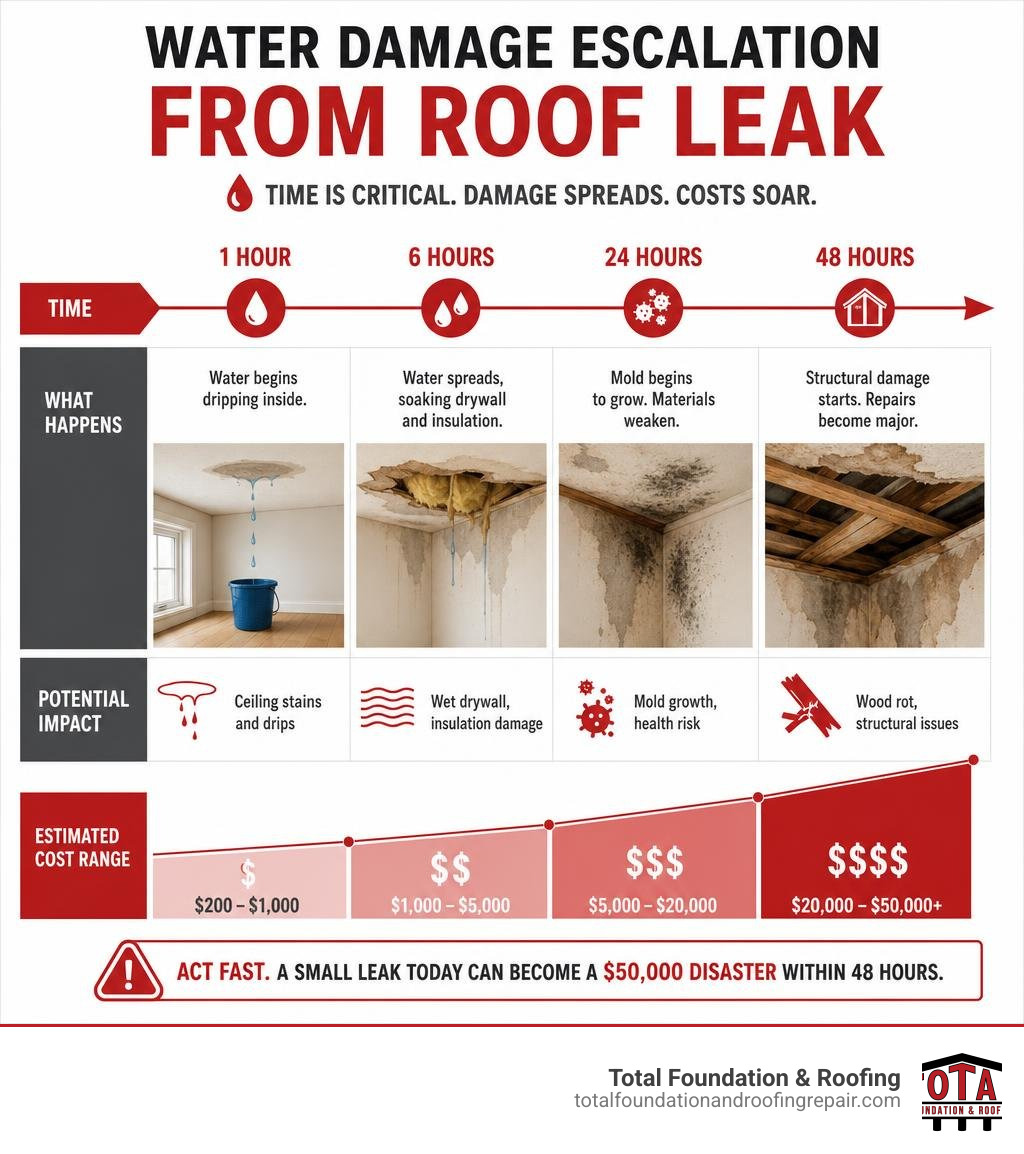
Fix a leaking roof temporarily terms you need:
How to Fix a Leaking Roof Temporarily: 4 Proven DIY Methods
Temporary roof patches are designed to withstand weather elements for a maximum of 30 to 90 days; they are not permanent substitutes for professional roof replacement.
When you discover a leak during a heavy Texas rainstorm in Kerrville, Fredericksburg, or Comfort, you cannot wait weeks for a full crew to arrive. You need a fast, reliable barrier to stop the water from ruining your ceiling, insulation, and electrical systems while emergency roof repair services or professional roof repair services are arranged.
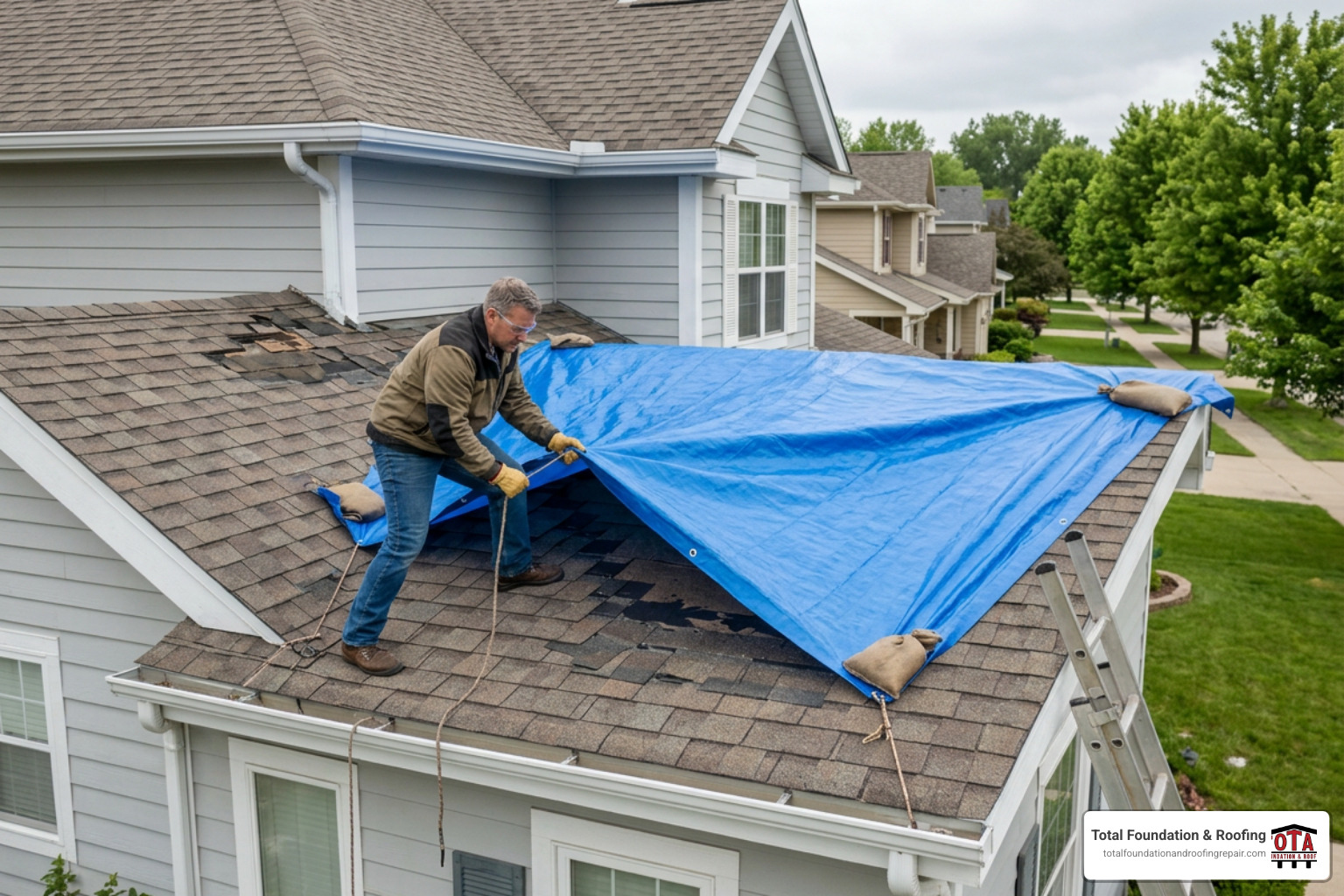
Depending on the severity of your damage and the tools you have in your garage, we recommend four primary temporary fixes. Here is a quick comparison to help you choose the right method for your home:
| Temporary Fix Material | Average DIY Cost | Difficulty Level | Expected Lifespan | Best Used For |
|---|---|---|---|---|
| Heavy-Duty Tarp | $150 – $300 | Medium | 30 – 90 days | Large-scale storm damage, missing shingles, or multiple leaks |
| Roofing Cement | $20 – $50 | Low | 14 – 30 days | Small cracks, flashing leaks, or isolated shingle punctures |
| Self-Adhesive Tape | $30 – $80 | Low | 30 – 60 days | Plumbing vent boots, small holes, or interior attic patches |
| Tar Paper Layering | $50 – $100 | Medium | 30 – 45 days | Moderate shingle damage under dry conditions |
Step-by-Step: How to Fix a Leaking Roof Temporarily with a Tarp
To secure a tarp, always run it over the roof ridge to prevent water from running underneath the upper edge, securing it with 2×4 anchor boards and cap nails. Nailing directly through the middle of a tarp without anchor boards will create new holes for water to slip through, rendering your hard work useless.
If you have determined that climbing onto your roof is safe, follow these steps to secure a tarp:
- Measure the Damaged Area: Choose a heavy-duty, woven polyethylene tarp (usually labeled as 6-mil to 8-mil thickness) that is large enough to cover the damaged area and extend at least 4 feet beyond the damage on all sides.
- Roll the Top Edge: Wrap the top edge of the tarp around a 2×4 wooden board. This creates an anchor that distributes wind pressure evenly.
- Drape Over the Ridge: Pull the tarp up and over the peak (ridge) of your roof. This is a critical step; if the top edge of the tarp sits on the slope below the ridge, rainwater will run down the shingles and slip right under the tarp.
- Secure the Anchor Boards: Screw or nail the wrapped 2×4 boards into the roof deck. Always use exterior-grade screws or roofing cap nails.
- Tension and Secure the Bottom: Pull the tarp tight so it lies completely flat against the shingles. Wrap the bottom edge around another 2×4 board and secure it to the roof deck.
For more detailed safety advice and list of materials, refer to our comprehensive emergency roof tarping guide.
Alternative Methods to Fix a Leaking Roof Temporarily
Roofing cement combined with mesh patch material creates an airtight seal over minor shingle punctures but loses elasticity under extreme UV exposure. In our hot, sunny Texas Hill Country climate, roofing cement can bake and crack within a few weeks, which is why it is strictly a short-term solution.
If you are dealing with smaller, localized issues rather than massive storm damage, consider these alternatives:
- Roofing Cement & Tar Paper: For a localized tear, apply a thick layer of roofing cement using a putty knife or caulk gun. Press a piece of heavy tar paper or roofing felt directly into the wet cement, then apply another layer of cement over the edges to seal them.
- Self-Adhesive Waterproof Roofing Tape: High-quality butyl-based flashing tapes work incredibly well on clean surfaces. They are ideal for quick patches around rusted flashing, chimney bases, and plumbing vent boots. Always clean the area of dirt and loose shingle granules before pressing the tape down.
To make sure your temporary materials do not damage your existing roof system, you can learn more about industry-standard materials from leading manufacturers like Owens Corning Roofing or GAF. You can also read community insights on the Quora discussion on temporary roof patches to see how other homeowners handle these quick repairs.
If you have identified a clear, localized hole in your shingles, follow these simple roof hole repair steps to seal it off before the next storm rolls through.
How to Locate the Source of a Roof Leak from the Inside
Water rarely travels in a straight line; trace water trails along rafters from the ceiling leak back to the entry point using a high-powered flashlight in a dark attic. Because water follows the path of least resistance, it often enters through a gap in your shingles, runs down a sloped rafter, and drips onto your ceiling drywall feet away from the actual roof hole.
To find the leak source safely from inside your home:
- Go Up in the Attic: Wait for a rainy day, or perform this check immediately after a storm. Bring a bright flashlight.
- Turn Off Attic Lights: With the space dark, shine your flashlight along the undersides of the rafters and the roof decking. Look for wet, shiny paths, water droplets, or dark water stains.
- Check the Insulation: Look for matted, damp, or discolored fiberglass batts. Wet insulation is a clear indicator that water is dripping directly above that spot.
- Mark the Spot: Drive a small nail or insert a colorful wire upward through the roof deck hole (if visible) so you can easily locate it from the outside later.
If you are struggling to find where the water is coming from, learn how to read ceiling leak clues to pinpoint the exact source of water intrusion. If the weather is clear and you want to trace the issue before the next rain, you can read our step-by-step instructions on conducting a safe roof leak water test.
Immediate Steps to Take When You Discover a Leak
Immediately relieve ceiling pressure by drilling a small hole in the center of the sagging drywall to drain pooled water into a bucket, preventing a sudden ceiling collapse. If you see a bulging circle on your ceiling, water is pooling on top of the drywall. If left alone, the heavy water will cause the entire ceiling panel to cave in, creating a massive, messy disaster.
As soon as you spot a leak indoors, follow this emergency containment protocol:
- Contain the Water: Place a large bucket or plastic bin directly under the drip. If the dripping is noisy, pin a piece of string to the ceiling and let it hang down into the bucket; the water will run down the string silently.
- Protect Your Belongings: Move furniture, electronics, and rugs completely out of the room. Cover large items with plastic trash bags or painter’s tarps.
- Manage Electrical Safety: If water is dripping near light fixtures, ceiling fans, or wall outlets, go to your home’s main electrical panel and shut off the breakers to those rooms immediately.
Knowing what to do when you see water coming through the ceiling can save you thousands of dollars in ruined flooring and furniture. For late-night disasters, keep our midnight roof rescue guide bookmarked so you can act calmly and systematically.
When to Call a Professional for Permanent Repairs
Structural roof damage, sagging roof decks, and leaks spanning multiple rooms require professional structural engineering and cannot be safely resolved with DIY patches.
Temporary fixes are fantastic for buying you time, but they are not permanent solutions. Eventually, the adhesive on roofing tape degrades, tarps tear in high winds, and roofing cement cracks under the intense Texas heat.
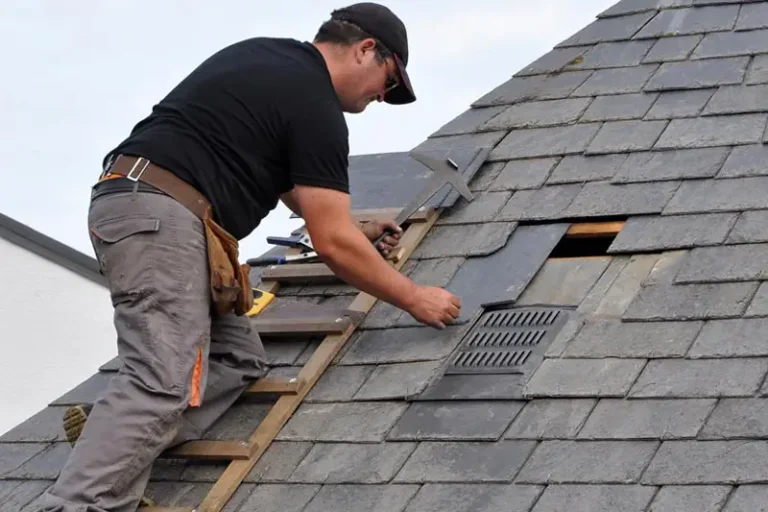
If your roof has structural sagging, massive areas of rotted decking, or leaks in several different rooms, it is time to skip the DIY patches and call our team. We can step in to provide robust, long-lasting solutions. Explore our professional roof repair services to restore your home’s structural integrity.
We proudly serve homeowners across the Texas Hill Country, offering specialized Kerrville, Texas roofing services tailored to our local weather patterns, including Fredericksburg and Comfort. We maintain the highest standards of safety and workmanship. You can verify local licensing and industry standards through the Roofing Contractors Association of Texas to ensure your contractor is fully qualified.
Critical Safety Precautions for DIY Roof Work
Never step onto a wet, icy, or steeply pitched roof; always utilize a properly anchored fall-arrest harness and secure your ladder on level ground. Falls are the leading cause of death in construction, and thousands of homeowners are hospitalized every year due to ladder slips and roof falls.
Before you even think about climbing up to fix a leaking roof temporarily, review these strict safety rules:
- Check the Weather: Never climb onto a roof during an active rainstorm, high winds, or lightning. Wait until the storm has completely passed and the roof surface is 100% dry.
- Secure Your Ladder: Always place your ladder on flat, solid ground. Extend the ladder at least 3 feet past the roof edge, and tie off the top of the ladder to a secure anchor point if possible.
- Have a Spotter: Never do roof work alone. Always ensure someone is on the ground to steady the ladder and call for help in case of an accident.
For comprehensive safety guidelines, review the official OSHA Roofing Fall Protection Guidelines to understand critical safety heights and equipment. If you are tempted to climb up during a storm, watch this instructional emergency roof leak repair in the rain video to understand the extreme hazards of wet roof surfaces.
Protecting Your Homeowner’s Insurance Claim
Insurance policies typically require homeowners to take immediate, reasonable action to mitigate further damage after a leak is discovered, or risk claim denial. This means that applying a temporary tarp or patch isn’t just a good idea to protect your drywall — it is often a legal requirement to keep your insurance policy valid.
To protect your claim and ensure your insurance company covers the permanent repairs:
- Take Photos First: Before you apply any tarp, tape, or cement, take clear, well-lit photos and videos of the damage on the roof and the water damage inside your home.
- Keep Your Receipts: Save every receipt for tarps, screws, lumber, or cement you buy to patch the leak. Most insurance companies will reimburse you for these mitigation costs.
- Avoid Permanent DIY Alterations: Do not attempt to replace large sections of shingles or structurally alter the roof yourself before the insurance adjuster has inspected the damage. Doing so can make it impossible for them to assess the original storm damage.
To learn how to document your temporary repairs properly without jeopardizing your insurance claim, read our guide on emergency roof leak fix procedures.