

A Roof Hole Is a Building Emergency — Here’s What to Do First
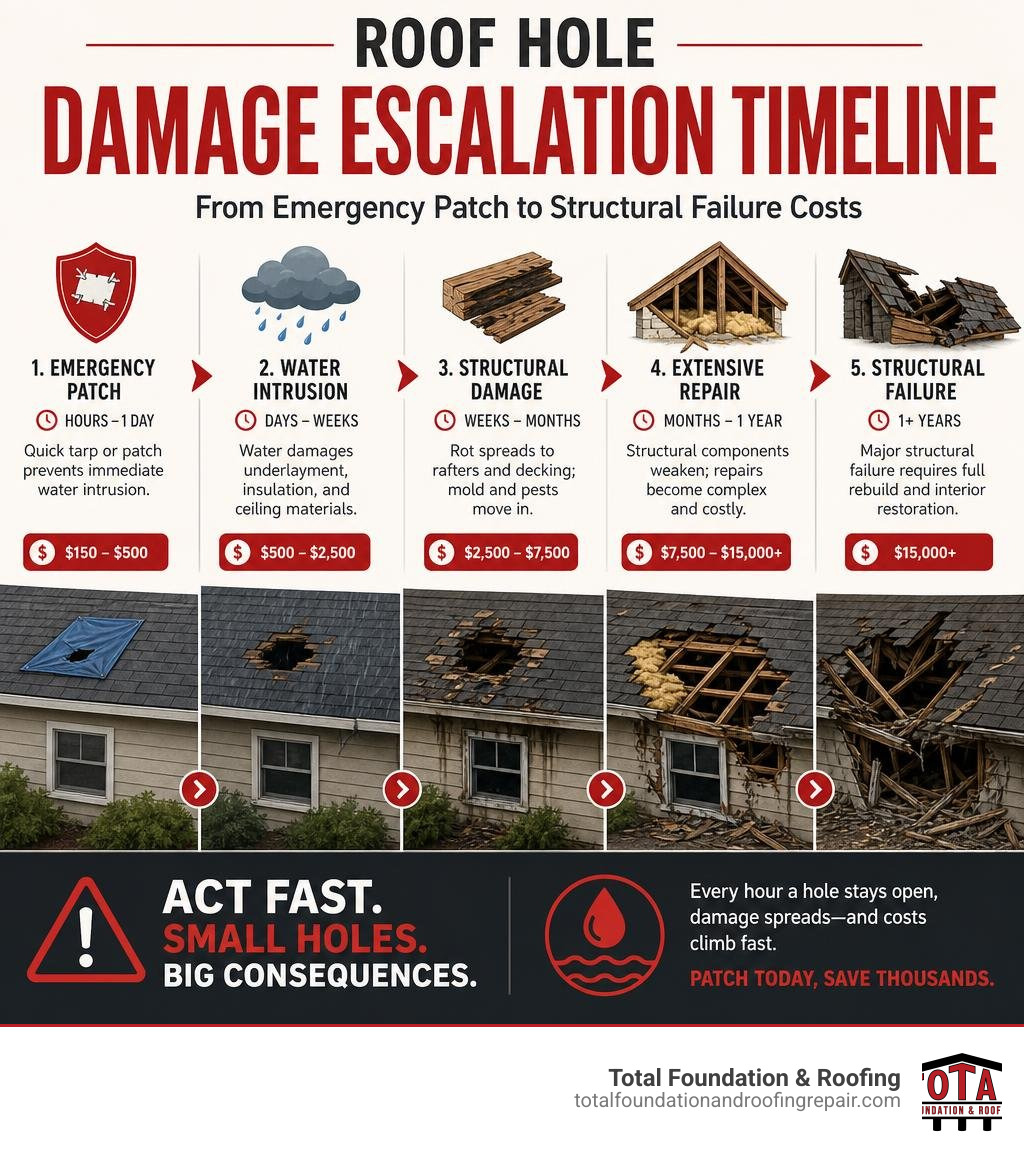
Roof hole repair needs to happen fast. Every hour a hole stays open, water, wind, and pests move in freely — and what starts as a $150 fix can spiral into thousands in structural damage. When dealing with a sudden building-envelope emergency, securing immediate mitigation from a trusted provider of Kerrville roofing services is the most reliable way to protect your property.
Quick answer — how to repair a roof hole:
- Contain the water — place buckets inside and document damage with photos
- Cover the hole — secure an emergency tarp extending at least 4 feet past the hole on all sides
- Inspect from the attic — check rafters for cracks, rot, or moisture before any surface repair
- Patch the decking — cut damaged wood back to solid material and install a CDX plywood patch
- Restore the surface — apply underlayment, then replace shingles over the patched area
- Test the repair — run a garden hose below the patch and have someone watch from the attic
Roof leaks account for roughly 30% of all home insurance claims in the United States, and water damage from a leaking roof carries an average insurance claim of $11,000. Delaying even one season can turn a straightforward patch into a full structural rebuild.
Our professional roofing services cover everything from emergency tarping to complete deck restoration — but if you’re ready to tackle this yourself, the steps below will walk you through it safely.
I’m Daniel Sowell, owner of Total Foundation & Roofing Repair in Kerrville, Texas, with over 18 years of hands-on experience in roof hole repair and storm damage restoration across the Texas Hill Country. In that time, I’ve seen small, ignored holes turn into five-figure disasters — and I’ve put together this guide so you don’t have to learn that lesson the hard way.
Quick roof hole repair definitions:
Step-by-Step Guide to Roof Hole Repair
When tackling a roof hole repair, you must approach the process systematically. Simply throwing some caulk or a piece of metal over the top of a hole is a recipe for a structural disaster. Water always finds the path of least resistance, which means your patch must be engineered to shed water naturally, flowing downhill without getting trapped.
Common Causes of Holes in a Roof
Holes in residential and commercial roofs rarely occur without warning. In the Texas Hill Country—including Kerrville, Fredericksburg, and Comfort—we see several recurring culprits:
- Storm Damage and Wind-Driven Debris: Severe thunderstorms can bring down heavy oak limbs. When wind speeds exceed 60 mph, flying debris can easily puncture asphalt shingles and crack the underlying plywood decking. If your roof has suffered from hail or high winds, you may need targeted storm damage roof repair.
- Animal Intrusion: Squirrels, raccoons, and rodents are notorious for chewing through soft soffits, fascia boards, and even directly through rotting roof decking to establish nests in warm attics.
- Satellite Dish and Equipment Removal: When homeowners cancel satellite services, they often pull out the bracket lag bolts, leaving open penetrations. These tiny holes can rot the surrounding wood over time.
- Age and Wear Around Penetrations: Rubber boots around plumbing vent pipes crack after years of intense Texas sun exposure, allowing water to seep directly into the roof deck.
Essential Materials for DIY Roof Hole Repair
Before you climb up, you need to gather the correct structural and weatherproofing materials. Do not substitute sub-par woods or cheap sealants. For the best results, professional contractors rely on asphalt shingles and underlayment certified by industry leaders like GAF or Owens Corning.
- CDX Plywood: For structural deck patches, we recommend using CDX plywood (minimum 1/2-inch or matching your existing deck thickness). Avoid using OSB (Oriented Strand Board) in areas prone to active water leaks, as OSB swells and delaminates rapidly when exposed to moisture.
- Underlayment (Tar Paper or Synthetic): Use 30# asphalt-saturated felt (tar paper) or a high-quality self-adhering ice-and-water shield.
- Pre-Fabricated Utility Patches: For quick, highly reliable repairs of small holes (up to 8 in. x 8 in.) where you want to avoid cutting back large sections of decking, products like the Gibraltar Building Products Kwik-Plug Roof Repair Patch provide a heavy-duty galvanized steel and wood reinforcement.
- Roofing Adhesive and Sealant: You will need a high-performance adhesive that cures in wet or dry conditions, such as Rust-Oleum Advanced Roofing Repair Adhesive, to seal shingle tabs and underlayment seams.
- Fasteners: Use 1-1/4 inch galvanized ring-shank roofing nails for shingles and deck screws for securing plywood patches to rafters.
- Specialty Boot Repairs: If your hole is specifically around a plumbing vent, consider a Perma-Boot Vent Pipe Repair for 4 in. I.D. Vent Pipe in Black or a Roof Vent Pipe Collar Repair for 1-1/2 in. I.D. Vent Pipe in Black to restore the seal without replacing the entire boot.
How to Execute a DIY Roof Hole Repair Safely
Safety must be your absolute top priority. Ladder falls account for hundreds of thousands of emergency room visits annually. If your roof has a steep pitch (greater than 6:12) or if you do not feel comfortable working at heights, do not risk it.
Required Safety Gear:
- OSHA-approved safety harness and roof anchor system
- Sturdy, slip-resistant work boots
- Safety glasses and heavy-duty work gloves
- Secure extension ladder tied off at the gutters
Step-by-Step Patching Instructions:
- Perform an Attic Inspection: Before touching the roof surface, crawl into your attic with a bright flashlight. Inspect the rafters immediately surrounding the hole. If a fallen branch has cracked or split a rafter, the roof is structurally compromised. You must sister a new 2×4 or 2×6 wood support to the damaged rafter before patching the decking from above.
- Remove Damaged Shingles: On the roof, use a flat pry bar to gently lift the shingles surrounding the hole. Carefully slide the pry bar under the shingle tabs to pop the nails loose without tearing the good shingles. Work from the top down.
- Cut Back Damaged Decking: Set your circular saw depth to match the exact thickness of your roof sheathing (typically 1/2 inch to 5/8 inch) so you don’t cut into the rafters. Cut a neat square or rectangle around the damaged hole, extending the cut until you reach the center of the nearest solid rafters on both sides.
- Install the Decking Patch: Cut your CDX plywood patch to fit the opening tightly. Screw the patch directly into the exposed rafters using 2-1/2 inch deck screws.
- Seal with Underlayment: Apply a self-adhering ice-and-water shield or 30# felt over the patch. Ensure the underlayment tucks at least 6 inches under the existing felt on the uphill side to maintain a proper water-shedding path.
- Lay New Shingles: Nail replacement shingles starting from the bottom course and working upward. Hand-nail them using galvanized ring-shank nails, ensuring you don’t nail directly into the seams of your wood patch. Seal the tabs down with a bead of roofing adhesive.
If you are dealing with a sudden active leak during a storm, consult our guide on making an emergency roof leak fix or contact us immediately for professional emergency roof repair.
Preventing Future Leaks and Maintaining Your Patched Roof
Once your patch is in place, keep it functioning with simple preventative maintenance:
- Trim Overhanging Branches: Keep tree limbs cut back at least 6 to 8 feet from your roofline to prevent scraping and impact damage during high winds.
- Clear Gutters Regularly: Clogged gutters cause water to back up under the lower edge of your roof deck, rotting the sheathing.
- Annual Inspections: Examine your patched area twice a year for cracking sealant, lifting shingles, or signs of wood rot. For a deeper look at protecting your home’s interior, read our advice on roof leak damage repair.
Estimating the Cost and Time of Your Repair
A simple DIY patch is highly economical if you have the tools, but a professional repair saves you time and guarantees structural safety.
| Repair Method | Average Material/Labor Cost | Time Investment | Best Suited For |
|---|---|---|---|
| DIY Patch (Small Hole) | $50 – $150 | 2 – 4 Hours | Small holes (< 8"x8"), low-pitch roofs, intact rafters |
| Professional Quick Patch | $150 – $400 | 1 – 2 Hours | Single-shingle punctures, vent collar replacements |
| Professional Structural Repair | $500 – $1,500 | 3 – 6 Hours | Large holes, broken rafters, multi-layer decking decay |
For a complete breakdown of roofing financial expectations, see our roof repair cost complete guide.
Professional Solutions for Texas Hill Country Roof Damage
While a small DIY patch can keep the rain out temporarily, severe structural punctures require professional intervention to preserve your home’s structural integrity and protect its resale value.
At Total Foundation & Roofing, we specialize in high-quality, certified residential and commercial roofing solutions tailored to the unique climate of the Texas Hill Country. Whether you need a structural roof repair Kerrville, a comprehensive roof repair Fredericksburg TX evaluation, or a reliable roof repair near me in Comfort, TX, we are here to help.
Our experienced teams provide complete roofing services, including structural deck replacement, rafter sistering, underlayment upgrades, and seamless shingle matching.
Don’t wait for the next storm to turn a small hole into a major headache. Contact us today for a certified professional roof repair assessment.