
Why Fixing Driveway Cracks is a Smart Move
Promptly filling cracks in your driveway is essential for preventing costly damage and maintaining your property’s value. As a leading provider of concrete, foundation, and roofing services in the Texas Hill Country, we know that timely repairs are key. Here’s your quick-start guide:
Quick Answer: How to Fill Driveway Cracks
- Clean the crack – Remove all debris, weeds, and loose material.
- Choose your filler – Use flexible polyurethane caulk for concrete or an asphalt emulsion for asphalt.
- Insert backer rod – For cracks wider than 1/4 inch, place foam backer rod 1/2 inch below the surface.
- Apply filler – Fill the crack completely with a steady bead of flexible filler.
- Finish and cure – Smooth the surface, add sand for texture, and allow 24-48 hours to cure.
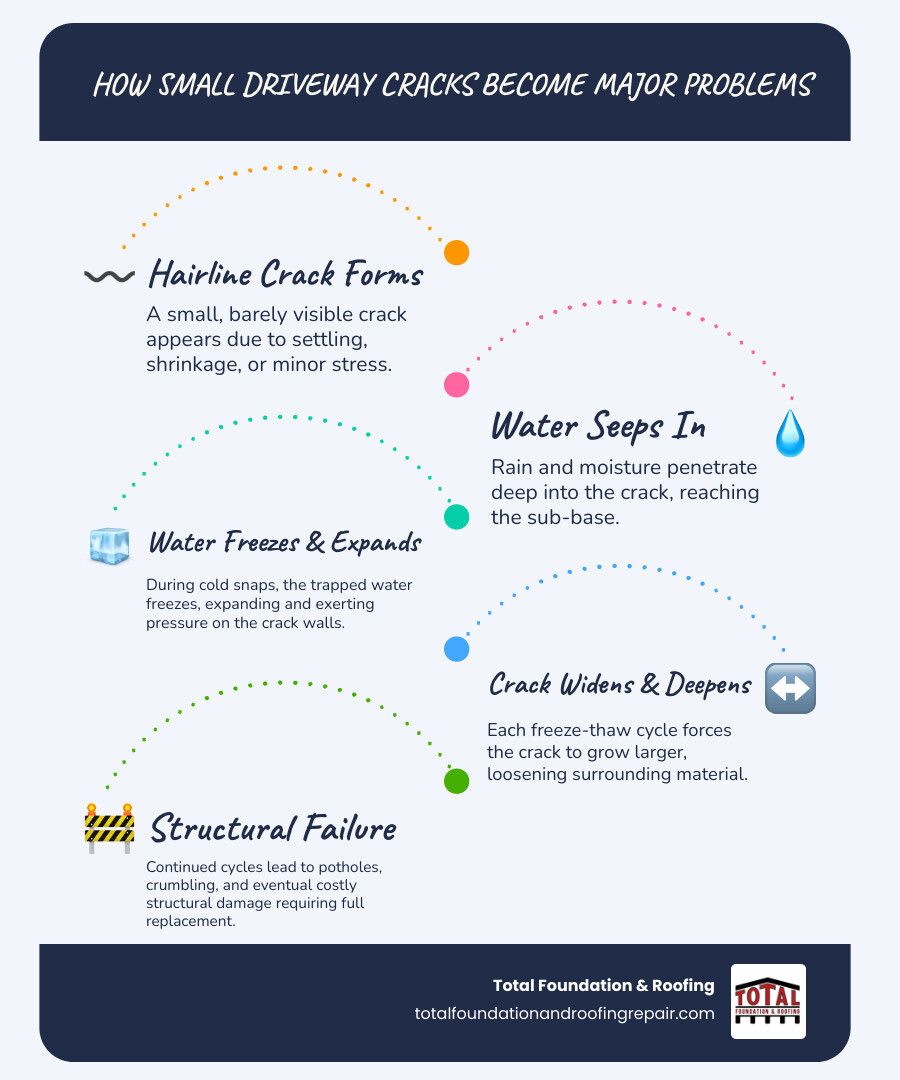
A small crack can quickly become a major problem. Water seeps in, freezes, and expands, making the crack wider with each freeze-thaw cycle. This can lead to a crumbling driveway that requires a full replacement.
Fortunately, most driveway cracks under 1/2 inch wide on a level surface are easy DIY fixes. With the right materials, you can prevent water damage, extend your driveway’s lifespan, and maintain curb appeal. The key is using a flexible polyurethane caulk, not rigid mortar. Concrete expands and contracts with temperature changes; a flexible filler moves with it, creating a durable, waterproof seal.
I’m Daniel Sowell, owner of Total Foundation & Roofing Repair. With 18 years of experience in the Kerrville area, I’ve seen how proactive maintenance saves homeowners thousands. Understanding the right repair approach is the first step to protecting your investment.
Fill cracks in driveway terms made easy:
Your Complete Guide on How to Fill Cracks in a Driveway
Driveway cracks can worsen over time if left unrepaired. Before you begin, it’s important to identify the type of crack and gather the right supplies.
Identifying the Crack and Gathering Your Supplies
Understanding the crack type is the first step. Hairline cracks are fine surface cracks, while shrinkage cracks are normal, straight cracks from curing. Structural cracks are more serious; they are often wider than 1/4 inch, uneven, and may indicate sub-base problems like soil settlement. In asphalt, this can appear as “alligator cracking.”
For DIY, tackle cracks under 1/2 inch wide on a level surface. Wider or uneven cracks signal deeper issues that need a professional.
What You’ll Need:
- Filler: For concrete, use flexible polyurethane caulk. For asphalt, use asphalt emulsion filler for small cracks or cold-patch blacktop for larger ones.
- Backer Rod: For cracks wider than 1/4 inch, insert a foam backer rod for wider cracks before filling.
- Tools: A wire brush, shop vac, caulk gun, putty knife, and safety gear (gloves, glasses) are essential.
Always choose flexible fillers over rigid mortar, as they accommodate the natural expansion and contraction of the driveway. You can explore more on driveway repair techniques to see why flexibility is key.

Step-by-Step: How to Fill Cracks in Driveway (Concrete)
Ready to fix your concrete driveway? Here’s a simplified guide.
Step 1: Preparation is Key
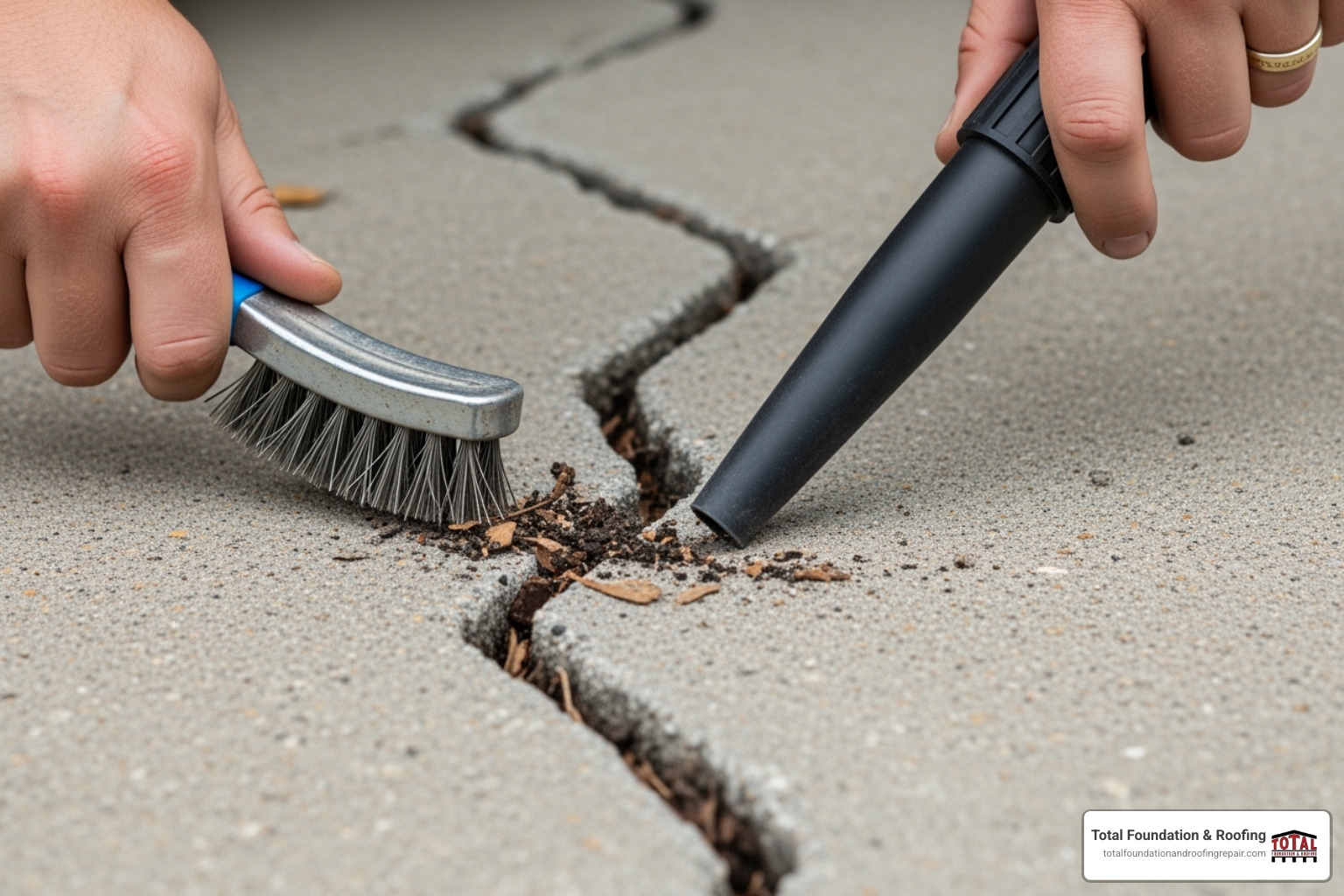
A clean, dry crack is crucial for a lasting bond. Use a wire brush and shop vac to remove all dirt and debris. For cracks wider than 1/4 inch, chisel the edges to create an inverted “V” shape, which helps lock the filler in. Ensure the crack is completely dry. If the slab is uneven, it needs professional leveling before you fill the crack. Our concrete driveway repair services can address underlying issues.
Step 2: Backer Rod Installation
For cracks wider than 1/4 inch, push a foam backer rod into the crack to a depth of about 1/2 inch. This supports the filler and creates a flexible joint.
Step 3: Application
Apply a steady bead of flexible polyurethane caulk, filling the crack completely. The caulk should sit just below the driveway surface to protect it from traffic.
Step 4: Finishing Touches & Curing
Smooth the caulk with a tool or gloved finger. Sprinkle sand over the wet caulk to match the concrete texture. Let it cure for 24-48 hours, following the manufacturer’s instructions, before allowing traffic. For more tips, check our guide on Concrete Repair Methods.
Step-by-Step: How to Fill Cracks in Driveway (Asphalt)
Asphalt driveways require a different set of materials and techniques.
Step 1: Cleaning
Just as with concrete, a clean crack is essential. Use a wire brush or screwdriver to remove all vegetation and loose debris. A shop vac or leaf blower will clear out fine particles. Wash the area and let it dry completely.
Step 2: Filling
Match the filler to the crack size:
- Small Cracks (up to 1/2 inch): Apply a pourable or cartridge-based asphalt crack filler. If the crack is deeper than 1/2 inch, use a backer rod first.
- Potholes (over 2 inches): Fill with cold-patch blacktop, overfilling slightly. Compact it firmly with a tamper or by driving a car over a piece of plywood placed on the patch.
Step 3: Curing and Sealing
Allow the filler to cure as directed. Afterward, sealing the entire driveway is recommended to protect the repair and extend the surface’s life. Apply two thin coats of asphalt sealer, allowing it to dry between coats. Keep vehicles off for 24-36 hours. For larger jobs, it’s wise to find the right concrete and asphalt contractors near you. We can also help you find expert driveway concreters near you for any concrete needs.
Common Mistakes to Avoid for a Lasting Repair
Avoid these common DIY pitfalls to ensure your repair lasts:
- Using the Wrong Material: Never use rigid mortar on a driveway. It can’t flex with temperature changes and will crack again. Always use a flexible polyurethane or rubberized filler.
- Inadequate Preparation: Applying filler to a dirty or damp crack will cause it to fail. Clean and dry the crack thoroughly.
- Skipping the Backer Rod: For wider cracks, a backer rod saves filler and creates a stronger, more flexible joint. Don’t skip it.
- Ignoring the Weather: Apply fillers within the manufacturer’s recommended temperature range. Avoid extreme heat, cold, or impending rain.
- Rushing the Cure Time: Give the repair ample time to cure before walking or driving on it. Patience prevents premature failure.
How long do repairs last? A properly executed repair using flexible filler can last several years. Inspect your driveway annually and perform touch-ups as needed. For a deeper dive, explore our resources on concrete repair methods and concrete crack solutions.
When DIY Isn’t Enough: Knowing When to Call a Professional
While many cracks are DIY-friendly, some issues require an expert to prevent further damage.
Signs You Need Professional Help:
- Large Cracks: Cracks wider than 1/2 inch in concrete or 2 inches in asphalt often need commercial-grade solutions.
- Uneven Slabs: If one side of a crack is higher than the other, it points to a sub-base or foundation issue that requires professional lifting and leveling.
- Widespread Damage: Extensive “alligator cracking” in asphalt or significant crumbling (spalling) in concrete indicates the material is failing and needs more than a simple patch.
- Water Pooling: Persistent puddles suggest a drainage problem that a professional should address.
When should you replace the driveway instead of repairing it?
Consider a full replacement if your driveway has widespread structural problems, large sunken or heaved sections, or is simply at the end of its lifespan with extensive deterioration. If multiple repairs have failed, it’s a sign that the underlying cause hasn’t been addressed.
For large or structural cracks, professional help is always the best course of action. A pro can diagnose the root cause, such as soil settlement common in areas like Kerrville, TX, and provide a lasting solution.
Here at Total Foundation & Roofing, we offer expert evaluation and lasting concrete repair solutions for homes and businesses across the Texas Hill Country, including Fredericksburg and Comfort. Our team understands the unique soil and climate conditions of our region, ensuring repairs are not just cosmetic, but structurally sound. For a comprehensive assessment and professional repair that addresses the underlying problem, contact a certified concrete contractor. We pride ourselves on high-quality workmanship and prompt, reliable service.