
Why Patching Your Concrete Steps Matters
Patching concrete steps is a manageable DIY project that can restore safety and curb appeal to your home in less than a day. Here’s what you need to know:
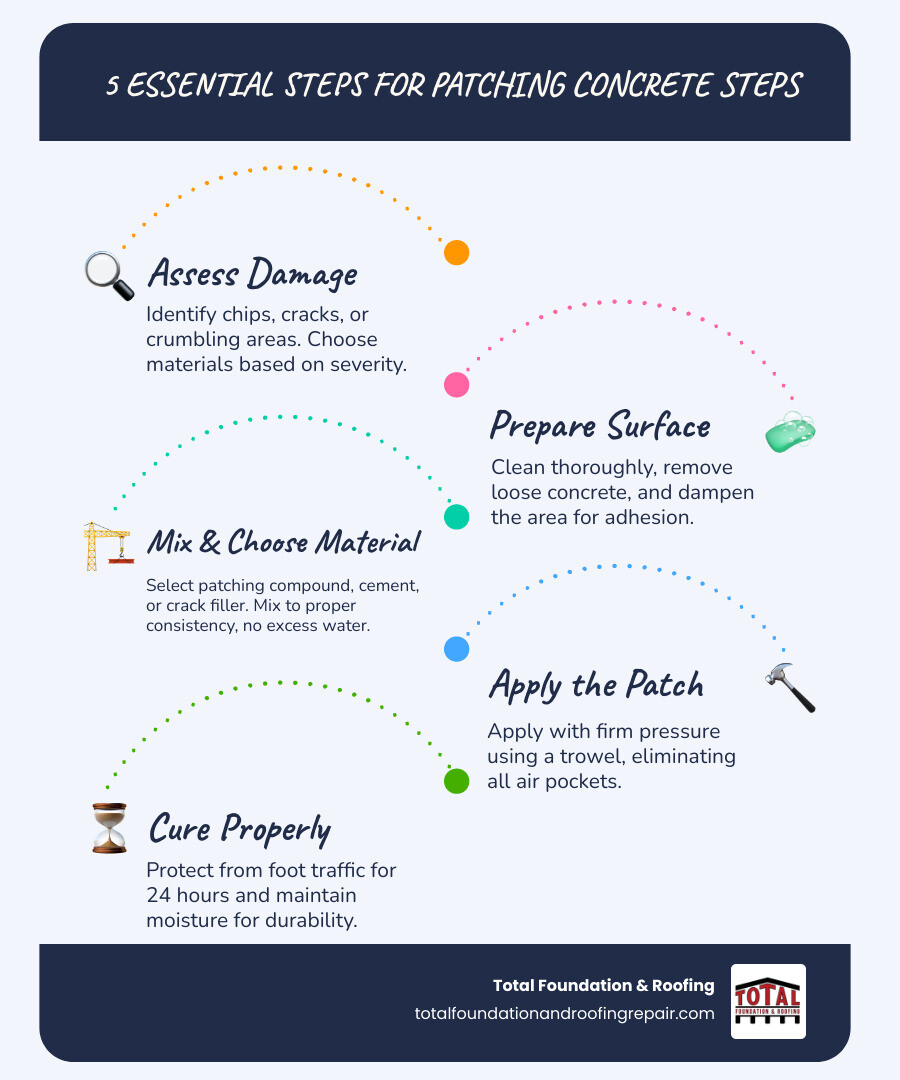
Quick Answer: How to Patch Concrete Steps
- Assess the damage – Identify chips, cracks, or crumbling areas
- Prepare the surface – Clean thoroughly, remove loose concrete, and dampen the area
- Choose your material – Use patching compound for small chips, quick-setting cement for larger damage, or crack filler for thin cracks
- Apply the patch – Mix material properly, apply with firm pressure, and smooth to match surrounding concrete
- Cure properly – Protect from foot traffic for 24 hours and keep the surface from drying too quickly
Concrete steps are durable, but over time, foot traffic, freeze-thaw cycles, and water damage can cause cracks and chips. What starts as a small flaw can become a safety hazard and an eyesore that hurts your property value. The good news is that most concrete step damage is repairable without replacing the entire structure.
At Total Foundation & Roofing, we understand that maintaining your property’s concrete is essential for both safety and value. Deteriorating steps look unattractive and create trip hazards that could lead to injuries. Acting early can save you thousands compared to a full replacement.
The key to a successful repair lies in proper preparation and using the right materials. When done correctly, a patched concrete step can last for years. When done poorly, the patch may fail within months, wasting your time and money.
I’m Daniel Sowell, owner of Total Foundation & Roofing Repair in Kerrville, Texas. With over 18 years of experience helping homeowners in the Texas Hill Country, I’ve seen how a simple patch can transform dangerous, unattractive steps into a safe, welcoming feature.
Patching concrete steps terms to learn:
The Complete How-To Guide for Patching Concrete Steps
Repairing your concrete steps is a manageable DIY project that can be completed in less than a day, making your home safer and more attractive. Let’s explore the process.
Assessing the Damage & Choosing Your Materials
The first step in patching concrete steps is to assess the damage. The type and extent of the problem will determine the best repair material for a lasting fix.
Common Causes of Damage to Concrete Steps:
- Freeze-Thaw Cycles: Water enters pores, freezes, expands, and breaks the concrete apart.
- Heavy Foot Traffic: Causes surface wear, chipping, and abrasion.
- Sinking concrete: Unstable ground beneath the steps can lead to structural cracks.
- Water Damage: Poor drainage and constant moisture erode the concrete.
- Extreme Temperatures & Severe Storms: Rapid temperature changes and harsh weather stress the concrete.
- Impact: Dropped objects can cause chips and breaks.
Deteriorating concrete steps are more than just an eyesore; they pose serious safety problems. An uneven or cracked step is a tripping hazard, which can lead to injuries for family members and guests. Addressing these issues promptly is crucial.
Choosing the Right Concrete Repair Materials:
Selecting the correct repair product is vital for a successful patch. Each is designed for a specific type of damage:
| Repair Material Type | Best Use Case | Characteristics – | Crack Filler | Thin cracks (up to 1/8 inch) | Flexible, water-resistant, often silicone or acrylic latex-based. |
| Concrete Patching Compound | Small areas with superficial chips or cracks (up to 1/4 inch deep) | Cement-based with bonding agents, good for thin layers. |
| Quick-Setting Cement | Larger holes, crumbling concrete, or structural damage (deeper than 1/2 inch) | Rapid hardening, high strength, often requires a bonding agent for optimal adhesion. – |
Surface Preparation: The Key to a Lasting Patch
Proper surface preparation is the most critical step for a permanent repair. A clean, solid base ensures the new material will bond correctly.
Safety First:
Before starting, wear appropriate personal protective equipment (PPE):
- Eye Protection: Safety glasses or goggles.
- Waterproof Work Gloves: Protects hands from abrasions and cement.
- Dust Mask or Respirator: Prevents inhalation of concrete dust.
- Long Sleeves and Pants: Protects skin from contact.
The Preparation Process:
- Clean the Area: Sweep away all loose debris. For stubborn grime, use a stiff brush and concrete cleaner or a pressure washer. The surface must be free of dirt, grease, or oil.
- Remove Damaged Concrete: Use a hammer and chisel to chip away all crumbling or loose material. A hollow sound when tapped indicates weak concrete that must be removed. For deeper repairs, undercut the edges into a “dovetail” shape to lock the patch in place. Use a wire brush and shop vacuum to remove all remaining dust and fragments.
- Dampen the Surface: Thoroughly wet the repair area with water, but do not leave any standing puddles. A damp surface prevents the old concrete from pulling moisture out of the new patch, which ensures a stronger bond.
- Mask Off Edges: Use painter’s tape to protect adjacent surfaces and create clean patch lines.
Proper surface preparation is critical to achieve a successful concrete repair. For a more in-depth visual guide on preparing concrete, you might find this helpful: A detailed guide on preparing concrete.
The Proper Technique for Patching Concrete Steps
With your steps prepped, it’s time to mix and apply the repair material. This stage requires precision for a strong, durable, and aesthetically pleasing patch.

Building Forms for Corner Repairs:
If you’re repairing a broken corner, you’ll need a form to hold the material in place.
- Construct the Form: Screw two pieces of 1×6 wood together into an “L” shape that matches the corner.
- Prepare the Form: Coat the inside surfaces with a release agent like cooking oil to prevent sticking.
- Secure the Form: Position the form against the corner, flush with the step’s surface, and secure it with duct tape or heavy objects.
Mixing Concrete Repair Material Correctly:
- Follow Instructions: Always follow the manufacturer’s instructions for water-to-mix ratios and mixing times.
- Mix to Proper Consistency: Add the dry mix to the measured water and mix thoroughly for 3-5 minutes until it reaches a smooth, lump-free consistency similar to thick pancake batter or peanut butter.
- Avoid Excess Water: Adding too much water will weaken the patch. The mix should be stiff, not runny.
Applying Concrete Bonding Adhesive (Optional but Recommended):
For improved durability, especially for larger patches, consider using a concrete bonding adhesive.
- Apply Adhesive: Paint a coat of bonding adhesive onto the damp, prepared surface.
- Wait Until Tacky: Allow the adhesive to set until it’s tacky to the touch before applying the patch.
Applying the Concrete Repair Material:
- Press Firmly: Using a trowel, press the repair material firmly into the damp, prepared area. This eliminates air pockets and ensures a strong bond. For deep repairs, apply in layers.
- Overfill Slightly: Overfill the patch slightly above the surrounding surface to allow for smoothing.
- For Major Repairs: For large, crumbling areas, you can add extra reinforcement by drilling into the existing concrete and inserting concrete screws before applying the patch material.
By following these steps, you’re on your way to a strong, lasting repair. For more detailed insights into various concrete issues and their remedies, check out our guide on Effective concrete crack solutions.
Finishing and Curing for a Durable, Safe Surface
The final steps are all about aesthetics and ensuring the long-term strength of your repair. A properly finished and cured patch will blend with your existing steps and provide a safe, non-slip surface.
Finishing the Patch:
- Smooth the Patch: Use a trowel to smooth the patch, making it level with the surrounding concrete.
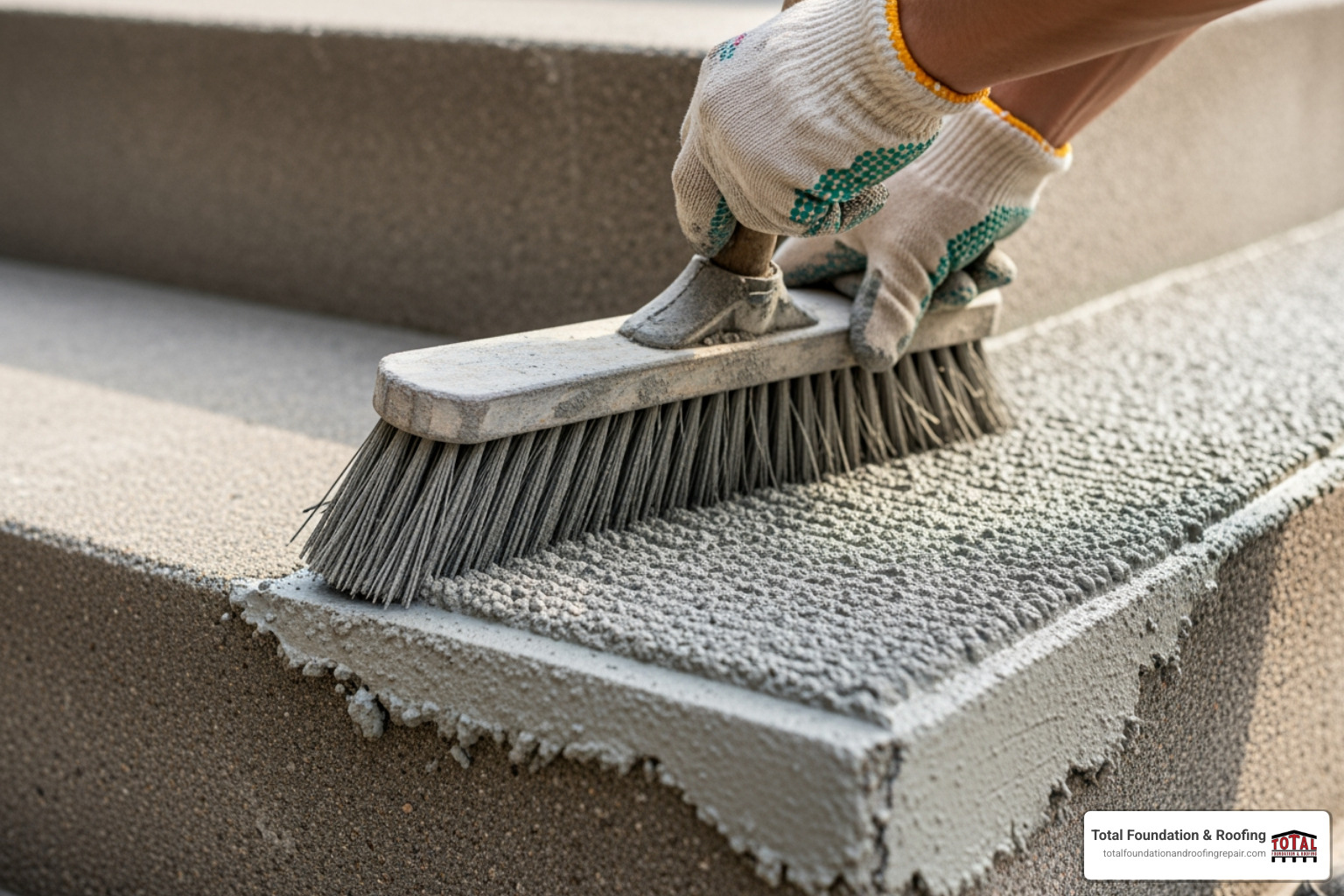
- Create a Non-Slip Texture: Once the patch is “thumb-print dry” (firm but still workable), gently drag a stiff broom or masonry brush across the surface. This creates a safe, non-slip finish that matches most existing concrete.
- Edge the Patch: Use a concrete edging tool to create a clean, rounded edge that blends with the original step.
For a visual demonstration of finishing techniques, this video offers excellent guidance: Watch this video on finishing techniques.
Curing the Patch:
Curing is critical for the strength and durability of your patch. It’s about controlling the drying process to allow the concrete to gain maximum strength.
- Keep it Moist: In hot or windy conditions, keep the patch damp for 24-48 hours by lightly misting it with water or covering it with a plastic sheet. This prevents it from drying too quickly and cracking.
- Protect from Traffic: Keep all foot traffic off the repaired area for at least 24-72 hours, depending on the product’s instructions.
- Remove Forms: For quick-setting cements, you can typically remove any wooden forms after 20-40 minutes.
Beyond the Patch: Maintenance and Professional Help
Even a perfect patch needs ongoing care, and sometimes a small crack signals a bigger problem. Knowing when to DIY and when to call a professional can save you time, money, and prevent safety hazards.
Common Mistakes to Avoid When Patching Concrete Steps
Even a simple patch can fail if not done correctly. Avoid these common DIY mistakes when patching concrete steps:
- Improper Surface Prep: Failing to remove all loose debris, dust, and unsound concrete will cause the patch to fail.
- Incorrect Water-to-Mix Ratio: Too much water weakens the patch. Follow the manufacturer’s instructions precisely for a peanut butter-like consistency.
- Applying to a Dry Surface: Dry concrete pulls moisture from the new patch, causing it to crack and bond poorly. Always dampen the area first.
- Over-working the Surface: Excessive troweling can weaken the surface. Smooth it, texture it, and let it be.
- Skipping the Curing Process: A patch that dries too fast is a weak patch. Keep it moist and protected from traffic for at least 24 hours.
- Using the Wrong Material: A small crack filler can’t fix a large hole. Match the product to the size and type of damage.
When to Repair vs. When to Replace Your Steps
While patching concrete steps is great for many issues, some problems require a professional. Here’s how to tell the difference.
When to DIY Repair:
- Minor Chips & Spalling: Surface-level damage less than half an inch deep is ideal for patching compound.
- Small, Non-Structural Cracks: Hairline cracks can be sealed with masonry crack filler.
- Crumbling Corners: If the main step is solid, you can rebuild corners with quick-setting cement and a form.
When to Call a Professional:
- Deep, Growing Fractures: Cracks that run deep into the concrete or are getting wider indicate a structural problem.
- Uneven or sinking steps: If your steps are tilting or have settled, it points to a foundation or soil issue that requires professional concrete leveling.
- Widespread Damage: If more than a third of the steps are deteriorating, replacement is often more cost-effective than patching.
- Separation from the House: A significant gap between your steps and the foundation is a serious structural concern.
- Constant Re-Patching: If repairs fail quickly, the underlying concrete may be too degraded for patching to be a long-term solution.
For significant issues in the Kerrville, TX area and throughout the Texas Hill Country, including Fredericksburg and Comfort, a professional assessment provides peace of mind. As a professional concrete contractor, Total Foundation & Roofing offers expert evaluations to determine whether repair or replacement is the best solution for your budget and safety. If you’re uncertain about the extent of your concrete damage or are dealing with any of the warning signs above, contact us for an honest assessment. Learn more about our professional crack repair services to see how we tackle even the most challenging concrete problems.