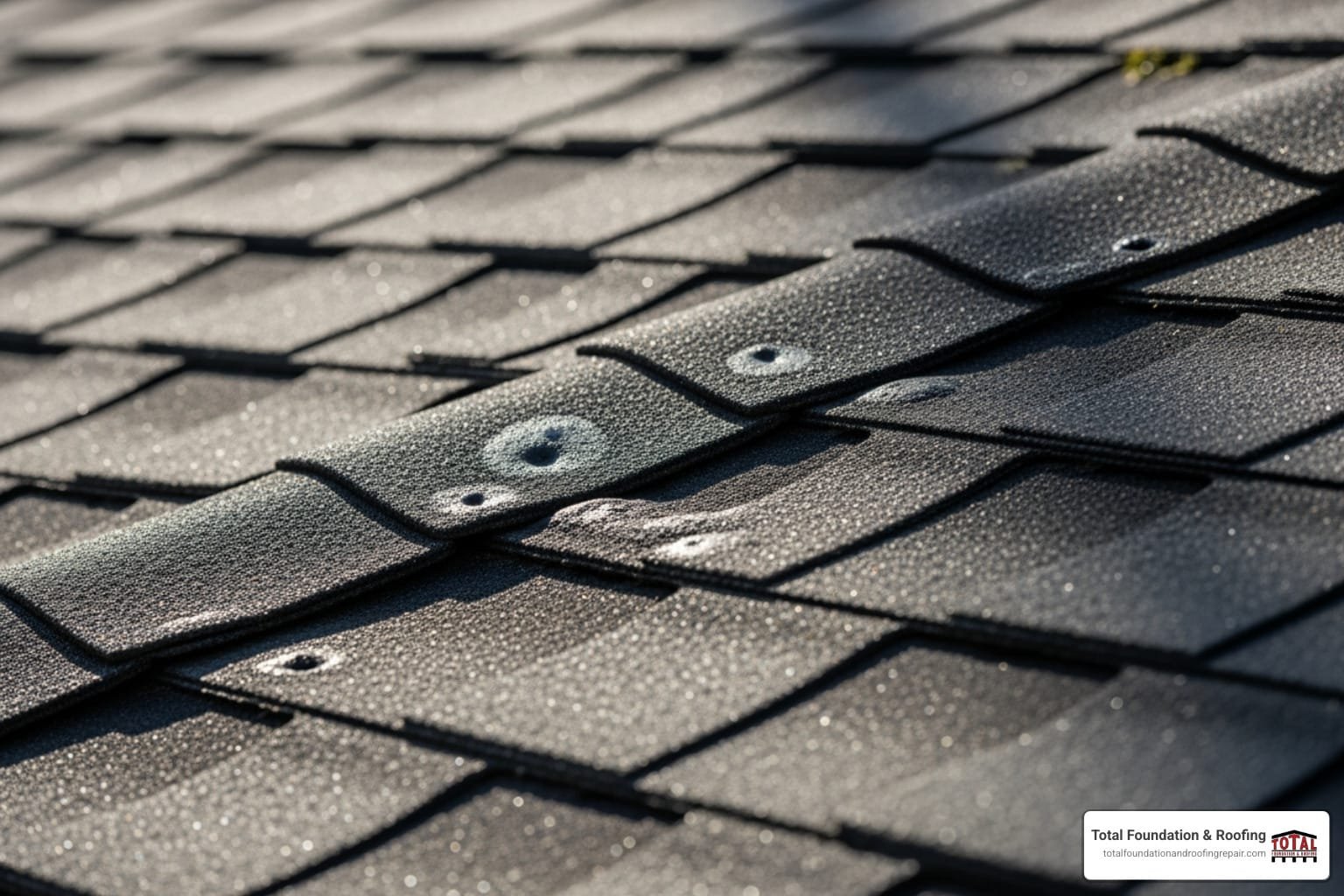

Why Immediate Action During Wet Weather Roof Leaks Is Critical
Flat roof repair in wet weather is one of the most urgent challenges a property owner can face. When rain is actively leaking through your roof, you need to act fast, but correctly. The experts at Total Foundation & Roofing have seen how the wrong move can make things worse. Property owners in the Texas Hill Country rely on trusted roofing professionals in Kerrville to distinguish between safe temporary measures and long-lasting solutions that protect their building for years.
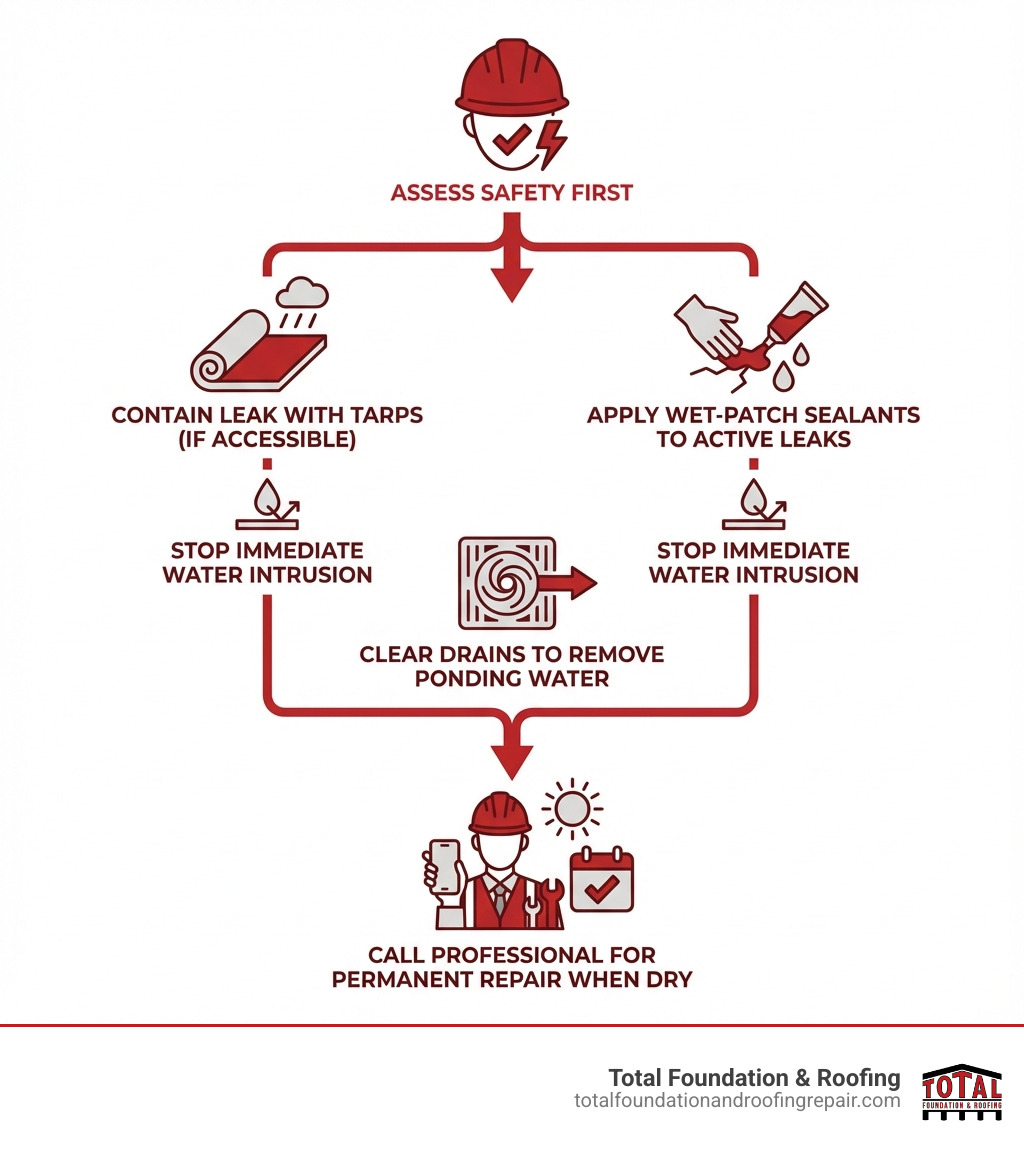
- Emergency Repairs: Temporary containment with tarps and specialized wet-patch sealants can stop immediate water intrusion.
- Permanent Repairs: Most roofing adhesives and membranes require dry surfaces to bond correctly, making permanent fixes in the rain impossible.
- Professional Assessment: Always recommended for safety, accurate diagnosis, and warranty protection.
- Timeline: Temporary fixes provide a short-term solution for hours or days; permanent repairs must wait for dry weather.
The fact is, attempting a permanent repair on a wet roof is a recipe for failure. Rain interferes with adhesion and traps moisture, leading to mold, rot, and structural decay. However, inaction is not an option. Effective temporary measures can secure your property until a professional contractor can implement a lasting solution.
The Dangers and Challenges of Wet Weather Flat Roof Work
A flat roof repair during rainfall is not a standard procedure. Moisture introduces significant risks to the structure and the person performing the repair. Attempting a fix without understanding these challenges can lead to failed repairs, voided warranties, and severe safety hazards. The primary goal is to stop water from entering the building’s interior, where it can damage drywall, insulation, and structural components.
Safety First: The Non-Negotiable Risks of Working on a Wet Roof
Working on a wet roof multiplies the inherent dangers of roofing. Wet surfaces are notoriously slippery, dramatically increasing the risk of falls, a leading cause of injury in the construction industry. Professional roofers follow strict NRCA safety guidelines to manage these hazards, which is why DIY repairs in the rain are strongly discouraged.
Key risks include:
- Slippery Surfaces: Water, moss, and debris create a treacherous environment.
- Electrocution Risk: Standing water near electrical equipment or tools is a deadly combination.
- Unstable Footing: Water can compromise the roof’s structural integrity, creating weak spots that are unsafe to walk on.
Homeowners and facility managers who need urgent help during storms often turn to specialized emergency roof repair services instead of risking unsafe DIY work.
How Rain Compromises Flat Roofing Materials and Adhesion
Rain is the enemy of proper roofing material adhesion. Most roofing products, from membranes to sealants, require a clean, dry surface to bond effectively. Applying them in the rain leads to failure.
Here’s how rain impacts repairs:
- Adhesive Failure: Tar, caulk, and glues do not stick to wet surfaces, resulting in weak seams and patches that will not hold.
- Saturated Insulation: Insulation that gets wet loses its R-value and no longer insulates properly, driving up energy bills.
- Warped Decking: Wooden roof decking can swell and warp when wet, compromising the roof’s structure and creating an uneven surface.
- Trapped Moisture: Any moisture trapped under a new patch will cause blistering, delamination, and premature failure of the repair.
This is why permanent repairs must wait for dry conditions, especially after severe weather causes flat roof storm damage. Industry leaders such as GAF emphasize dry, clean substrates as a non-negotiable requirement for warranty-backed installations.
Long-Term Consequences of Improper Wet Weather Repairs
An improper repair in the rain can cause more severe and costly problems than the original leak. Trapping moisture under a patch guarantees future issues.
The long-term consequences include:
- Mold and Mildew: Trapped moisture creates a breeding ground for mold, which can spread into the building and cause health issues.
- Structural Rot: Constant moisture will rot wooden components, weakening the roof structure and potentially leading to collapse.
- Chronic Leaks: A poor patch will fail, leading to recurring leaks and ongoing frustration.
- Higher Future Costs: A quick fix often results in the need for a complete roof replacement, significantly increasing the total roof repair cost. It is more cost-effective to do it right once conditions are dry.
For commercial properties, ignoring these long-term risks can also shorten the lifespan of investments in commercial roofing services, leading to premature capital expenses.
5 Proven Methods for Flat Roof Repair in Wet Weather
While a permanent repair must wait for dry weather, immediate action is necessary to prevent interior damage. These methods range from temporary emergency measures to the final professional solution, providing a clear path forward when dealing with a leaking flat roof during a storm in areas like Kerrville, Fredericksburg, and Comfort, TX.
Method 1: Emergency Tarping and Temporary Containment
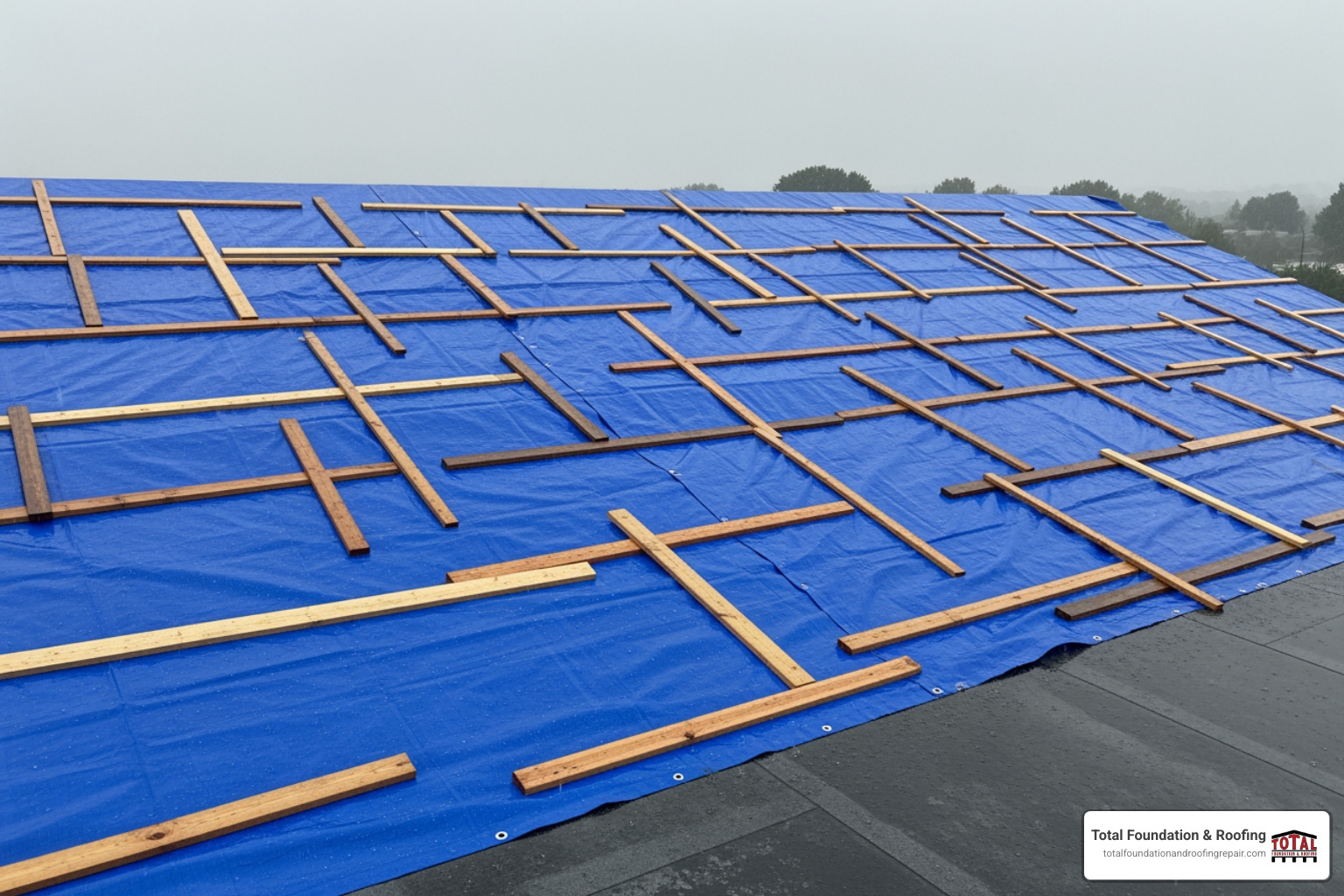
When a leak appears during a downpour, immediate containment is the first line of defense. The most effective immediate action is to cover the damaged area with a heavy-duty tarp. This is a critical step in any emergency roof repair and can prevent thousands of dollars in interior water damage.
Key steps for tarping:
- Size: The tarp must extend several feet beyond the leak on all sides to divert water flow.
- Secure: Use sandbags or wood planks to weigh the tarp down and prevent it from blowing away in high winds.
- Direct Water Flow: Position the tarp so water flows over it and away from the leak, not underneath.
This method buys valuable time and protects your property’s interior.
Method 2: Applying Wet-Application Sealants and Patches for flat roof repair in wet weather
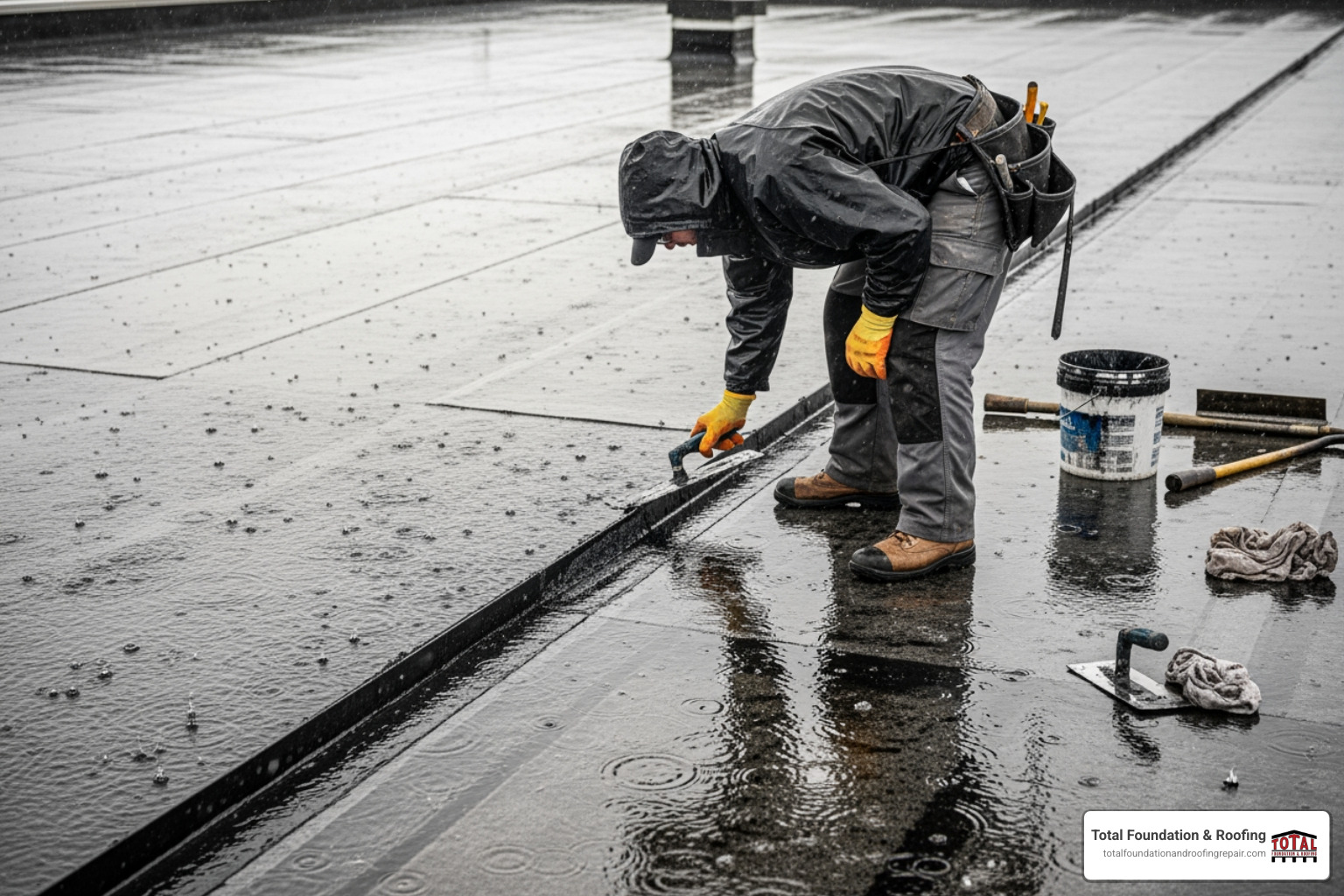
While most sealants fail on wet surfaces, professional-grade materials are specifically designed for wet or even underwater application. These products are invaluable for a temporary flat roof repair in wet weather.
Examples include:
- Butyl-based sealants: Highly adhesive materials that can bond to wet surfaces.
- Rubberized flashing cement: A flexible material for sealing small cracks and holes in wet conditions.
- Peel-and-stick patches: Advanced membranes designed to adhere to damp surfaces for a quick patch.
For best results, remove as much standing water as possible before applying these products generously to create a strong, temporary bond. These are temporary fixes designed to stop an active leak until a permanent flat roof leak repair can be performed. Manufacturers and associations such as the Roofing Contractors Association of Texas consistently remind owners that wet-applied products are stopgap measures, not substitutes for full-system repairs.
Method 3: Clearing Drains and Removing Ponding Water
Ponding water—water that accumulates on a roof for more than 48 hours—is a primary cause of flat roof leaks. The weight and constant pressure can force water through the smallest imperfections.
- Identify the Cause: Ponding is usually caused by drains, scuppers, or gutters clogged with leaves, branches, and other debris.
- Take Action: If it is safe to access the roof, clearing this debris can allow water to drain, relieving pressure on the membrane and potentially stopping the leak.
Ensuring proper drainage is a key part of routine maintenance for both residential and commercial roofing services and helps extend the life of your roof. For some larger facilities, periodic inspections may be bundled with broader roof repair services to catch these issues before major storms.
Method 4: Interior Water Diversion
If you cannot stop the leak from the outside, the next step is to manage the water inside to prevent damage to your interior.
- Containment: Place a bucket or trash can directly under the drip.
- Prevent Splashing: To avoid splashing and noise, hang a string from the ceiling into the bucket. Water will run silently down the string.
- Protect Valuables: Move furniture, electronics, and other valuables away from the leak, or cover them with plastic sheeting.
This strategy minimizes immediate damage while you wait for professional roof leak detection services. For repeat leaks in the same area, many owners schedule full roof inspections and maintenance to address underlying causes instead of relying on interior diversion alone.
Method 5: Professional Assessment and Permanent flat roof repair in wet weather
While the above methods provide temporary relief, the only long-term solution is a professional, permanent repair performed in dry conditions.
Why a professional is essential:
- Expert Diagnosis: An experienced contractor can find the true source of the leak, which is often not directly above the interior drip. We use tools like thermal imaging to detect roof leaks to find hidden moisture.
- Safety and Equipment: Professionals have the training and safety gear to work on damaged roofs without risk.
- Material Knowledge: We know the correct materials and application methods for your specific roof type (TPO, EPDM, Modified Bitumen).
- Warranty Protection: A professional repair includes a workmanship warranty. DIY repairs can void existing manufacturer warranties.
Call a professional for your flat roof repair in wet weather if you see extensive damage, multiple leaks, or structural sagging. Property owners in Kerrville, Fredericksburg, and Comfort typically start with a comprehensive inspection and then schedule permanent repairs once the roof and substrate are fully dry.
For ongoing protection, many owners also coordinate flat roof work with broader roof replacement planning, ensuring the system meets current performance and storm-resistance standards.
The Impact of Rain on Flat Roof Project Timelines and Costs
Rain, especially the unpredictable downpours in the Texas Hill Country, significantly impacts flat roof project timelines and costs. While we can perform emergency containment in wet weather, permanent repairs and installations must wait for dry conditions.
- Delays: Rain forces work to stop and start, extending project timelines. This can be frustrating for property owners eager to resolve the issue.
- Increased Labor Costs: Emergency repairs in hazardous weather may incur higher labor costs due to the increased risk and specialized procedures.
- Material Waste: Attempting to install materials in wet conditions can lead to failure, requiring costly re-work and wasted products.
- Indirect Costs: Delays in permanent repairs can lead to further interior damage from the leak, adding to the overall project cost.
Our team communicates transparently about how weather in Fredericksburg and Comfort, TX, might affect your project, ensuring you are always informed while we prioritize quality and safety. When planning larger projects, we also help compare the cost-benefit of phased roof repair and replacement strategies so owners can budget realistically around seasonal weather patterns.
Can Specific Flat Roofing Materials Be Repaired in the Rain?
For permanent repairs, the answer is almost always no. Most flat roofing materials, including TPO, EPDM, and Modified Bitumen, require dry surfaces for proper adhesion and welding.
- TPO and PVC Membranes: These materials are joined by heat-welding the seams. Welding cannot be performed safely or effectively in the rain, as moisture results in weak, compromised seams that will fail.
- EPDM (Rubber) Membranes: While some liquid EPDM patches can be applied to damp surfaces for a temporary fix, a full repair or installation requires a dry substrate for the adhesive to cure and create a durable bond.
- Modified Bitumen: This material often uses torch-down or hot asphalt applications, which are extremely hazardous and ineffective in wet conditions. Even cold-applied systems need a dry surface for optimal adhesion.
For any of these materials, temporary wet-application sealants can provide a short-term fix. However, the integrity of your roof depends on following manufacturer specifications, which universally require dry conditions for permanent installation and repairs. Homeowners who want material-specific guidance can also consult technical resources from major manufacturers like Owens Corning alongside the recommendations of local roof repair experts.
Conclusion: Don’t Let Wet Weather Wash Away Your Roof’s Integrity
Dealing with a flat roof leak during a storm is stressful, but it does not have to be a disaster. The key is understanding the difference between temporary containment and permanent repair. While immediate action is vital to protect your property’s interior, attempting a permanent flat roof repair in wet weather creates safety risks, compromises materials, and leads to more costly long-term problems.
This guide has outlined proven methods for temporary relief, from emergency tarping to clearing drains and managing interior water. However, the only lasting solution is a professional assessment and a permanent repair performed in dry conditions by experienced experts.
At Total Foundation & Roofing, we are committed to providing certified, high-quality workmanship custom to the unique conditions of the Texas Hill Country. Our team is equipped to handle emergency needs safely and then follow up with durable solutions, whether that means targeted roof repair services, proactive emergency roof repair, or full roof replacement. For reliable roofing services and expert flat roof repair in wet weather throughout Kerrville, Fredericksburg, and Comfort, TX, trust the professionals at Total Foundation & Roofing for a comprehensive inspection and a detailed estimate.