
Why Flat Roofs Are Uniquely Vulnerable to Storms
Flat roof storm damage can turn a minor weather event into a major property crisis. Unlike sloped roofs that naturally shed water, flat roofs absorb the full impact of severe weather, making them highly susceptible to damage. For property owners in the Texas Hill Country, understanding these vulnerabilities is the first step in protecting your investment with a team specializing in Texas Hill Country roofing and foundation repair.
Common types of flat roof storm damage include:
- Wind Damage – Membrane uplift at corners and edges, especially at wind speeds over 50 mph
- Hail Impacts – Direct punctures, cracks, and granule loss on all material types
- Ponding Water – Standing water that remains for more than 48 hours after rain
- Membrane Tears – Rips and separations in TPO, EPDM, PVC, or modified bitumen
- Drainage Failure – Clogged drains and scuppers leading to water accumulation
- Flashing Damage – Compromised seals around vents, HVAC units, and other penetrations
The Texas Hill Country experiences intense storms that can devastate unprepared flat roofs. Much of this damage isn’t visible from the ground, allowing small problems to escalate into costly structural failures. I’m Daniel Sowell, owner of Total Foundation & Roofing. With over 18 years of experience, I’ve assessed hundreds of cases of flat roof storm damage, from minor hail dings to complete membrane failures. Identifying damage early can save you thousands in repair costs and protect your property.
The Complete Guide to Flat Roof Storm Damage
Flat roofs are a great asset for commercial buildings and modern homes, but their low-slope design makes them vulnerable when Texas storms hit. A seemingly minor weather event can lead to significant flat roof storm damage, turning a calm day into a costly headache if not addressed.
Identifying Common Types of Storm Damage on Flat Roofs
When storms with strong winds, heavy rain, and hail sweep through areas like Kerrville, Fredericksburg, or Comfort, your flat roof takes the full brunt of the impact. At Total Foundation & Roofing, we frequently encounter these key types of storm damage:
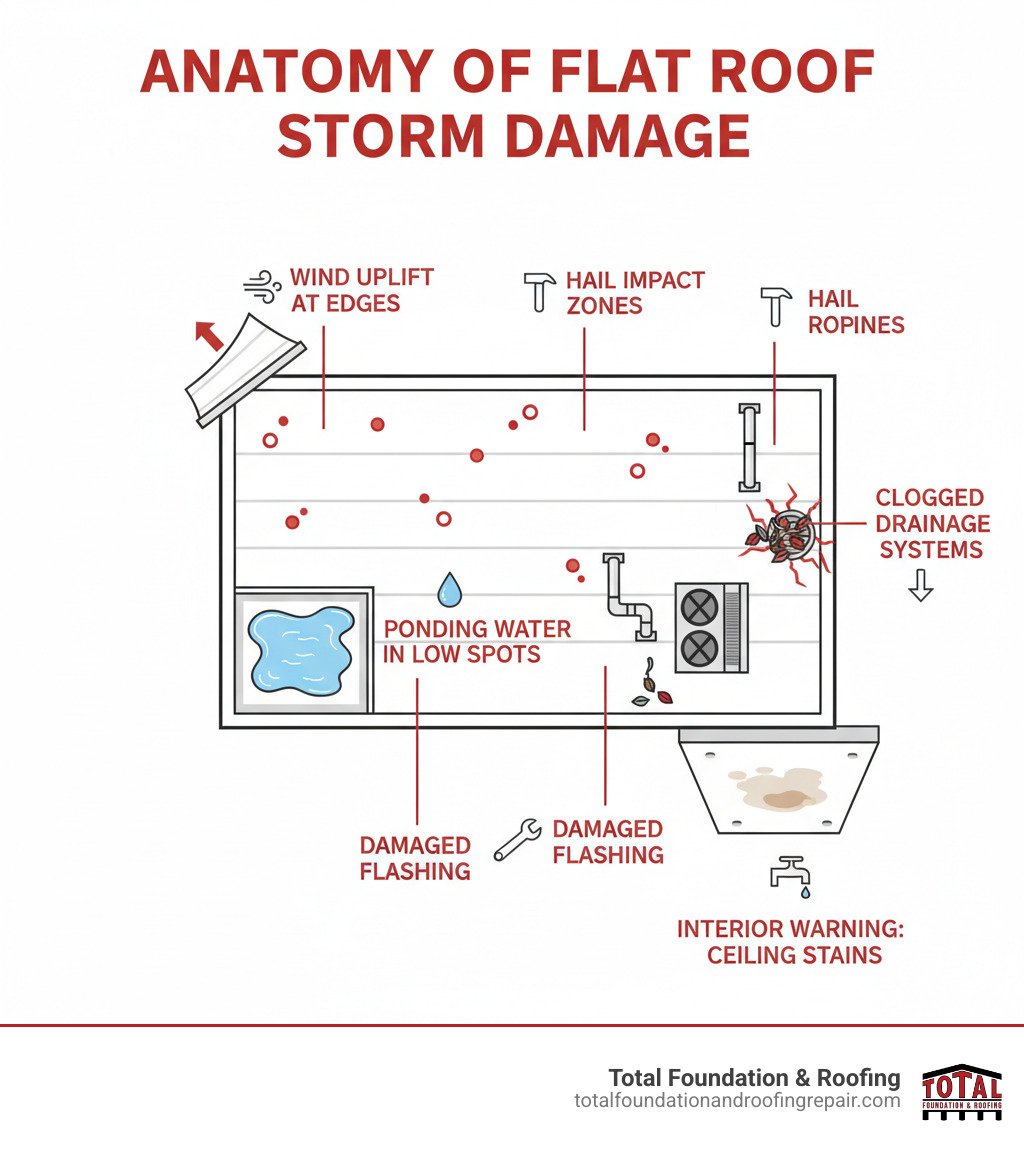
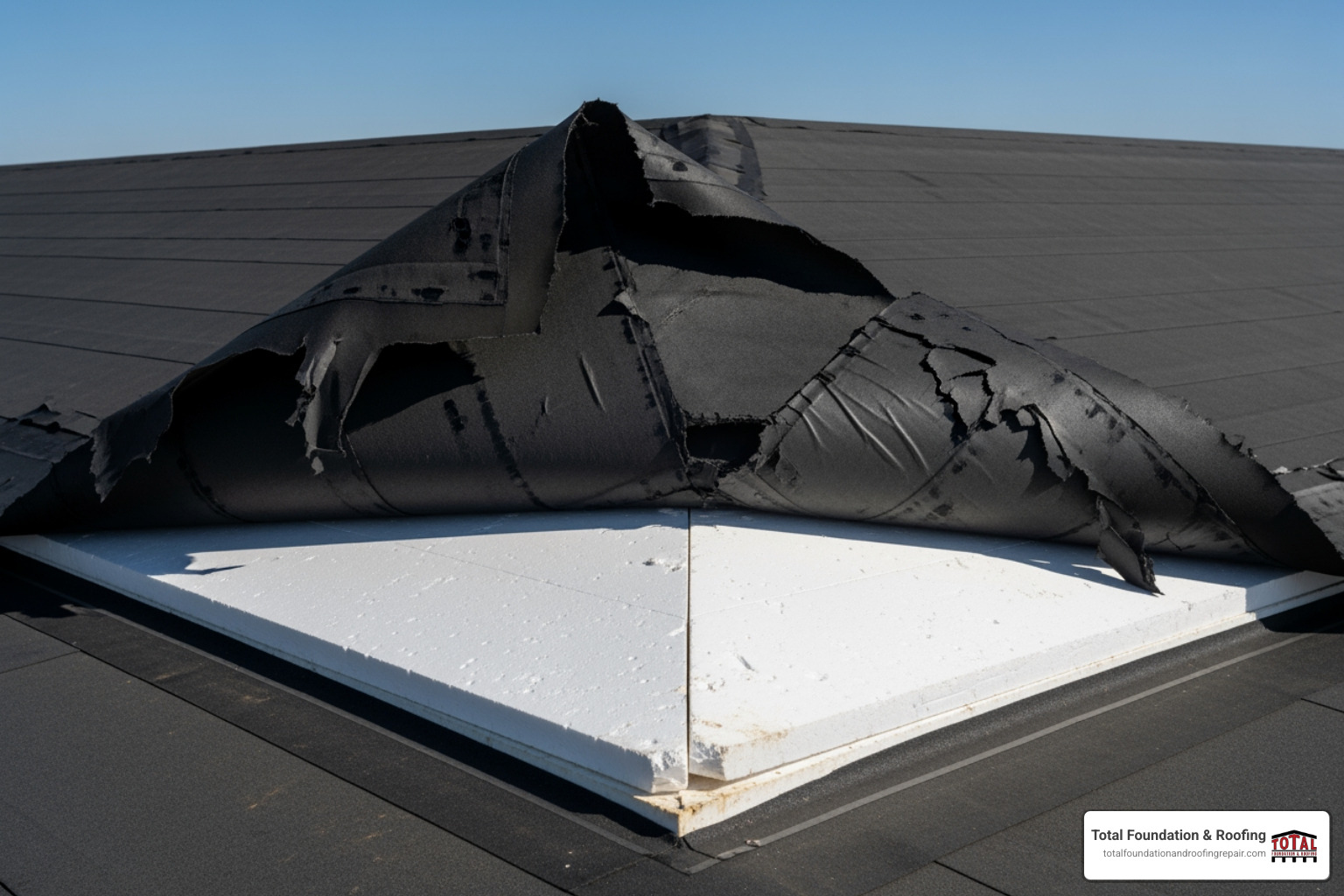
Wind Damage: High winds can catch the edges and corners of a flat roof, causing wind uplift that peels back the membrane. We also see wind scouring, where protective granules are scraped away. According to the National Severe Storms Laboratory, at 50 mph wind speeds, wind damage becomes a significant concern, potentially causing major material tearing.
Hail Damage: Flat roofs receive direct hail hits, which can lead to immediate punctures or fractures in the roofing material. Even small hailstones can create expensive problems on vulnerable or older membranes.
Punctures and Tears: Falling debris, like tree branches, can easily pierce or rip the membrane, creating a direct path for water to enter your building.
Membrane Blistering: Rapid temperature changes during a storm can cause “thermal shock,” worsening blistering. These surface bubbles can crack if ignored, exposing the layers beneath.
Flashing and Accessory Damage: The seals where your roof meets walls, vents, or HVAC units are called “flashing.” High winds or debris can compromise these critical seals, creating easy entry points for water.
How Hail Specifically Impacts Different Roofing Materials
Hail’s impact on your flat roof depends on the material, hail size, and roof age. Here’s how common materials are affected:
| Roofing Material | Common Hail Damage Effects |
|---|---|
| TPO (Thermoplastic Polyolefin) | Punctures, deep dents (craters), and fractures from larger hailstones. While TPO can be impact-rated, severe hail can still compromise its integrity, leading to leaks. |
| EPDM (Ethylene Propylene Diene Monomer) | Tears, punctures, and indentations. EPDM is a flexible rubber membrane, but sharp hail can still cut through it. Hail can also stress and separate seams. |
| PVC (Polyvinyl Chloride) | Fractures, punctures, and dents. Similar to TPO, PVC membranes are durable but can crack or be deeply dented by significant hail impact. Impact-rated versions offer better resistance. |
| Modified Bitumen (Mod-Bit) | Granule loss is the primary concern. Hail can strip away the protective granules from a modified bitumen roof, exposing the asphalt base to UV rays and moisture, drastically shortening the roof’s lifespan. This also accelerates “alligatoring.” |
| BUR (Built-Up Roofing) | Granule loss, dislodged gravel, and cracks. For BUR systems with a gravel surfacing, hail can dislodge the gravel, exposing the underlying asphalt layers. Smaller hailstones can effectively “bruise” the surface, leading to cracks and reduced protection. |
For asphalt-based systems like Mod-Bit and BUR, hail strips away protective granules. This exposes the asphalt base to UV rays and moisture, which accelerates aging and shortens the roof’s lifespan. To properly assess these subtle impacts, consult with expert hail damage roofing contractors who can spot damage an untrained eye might miss.
The Ripple Effect: Ponding Water, Debris, and Biological Growth
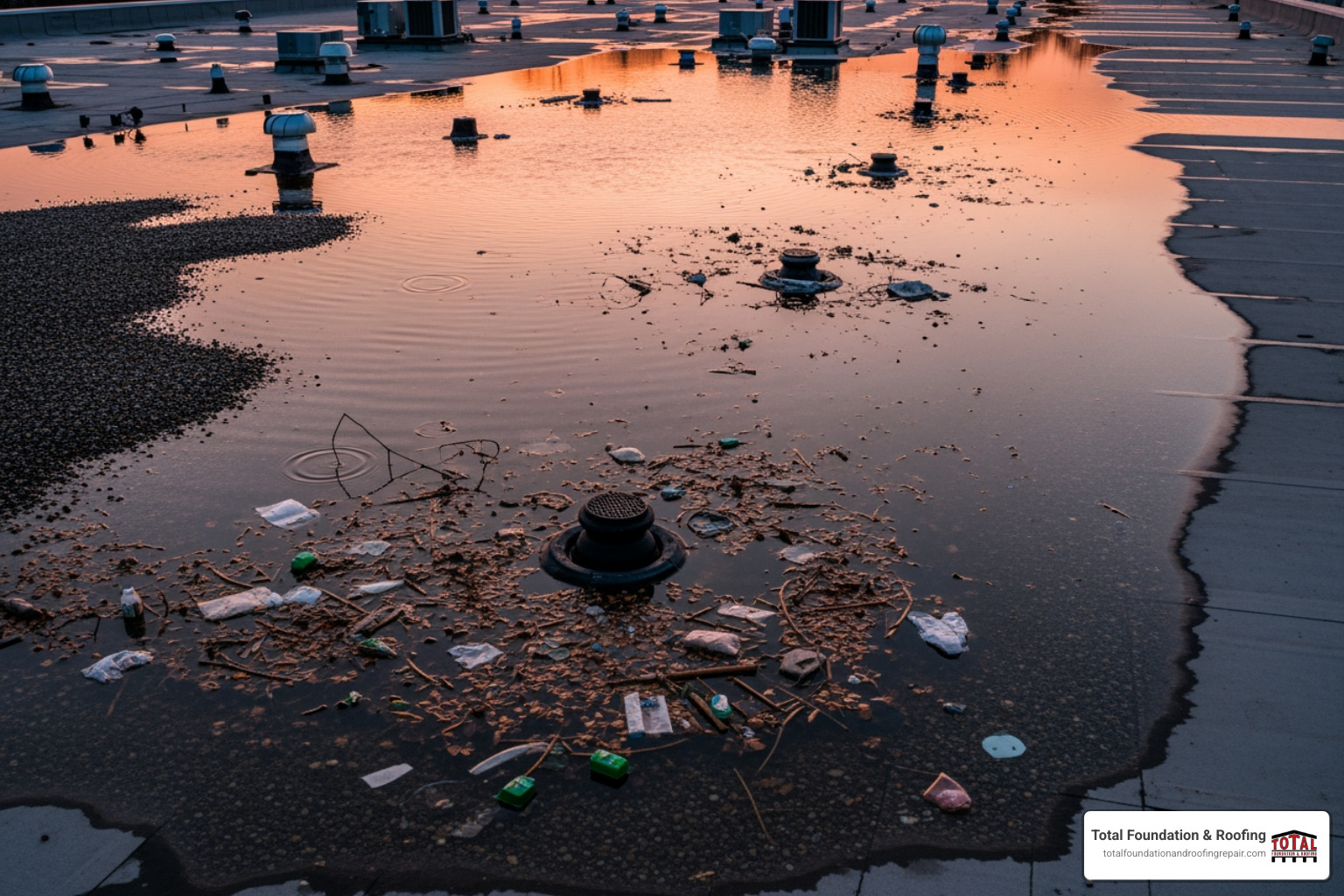
Storm damage often leads to a cascade of secondary issues, starting with water and debris. Storms deposit leaves and branches that clog drains, leading to ponding water. If water stands for over 48 hours, its immense weight can sag the roof deck and accelerate material degradation, causing leaks.
This trapped moisture also creates a perfect breeding ground for algae, moss, and hazardous mold growth. These organic invaders don’t just look bad; they hold moisture against the membrane, further degrading it and potentially compromising your building’s indoor air quality. That’s why regular commercial roof cleaning is a crucial preventative measure.
Interior Warning Signs and Hidden Structural Issues
The first sign of flat roof storm damage may appear inside your building. New water stains on ceilings or walls after a storm are the most obvious sign of a leak. A compromised membrane allows water to seep in, and a small leak can quickly escalate. Our expert roof leak detection services can pinpoint the source.
Other signs include a persistent musty odor or damp walls, which indicate hidden moisture that can lead to mold. In buildings with an accessible attic, an attic water leak is an undeniable sign of roof damage. Look for wet insulation or water pooling on the attic floor.
Storms can also cause thermal shock, where rapid temperature changes make the roof expand and contract. This stresses seams and flashing, creating tiny cracks that allow water to seep in over time. Ignoring these internal clues can lead to significant structural problems.
Your Post-Storm Action Plan: Inspection, Documentation, and Repair
After a storm, a quick and decisive action plan is key to preventing further damage and streamlining insurance claims. Follow these steps:
- Prioritize Safety: Your safety is paramount. Never go on a wet, icy, or potentially damaged roof. Wet surfaces are extremely slippery, and the underlying structure could be compromised and unstable.
- Visually Inspect from the Ground: Walk around the perimeter of your building. Look for obvious signs of trouble like large pieces of debris, visible tears in the membrane, dislodged flashing around vents and edges, or sections of the roof that appear to be peeling or lifted.
- Document All Visible Damage: Use your smartphone to take clear photos and videos of all damage you can see from the ground. Capture both wide shots to show the overall context and close-ups of specific problem areas. This visual evidence is crucial for your insurance claim.
- Check for Interior Leaks: Go inside and thoroughly inspect your ceilings and walls, especially on the top floor. Look for new water stains, damp spots, peeling paint, or bubbling drywall. Also, be aware of any new, persistent musty odors, which indicate hidden moisture.
- Contact a Professional Roofer: We strongly recommend a professional assessment, as critical damage like hail bruises, micro-fractures, or membrane separations is often invisible to the untrained eye. An expert can safely access the roof and use specialized knowledge to identify all points of failure.
Thorough documentation is vital for insurance claims. Keep a detailed log that includes the date and time of the storm, all photos and videos, and receipts for any temporary repairs you have professionally done. We strongly advise against DIY repairs, as they often fail, can void your roof’s warranty, and are extremely dangerous. A professional repair not only fixes the problem correctly but also saves you money in the long run. For urgent issues like active leaks, calling for emergency roof repair is the safest, most cost-effective choice.
An experienced roofer will also help you navigate the decision between a repair vs. replacement. This choice depends on your roof’s age, the extent and type of the damage, and its overall condition. If damage is widespread, affects more than 25-30% of the roof surface, or your roof is already near the end of its warrantied lifespan, a full replacement is often the most financially sound long-term solution.
Prevention and Preparedness: Fortifying Your Flat Roof
The best way to handle flat roof storm damage is to prevent it. Proactive steps can significantly reduce your roof’s vulnerability to Texas Hill Country weather.
A routine preventative maintenance plan is the cornerstone of a long-lasting flat roof. This plan should include semi-annual clearing of all drains, scuppers, and gutters to prevent ponding water, which is a flat roof’s primary enemy. It also involves inspecting all seams, flashing, and penetration seals for signs of wear, cracking, or separation. Before a known storm is forecast, it’s wise to do a quick check to ensure rooftop equipment is secure and remove any loose debris that could become a projectile in high winds.
Schedule professional inspections at least twice a year—once in the spring and once in the fall—and always after a major storm event. A trained professional can spot subtle signs of stress or damage that an untrained eye would miss, allowing you to address minor issues before they escalate into major leaks. A well-maintained drainage system is non-negotiable for low-slope roofs; ensuring it is clear and functioning at full capacity is one of the most important preventative tasks.
When it’s time for a replacement, consider upgrading to impact-rated materials. Modern roofing technology offers excellent options for storm-prone regions. Many TPO and PVC membranes, like GAF’s EverGuard Extreme® TPO or products from other leading manufacturers like Carlisle SynTec Systems, are specifically engineered to withstand hail and punctures. These advanced systems are a key component of our commercial roofing services. For property owners in the Kerrville area, investing in a resilient roofing system is a non-negotiable part of protecting your commercial or residential investment.
Secure Your Investment with Professional Storm Damage Repair
Ignoring or improperly repairing flat roof storm damage leads to severe consequences. A small crack or ponding water can escalate into chronic leaks, widespread mold, and structural failure. This results in waterlogged insulation, compromised decking, and expensive interior repairs, ultimately shortening your roof’s life and lowering your property’s value.
In the unpredictable Texas Hill Country climate, professional roof care is essential. Total Foundation & Roofing understands these unique challenges. We offer certified, reliable roof repair with high-quality workmanship to ensure your flat roof stands strong against the elements.
If you suspect your flat roof was damaged in a recent storm, don’t wait for a small problem to become a catastrophe. Reach out to our expert team right away. You can call us directly at (830) 222-2900 or request a free, no-obligation estimate online. Let us help you secure your investment and peace of mind.