
Why Searching for “Slab Raising Near Me” Is the Right First Step
Searching for slab raising near me is one of the smartest moves a homeowner can make when concrete starts sinking, cracking, or creating dangerous trip hazards on their property. Before you commit to the massive expense and headache of a full concrete replacement, it is essential to consult with a professional team like Total Foundation & Roofing Repair to explore faster, more affordable restoration solutions. In many cases, your existing concrete is perfectly salvageable; it simply lacks the support it needs from the soil beneath it. By addressing the root cause of the settlement rather than just the surface symptoms, you can save thousands of dollars and avoid the weeks of mess associated with traditional construction projects.
Quick answer — what to do when you need slab raising:
- Identify the problem — Look for sunken, uneven, or cracked concrete on driveways, patios, sidewalks, or pool decks. Pay close attention to areas where water pools or where the slab has pulled away from the foundation of your home.
- Call a local slab raising contractor — A professional can assess whether lifting is possible. Most settled slabs qualify for raising as long as the concrete itself hasn’t crumbled into small, unmanageable pieces.
- Get a free on-site estimate — Pricing for slab raising is typically $3–$8 per square foot, which represents a massive saving of 50–70% over the cost of full concrete replacement.
- Schedule the repair — Most residential jobs are completed in just a few hours. Unlike new concrete, which requires days of curing, slab raising provides immediate results.
- Use the surface right away — Modern polyurethane foam repairs cure in as little as 15 to 30 minutes, allowing you to park your car or host a backyard barbecue the same afternoon.
Slab raising — also called slabjacking or concrete lifting — restores sunken concrete to its original position by injecting specialized material beneath the slab to fill voids and lift it back into place. It is faster, less disruptive, and far less expensive than tearing out and pouring new concrete. For homeowners in the Texas Hill Country, where shifting soils and moisture fluctuations are constant challenges, professional concrete and foundation services like slab raising are a practical first line of defense against worsening structural damage.
I’m Daniel Sowell, owner and operator of Total Foundation & Roofing Repair in Kerrville, Texas. With over 18 years of hands-on experience, I have helped countless homeowners find the right slab raising near me solutions tailored to their specific soil conditions and budgets. In this guide, I’ll walk you through the science, the costs, and the long-term benefits of this innovative repair method.
Slab raising near me terms made easy:
The Science and Process of Concrete Restoration
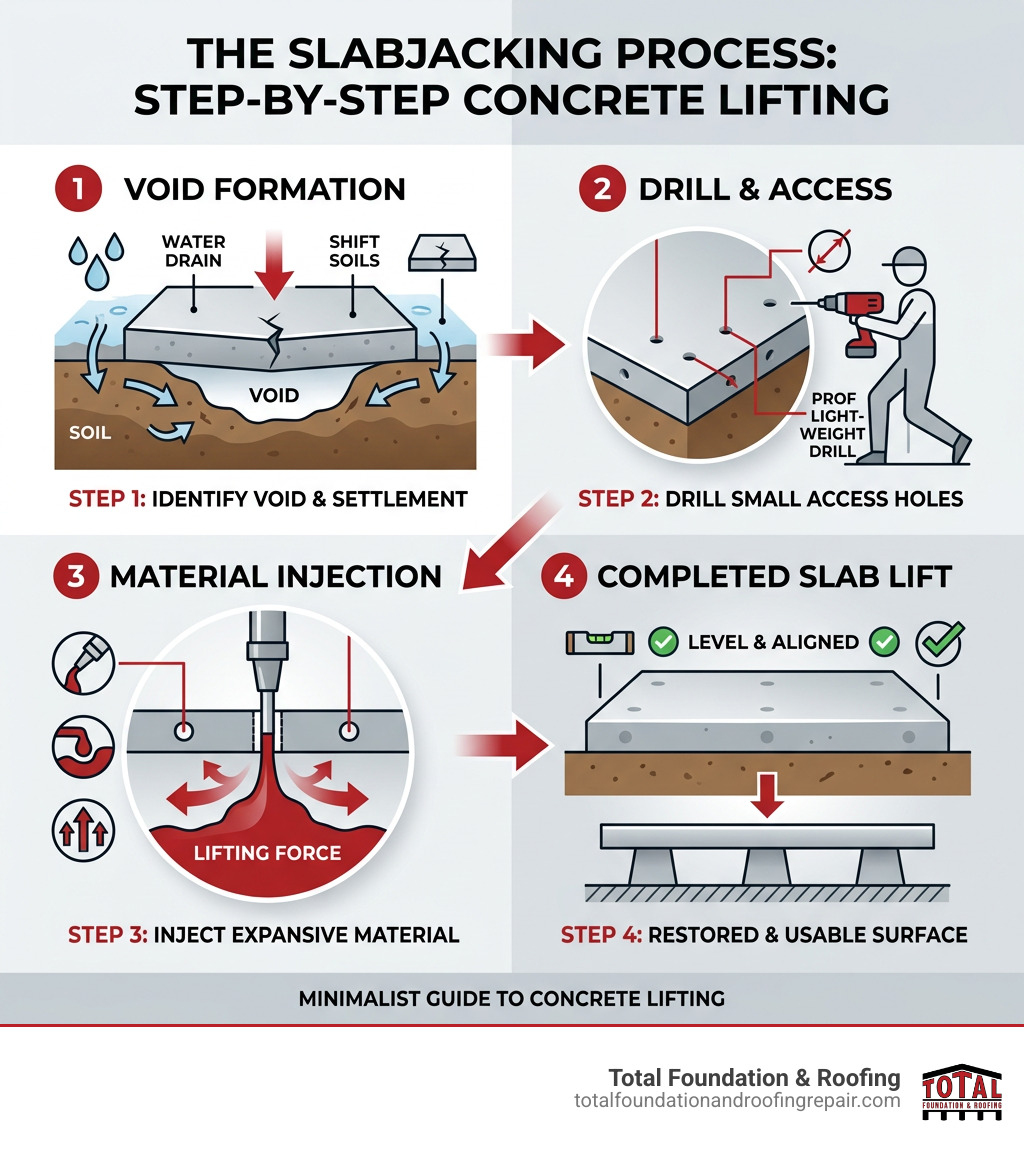
At its core, slab raising is a mechanical process driven by pressure and material expansion. When we arrive at a property in Kerrville or Fredericksburg, we aren’t just looking at a “crooked sidewalk.” We are analyzing a failure of the subgrade—the soil layers beneath the concrete. Over time, gaps or “voids” form due to erosion, soil shrinkage, or poor initial compaction. If those voids aren’t filled, the heavy concrete slab has no choice but to succumb to gravity and sink. According to the American Concrete Institute (ACI), maintaining the integrity of the subgrade is the most critical factor in the longevity of any concrete structure.

The restoration process involves drilling small, penny-sized holes into the sunken slab in a strategic pattern. We then use specialized Concrete Slab Lifting Equipment to inject a material—either a cement-based slurry or high-density polyurethane foam—into those holes. As the material fills the voids, it creates an upward force that precisely lifts the slab back to its original design alignment. This process is highly controlled, allowing technicians to lift slabs within a fraction of an inch of their target height.
This method is considered “non-invasive” because it doesn’t require heavy demolition equipment, jackhammers, or the tearing up of your lawn. Once the slab is level, we patch the small drill holes with a concrete mixture that blends in with your existing surface. The result is a stable, permanent repair that restores both the structural integrity and the aesthetic value of your property without the environmental waste of hauling old concrete to a landfill.
How Slab Raising Near Me Works: Polyurethane vs. Mudjacking
When you look for slab raising near me, you will likely encounter two primary methods: traditional mudjacking and modern polyurethane injection (often called “poly-jacking”). While both aim to achieve the same result, the materials and long-term performance differ significantly. Understanding these differences is key to choosing the right solution for your home.
| Feature | Polyurethane Injection | Traditional Mudjacking |
|---|---|---|
| Material | High-density expanding foam | Cement, soil, and sand slurry |
| Hole Size | 5/8 inch (size of a penny) | 1 to 2 inches (size of a soda can) |
| Weight | ~2 lbs per cubic foot | ~100+ lbs per cubic foot |
| Cure Time | 15–30 minutes | 24–72 hours |
| Durability | Waterproof; won’t wash away | Can erode or shrink over time |
Polyurethane is often the superior choice for the Texas Hill Country. Because the foam is lightweight (weighing only about 2 lbs per cubic foot), it doesn’t add significant stress to the already unstable or weak soil. Furthermore, it is completely waterproof. In areas like Comfort or Kerrville, where heavy rains can lead to rapid erosion, polyurethane remains stable while traditional mudjacking slurries might eventually wash out or shrink. The chemical reaction that creates the foam allows it to expand into even the smallest crevices, ensuring 100% coverage of the void.
The expansion force of the foam is incredibly precise. Plus, with a 30-minute cure time, you can drive your car over a repaired driveway almost immediately after we finish. For more technical details, you can explore our guide on Concrete Leveling with Foam Injection. You can also check Verified Slabjacking Contractor Ratings to see how these methods hold up in professional industry standards.
Comparing Costs and Benefits of Slab Raising Near Me
The most compelling reason to choose slab raising over replacement is the impact on your wallet. On average, homeowners see 50% to 70% savings when they choose to lift rather than replace. To put that into perspective, the cost of mudjacking or poly-jacking typically ranges from $3 to $8 per square foot, whereas replacing that same concrete can cost between $6 and $14 per square foot when you factor in demolition, disposal fees, and the cost of the new pour.
Beyond the initial price tag, consider these benefits:
- Time Savings: Most projects are completed in a few hours. Replacement takes days of noise, dust, and waiting for the new concrete to cure.
- Landscape Preservation: We don’t need to bring in bobcats or dump trucks that tear up your grass, flower beds, and irrigation systems.
- Immediate ROI: Level concrete instantly removes trip hazards, which is vital for homeowners’ insurance compliance and property value. Many insurance companies will actually require these repairs to maintain coverage if an inspector identifies a trip hazard.
If you are curious about the specific investment for your property, you can Request Local Concrete Quotes or view our detailed breakdown of Concrete Lifting Cost.
Common Causes of Concrete Settling
Why does concrete sink in the first place? In our experience serving the Texas Hill Country, there are a few usual suspects that homeowners should be aware of:
- Soil Erosion: Water from leaky gutters or poor drainage washes away the soil beneath the slab, creating a hollow space. This is especially common near downspouts.
- Poor Compaction: If the ground wasn’t properly packed down before the concrete was poured, it will naturally settle over the first few years as the weight of the slab compresses the loose dirt.
- Clay Shrinkage: Our local soils often have high clay content. During Texas droughts, this clay shrinks and pulls away from the concrete, leaving it unsupported. When the rains return, the clay expands, creating a cycle of movement.
- Tree Roots and Pests: While roots can push concrete up, they can also die off and leave large voids. Similarly, groundhog burrows or ant colonies can undermine a slab’s foundation over time.
Understanding these triggers is the first step in prevention. Our Sinking Concrete Guide 2025 offers a deep dive into how environmental factors specifically affect Texas properties.
Choosing the Best Local Concrete Leveling Experts
When you start looking for slab raising near me, you want a partner who understands the local geography and climate. A contractor from a different region might not realize how the intense heat and specific soil types in Kerrville or Fredericksburg affect the longevity of a repair. Local expertise ensures that the materials used are rated for our specific environmental stressors.
Residential and Commercial Applications
Slab raising isn’t just for small sidewalk cracks. We apply these techniques to a wide variety of surfaces across both residential and commercial sectors:
- Residential: Driveways, patios, pool decks, garage floors, and front porches. We can even level interior concrete floors before you install new hardwood or tile.
- Commercial: Warehouse floors, retail parking lots, industrial slabs, and loading docks.
For business owners, the “minimal disruption” aspect is key. We can often level a warehouse floor or a storefront sidewalk without requiring the business to close its doors or move heavy inventory. This prevents lost revenue and keeps operations running smoothly. If you’re managing a larger property, check out our Concrete Lifting Services Guide for commercial-grade insights. Whether you need Cement Leveling Near Me for a home walkway or a massive commercial lot, the process remains the most efficient way to restore safety. Organizations like the International Concrete Repair Institute (ICRI) provide excellent resources on the standards for these types of commercial repairs.
What to Look for in Professional Contractors
Not all slab raising companies are created equal. To ensure you’re getting a repair that lasts, look for the following “must-haves”:
- Warranty: Reputable companies should offer a significant warranty against future settling. At Total Foundation & Roofing, we believe in the permanence of our work and stand behind every lift.
- Local Expertise: Choose someone who knows Kerrville local expertise and the surrounding Hill Country. Local contractors are more accountable to the community.
- Transparency: You should receive a free, written estimate that explains exactly how many holes will be drilled, what material will be used, and how long the process will take.
- Licensing and Insurance: Never let someone drill into your concrete without verifying they are fully insured. This protects you from liability in the rare event of an accident.
If you are also dealing with interior floor sloping or wall cracks, you might need more than just surface leveling. In those cases, searching for Foundation Leveling Near Me is a good way to find comprehensive structural support for the entire building.
Maintenance and Longevity After the Repair
Once we’ve raised your slab, the goal is to keep it there for decades. While the polyurethane foam itself is permanent and won’t degrade, the soil around it can still shift if environmental issues aren’t addressed. Proper maintenance is the key to protecting your investment.
Post-Repair Checklist:
- Seal the Joints: Use a high-quality silicone-based sealant on cracks and joints to prevent water from getting back under the slab. This is the single most important step in preventing future erosion.
- Redirect Water: Ensure your downspouts are carrying water at least five to ten feet away from your concrete surfaces. Consider installing French drains if you have persistent standing water.
- Annual Inspections: Walk your property once a year to look for new signs of settling or cracks. Catching a small problem early is much cheaper than waiting for a major failure.
For a complete look at how to protect your investment, read our Slab Concrete Repair Complete Guide. You can also find helpful home maintenance tips from the National Association of Home Builders (NAHB).
At Total Foundation & Roofing, we pride ourselves on being the go-to experts for Foundation Repair Services / Concrete Leveling in the Texas Hill Country. We’ve saved millions of pounds of concrete from landfills by choosing to raise rather than replace. Ready to fix that trip hazard and restore your property’s value? Don’t wait for the problem to get more expensive. Call us today for a free quote at 830-331-0170. Whether you are in Kerrville, Fredericksburg, or Comfort, we are ready to help you get back on level ground.