
Hail Damage Claim Help for Kerrville Roofs
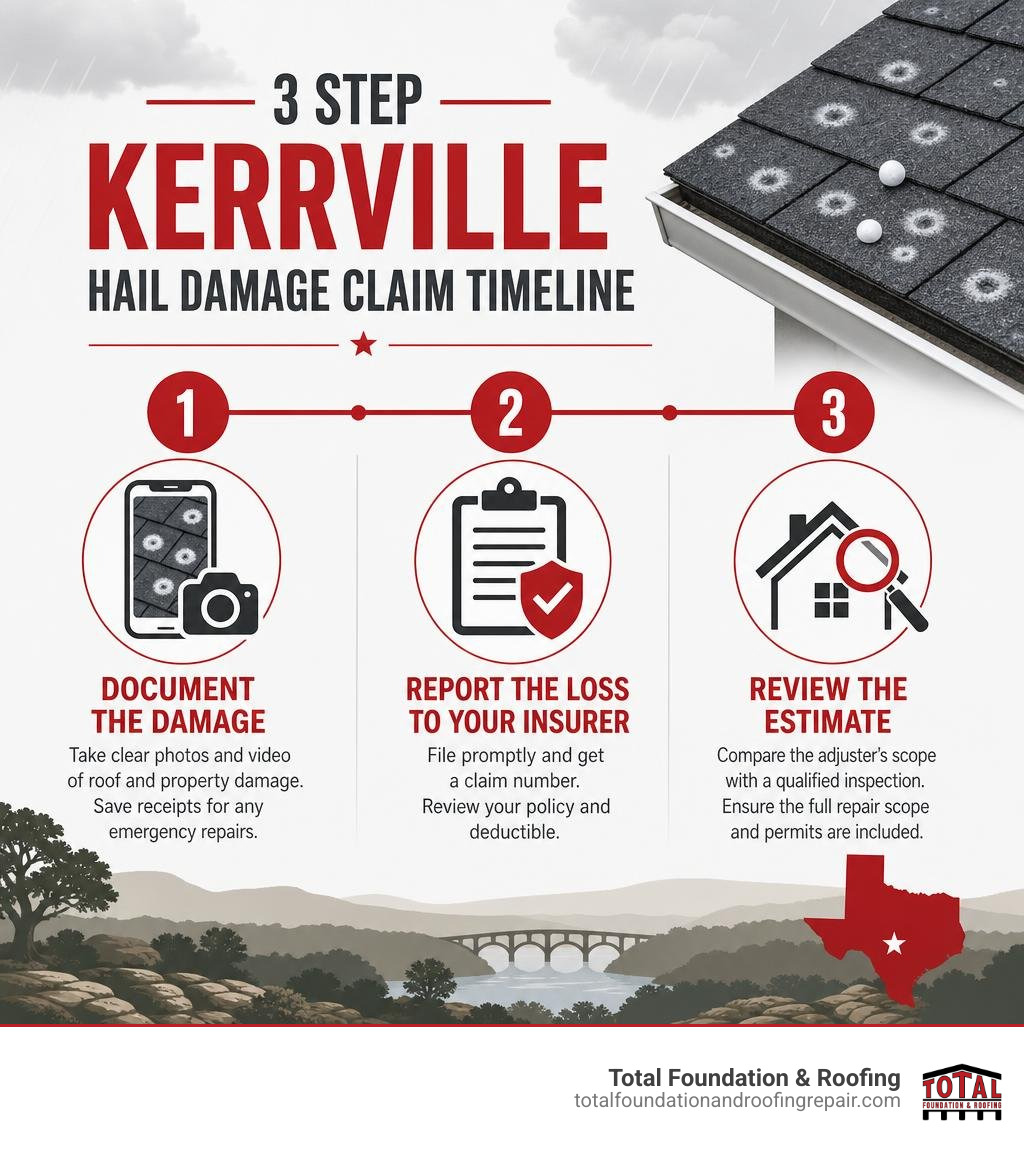
Seeking hail damage claim help in Kerrville after a severe storm requires a fast, structured approach to protect your property investment and secure your insurance benefits. Severe weather across Kerr County often leaves property owners dealing with hidden shingle impact, granule loss, and compromised underlayment that worsen over time if neglected. To ensure your claim covers every necessary repair, homeowners must take key initial steps: document every detail of physical roof damage immediately, report the loss promptly to your insurance carrier, and carefully compare the adjuster’s initial scope of work against a professional contractor’s evaluation. Accessing reliable Texas Hill Country roof repair guidance ensures you understand full restoration scope before permanent construction begins.
- Take clear photos and video of shingles, gutters, vents, screens, and any interior leaks. Save receipts for emergency tarping or drying.
- File promptly and get a claim number. Texas policies often have strict notice deadlines, and your wind/hail deductible applies before coverage pays.
- Review the insurer’s estimate carefully. It should include the full storm-related repair scope and required permits before you authorize replacement.
Kerrville roofs face spring hail and high winds, while Texas Hill Country properties also deal with expansive clay, drought-cycle soil movement, and limestone bedrock. Those local conditions make careful inspections, sound roof repairs, and compliance with Kerr County permit requirements important after a storm.
I am Daniel Sowell, owner of Total Foundation & Roofing, with more than 18 years of construction and roofing experience serving the Texas Hill Country. I provide practical hail damage claim help by helping property owners document roof damage and understand the repair work their claim should address.
Step-by-Step Hail Damage Claim Help for Texas Homeowners
Navigating a storm claim requires structured actions to ensure your policy covers every dollar of legitimate damage. Standard homeowners insurance policies require policyholders to report wind and hail losses within strict timeframes—typically 30 to 90 days following a severe storm event. Failing to report within this reporting window opens the door for insurance carriers to deny coverage based on late notice.
Understanding your policy’s wind and hail endorsement is critical before filing. In Texas, weather-related claims carry percentage-based deductibles rather than fixed flat-dollar deductibles. These deductibles range from 1% to 5% of your home’s total dwelling limit, requiring substantial out-of-pocket investment before insurance funds kick in. Following a structured guide to Wind And Hail Damage Claim – Amazing Proven Guide (2026) ensures you do not compromise your rights during the claims process.
Step 1: Documenting Roof Damage and Seeking Immediate Hail Damage Claim Help
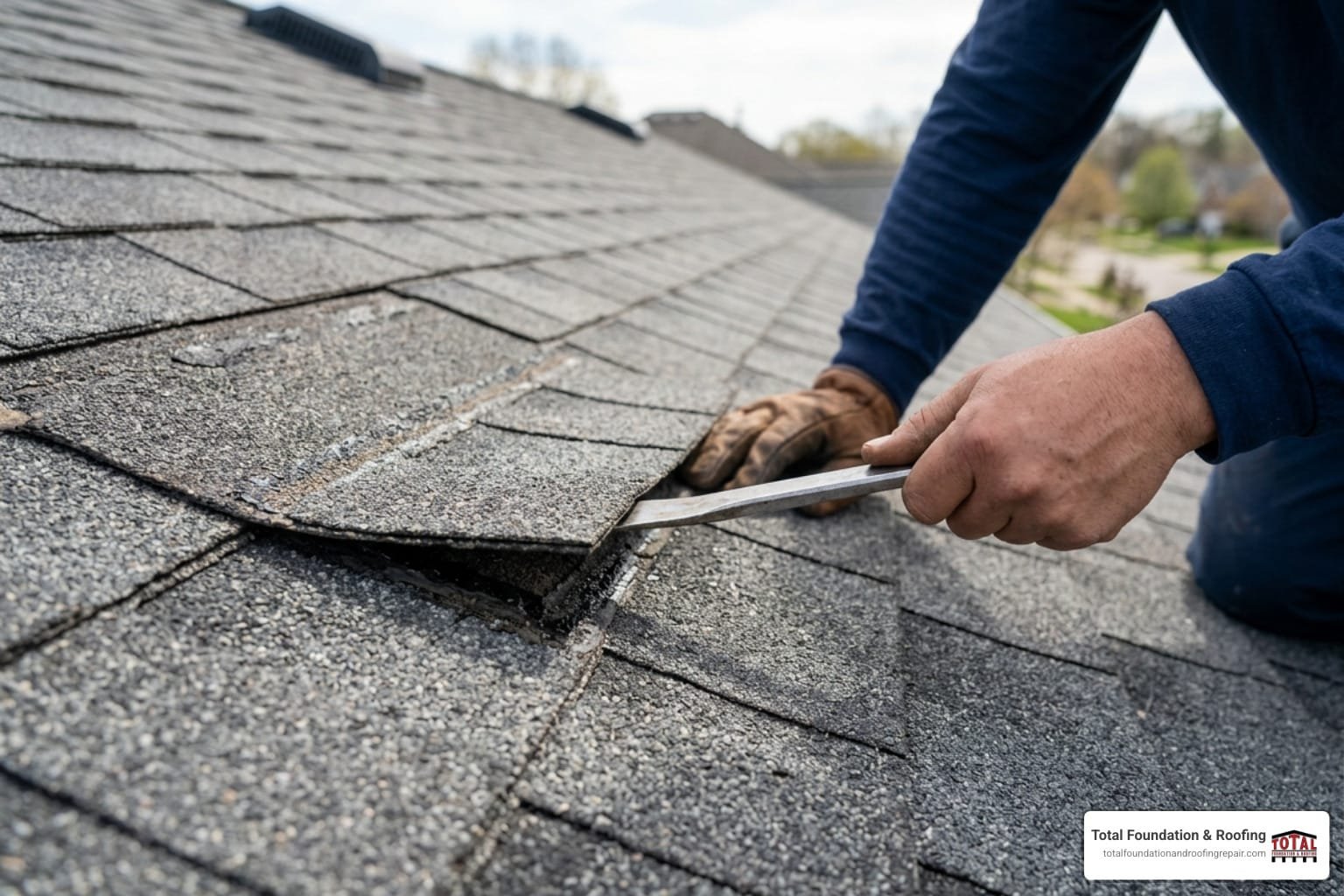
Gathering ground-level visual evidence immediately following a severe hailstorm establishes a verifiable baseline that carriers cannot easily dispute. Hailstones bruise shingle mats, remove protective mineral granules, and fracture asphalt substrates. Major asphalt material manufacturers like GAF Roofing outline strict guidelines regarding hail impact identification and granule depletion limits. However, climbing on a storm-damaged roof creates safety hazards and risks damaging brittle shingles further.
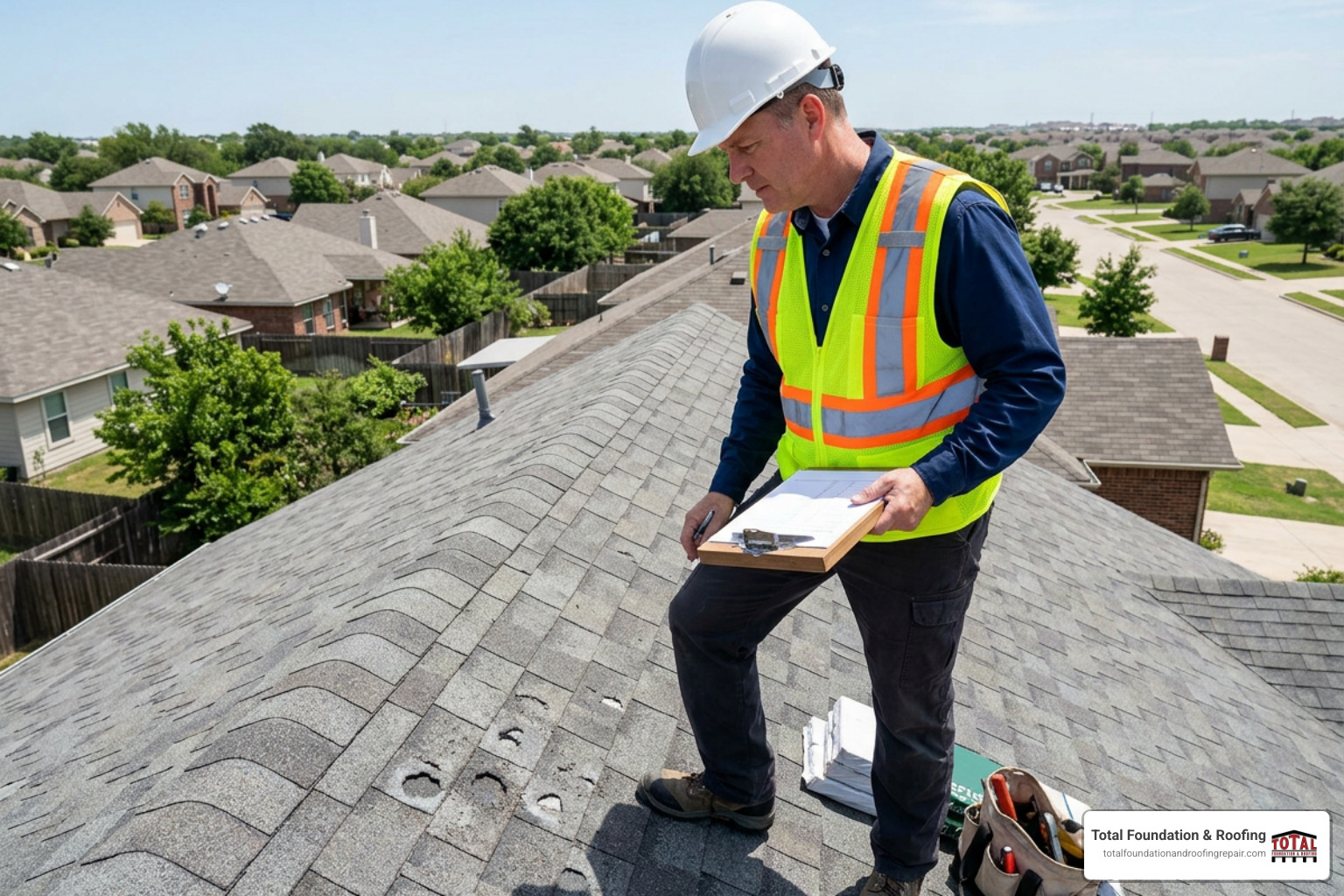
Our inspectors identify hail impacts using soft metal indicators on the ground and exterior walls. Soft metals—such as aluminum gutters, downspouts, metal roof vents, mailboxes, and outdoor air conditioning coil fins—dent at lower impact thresholds than asphalt shingles. When air conditioner fins and metal vents show hail strikes, it proves hail fell directly on your property during the storm event.
During professional inspections, we utilize the industry-standard 10×10 test square methodology. We mark a 100-square-foot area on each slope of the roof to count individual hail strikes, verify granule loss, and assess structural mat fracture.
To document damage effectively for your claim:
- Take date-stamped, wide-angle photos of all four sides of the property exterior.
- Capture close-up photographs of dented metal gutters, downspouts, window screens, and AC unit fins.
- Photograph any ceiling water stains or interior moisture damage immediately.
- Store all emergency temporary mitigation receipts, such as tarping costs, to submit for direct carrier reimbursement.
Learning How to Spot Hail Storm Roof Damage Like a Professional Inspector helps you recognize subtle indicators before water penetrates your attic.
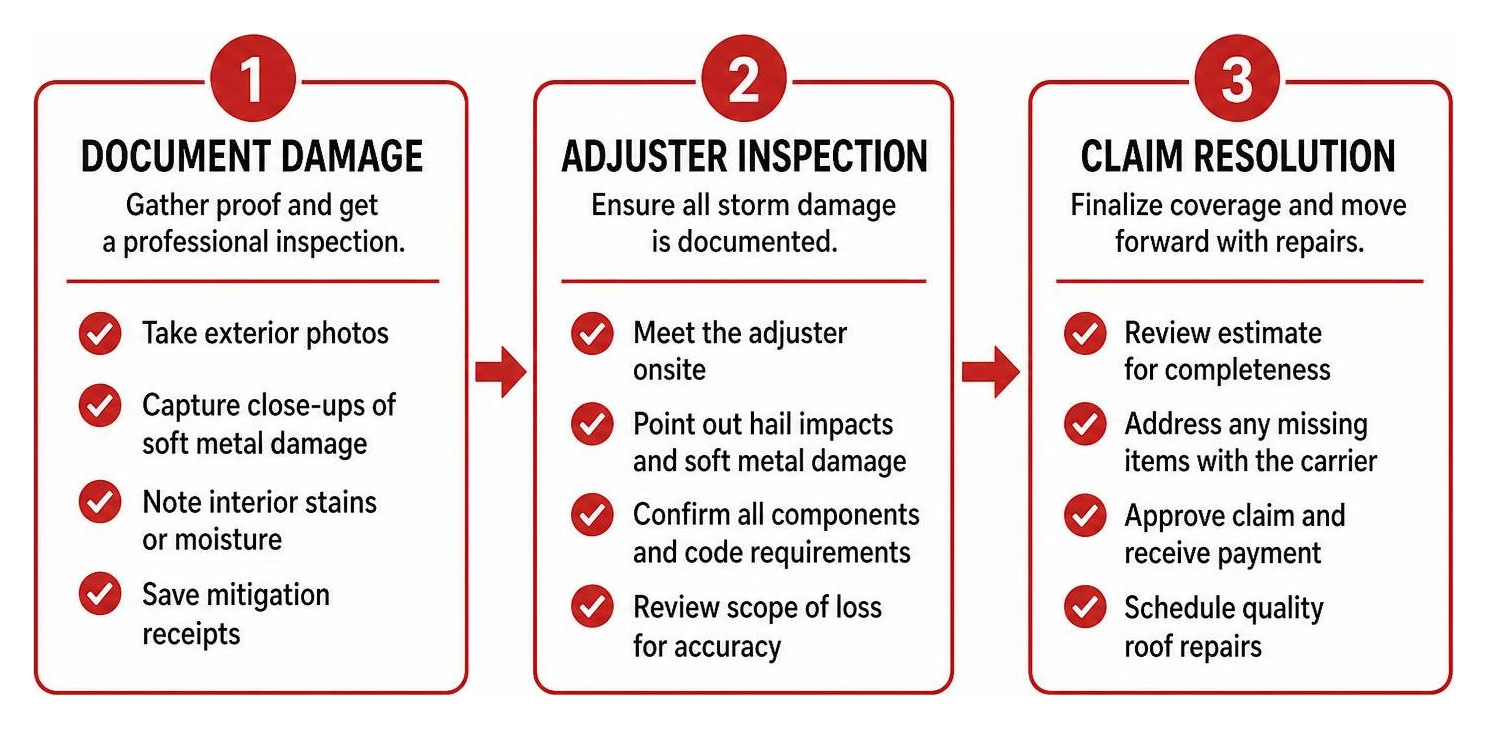
Step 2: Navigating the Adjuster Inspection and Policy Coverage
Insurance company field adjusters handle high claim volumes following Hill Country storms. Consequently, initial adjuster estimates are 30 to 50 percent below actual repair costs because adjusters routinely omit essential construction components like drip edge flashing, ice and water shield underlayment, ridge caps, and waste factor calculations.
Having our experienced roofing team present during the adjuster’s physical walkthrough ensures that all storm damage is documented on the carrier’s official scope of loss. We point out collateral soft metal damage, shingle mat bruising, and regional code requirements that adjusters miss when inspecting properties alone.
Understanding how claims payouts are calculated prevents financial surprises:
- Actual Cash Value (ACV): The initial payout check issued by your insurance carrier after approving a claim. ACV equals the full replacement cost minus your policy deductible and age-based depreciation.
- Replacement Cost Value (RCV): The total monetary amount required to replace the damaged roof at current material and labor rates.
- Depreciation Holdback: Insurance carriers withhold 20 to 40 percent of the total RCV payout as depreciation until the roof replacement is complete and a final contractor invoice is submitted.
Reviewing local claim resources such as a guide to Roof Insurance Claim Kerrville provides insight into managing insurance inspections across Kerrville, Fredericksburg, Boerne, and Comfort.
Step 3: Choosing a Reputable Contractor and Managing Claim Supplements
Selecting a established local contractor ensures your roof restoration meets Texas Hill Country structural standards and Kerr County building permit requirements. Transient storm chasers frequently travel through Texas after hailstorms, collect initial ACV checks, and install substandard roofs without local warranty support.
Under Texas law (Texas Business and Commerce Code § 27.02), it is illegal for contractors to absorb, offset, rebate, or waive a policyholder’s insurance deductible. Insurers legally require proof of deductible payment—such as a cleared check or bank receipt—before releasing final recoverable depreciation funds. Offers to waive deductibles represent insurance fraud and render repair contracts legally void.
When initial insurance estimates fall short of real-world repair costs, we prepare formal claim supplements. A claim supplement is an itemized request submitted directly to the insurance adjuster with photographic evidence detailing missing materials, labor rates, and mandatory building codes. Supplement recovery on hail damage claims averages 35 to 55 percent above initial adjuster estimates when an active contractor represents your scope of work.
| Claim Stage | Financial Payout Calculation | Action Required by Homeowner |
|---|---|---|
| Initial Assessment | Scope of loss generated by adjuster | Compare insurance estimate line-by-line with contractor quote |
| ACV Disbursement | Total RCV minus depreciation and deductible | Pay deductible to contractor and schedule roof installation |
| Claim Supplement | Additional 35% to 55% added for omitted items | Contractor submits line-item code and material updates |
| Final RCV Release | Withheld 20% to 40% depreciation released | Submit final contractor invoice and certificate of completion |
Partnering with a dedicated Storm Damage Roofing Company ensures your roof replacement complies with all municipal building regulations while securing full policy benefits.
Overcoming Denials, Rates, and Disputed Hail Claims
Insurance carriers sometimes issue partial or full claim denials by attributing hail strikes to normal wear and tear, manufacturing defects, or cosmetic damage. Under standard Texas property policies, weather-related storm claims represent no-fault catastrophic events. Texas insurance guidelines prohibit carriers from non-renewing individual policyholders solely for filing a single weather-related storm claim. However, carriers may adjust regional baseline rates across entire zip codes following severe catastrophic weather.
Reviewing consumer advisory updates from the Help after a storm – Texas Department of Insurance clarifies your legal protections as a policyholder.
Expert Hail Damage Claim Help When Your Insurance Claim Is Denied or Underpaid
When an insurer improperly denies or underpays a claim, specific legal mechanisms exist to reopen the claim and secure proper compensation:
- Re-Inspection Requests: If an initial inspection yields a wrongful denial, we submit address-specific weather data from National Oceanic and Atmospheric Administration (NOAA) and National Weather Service (NWS) verification records. We request a formal re-inspection with a senior insurance adjuster.
- Policy Appraisal Clause: When you and your insurer disagree on the exact dollar value of the loss, either party can invoke the policy’s formal appraisal clause. Independent appraisers evaluate the roof scope and select an impartial umpire to issue a binding financial award.
- State Complaints: If a carrier engages in bad-faith claim delays or unjustified denials, filing a formal complaint with the Texas Department of Insurance triggers regulatory oversight.
Consulting a detailed Storm Damage Repair Guide 2025 equips you with the documentation necessary to overturn improper claim determinations.
When to File a Claim vs Paying Out of Pocket
Because Texas homeowners insurance policies utilize percentage-based deductibles, filing a claim is not always financially prudent. If your home is insured for $400,000 under a standard 2% wind/hail endorsement, your out-of-pocket deductible responsibility equals $8,000.
If total roof repair costs amount to $8,500, filing a claim yields an initial payout of only $500 above your deductible. In that scenario, paying for minor repairs out of pocket avoids adding a claim entry to your Comprehensive Loss Underwriting Exchange (C.L.U.E.) property report. However, when severe hailstorms fracture shingle substrates across entire slopes—requiring $15,000 to $25,000 in complete roof replacement—seeking hail damage claim help and utilizing insurance coverage is the necessary path forward.
Evaluating Minor Hail Damage Roof impacts allows you to make calculated decisions regarding deductible thresholds and repair expenditures.
Next Steps and Professional Kerrville Roof Repair Services
Navigating hail damage claims requires professional oversight to ensure your roof is restored safely and completely. Total Foundation & Roofing delivers certified roofing workmanship tailored specifically to the high winds, hail events, and unique architectural demands of Kerrville, Fredericksburg, Boerne, and Comfort properties.
We perform comprehensive storm damage inspections, prepare line-item repair scopes, meet field adjusters on-site, and install complete roof replacements that satisfy Kerr County permit requirements. To schedule your complimentary roof evaluation, visit our storm damage repair service page to restore your home’s protection.