
When a Storm Hits Your Home, Here’s What You Need to Know
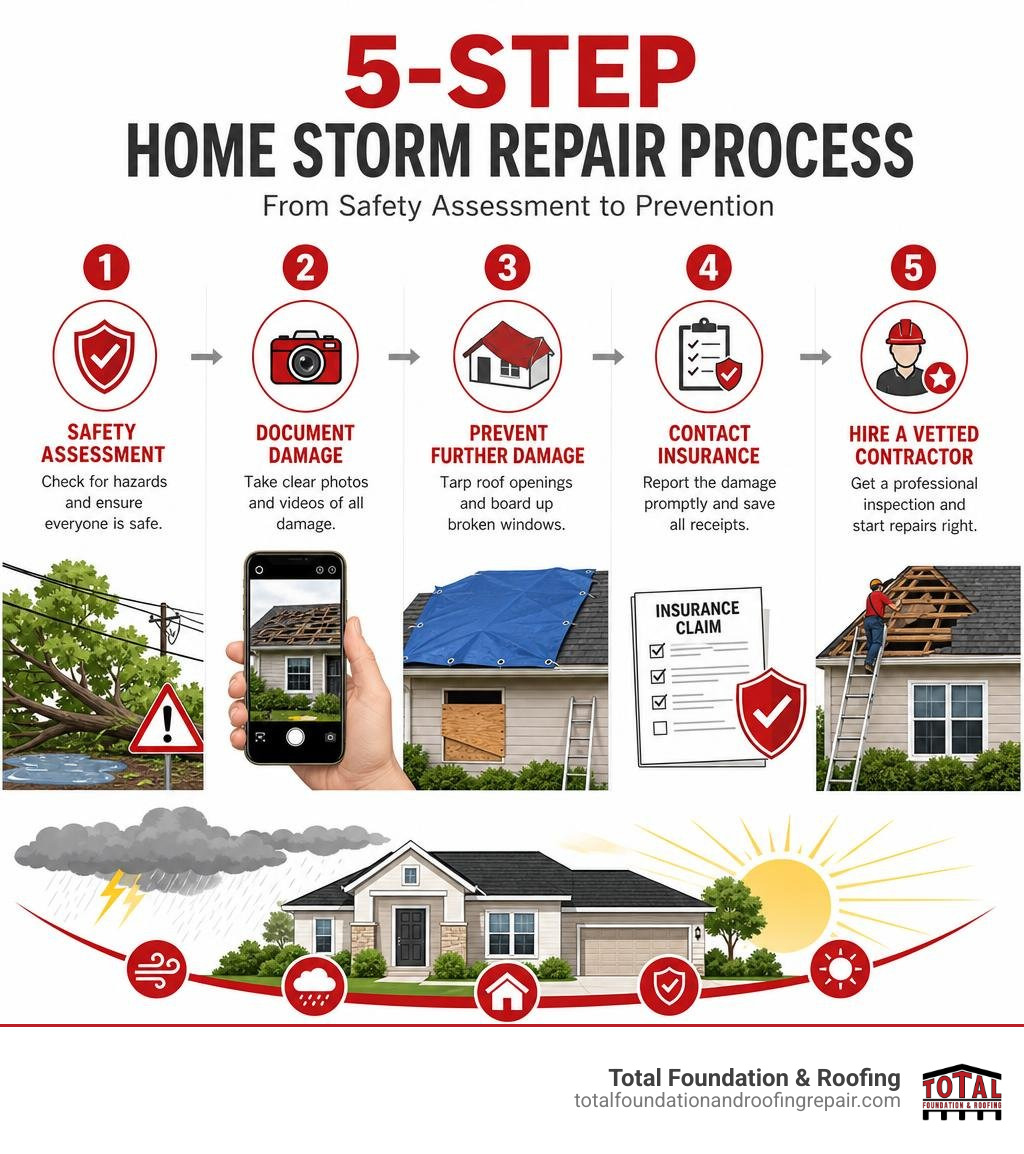
Home storm repair starts with one non-negotiable rule: safety before everything else. If you’ve just come through a severe storm and you’re trying to figure out what to do next, contacting a professional home storm repair contractor ensures your home remains safe and secure. Here is the immediate short version of what you need to do:
- Stay safe — stay away from downed power lines (at least 35 feet), check for gas leaks, and don’t enter rooms with visible structural collapse.
- Document everything — take photos and video of all damage before touching anything.
- Stop further damage — tarp open roof sections and board up broken windows as soon as it’s safe to do so.
- Call your insurance company — report the damage promptly and save every receipt.
- Hire a vetted local contractor — get a professional inspection before repairs begin.
Those five steps won’t cover every situation, but they will protect your safety, your property, and your insurance claim while you figure out the full picture. If the damage involves missing shingles, punctured roof decking, or wind-driven water intrusion, scheduling a dedicated storm damage repair inspection gives you a documented repair plan before permanent work begins.
Storms don’t give warnings. One severe thunderstorm — the kind that’s common across Texas and much of the South — can strip shingles, snap tree limbs onto roofs, push water through walls, and leave homeowners staring at damage they don’t know how to handle. Mold can begin growing on wet surfaces within 24 to 48 hours of water intrusion. What looks like a minor roof issue today can become a structural problem within weeks if left unaddressed.
The stakes are real, and the decisions you make in the first 24 to 48 hours after a storm matter more than most homeowners realize.
I’m Daniel Sowell, owner of Total Foundation & Roofing Repair, and I’ve spent over 18 years helping Texas Hill Country homeowners navigate home storm repair — from emergency tarping the night of a storm to full structural rebuilds. This guide covers everything you need to make smart, confident decisions after severe weather hits.
Easy home storm repair word list:
Post-Storm Assessment and Immediate Safety Protocols
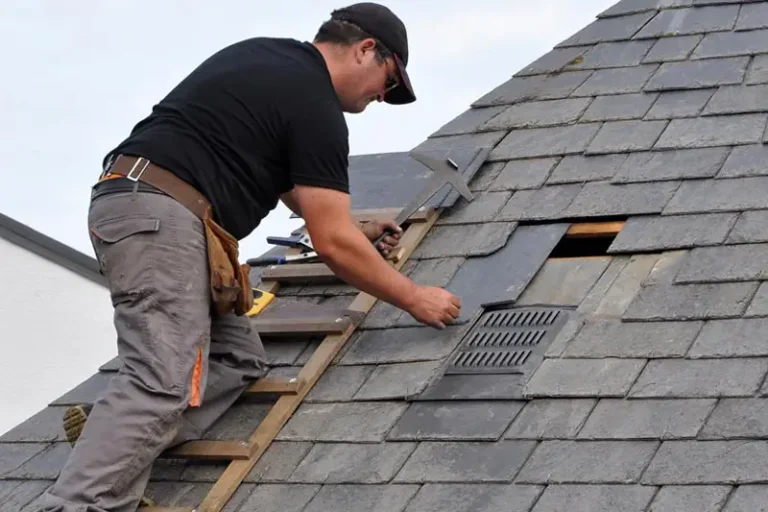
When the skies clear after a severe weather event, your immediate priority must be assessing safety before attempting any physical property checks. Always inspect exterior grounds for hazards prior to examining structures.
First, check utility lines. Stay at least 35 feet clear of any fallen or sagging power lines, treating every downed line as live and dangerous. If you smell gas or suspect a leak, evacuate immediately and contact emergency utility services. Avoid entering rooms showing sagging ceiling drywall or warped load-bearing walls.
Once perimeter safety is established, begin your initial damage evaluation. Walk around your home taking clear, high-resolution photos and video of every impacted area—including missing shingles, dented siding, cracked windows, and gutter detachment. This original documentation creates an unassailable baseline for your insurance carrier.
Identifying Visible and Hidden Home Storm Repair Needs
Exterior storm damage reveals itself in distinct patterns depending on whether wind or hail caused the destruction.
Wind speeds exceeding 50 mph easily lift shingle tabs, tear off ridge caps, and detach fascia boards. Hail presents different challenges. Soft impact hail strips protective asphalt granules, while stones up to 3 inches in diameter bruise roof decking, shatter vinyl siding, and puncture underlayment.
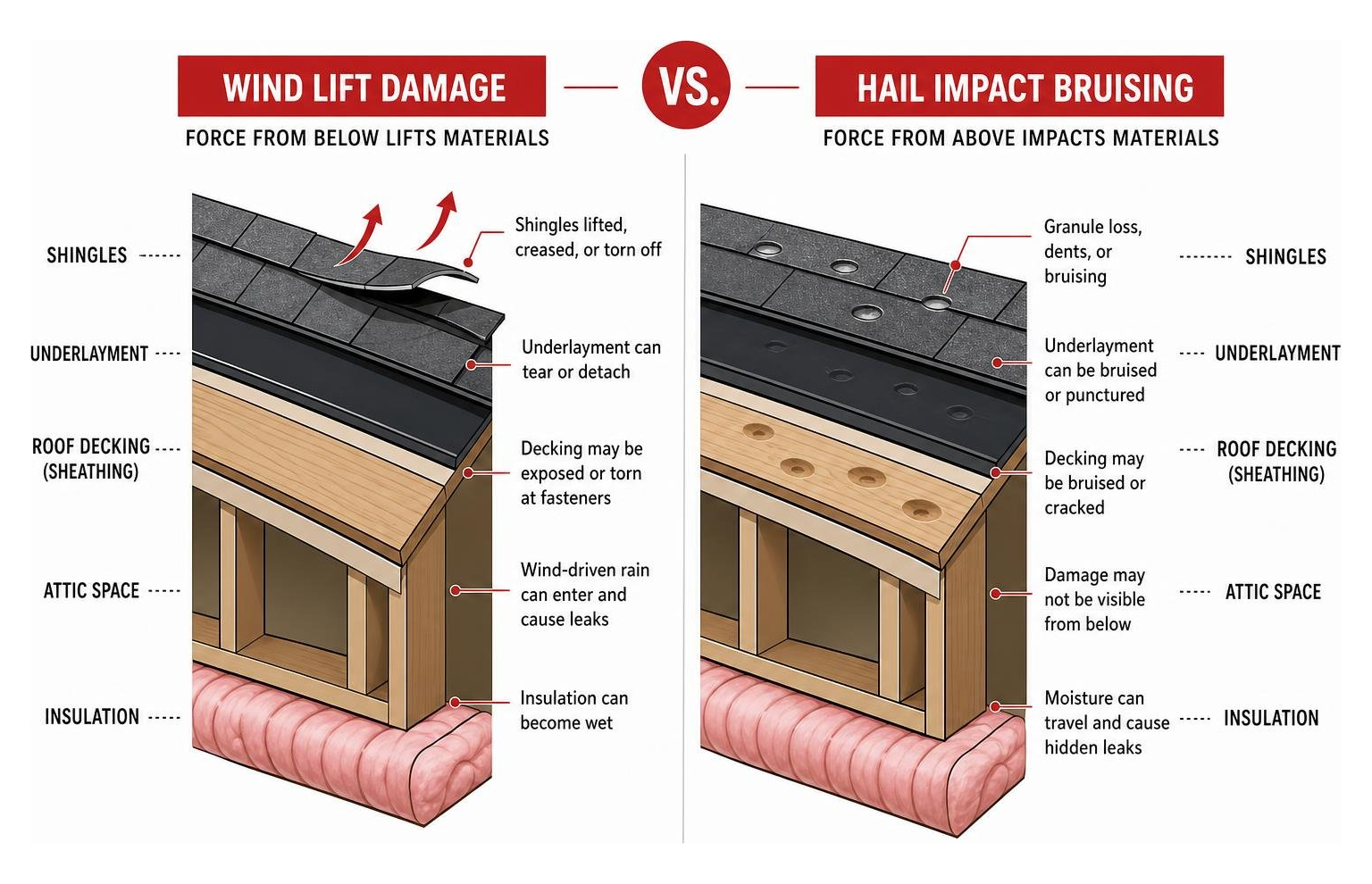
However, ground-level checks miss most critical roofing issues. Severe hail creates subtle circular fractures in shingle mats that allow water penetration long before visible ceiling stains appear.
In the attic, check for damp insulation, daylight shining through decking seams, or wet rafters. Professional contractors utilize advanced moisture diagnostics, such as thermal imaging to detect roof leaks, uncovering hidden water pathways hidden behind interior walls. Reviewing manufacturers like GAF Storm Damage Guidance can also help you understand material tolerance after severe weather.
Immediate Actions for Tree Fall and Flooding Emergencies
When severe wind downs a tree onto your roof or torrential rain causes localized flash flooding, immediate stabilization prevents catastrophic compounding damage.
For structural impacts caused by tree limbs:
- Safely evacuate the impacted zone of the house immediately.
- Do not attempt to remove large tree limbs resting on structural framing yourself.
- Perform emergency board-up on shattered windows to block rain driven by high winds.
- Secure heavy-duty, UV-resistant tarps over structural punctures; read our guide on emergency roof tarp installation to understand proper fastening techniques.
If rapid runoff causes interior water entry, shut off electricity to flooded zones at the main breaker panel only if the panel is safely dry. Review FEMA Flood Safety Guidelines for immediate evacuation and clean water sanitation practices. For active roof leaks, request professional emergency roof repair and review these fast emergency roof repair tips to mitigate interior losses until professional crews arrive.
The Complete Guide to Home Storm Repair and Restoration
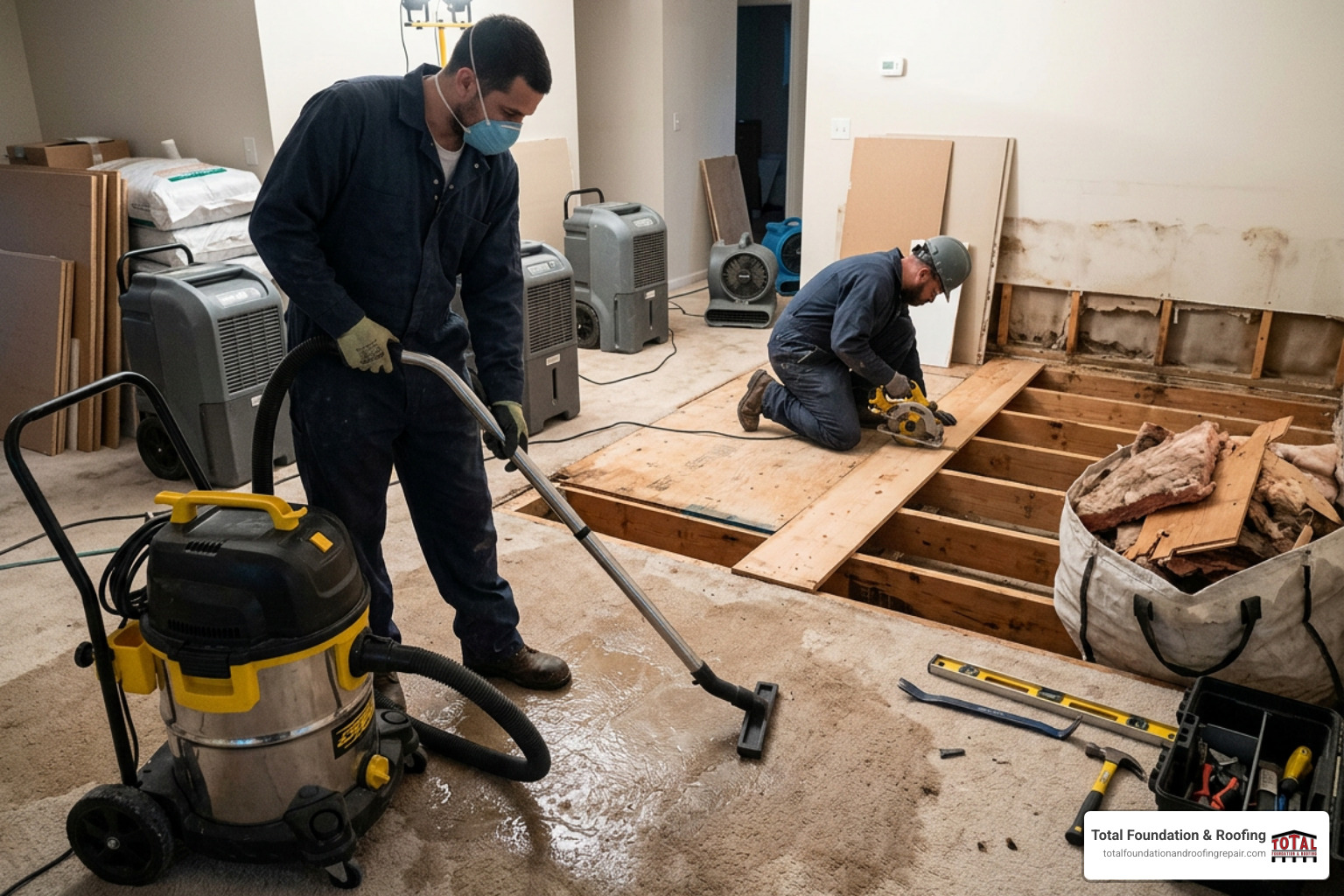
Complete structural restoration transitions emergency containment into permanent property recovery. Professional crews follow strict protocols to return your home to pre-loss condition.
After initial containment, certified technicians conduct a comprehensive assessment using standardized software like Xactimate—the exact pricing software insurance adjusters use. This ensures every line item, from structural roof decking replacement to interior drywall drying, reflects accurate regional labor and material costs. A formal storm damage repair service inspection also separates emergency stabilization from permanent code-compliant repairs.
Our complete storm damage restoration service addresses structural rebuilds from the roof framing down to foundational drainage, providing total continuity throughout the restoration process.
Navigating Insurance Claims for Maximum Coverage
Filing a successful insurance claim requires clear organization and precise documentation. Standard homeowners policies cover sudden, accidental storm damage from wind, hail, and fallen trees, but standard policies explicitly exclude rising surface water or localized flood events.
| Coverage Type | Standard Homeowners Policy | Separate Flood Insurance Policy |
|---|---|---|
| Wind & Hail Damage | Covered (Subject to wind/hail deductible) | Not Covered |
| Fallen Tree Impact | Covered | Not Covered |
| Wind-Driven Rain (via roof breach) | Covered | Not Covered |
| Rising Outdoor Water / Flash Flood | Excluded | Covered |
| Settlement Basis | Replacement Cost Value (RCV) or ACV | Actual Cash Value (ACV) or RCV |
Understanding the distinction between Replacement Cost Value (RCV) and Actual Cash Value (ACV) is essential. ACV factors in depreciation, paying out what the item was worth immediately before the storm. RCV covers the actual cost to replace materials at current market prices once work is completed.
Always log time-stamped photo records, retain repair receipts, and maintain clear records of all adjuster interactions. For step-by-step guidance on handling regional adjusters, review our roof insurance claim guidance resources. Professional industry guidelines also highlight the value of detailed itemization during claims processing.
Timelines for Moisture Mitigation and Preventing Structural Rot
Water intrusion operates on a strict timeline. Structural lumber, drywall, and carpet pad act as sponges, absorbing moisture quickly and creating ideal conditions for organic growth.
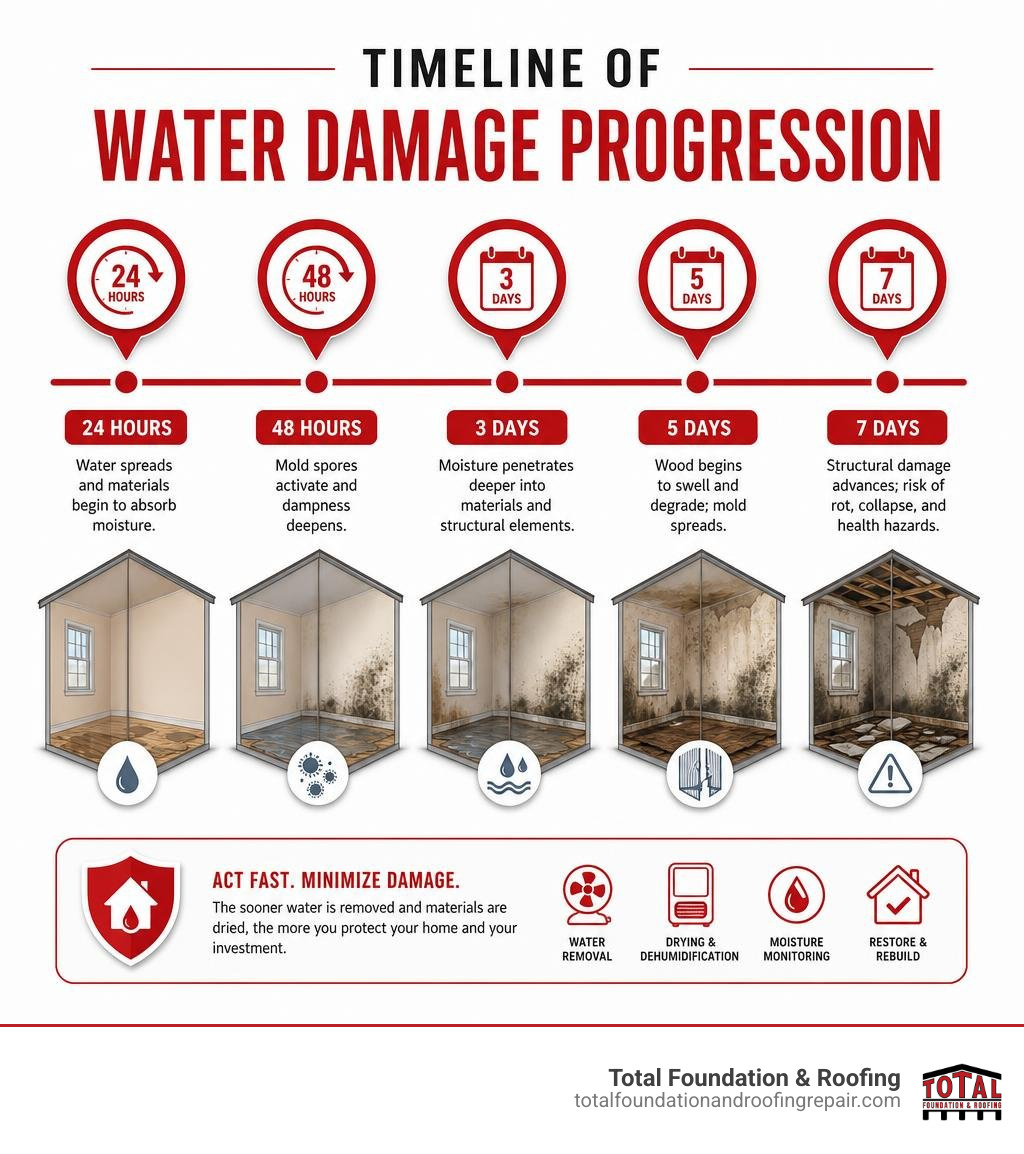
Within 24 to 48 hours of liquid contact, mold spores activate on damp surfaces. Left unaddressed, moisture migrates into framing timbers, rotting roof trusses and causing ceiling collapses. Addressing small roof leaks promptly typically costs between $300 and $500, whereas delayed repairs leading to structural decking replacement and mold remediation quickly escalate to $8,000 to $15,000 or more.
If you observe sagging drywall or ceiling water leaks repair requirements, immediate structural drying is required. Industrial air movers and commercial dehumidifiers dry hidden cavities while moisture meters track drying progress. Following established guidelines like Owens Corning Roof Restoration Guidelines ensures structural framing meets code before final finishes are installed.
Preventive Upgrades and Selecting Reliable Contractors
Once emergency repairs are complete, taking proactive measures protects your property against future weather extremes. Selecting the right contractor and choosing high-performance materials are key steps in this process.
How to Hire Reliable Home Storm Repair Contractors
Following severe weather, transient “storm chasers” often flood damaged neighborhoods offering quick fixes and cash-out deals. Hiring unvetted out-of-town door-knockers leaves homeowners vulnerable to poor workmanship, voided warranties, and abandoned jobs.
When selecting a contractor for home storm repair, verify the following criteria:
- Local Business Presence: Choose contractors established in Kerrville, TX, Fredericksburg, or Comfort, TX, with verifiable local references.
- Licensing & Insurance: Demand active certificates for general liability and worker’s compensation coverage.
- Written Workmanship Warranties: Look for comprehensive labor coverage—such as a 3-year workmanship warranty—backed by certified manufacturer credentials.
- Detailed Written Estimates: Ensure all project line items, material specifications, and payment milestones are clearly defined before signing.
Review our dedicated guide on finding a reliable storm contractor to avoid common scams. For severe exterior damage across larger regional properties, third-party industry specialists also emphasize verifying contractor credentials prior to signing authorization forms.
Fortifying Your Property Against Future Severe Weather
Upgrading your building envelope during post-storm reconstruction greatly reduces vulnerability to future severe weather events.
Key preventive improvements include:
- Class 4 Impact-Resistant Shingles: Engineered to withstand severe hail strikes, these materials often qualify homeowners for policy premium discounts.
- Reinforced Garage Doors & Window Shutters: Fortified garage doors resist high-wind blow-in pressures, preserving roof framing integrity during severe storms.
- Upgraded Gutter and Drainage Systems: Heavy-duty, properly pitch-adjusted seamless gutters direct torrential runoff away from foundation soils, preventing settlement cracks.
- Tree Canopy Maintenance: Keep tree branches trimmed back at least 10 feet from rooflines to prevent limb strikes during severe weather.
At Total Foundation & Roofing, we specialize in complete exterior fortification tailored to the unique climate conditions of the Texas Hill Country. From precise leak detection to structural roof replacements and foundation protection, our team delivers certified workmanship designed to stand the test of time.
If your property has experienced recent storm damage or you require an expert post-storm safety inspection, do not delay. Schedule Professional Storm Repair Today to request your dedicated property evaluation.