
Introduction
Roofing materials are the foundation of every home’s first line of defense against the elements — and choosing the wrong one can cost you thousands. For homeowners seeking reliable roofing and foundation repair, selecting high-quality components is the first step in long-term property protection. Here’s a quick look at the most common options:
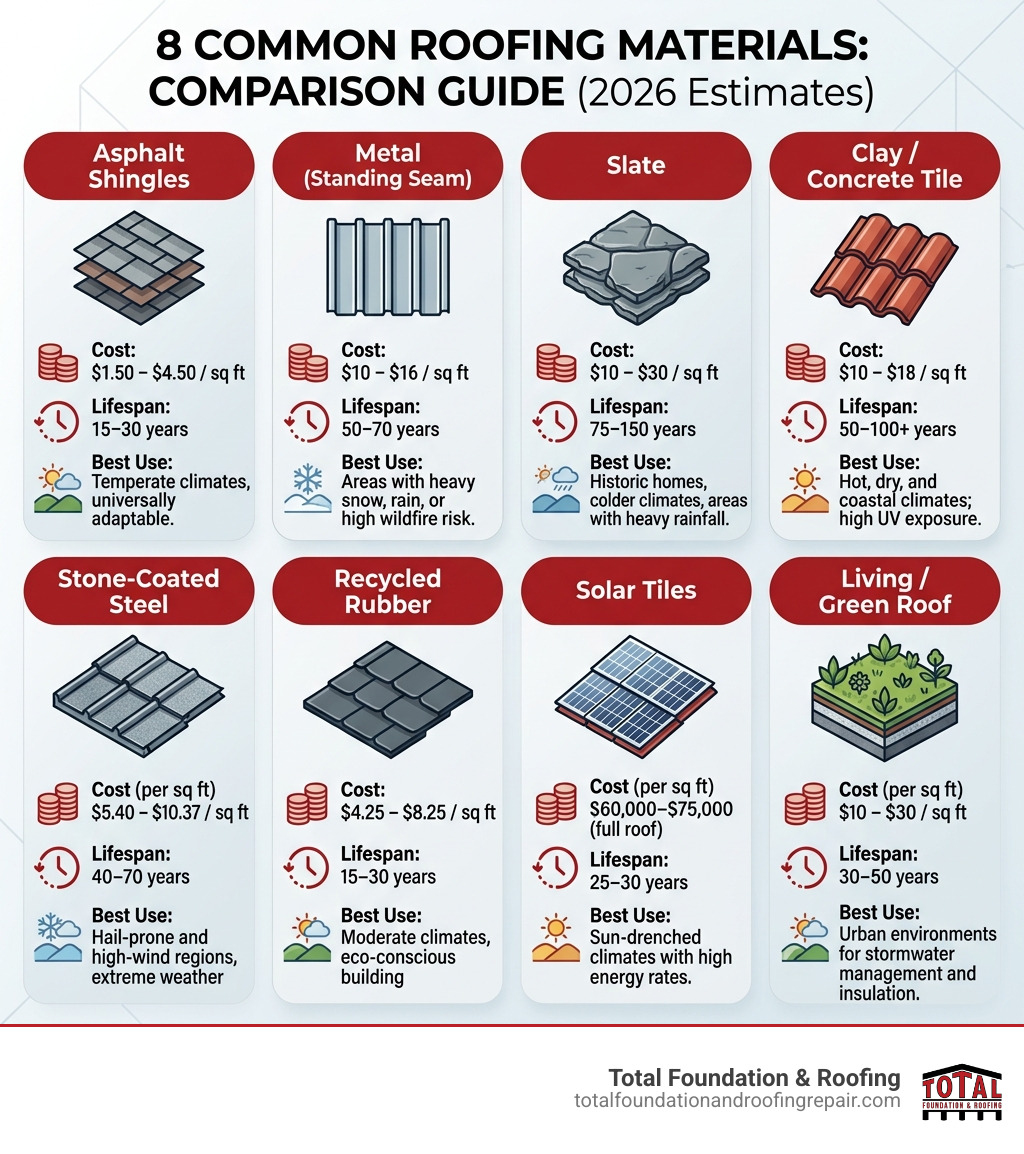
| Material | Cost (per sq ft) | Lifespan |
|---|---|---|
| Asphalt Shingles | $1.50 – $4.50 | 15–30 years |
| Metal (Standing Seam) | $10 – $16 | 50–70 years |
| Slate | $10 – $30 | 75–150 years |
| Clay / Concrete Tile | $10 – $18 | 50–100+ years |
| Stone-Coated Steel | $5.40 – $10.37 | 40–70 years |
| Recycled Rubber | $4.25 – $8.25 | 15–30 years |
| Solar Tiles | $60,000–$75,000 (full roof) | 25–30 years |
| Living / Green Roof | $10 – $30 | 30–50 years |
Your roof takes more punishment than any other part of your home. Wind, rain, hail, heat, UV rays — it faces all of it, every single day. A bad material choice doesn’t just look wrong. It fails early, leaks often, and quietly drains your wallet through repairs and energy bills.
The national average cost of a roof replacement sits at $9,515 — but that number swings dramatically depending on what material you choose. Getting this decision right matters.
I’m Daniel Sowell, owner of Total Foundation & Roofing Repair with over 18 years of hands-on experience installing and replacing roofing materials across the Texas Hill Country. In that time, I’ve seen every material perform — and fail — under real-world Texas conditions, from brutal summer heat to surprise hailstorms.
Easy roofing materials glossary:
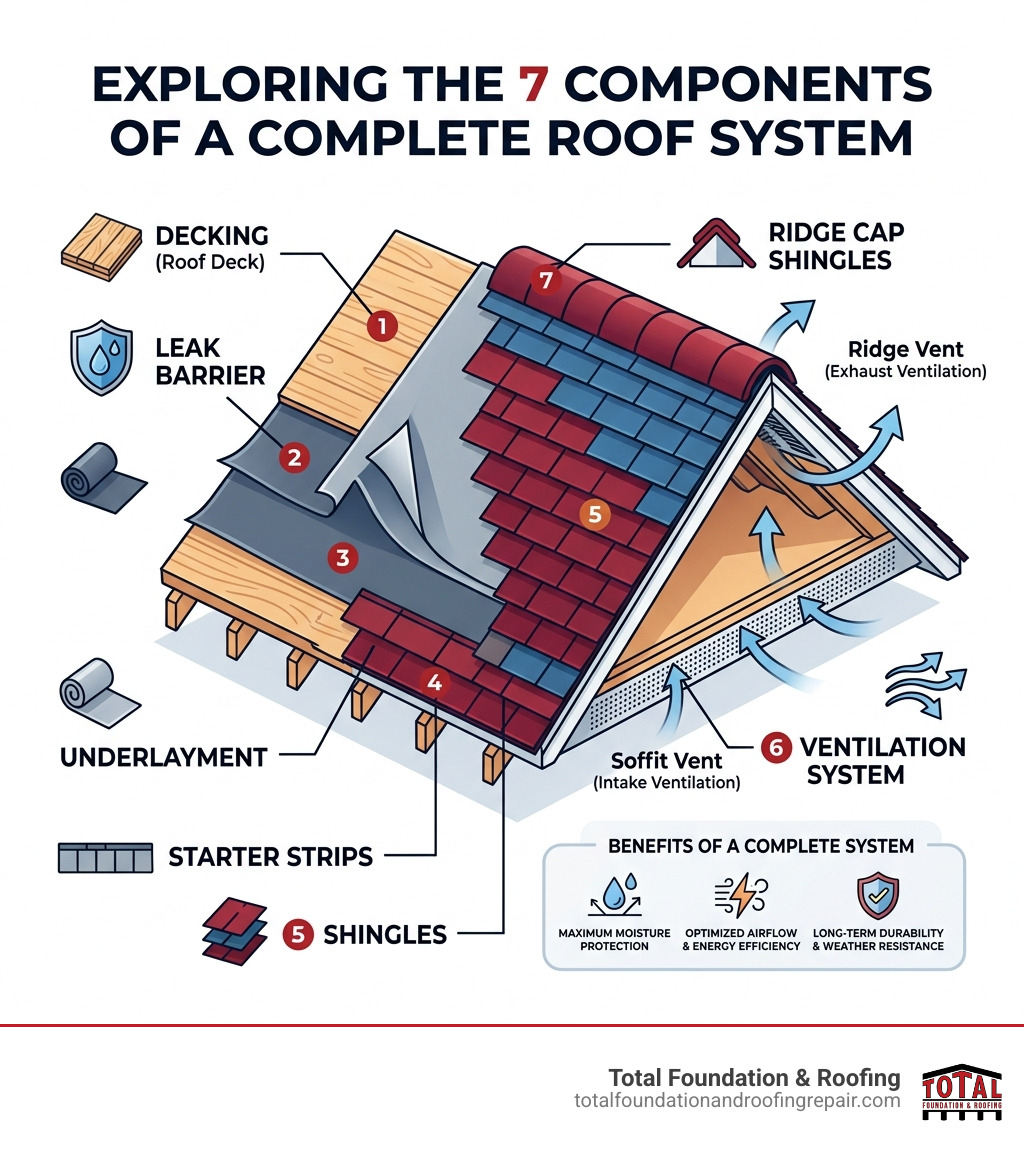
Once upon a time, humanity’s best bets for shelter were caves and trees. Today, we have entire catalogs full of high-tech options designed to withstand everything from 150 mph winds to scorching 100-degree days in Kerrville. Modern roofing materials have evolved into complex systems. A “roof” isn’t just the shingles you see from the curb; it is a seven-component system including the deck, leak barriers, underlayment, starter strips, shingles, attic ventilation, and ridge cap shingles.
When one part of this system fails, the whole structure is at risk. Whether you are managing a commercial warehouse in Fredericksburg or a ranch-style home in Comfort, understanding the strengths and weaknesses of different materials is the only way to ensure your investment lasts for decades rather than years.
Comparing the Best Roofing Materials for 2026
As we move through April 2026, the roofing industry has seen significant shifts. While asphalt remains the king of the market, metal and synthetic options are gaining ground due to their superior durability in extreme weather.
When evaluating roofing materials, we look at four main metrics: upfront cost, expected lifespan, maintenance requirements, and “weather-hardiness.” For example, while a slate roof might cost five times more than asphalt, it can last four times longer.
| Feature | Asphalt Shingles | Metal Roofing | Natural Slate | Clay/Concrete Tile |
|---|---|---|---|---|
| Avg. Cost/Sq. Ft. | $1.50 – $4.50 | $10 – $16 | $10 – $30 | $10 – $20 |
| Lifespan | 15 – 30 Years | 50 – 70 Years | 75 – 150 Years | 50 – 100+ Years |
| Fire Rating | Class A (Fiberglass) | Class A | Class A | Class A |
| Weight | Light | Light to Medium | Very Heavy | Very Heavy |
According to the National Roofing Contractors Association, selecting the right material requires balancing these costs against the architectural limits of your home. You can’t put a heavy slate roof on a frame designed for light shingles without significant structural reinforcement.
Asphalt Shingles: The Most Popular Roofing Materials
Asphalt shingles are the most common roofing material in America for a reason: they are effective, affordable, and work in almost any climate. According to Owens Corning, asphalt shingles remain the most versatile option for residential homes. At Total Foundation & Roofing, we find that most residential clients opt for these because of the sheer variety of styles available.
There are two primary types of asphalt bases:
- Fiberglass Mats: These are the modern standard. According to GAF, they are made of a glass fiber reinforcing mat coated with asphalt and mineral granules. They typically carry a Class A fire rating.
- Organic Bases: These use a base of cellulose, paper, or wood fibers. While they contain more asphalt (making them heavier), they are less common today and usually only carry a Class C fire rating.
When choosing asphalt shingle roofing, you generally pick from three categories:
- 3-Tab Shingles: The most budget-friendly option. They are flat and uniform, lasting about 15–20 years.
- Architectural (Dimensional) Shingles: These are thicker and multi-layered, giving a wood-shake look. They are more durable and typically last 24–30 years.
- Luxury Shingles: These are designed to mimic slate or cedar shakes at a fraction of the cost and weight, offering the highest level of protection.
For those looking for long-term peace of mind, we often recommend 50-year asphalt shingles. These premium options offer superior wind and impact resistance. You can check out our 50-year asphalt shingles prices guide for a deeper look at the costs involved.
One technical tip: always ensure your shingles pass ASTM D3462 standards. This ensures the material meets specific physical requirements for nail-pulling resistance and tear strength, which is vital in our windy Hill Country afternoons. Many modern shingles also feature copper-coated granules to prevent the unsightly black algae streaks common in humid areas.
Metal and Membrane Systems: Commercial Roofing Materials
For commercial properties or homeowners wanting a “lifetime” roof, metal roofing is an unbeatable choice. Metal roofs can last 50 to 70 years and are increasingly popular in areas prone to wildfires or heavy hail.
Standing Seam Metal: This is the gold standard. The panels feature interlocking seams that sit above the level of the roof surface, meaning water has almost no chance of getting in. While the cost is higher—ranging from $10 to $16 per square foot—the longevity makes it a cost-effective choice over 50 years. If you’re considering this, read our metal roof installation complete guide.
Membrane Systems (TPO & PVC): For flat or low-slope commercial buildings, we often use TPO (Thermoplastic Polyolefin) or PVC. These are single-ply membranes that are highly reflective, helping to lower cooling costs during those triple-digit Texas summers.
Built-Up Roofing (BUR): Often called “tar and gravel” roofs, these consist of multiple layers of bitumen and reinforcing fabrics. They are incredibly durable for foot traffic but are heavier than membrane systems.
For high-end residential projects, copper roofing offers a unique aesthetic that develops a beautiful green patina over time. It is virtually maintenance-free and can last well over a century.
Premium Alternatives: Slate, Tile, and Stone-Coated Steel
If you want your home to stand out in Fredericksburg, premium roofing materials like slate or tile offer a timeless, Old World look.
Natural Slate: Slate is quarried stone. It is naturally fire-resistant and can last 75 to 150 years. However, it is expensive ($10–$30 per square foot) and very heavy. A structural engineer must often verify that your home can support the weight.
Clay and Concrete Tiles: These are staples of Spanish and Mediterranean architecture. Clay tiles are color-fast and durable, while concrete tiles are a more affordable way to get the same look. Both offer excellent thermal insulation. If you already have these, you know that Spanish tile roof repair cost can be higher due to the specialized labor required, but the durability is worth it. You can explore more in our best new roof tiles guide.
Stone-Coated Steel: This is a brilliant hybrid. It gives you the look of tile or slate but with the lightweight durability of steel. These roofs can resist 120 mph winds and are ideal for the heavy rain and hail we see in Central Texas.
Sustainable Innovations: Solar Tiles and Green Roofs
As we look toward the future of roofing materials, sustainability is no longer a niche market.
Solar Tiles: Unlike bulky traditional panels, solar shingles (like those from GAF or Tesla) integrate directly into the roofline. They are ideal for HOAs that have strict aesthetic rules. A full solar roof for a standard home can cost between $60,000 and $75,000, but federal tax credits can often offset 30% of that cost.
Recycled Rubber Shingles: Made from old tires, these shingles are eco-friendly and incredibly durable. They offer a Class 4 impact rating (the highest possible), which can lead to significant discounts on your homeowners insurance.
Living (Green) Roofs: These involve a waterproof membrane covered by soil and vegetation. While they require extensive structural support and maintenance, they provide incredible insulation and help reduce the “urban heat island” effect. According to CertainTeed, sustainable roofing solutions are becoming a standard for energy-conscious homeowners.
Critical Selection Factors: Climate, Pitch, and Budget
Choosing between different roofing materials isn’t just about what looks good on Pinterest. You have to consider the “Three Pillars of Selection”:
- Climate: In the Texas Hill Country, our roofs face extreme UV exposure and frequent hail. We highly recommend materials with a Class 4 Impact Rating. This rating means the material has been tested with 2-inch steel balls dropped from 20 feet to simulate heavy hail.
- Roof Pitch: Not all materials work on all slopes. Wood shingles and asphalt require a steeper pitch to shed water effectively. For flat or very low-slope roofs, you must use membrane systems or built-up roofing to prevent ponding water.
- Budget vs. Value: Asphalt is cheaper today, but metal may be cheaper over 50 years. We always encourage clients to look at the “total cost of ownership” rather than just the initial quote.
Replacement Indicators: When to Call a Professional
How do you know it’s time to stop repairing and start replacing? Regardless of the roofing materials used, there are universal warning signs:
- The 20-Year Rule: Most asphalt roofs begin to fail after 20 years. Even if it looks okay from the ground, the adhesives are likely brittle.
- Granule Loss: If your gutters look like they are filled with coffee grounds, your shingles are losing their UV protection.
- Curling or Cupping: When shingle edges turn upward, they are no longer shedding water and are susceptible to wind uplift.
- Ceiling Stains: If you see brown spots on your ceiling, you have an active leak. This is often an emergency roof repair situation that needs immediate attention to prevent mold and structural rot.
- Recurring Leaks: If you’ve patched the same area twice, the underlying underlayment or flashing has likely failed.
Conclusion: Securing Your Investment
Your roof is the most critical component of your home’s structural integrity. Whether you choose the reliable affordability of asphalt shingles or the “once-in-a-lifetime” durability of a shingle and metal roof combination, the quality of the installation is what truly matters.
At Total Foundation & Roofing, we specialize in providing high-quality roofing services tailored to the unique climate of Kerrville, Fredericksburg, and Comfort. We don’t just slap on shingles; we build integrated systems designed to protect your family for decades.
Don’t wait for a ceiling stain to tell you your roof is failing. If you’re ready to upgrade your home’s protection or need an expert inspection to see which roofing materials are right for your specific pitch and budget, contact our team for a consultation.
Secure your home today with the Hill Country’s trusted roofing experts.
Total Foundation & Roofing Serving Kerrville, Fredericksburg, and Comfort, TX.