
Why Knowing the Signs of Roof Damage Could Save You Thousands
Identifying the signs of roof damage early is one of the most critical responsibilities of homeownership. At Total Foundation & Roofing Repair, we have seen how a simple oversight can escalate into a catastrophic structural failure. The roof is your home’s first line of defense against the elements, and when that defense is compromised, every other component of your house—from the attic insulation to the foundation—is at risk. Catching these issues early is the difference between a minor repair and a five-figure emergency. According to industry estimates, nearly four in 10 U.S. homes have roofs rated in “moderate” or “poor” condition. Many homeowners have no idea until water is dripping through the ceiling, often during the middle of a severe storm when emergency services are most expensive. This is especially true in the Texas Hill Country, where the combination of intense UV rays and sudden, high-impact weather events can degrade even the highest quality materials faster than expected.
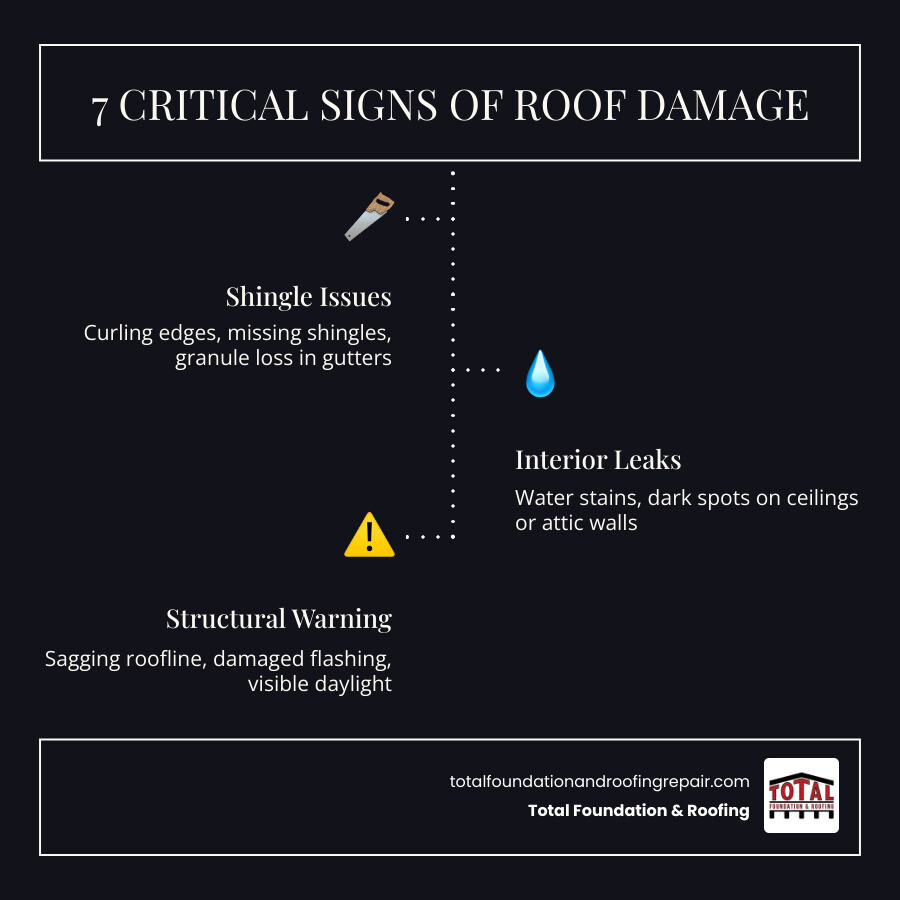
Here are the most common signs of roof damage to look for right now:
- Curling, cupping, or missing shingles on the roof surface
- Granule loss — sandy buildup collecting in your gutters
- Water stains or dark spots on attic ceilings or interior walls
- A sagging or uneven roofline visible from the street
- Damaged or rusted flashing around chimneys, vents, or skylights
- Moss, algae, or dark streaks growing across shingles
- Daylight visible through attic boards when the lights are off
Spotting any one of these is reason enough to schedule an inspection. Spotting several means it’s urgent. Roof problems rarely fix themselves; in fact, they tend to accelerate. A small leak ignored for months can rot the decking beneath your shingles, damage attic insulation, trigger mold growth, and eventually compromise the structural integrity of your home. A $300 inspection and minor repair today can realistically prevent $15,000 to $30,000 in emergency damage costs down the road. If you suspect moisture is already entering your home, seeking expert roof leak detection is the most effective way to pinpoint the source before it spreads.
If you’re a homeowner in the Texas Hill Country area, getting professional roofing services from someone who knows local weather conditions — hail, heat, wind — isn’t optional. It’s smart ownership. I’m Daniel Sowell, owner of Total Foundation & Roofing Repair with over 18 years of hands-on experience diagnosing and repairing roofs across the Texas Hill Country — and in that time, I’ve seen every possible sign of roof damage, from hairline flashing cracks to full structural collapses. This guide covers what to look for, how to inspect safely, and exactly what to do when you find a problem.
Signs of roof damage word guide:
7 Critical Signs of Roof Damage to Watch For
In April 2026, as we transition from the unpredictable Texas winter into the stormy spring season, your roof faces its toughest tests. Understanding the signs of roof damage requires looking at both the obvious and the subtle. We often see homeowners overlook small changes, but in the roofing world, “small” is just a precursor to “expensive.” According to research from Angi, identifying these indicators early can extend the lifespan of your materials significantly. In the Texas Hill Country, our roofs deal with intense UV radiation that accelerates chemical breakdown in asphalt. This leads to brittle shingles that crack under the pressure of thermal expansion.
Industry leaders like GAF emphasize that a roof is a complex system of integrated components. When one part fails, the rest are soon to follow. Furthermore, moss and algae growth aren’t just cosmetic issues. Moss acts like a sponge, holding moisture against the shingle surface and eventually causing the wooden decking beneath to rot. If you see green patches or dark streaks, your roof’s “breathing” and drainage capabilities are likely compromised.
Identifying Shingle and Surface Signs of Roof Damage
The most visible signs of roof damage occur on the shingles themselves. You should look for:
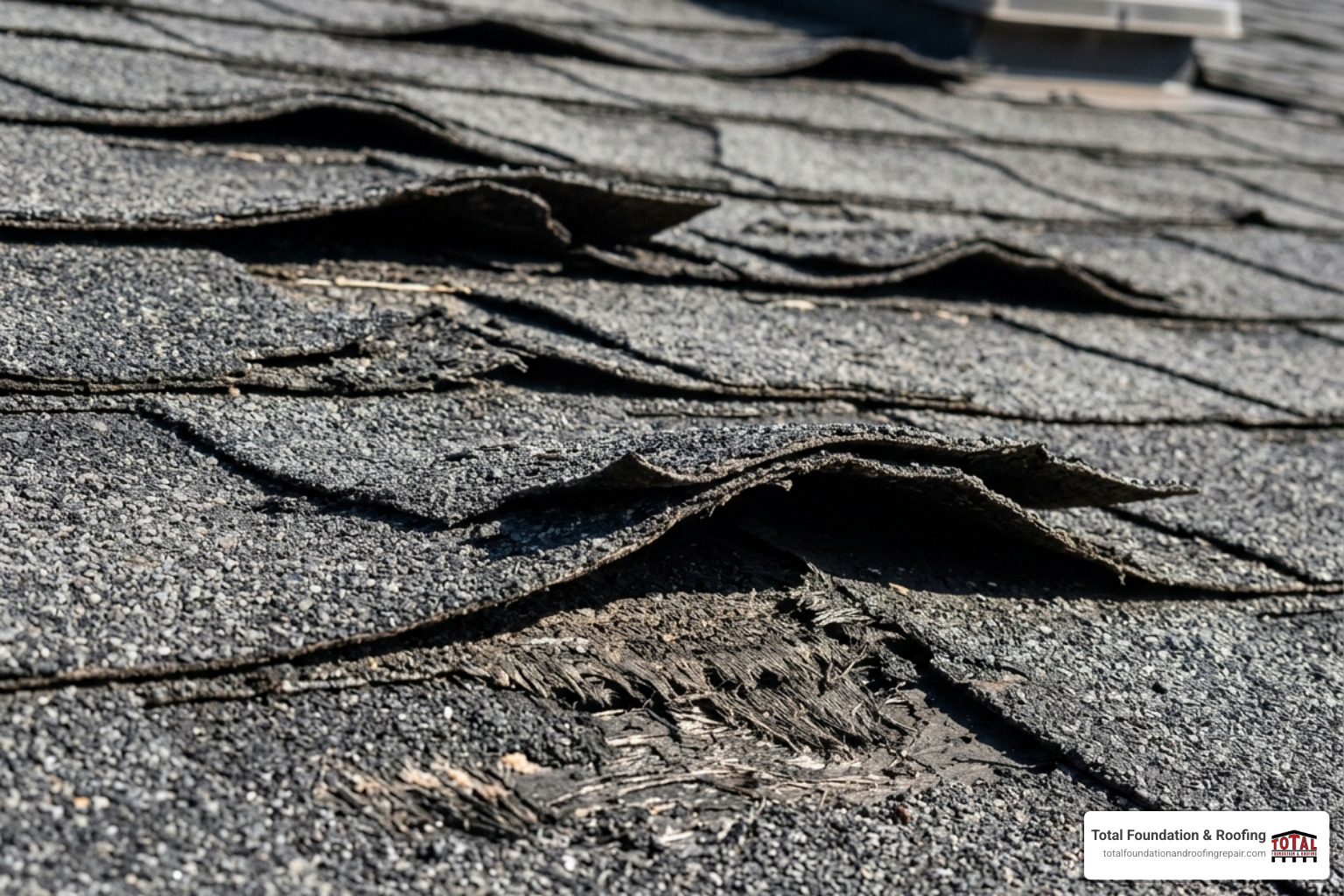
- Curling and Cupping: This happens when the edges of the shingles turn upward (curling) or the centers start to sink (cupping). This is a definitive sign of weathering and potential attic ventilation issues. When shingles lose their flat profile, they become vulnerable to wind uplift.
- Missing Shingles: High winds in areas like Kerrville and Fredericksburg can literally peel shingles off. This leaves your underlayment exposed to direct rain. Even one missing shingle can lead to a major leak if it’s located over a seam in the roof decking.
- Bald Spots: When shingles lose their granules, they lose their UV protection. If your shingles look “bald” or shiny, they are nearing the end of their functional life. Granules are the primary defense against the sun’s rays.
- Cracked Shingles: Often caused by wind damage or thermal stress, cracks allow water a direct path to your home’s interior. These are often hard to see from the ground but are a major entry point for moisture.
If you notice these issues, you may need repairing roof shingles to prevent a full-scale leak. For those with Mediterranean-style homes, fixing roof tiles requires a different approach, as cracked clay or concrete tiles can be more deceptive than asphalt.
Spotting Structural and Attic Signs of Roof Damage
Sometimes the most telling signs of roof damage aren’t on the roof at all—they are inside your attic. We recommend a “lights-off” inspection. If you see pinpricks of daylight coming through the roof boards, you have a hole that water will eventually find. This is a clear indicator that the structural integrity of the roof deck has been compromised.
Watch out for “shiners.” A shiner is a nail that missed the rafter and is exposed in the attic. During cold snaps, moisture condenses on these cold nails, turning into frost. When it warms up, the frost melts, creating a “phantom leak” that drips onto your insulation. Over time, this can lead to localized mold growth and wood rot. Structural sagging is the most serious sign. If your roofline looks like it has a “dip” or a “sway” from the street, the internal decking or rafters may be rotting or failing. This requires immediate professional attention. To find hidden moisture that hasn’t yet stained your ceiling, we often use thermal imaging to detect roof leaks, which can identify temperature differences caused by trapped water. If you suspect an issue, checking for an attic water leak is your first line of defense.
Evaluating Flashing and Gutter Health
Flashing is the metal material used to redirect water away from critical areas of the roof, such as chimneys, dormers, and vent pipes. According to Nationwide, flashing should be inspected at least every 10 years, though in the harsh Texas sun, seals can fail much sooner. Manufacturers like Owens Corning point out that proper ventilation and flashing are the two most important factors in roof longevity.
- Rusted Flashing: Metal flashing can corrode over time. Once a hole develops, water flows directly into the wall cavity, often bypassing the attic and damaging the interior drywall of your living spaces.
- Cracked Vent Boots: The rubber seals around plumbing vents (boots) dry out and crack. These are one of the most common sources of isolated leaks and are relatively inexpensive to fix if caught early.
- Gutter Granules: If your gutters look like they are filled with coarse sand, your shingles are shedding their protective coating. Granule loss exceeding 25% means your roof will likely fail within the next few years.
Understanding the roof ridge cap repair cost is also vital, as the ridge cap is the highest point of your roof and takes the brunt of wind and hail damage.
How to Inspect and Manage Your Roof Damage
In Kerrville, Texas, we see a lot of “storm chasers” who knock on doors after a hail event. We always tell our neighbors: the best way to manage your roof is through consistent, documented inspections performed by local experts you trust. A local contractor understands the specific challenges of the Hill Country climate, from the intense summer heat to the sudden spring hailstorms.
| Service Type | Estimated Cost | Potential Savings |
|---|---|---|
| Professional Inspection | $250 – $400 | Prevents $15k+ in damage |
| Minor Leak Repair | $400 – $1,100 | Prevents structural rot |
| Full Replacement | $9,000 – $25,000 | Increases home value 60-70% |
Safe DIY Inspection Techniques
We never want you climbing a ladder if you aren’t comfortable or equipped for it. You can spot 90% of signs of roof damage from the safety of the ground using these simple methods:
- The Binocular Method: Use a pair of binoculars to scan your roof from the street and the backyard. Look for shingles that are “lifted” or missing. Look at the “valleys” (where two roof planes meet) for debris buildup, which can trap moisture and cause premature rot.
- The Attic Moisture Check: After a heavy rain, head into the attic with a flashlight. Look for damp insulation, dark streaks on the wood, or a musty smell. Pay close attention to the areas around chimneys and vents, as these are the most common leak points.
- The Gutter Audit: When you clean your gutters in the spring and fall, check the “sludge” at the bottom. If it’s mostly granules, your roof is aging rapidly. Also, check for standing water, which indicates that your gutters aren’t draining properly and could be backing up under your shingles.
If you find a spot on your ceiling, don’t panic. You can often address ceiling water stains yourself once the primary leak is fixed, but you must ensure the wood behind the drywall is completely dry first to prevent mold growth.
Repair vs. Replacement: Making the Right Choice
When do you patch, and when do you pull the trigger on a new roof? As a general rule of thumb, if more than 20% of your roof shows signs of roof damage, or if the roof is over 20 years old, replacement is usually the more cost-effective long-term move. Modern roofing systems offer significantly better energy efficiency and wind resistance than those installed two decades ago.
A single leak over a garage might just need a quick patch. However, if you are seeing multiple leaks or widespread granule loss, you’re playing a game of “whack-a-mole” that will eventually cost more in repairs than a new roof would. For those in the Texas Hill Country, hail is often the deciding factor. Our hail roof repair complete guide can help you determine if a storm has compromised your roof’s integrity beyond a simple fix. If you’re searching for roof repair near me, make sure you choose a contractor who offers a comprehensive structural assessment, not just a shingle swap.
Immediate Steps and Insurance Claims
If you spot a major leak or storm damage, time is your enemy. Water can cause mold to grow within 24 to 48 hours, and once mold takes hold, the remediation costs can skyrocket.
- Step 1: Document Everything. Take photos of the damage on the roof (if safe) and the interior stains. This documentation is vital for insurance adjusters.
- Step 2: Mitigate the Damage. Use an emergency roof leak fix like a heavy-duty tarp to stop water entry. This shows the insurance company you are taking steps to prevent further loss.
- Step 3: Call a Professional. Get a detailed estimate that distinguishes between “sudden” storm damage and “gradual” wear and tear.
Insurance typically covers sudden events like hail or a fallen tree, but they rarely cover leaks caused by neglect or old age. Referencing our storm damage repair guide 2025 can provide you with the necessary framework to navigate these often-confusing claims and ensure you get the coverage you deserve.
Conclusion
Your roof is the most important structural component of your home. It protects your family, your memories, and your biggest financial investment. By staying vigilant and watching for the signs of roof damage we’ve discussed—like curling shingles, rusted flashing, and attic “shiners”—you can stop problems before they turn into disasters. Regular maintenance and timely inspections are the keys to maximizing the lifespan of your roofing system and ensuring your home remains a safe haven for decades to come. We often tell our clients that a roof doesn’t just cover a house; it preserves a lifestyle.
At Total Foundation & Roofing, we pride ourselves on serving the Kerrville, Fredericksburg, and Comfort communities with the honesty and high-quality workmanship that Texas Hill Country residents deserve. We understand that a roof repair or replacement is a significant investment, and we are committed to providing transparent pricing and expert guidance every step of the way. Whether you need a minor shingle repair or a full system replacement, our certified team is ready to provide prompt, reliable service tailored to our unique local climate. Our goal is to ensure that every homeowner feels confident in the strength of their shelter.
Don’t wait for the next big storm to find out your roof is failing. Proactive care is always more affordable than reactive repairs. If you’ve spotted any of the warning signs mentioned today, reach out for an expert roof leak detection and inspection. We will provide a thorough assessment and a clear plan of action to keep your home protected. Our team is dedicated to excellence, ensuring that your roof remains your home’s strongest asset.
Ready to protect your home? Let’s make sure your roof stays over your head, not in your living room! Our team is standing by to ensure your peace of mind and the long-term durability of your property.