
Why Concrete Pad Crack Repair Matters More Than You Think
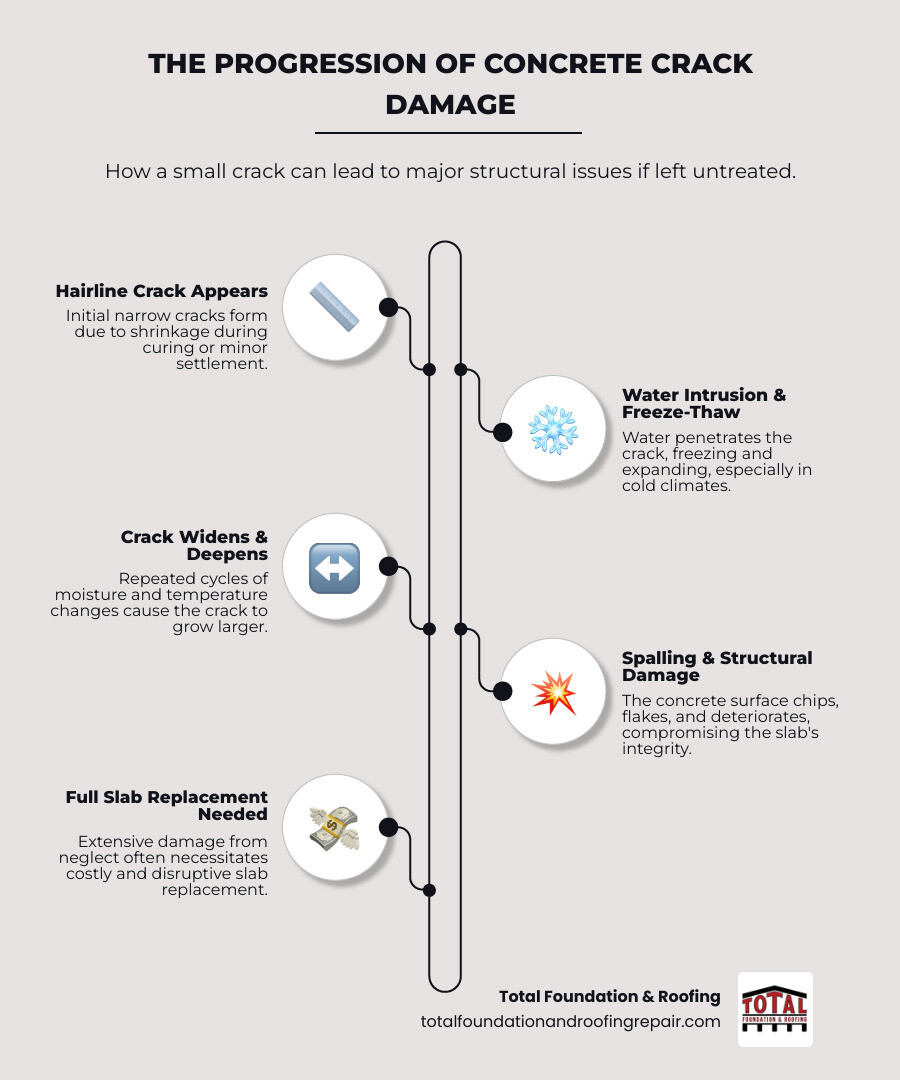
Effective concrete pad crack repair is essential for preventing water intrusion, which leads to structural damage and costly replacements. Even a hairline crack can allow water to freeze and expand, widening the damage over time. Acting quickly is key. For expert concrete services in the Texas Hill Country, our team has the experience to handle any issue.
Quick Action Guide for Concrete Crack Repair:
- Hairline cracks (under 1/4-inch): Use a flexible latex or polyurethane filler.
- Wide cracks (1/4-inch to 1/2-inch): Apply concrete patching compound with a backer rod.
- Deep or uneven cracks (over 1/2-inch): Consult a professional immediately.
- Active (moving) cracks: Seal with a flexible material to accommodate movement.
Cracks are inevitable, often caused by shrinkage, soil settlement, or ground heaving. Most minor cracks are fixable with the right approach. This guide will walk you through identifying the cause and choosing the correct repair method.
Concrete pad crack repair definitions:
The Ultimate Guide to Concrete Pad Crack Repair
This section provides a step-by-step guide to identifying, preparing for, and repairing concrete cracks. The primary goal is to prevent moisture intrusion, which causes deterioration, especially in climates with freeze-thaw cycles.
Assessing the Damage: What Kind of Crack Are You Dealing With?
Understanding the cause and type of crack is the first step in determining the right repair strategy.
1. What are the common causes of cracks in concrete slabs?
Cracks in concrete pads often stem from issues unique to the Texas Hill Country’s geology.
- Shrinkage: As new concrete cures and water evaporates, it shrinks, creating stress that leads to fine, hairline cracks.
- Heaving: Expansive clay soils, common in Texas, can swell with moisture and push the slab upward, causing it to break. This often results in one side of the crack being higher than the other.
- Settlement: If the soil base was not properly compacted, it can settle over time, creating voids. The unsupported slab then cracks under its own weight.
- Freeze-Thaw Cycles: Water that enters cracks can freeze and expand, widening the gap and accelerating damage.
- Other Causes: Heavy loads and invasive tree roots can also exert pressure that leads to cracking.
2. What are the different types of concrete cracks?
Diagnosing the crack type helps determine its severity.
- Hairline Cracks (Crazing): Fine, shallow surface cracks (under 1/8-inch wide), usually cosmetic.
- Narrow Cracks: Less than 1/4-inch wide. These can allow water intrusion and should be sealed.
- Wide Cracks: Over 1/4-inch wide, often signaling more serious underlying issues like settlement or heaving.
- Uneven Cracks: When one side of the crack is higher than the other, it indicates significant ground movement and potential structural problems. If you suspect a crack points to a deeper issue, it’s best to get a professional assessment.
- Active Cracks: Cracks that are actively growing in length or width. These require flexible repair materials.
Gathering Your Arsenal: Essential Tools and Materials
Having the right equipment is crucial for a lasting concrete pad crack repair.
13. What safety precautions should be taken when repairing concrete?
Always prioritize safety. Following guidelines from organizations like the Occupational Safety and Health Administration (OSHA) is non-negotiable. Wear the following protective gear:
- Safety Glasses
- Gloves (rubber or nitrile)
- Long Sleeves and Pants
- Dust Mask
- Ear Protection (when using power tools)
3. What are the best materials and tools for repairing concrete cracks?
Essential Tools:
- Wire Brush
- Chisel and Hammer
- Trowel (pointing and finishing)
- Caulk Gun
- Pressure Washer or Shop Vacuum
- Bucket and Stir Stick
8. What are the differences between latex, epoxy, and polyurethane concrete fillers?
Choosing the right filler is critical. This table breaks down the most common options:
| Material Type | Best For | Pros | Cons |
|---|---|---|---|
| Latex-based | Cracks up to 1/8″ to 3/8″ wide, non-structural | Easy to use, water cleanup, good flexibility, paintable after 7 days | Less durable than epoxy/polyurethane, lasts a couple of years depending on conditions |
| Epoxy | Cracks up to 1/8″ to 1/2″ wide, spalling, structural repairs (injection) | Excellent bond strength, very durable, waterproof, good for spalling | Can be rigid (less flexible for active cracks), requires careful mixing, messier cleanup |
| Polyurethane | Cracks up to 1/2″ deep and wide, active cracks | Superior flexibility, strong bond, excellent for active/moving cracks | Requires acetone for cleanup, typically not paintable, can be more expensive |
| Patching Compound (Mortar/Cement-based) | Wider cracks (>1/4″), chipped edges, deeper repairs | Strong, good for filling voids, can be textured to match concrete | Less flexible, not ideal for active cracks, requires proper curing, not for very narrow cracks |
For cracks wider than 1/4-inch, use a Concrete Backer Rod to control the depth of the filler and ensure a proper seal.
Prepping the Surface for a Perfect Concrete Pad Crack Repair
Proper preparation is non-negotiable for a durable repair. A clean, stable surface is necessary for the new material to bond.
4. What is the proper surface preparation for concrete crack repair?
- Clean: Use a wire brush and shop vacuum or pressure washer to remove all dirt, weeds, and loose debris from the crack. Any contaminants will act as a bond breaker.
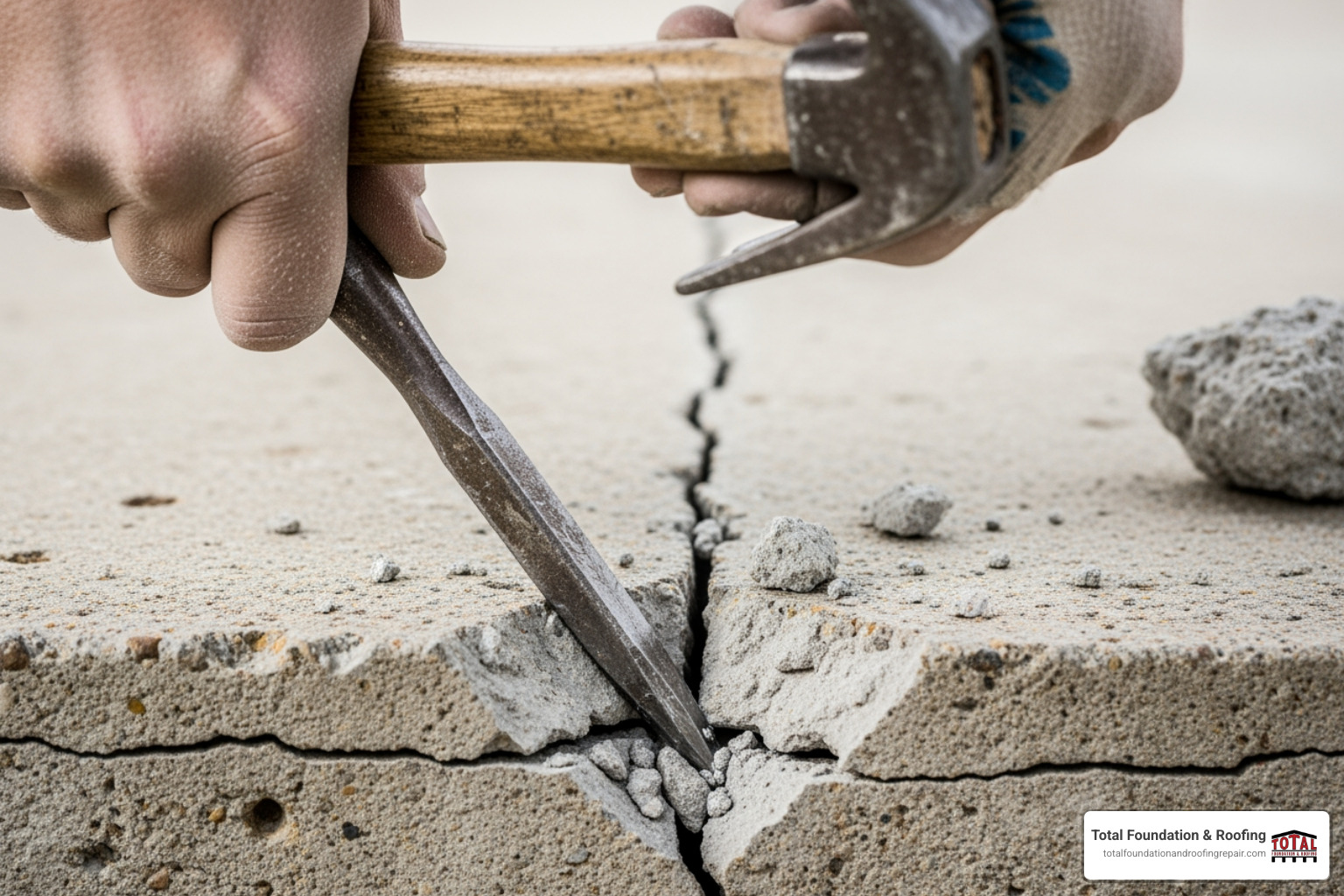
- Widen (Undercut): For cracks wider than 1/4 inch, use a hammer and chisel to widen the base of the crack, creating an inverted ‘V’ shape. This helps lock the patching material in place.
- Dry: Ensure the surface is completely dry before applying most fillers, especially polyurethane or epoxy. Check your product’s instructions, as some cement-based patches require a damp surface.
Step-by-Step Concrete Pad Crack Repair for Narrow Cracks (Under 1/4-Inch)
This method is ideal for hairline cracks and other minor fissures.
5. What is the step-by-step process for filling narrow concrete cracks?
- Clean the Crack: Use a wire brush and vacuum to remove all loose material.
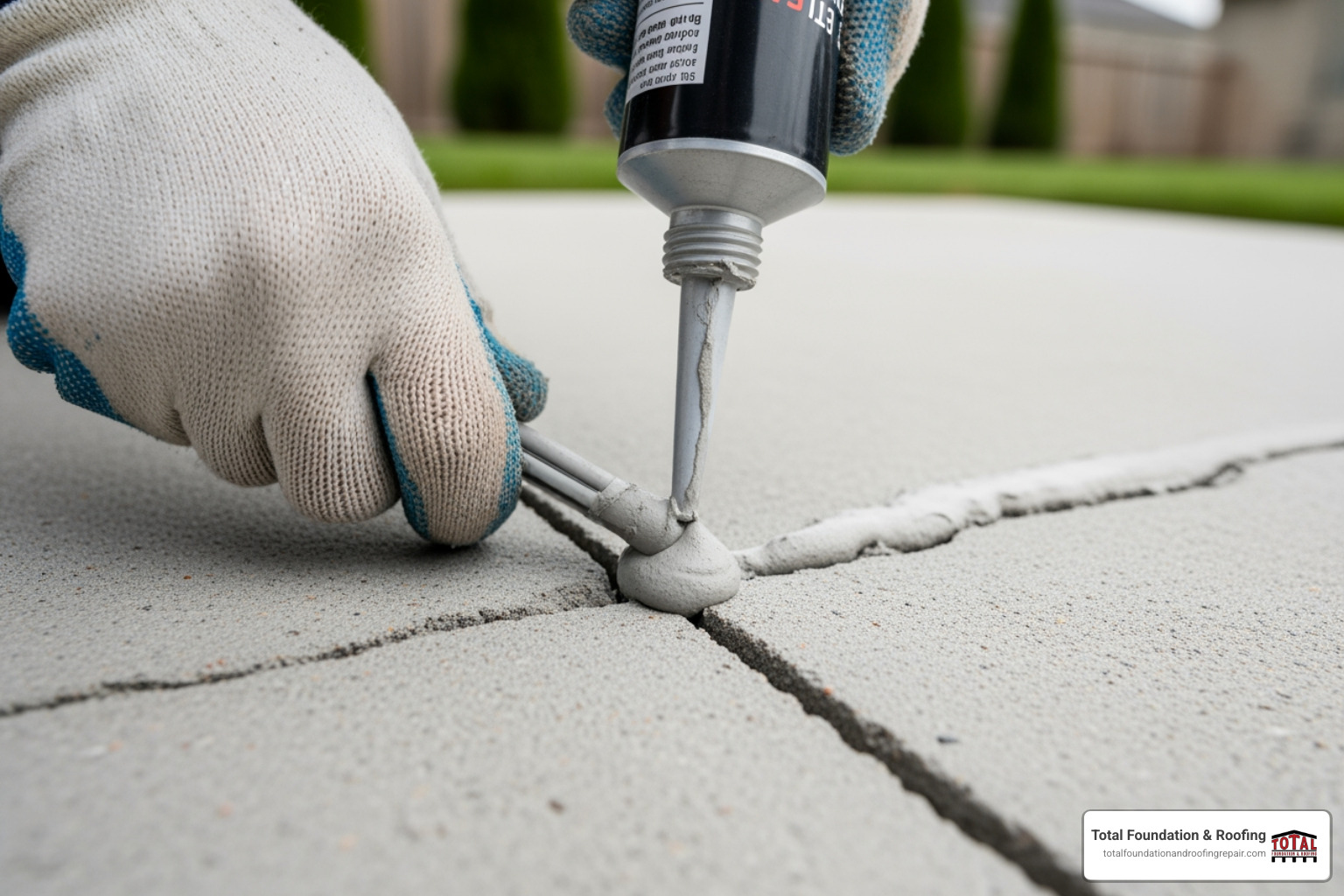
- Apply Filler: Load a flexible sealant (latex or polyurethane) into a caulk gun. Apply a steady bead, forcing the filler deep into the crack.
- Smooth the Surface: Use a putty knife or gloved finger to smooth the filler flush with the concrete. Clean up any excess immediately.
- Cure: Allow the filler to cure according to the manufacturer’s instructions, typically 24 hours before light traffic. A second application may be needed if the material settles.
Beyond the Patch: Lasting Repairs and Professional Solutions
Patching a crack is just the first step. Ensuring the repair lasts and knowing when to call for professional help is crucial, especially for property owners in areas like Kerrville, Fredericksburg, or Comfort, TX.
6. What is the step-by-step process for repairing wider concrete cracks?
For cracks over 1/4-inch wide, a more robust approach is needed.
- Prepare the Crack: Clean the crack thoroughly and undercut the edges into an inverted ‘V’ shape.
- Insert Backer Rod: For deep cracks, push a foam backer rod into the crack, leaving it about 1/2-inch below the surface. This saves material and creates a proper two-sided bond.
- Mix and Apply Patching Compound: Prepare a cement-based patching compound according to the instructions. Press the material firmly into the crack with a trowel, removing any air pockets.
- Finish: Smooth the patch level with the surrounding concrete. You can use a stiff brush to add texture to match the existing surface.
- Cure: Follow the curing instructions carefully (see below).
7. How do you repair chipped edges or corners on concrete?
Repairing chipped corners on steps or patios requires a similar process.
- Clean and Undercut: Remove all loose concrete and undercut the edges of the damaged area to create a mechanical lock for the patch.
- Build a Form: Use a piece of wood to create a form, holding it flush against the corner to rebuild the edge.
- Apply Patching Compound: Mix a quick-setting or vinyl-fortified concrete patch. Press it firmly into the void against the form.
- Shape and Cure: Smooth the patch with a trowel. Once it has begun to set, carefully remove the form and finish the surface. Allow it to cure completely.
Curing, Prevention, and When to Call a Pro
10. What are the best practices for curing concrete repairs?
Proper curing is a chemical process that gives the patch its strength.
- Cement-Based Patches: Keep the patch damp for several days. Cover it with plastic and mist it with water daily to ensure a slow, strong cure.
- Sealants and Epoxies: Follow the product’s specific instructions. Most require at least 24 hours before being subjected to traffic.
11. How can concrete cracks be prevented in the first place?
Preventing cracks is always better than repairing them.
- Ensure a Compacted Base: A stable, well-compacted gravel base is the best defense against settlement cracks.
- Use Control Joints: Cut shallow grooves into new concrete slabs to direct shrinkage cracks along a controlled line.
- Manage Water: Ensure proper drainage away from concrete pads to prevent soil erosion and heaving.
- Seal the Surface: Apply a quality concrete sealer every few years to protect against water intrusion.
9. When should a concrete crack be repaired versus when should the concrete be replaced?
While many cracks are a DIY fix, some are signs of deeper problems that require a professional.
Repair if:
- The cracks are less than 1/2-inch wide and relatively even.
- The issue is cosmetic, like hairline cracks or minor chipping.
Call a Professional for Replacement or Structural Repair if:
- Cracks are wider than 1/2 inch or one side is significantly higher than the other (unevenness greater than 1 inch).
- The crack is active, meaning it continues to widen or lengthen over time.
- You see multiple, interconnected cracks across a large area, suggesting the slab is failing.
- The concrete is crumbling or flaking (spalling) over a large surface.
- The crack is in a foundation wall, especially if it’s horizontal or jagged. These can indicate serious structural issues that require specialized techniques, as detailed in reports like the American Concrete Institute’s guide on epoxy injection methods.
Our team at Total Foundation & Roofing Repair specializes in diagnosing and fixing complex foundation and concrete issues throughout the Texas Hill Country.
For a comprehensive evaluation and professional repair of your concrete surfaces, request a free estimate from our concrete contractors. We’re here to help protect your investment for years to come.