
After the Storm: An Introduction to Hail Damage
Hail roof repair is essential after a storm to prevent leaks, water damage, and costly structural issues. For fast, professional Texas Hill Country roofing and foundation services, visit our Total Foundation & Roofing homepage. Here’s what you need to know right away:
Quick Answer: Key Steps for Hail Roof Repair
- Inspect for damage – Look for dented shingles, missing granules, cracked materials, and damaged gutters.
- Document everything – Take photos and videos of all visible damage.
- Contact your insurance – File a claim within 6-24 months (most policies require 1 year).
- Hire a professional – Get a licensed roofing contractor to assess damage and provide estimates.
- Complete repairs – Address damage promptly to prevent water infiltration and mold.
Average Cost: $940 for minor repairs, $4-$7 per square foot, up to $25,000+ for extensive damage or full replacement.
Hailstorms are a major threat in the Texas Hill Country, contributing to over $10 billion in U.S. property damage annually. When hail slams into your roof, it can crack shingles, dent metal, and strip protective granules. This damage, often invisible from the ground, shortens your roof’s lifespan and leads to leaks if ignored. As a leading provider of comprehensive roofing solutions, we’ve seen how critical prompt action is.
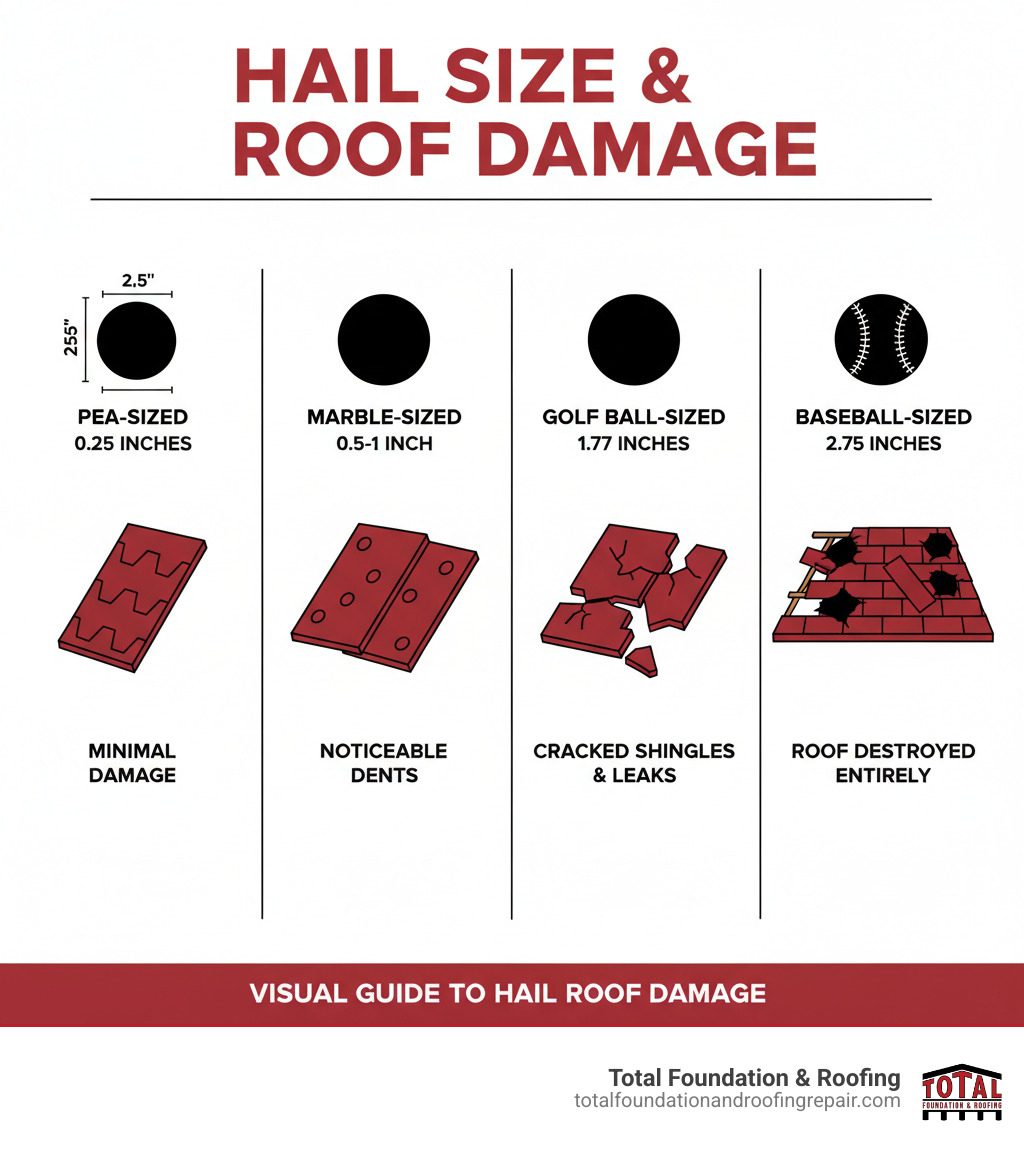
Hail size dictates the damage. While pea-sized hail is often harmless, stones of 1 inch or more can crack asphalt and puncture materials. Golf ball-sized hail (1.75 inches) causes significant damage, and baseball-sized hail (2.75 inches) can destroy a roof. Homeowners in Kerrville, TX and nearby often find dents on gutters or siding and wonder about their roof. If you see collateral damage, your roof likely took a hit, too.
Most homeowners insurance policies cover hail damage, but you typically have only 1 year from the storm date to file a claim. Navigating the process can be confusing, and since insurance companies use hail maps to verify storm dates, timing is critical. You can confirm event dates using the NOAA/NCEI Storm Events Database.
I’m Daniel Sowell, owner of Total Foundation & Roofing Repair. With over 18 years of experience, I’ve helped hundreds of Texas Hill Country homeowners steer the hail roof repair process, from inspection to insurance claims, ensuring their homes are properly restored.
Your Complete Guide to Hail Roof Repair
When a hailstorm tears through the Texas Hill Country, it can wreak havoc on your roof in ways that aren’t always visible. Understanding hail roof repair is critical for homeowners in Kerrville, Fredericksburg, and Comfort. Our team at Total Foundation & Roofing specializes in professional assessments, managing insurance claims, and executing precise repairs to restore your home’s first line of defense.
Identifying Hail Damage: What to Look For
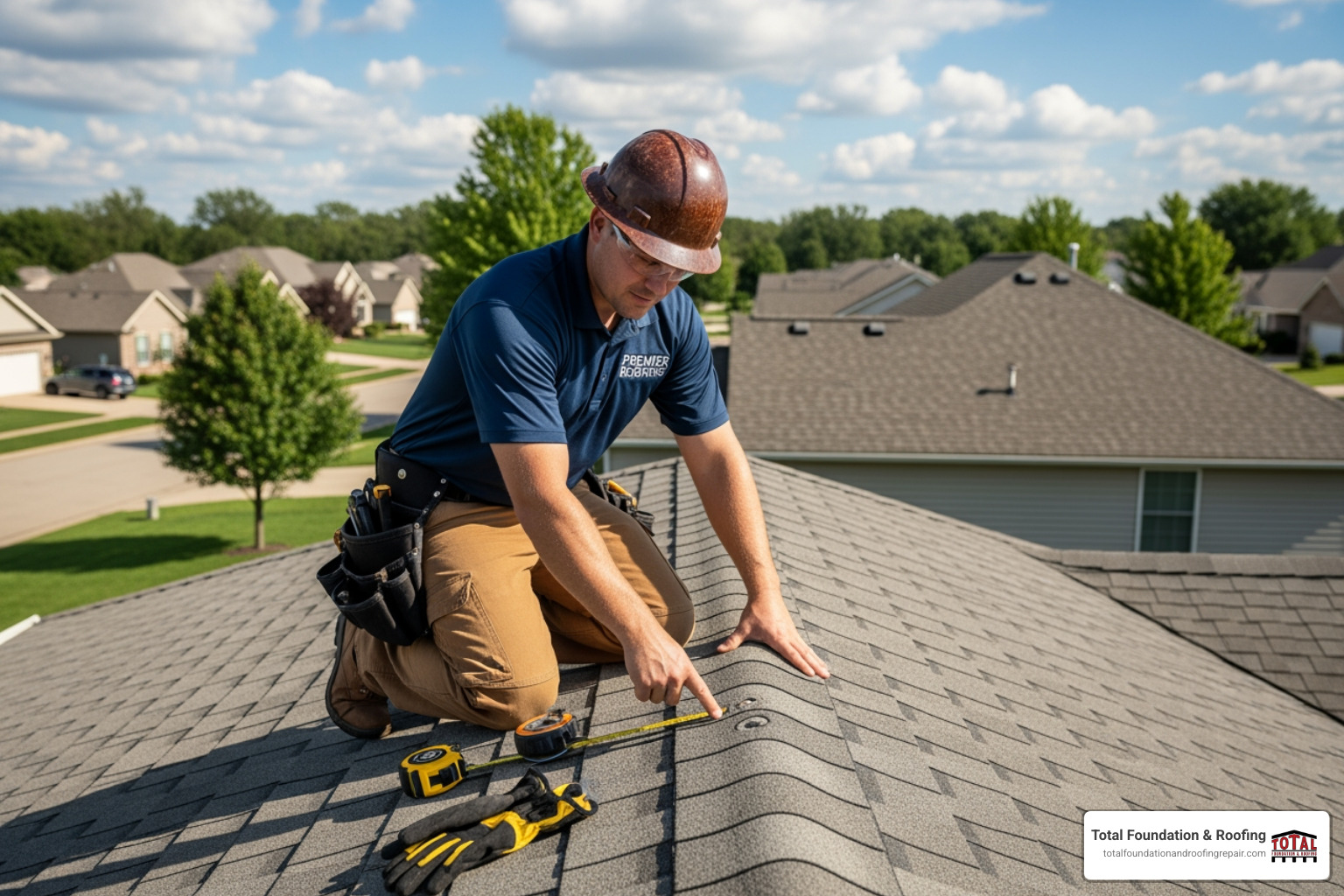
After a storm, inspect your roof from the ground (using binoculars for safety) to spot these common signs of hail damage:
- Dented or Bruised Shingles: Look for soft, black spots on asphalt shingles where the underlying mat is exposed.
- Granule Loss: Check gutters and downspouts for an accumulation of shingle granules, which protect the asphalt from UV damage.
- Cracked or Split Shingles: Severe hail can crack asphalt or split wood shingles, creating direct paths for water.
- Damaged Metal Components: Inspect roof vents, flashing, and gutters for dents or dings.
- Collateral Damage: Dents on your AC unit, siding, or window screens are a strong indicator that your roof is also damaged.
- Interior Water Stains: Stains on your ceiling mean a leak has already started, requiring immediate roof leak detection and repair.
Here’s how different hail sizes impact common roofing materials:
| Roofing Material | Hail Size for Damage | Type of Damage |
|---|---|---|
| 3-Tab Asphalt Shingles | 1 inch diameter | Dents, bruising, granule loss, cracks |
| Heavy Wood Shakes / Thick Fiberglass | 1.25 inches (golf ball size) | Dents, cracks, splits |
| Metal Roofing | 1 inch + diameter | Dents, dings, potential flashing damage |
| Concrete Tiles | 2 inches diameter | Cracks, fractures |
For superior protection in the Texas Hill Country, consider hail-resistant materials. The International Association of Certified Home Inspectors (NACHI) notes that metal roofing is a top choice for hail-prone areas. Look for products with an FM4470 approval, a third-party certification that rates a roof’s resistance to hail impact, which can sometimes lead to insurance discounts. Many homeowners also choose Class 4 impact-rated shingles such as Owens Corning Duration STORM to reduce hail damage risk.
The Step-by-Step Hail Roof Repair Process
Navigating hail roof repair is a clear process. Delaying can turn small issues into costly water damage.
- Initial Assessment & Documentation: Safely conduct a ground-level inspection. Take detailed photos and videos of all damage and note the date of the storm.
- Professional Roof Inspection: Contact a qualified roofing contractor. A professional inspection is non-negotiable to find hidden damage and provide the evidence needed for your claim.
- File Your Insurance Claim: Contact your provider promptly with your documentation and our inspection report.
- Meet the Adjuster: Have your contractor present when the insurance adjuster inspects the roof. This protects your interests and ensures a fair assessment.
- Temporary Repairs: If there are active leaks, we can perform temporary fixes, like an emergency roof tarp or immediate emergency roof repair, to prevent further water damage while awaiting claim approval.
- Repair or Replacement: Based on the damage extent, we’ll either repair isolated sections or recommend a full replacement. Widespread damage or an older roof often warrants a replacement. Our Home Roof Replacement Ultimate Guide can help with this decision.
- Final Walkthrough: We conduct a final inspection with you to ensure complete satisfaction and provide all warranty information.
Warning: Avoid DIY Hail Damage Repair. Attempting to fix a hail-damaged roof yourself is dangerous and can be costly. You risk serious injury, may miss critical damage, and could void your roof’s warranty. Insurance companies typically won’t reimburse DIY work, and poor repairs can complicate future claims. Always hire a certified professional.
Navigating Insurance Claims and Costs
Most homeowners insurance policies cover hail damage, but navigating the claim can be tricky.
Filing Your Claim:
- Notify Promptly: Contact your insurer as soon as you suspect damage. Most policies have a one-year limit to file a claim, but some are shorter. Insurers use hail maps to verify storm dates, so don’t wait.
- Document Everything: Provide photos, the storm date, and a detailed estimate from a reputable contractor.
- Meet the Adjuster: Have your roofer present to ensure all damage is accounted for.
- Review the Estimate: Compare the adjuster’s estimate with your contractor’s. We can help file a supplemental claim for any discrepancies.
Understanding Your Policy:
- Actual Cash Value (ACV): Pays for the depreciated value of your roof. This payout is often not enough to cover a full replacement.
- Replacement Cost Value (RCV): Pays to replace your roof with similar quality materials. You’ll get an initial check for the ACV and the rest (recoverable depreciation) after work is complete. RCV policies offer far better protection.
Understanding the Costs:
The cost of hail roof repair varies. Minor repairs might be a few hundred dollars, while a full replacement can cost $5,000 to $25,000+. The average is $4–$7 per square foot. Factors influencing cost include materials, scope of work, labor, and associated damage like water damage or mold remediation. For a detailed breakdown, see our Complete Roof Repair Estimate Guide.
Managing Costs:
- Use Your Insurance: Your main cost will be the deductible.
- Get Multiple Quotes: Compare estimates from reputable, local contractors.
- Act Quickly: Prevent minor damage from becoming a major expense.
This storm restoration process guide from GAF is a helpful external resource.
After the Storm: Protecting Your Home and Choosing a Contractor
The real danger of hail damage begins after the storm ends. If left unaddressed, minor issues escalate into major problems that are far more expensive than the initial repair.
What are the long-term effects of unaddressed hail damage?
- Immediate Effects: Hail knocks off protective granules, causing shingles to age faster. It also cracks and dents shingles, compromising the waterproof barrier and making them vulnerable to wind uplift.
- Long-Term Effects: Water seeps through damaged areas, leading to leaks, ruined insulation, and damaged drywall. This moisture creates a breeding ground for mold and mildew, which poses health risks and requires costly remediation. Over time, water infiltration causes wood rot in your roof’s decking and rafters, compromising your home’s structural integrity. An attic water leak is a serious sign that damage has progressed.
Unrepaired hail damage leads to a cascade of costly problems, including extensive interior water damage, costly mold remediation, damaged gutters, and structural rot.
How do you choose a qualified roofing contractor?
After a storm, ‘storm chaser’ roofers often appear. Choosing a reputable, local contractor is crucial to protect your investment. Here’s what to look for:
- Local Expertise: A contractor who understands the Texas Hill Country’s climate and building codes. They’ll be here long after the storm is gone.
- Licensed and Insured: Ask for current certificates of liability and worker’s compensation insurance to protect yourself from liability. You can also review consumer resources from the Roofing Contractors Association of Texas (RCAT).
- Positive Reviews and References: Check Google and the BBB for a history of quality work and customer satisfaction.
- Hail Claim Experience: Choose a roofer who knows how to work with insurance companies and can advocate on your behalf.
- Written Estimates and Contracts: A detailed contract should outline all costs, materials, and timelines, protecting you legally.
- Strong Warranties: Reputable contractors offer multi-year workmanship warranties, demonstrating confidence in their work.
Why hire a professional for hail damage repair?
While DIY might seem tempting, hiring a professional for hail roof repair is a necessity that saves money and prevents future disasters.
- Accurate Assessment: Trained experts spot hidden damage you would miss.
- Safety: Roofing is dangerous. Professionals have the training and equipment to work safely.
- Quality Workmanship: Ensures repairs are durable and meet industry standards.
- Insurance Claim Assistance: We speak the adjuster’s language, helping you maximize your claim and steer the process.
- Warranties: Professional work comes with workmanship and material warranties, giving you peace of mind.
- Efficiency: We complete jobs quickly, protecting your home from the next storm.
When hailstorms strike our communities in Kerrville, Fredericksburg, or Comfort, we understand the stress and uncertainty you’re facing. At Total Foundation & Roofing, we’ve helped hundreds of families through this exact situation. We’re here to guide you every step of the way with expert guidance and reliable storm damage repair services in the Texas Hill Country. We’re your neighbors, and we’re here to help protect your home.