
Why Slab Concrete Repair Matters for Texas Hill Country Homeowners
Slab concrete repair is the process of fixing damaged concrete slabs to restore their structural integrity and prevent further damage. For homeowners in the Texas Hill Country, understanding this process is crucial, as our expansive clay soils and temperature shifts make concrete prone to cracking. At Total Foundation & Roofing Repair, we know that addressing these issues correctly with professional concrete services is far more cost-effective than a full replacement.
Ignoring a crack is never a good strategy. Unaddressed cracks allow moisture and soil gases like radon to enter your home, compromise decorative floor coatings, and signal underlying issues that will only worsen. A small crack today can lead to thousands in structural repairs tomorrow. The global concrete repair market is projected to reach $25.8 billion by 2030, reflecting a simple truth: repair, when done right, is a smart investment.
This guide covers everything you need to know about slab concrete repair, from identifying the causes of cracks to understanding your repair options and knowing when to call a professional.
I’m Daniel Sowell, owner of Total Foundation & Roofing Repair in Kerrville, Texas. With over 18 years of experience, I’ve helped hundreds of homeowners restore their concrete with lasting results, addressing everything from foundation issues to problems with concrete slab settling.
Understanding and Executing Slab Concrete Repair

At Total Foundation & Roofing, we’ve learned that identifying the cause of a crack is as important as fixing it. Without understanding why your concrete is failing, any repair is just a temporary patch. Our goal with every slab concrete repair is to restore structural integrity and prevent future damage—not just make it look better for a few months.
Identifying the Root Causes and Risks of Slab Cracks
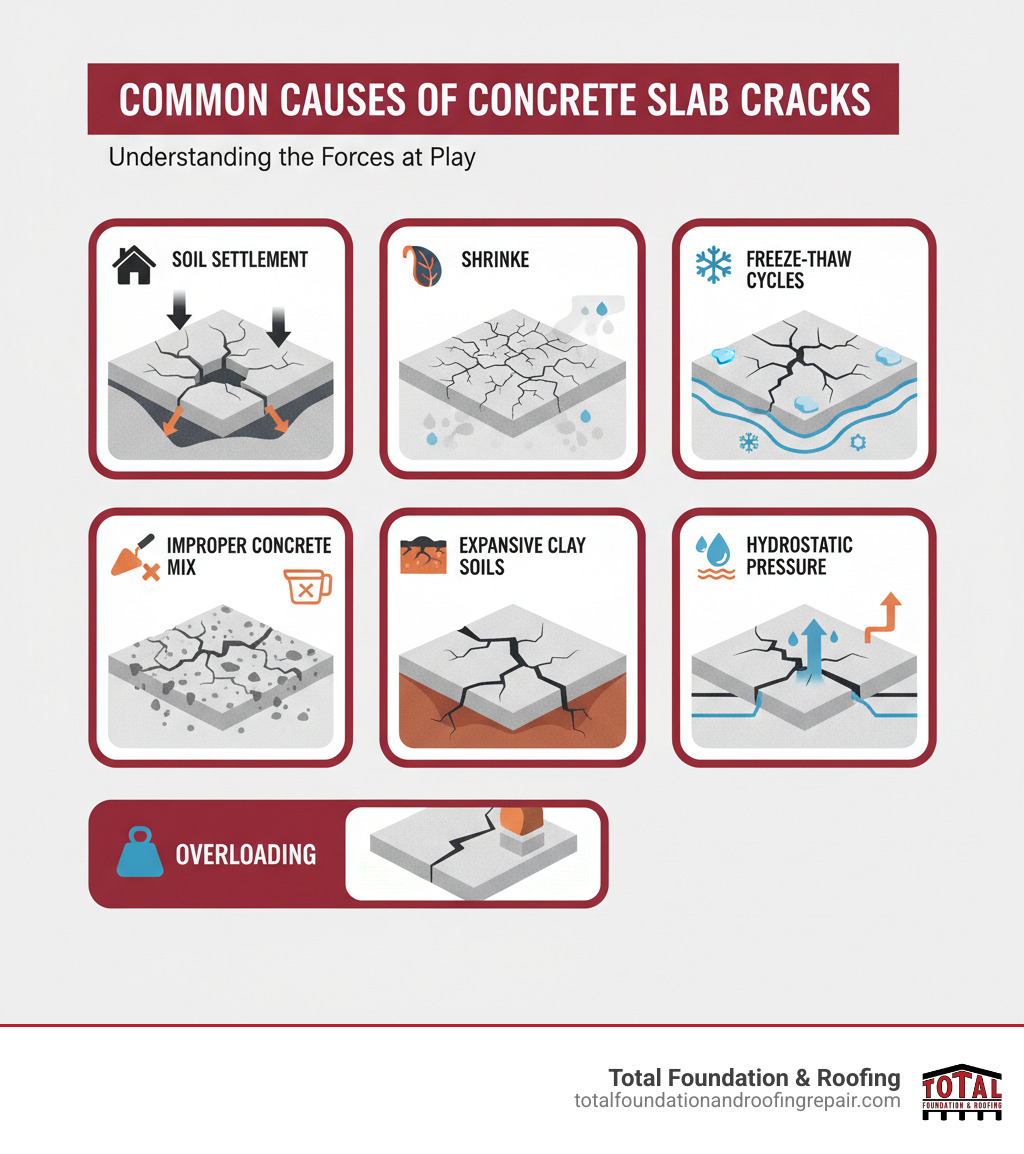
Cracks in your concrete are telling a story about what’s happening underground. The primary causes include:
- Soil Settlement & Expansive Clay Soils: In the Texas Hill Country, this is the main culprit. The ground shifts, swells, or shrinks, causing the slab above to lose support and crack under its own weight.
- Improper Concrete Mix: An incorrect water-to-cement ratio or poor-quality materials create weak concrete that is predisposed to cracking.
- Drying Shrinkage: As concrete cures, it naturally shrinks. Without proper control joints, this process creates stress that leads to cracks.
- Freeze-Thaw Cycles: Water seeps into pores, freezes, expands, and widens existing cracks over time.
Ignoring these cracks invites serious risks:
- Structural Integrity Loss: Cracks are weak points that can compromise the entire slab.
- Moisture Intrusion: Water penetration leads to mold, soil erosion, and a cycle of worsening damage.
- Soil Gas Migration: Cracks can allow harmful gases like radon to enter your living space.
- Tripping Hazards & Finish Damage: Uneven surfaces create safety risks, and slab movement will ruin any decorative coatings or tile.
Addressing these underlying issues often requires specialized foundation crack repair techniques. As confirmed by the U.S. Bureau of Reclamation’s guide to concrete repair, understanding these causes is essential for effective repair strategies.
Traditional vs. Modern Repair Methods
The evolution of slab concrete repair has moved from temporary fixes to permanent solutions. Traditional methods like simple concrete patching or polyurethane fillers often fail because they lack the strength and flexibility to withstand future slab movement. Even epoxy injection, while useful for bonding stable hairline cracks, can simply transfer stress to another part of the slab if the underlying movement isn’t addressed.
Carbon fiber reinforcement is the modern solution. Products like RHINO Carbon Fiber Concrete Crack Lock are designed to add tensile strength, which concrete naturally lacks. As detailed by RHINO Carbon Fiber, these systems act like high-strength stitches, permanently holding the crack together and preventing the slab from pulling apart. This technology, once reserved for bridges, offers a permanent structural fix for residential slabs.
The Role of Advanced Materials in Permanent Slab Concrete Repair
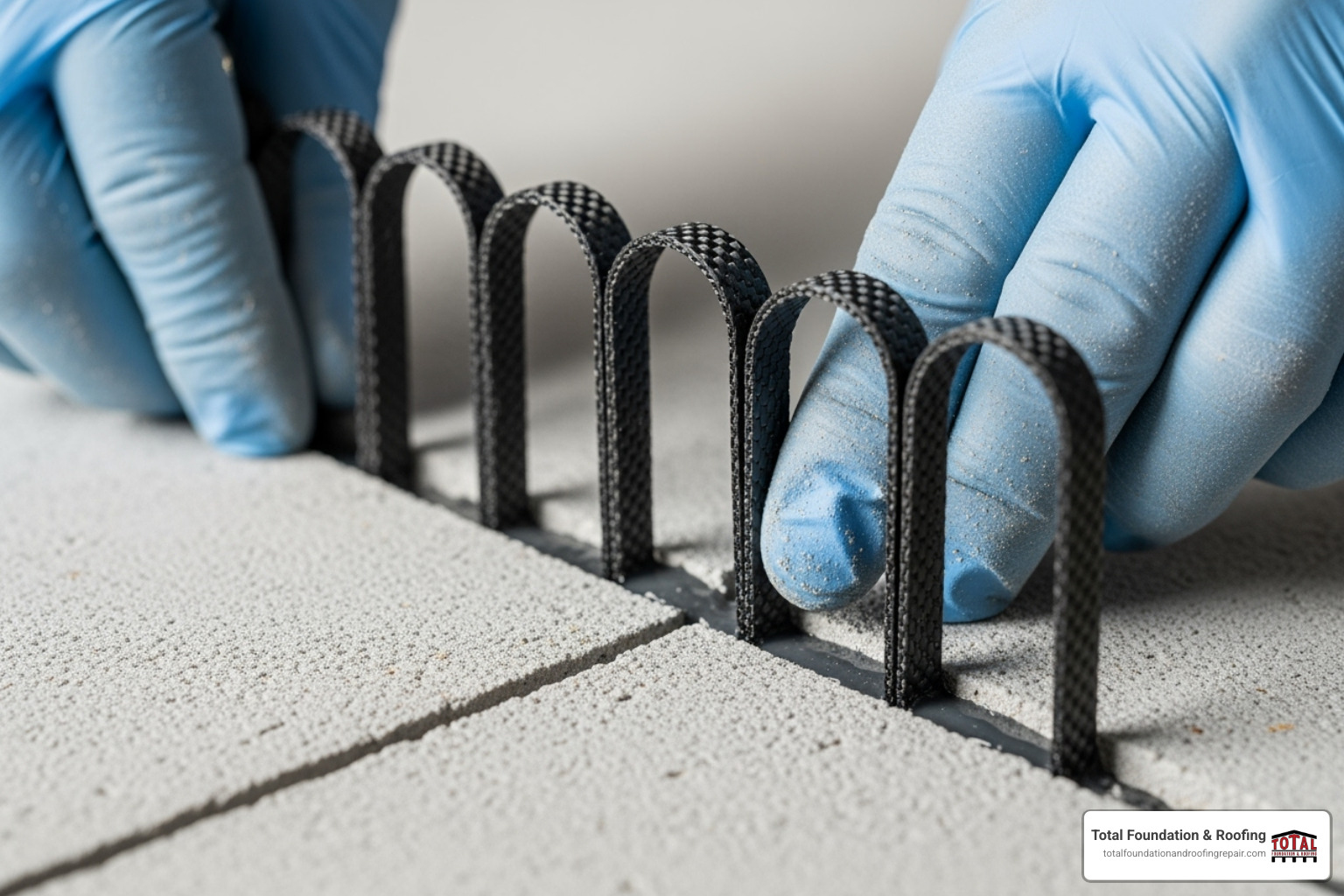
Lasting repairs depend on advanced materials. Carbon fiber staples are the backbone of a permanent structural repair. They are embedded across the crack, creating a non-corrosive bridge that is stronger than steel. This is why many concrete coating companies now require mechanical reinforcement to warranty their work—a simple fill isn’t enough.
We pair this structural reinforcement with flexible and elastic sealants like Sashco Slab. This product bonds aggressively to concrete but remains highly elastic, stretching to accommodate minor slab movement without breaking its seal. It is textured to match concrete and offers excellent weather resistance, making it ideal for the Texas climate.
The Repair Process: From Preparation to Finishing
A repair is only as good as its preparation. Our systematic process ensures success:
- Preparation: We start by thoroughly cleaning the crack of all debris. We then grind or saw-cut the edges to create a rough profile for maximum adhesion, ensuring only solid, stable concrete remains.
- Application: For deep cracks, we insert a backer rod before applying a high-performance sealant. For structural issues, we cut slots across the crack and embed carbon fiber staples with high-strength epoxy, effectively stitching the concrete together.
- Curing: We account for environmental factors like temperature and humidity, which affect curing times. The repaired area must be protected from traffic until it has gained full strength to ensure a durable, long-lasting result.
For clients in the Kerrville area, we apply these best practices rigorously, tailoring our approach to the specific challenges of our local climate and soil. Find more information about our services in Kerrville, TX.
Making the Right Choice: DIY vs. Professional Repair and Long-Term Value
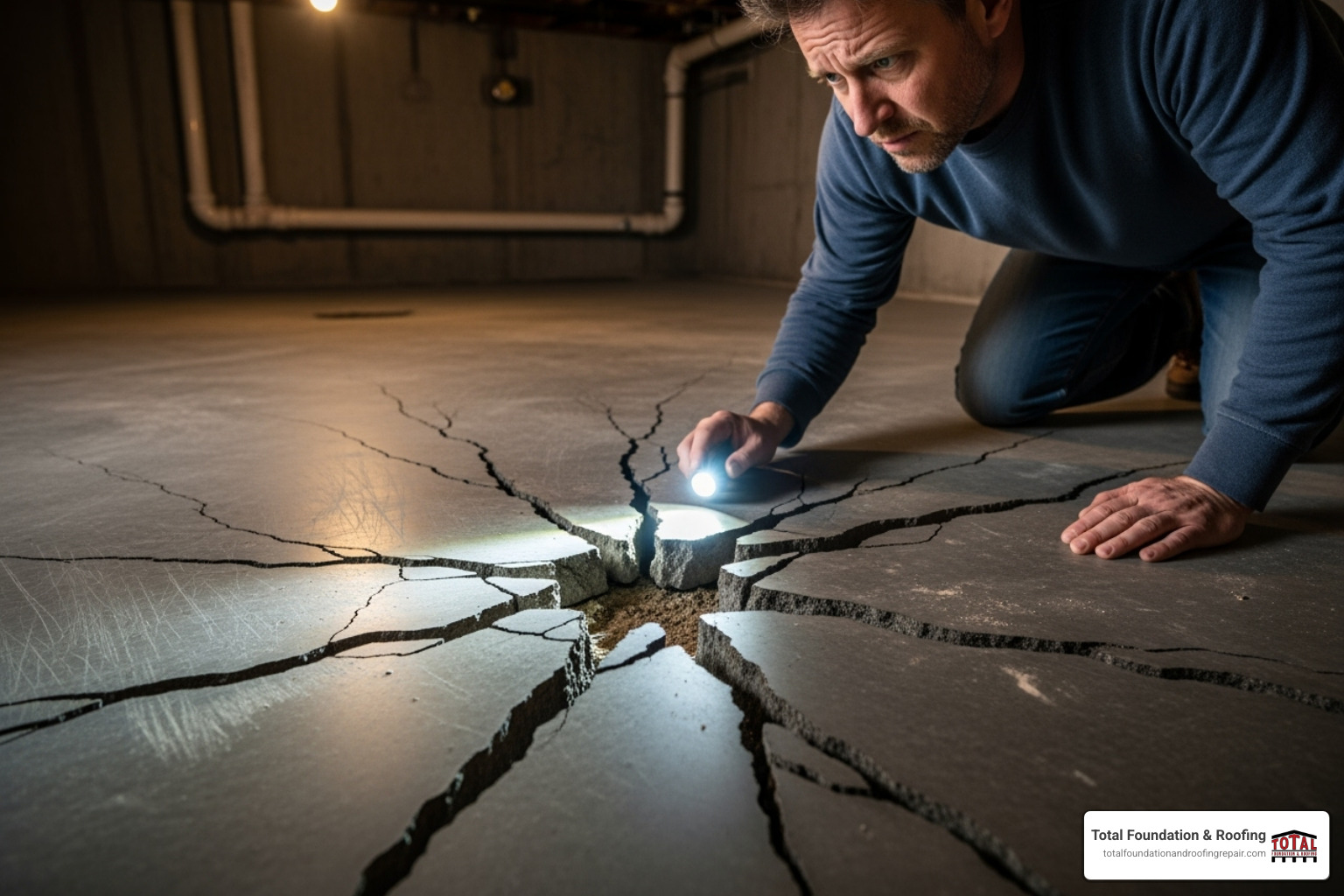
Deciding how to handle a concrete crack is a critical decision. While a minor, cosmetic crack might seem like a simple DIY project, many issues signal a more serious problem that requires professional analysis. Misdiagnosing the problem can lead to failed repairs and greater costs down the line.
When to Call a Professional Contractor
Certain signs indicate that your slab concrete repair requires professional expertise. Call a contractor if you observe any of the following:
- Cracks wider than 1/4 inch: This width suggests significant movement or stress.
- Vertical displacement: When one side of the crack is higher than the other, it’s a clear sign of differential settlement or heave.
- Actively growing cracks: If a crack is getting longer or wider, it points to an ongoing structural problem that needs immediate attention.
- Water leaking through a crack: Water intrusion can lead to mold, foundation damage, and property loss.
- Multiple or spiderwebbing cracks: This pattern often indicates widespread stress or foundation issues, a common problem in areas with expansive soils like Fredericksburg.
A professional contractor can accurately diagnose the root cause, ensuring the repair is permanent and effective. Many coating companies even require professional crack reinforcement before they will warranty their work.
The Long-Term Economics of Your Slab Concrete Repair
When evaluating slab concrete repair options, it’s crucial to consider the lifetime cost, not just the initial price tag.
Temporary Patches: A DIY fix with hardware store filler is cheap initially but almost always fails. The crack reopens, and you’re back to square one. Over time, these repeated small costs add up.
Permanent Repairs: A professional repair using carbon fiber and high-performance sealants has a higher upfront cost but is designed to last for decades. It’s a one-time investment that solves the problem for good, saving you money and future headaches.
Doing Nothing: This is the most expensive option. Unaddressed cracks worsen, leading to major structural damage, water intrusion, and mold growth. The cost of remediation for these issues can be astronomical, and a visibly damaged slab will significantly decrease your property’s value.
Proactive, permanent repairs are a wise investment that protects your property. At Total Foundation & Roofing, we provide expert assessments and durable slab concrete repair solutions custom to the unique conditions of the Texas Hill Country. We believe in offering solutions that provide the best long-term value for our clients.
For a comprehensive solution in the Texas Hill Country, call us at (830) 310-8223 or request a consultation through our concrete contractor services page. We’re here to ensure your concrete is safe, functional, and stable for years to come.