
What Flood Damage Restoration Really Involves — and Why It Matters
Flood damage restoration is the process of returning a property to its pre-flood condition after water intrusion — and it’s far more complex than simply drying things out. When your home suffers from severe water intrusion, partnering with a licensed specialist like Total Foundation & Roofing Repair is critical to protecting your structural foundation and roof.
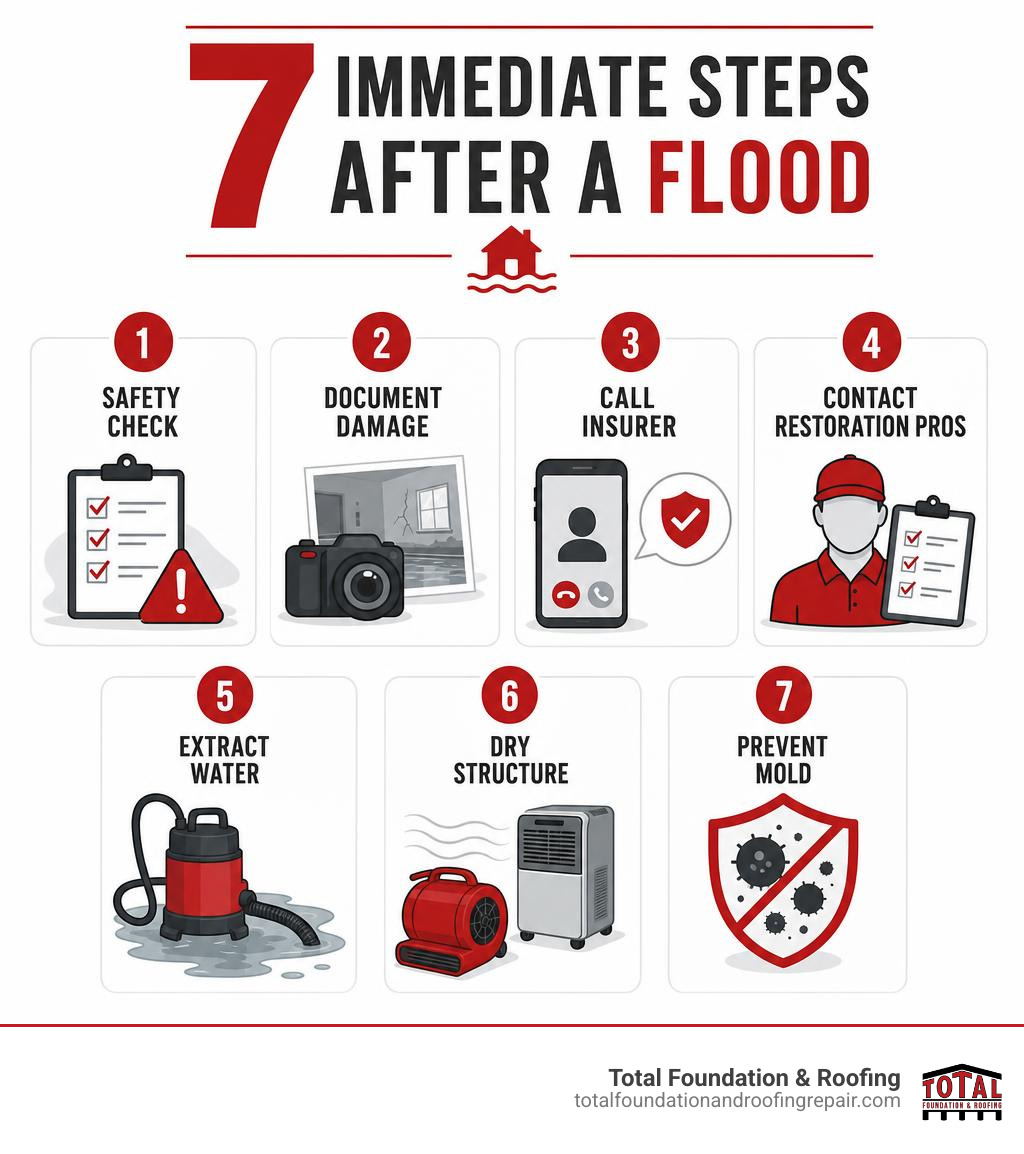
Here’s what professional flood damage restoration typically includes:
- Safety assessment — checking for electrical hazards and structural instability before anyone enters
- Water extraction — removing standing water with industrial pumps and vacuums
- Contaminated material removal — disposing of drywall, flooring, and insulation that can’t be saved
- Structural drying and dehumidification — using commercial-grade equipment for 3–7 days
- Sanitization and antimicrobial treatment — killing bacteria, pathogens, and mold spores
- Damage documentation — photographing and recording everything for insurance claims
- Repairs and reconstruction — restoring the structure to safe, livable condition
Flooding is one of the most destructive events a home can face. Unlike a slow leak from a pipe, floodwater carries sewage, chemicals, and bacteria directly into your walls, floors, and foundation. Mold colonies can begin forming on damp surfaces within 24 to 48 hours of water exposure. And the longer the water sits, the worse — and more expensive — the damage becomes.
For Texas homeowners, the stakes are especially high. Storm events across the Hill Country can push water into homes fast, leaving little time to react. The difference between a manageable restoration and a six-figure rebuild often comes down to how quickly and correctly the response begins.
The professional services you choose after a flood will directly affect your home’s structural integrity, your family’s health, and your ability to file a successful insurance claim.
I’m Daniel Sowell, owner of Total Foundation & Roofing Repair in Kerrville — with over 18 years of hands-on construction experience, I’ve seen how flood damage restoration decisions made in the first 24 hours can determine whether a home is saved or lost. This guide draws on that field experience to help you make the right call, fast.
Flood damage restoration terminology:
Flood Damage vs. Water Damage: Why the Distinction Matters
Many homeowners use the terms “water damage” and “flood damage” interchangeably, but insurance companies certainly do not. Mixing them up can cost you tens of thousands of dollars out of pocket.
The core distinction lies in the water’s source:
- Water Damage: Typically originates from an internal source within the property. This includes sudden and accidental events like a burst pipe behind the bathroom wall, a failing water heater, or a washing machine supply line failure. Standard homeowners insurance policies generally cover these incidents.
- Flood Damage: Occurs when rising surface water enters your home from the outside. This includes overflowing rivers, heavy rainwater pooling against your foundation, storm surges, or mudslides. Standard homeowners insurance policies almost universally exclude this. To be covered, you must have a separate flood policy, usually through the National Flood Insurance Program (NFIP) or a private flood insurer.
For a deeper look at localized flooding patterns and how water travels across Texas Hill Country properties, consult our Local Flooding Repair Guide.
Understanding Water Contamination Categories in Flood Damage Restoration
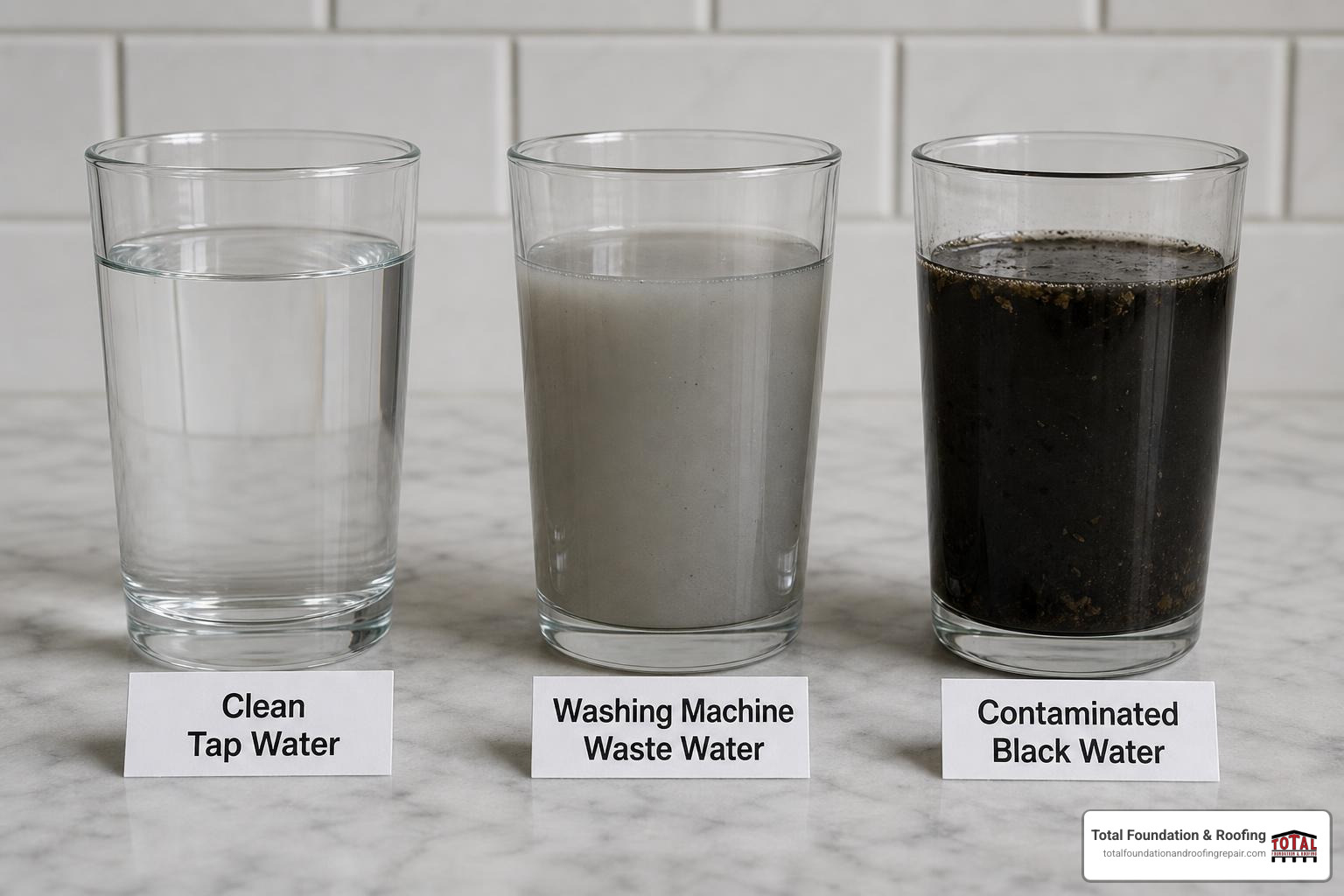
Not all water is created equal. The Institute of Inspection, Cleaning and Restoration Certification S500 standard classifies water into three distinct categories based on its level of contamination. This classification dictates the safety protocols, protective gear, and cleanup methods required.
| Water Category | Common Name | Source | Health Risk | Restoration Protocol |
|---|---|---|---|---|
| Category 1 | Clean Water | Broken water supply lines, tub overflows, melting snow | Low | Direct extraction, rapid drying of materials. |
| Category 2 | Gray Water | Dishwasher/washing machine discharge, sump pump failures | Moderate | Sanitization required; carpet padding must be replaced. |
| Category 3 | Black Water | Sewage backups, river/coastal flooding, storm runoff | Extreme | Complete removal of porous materials, heavy disinfection. |
By definition, external floodwater is always classified as Category 3 black water. By the time rainwater or river overflow reaches your living room, it has traveled over soil, asphalt, lawns, and agricultural land. It carries raw sewage, chemical runoff, heavy metals, and dangerous pathogens like E. coli.
Because of these extreme health hazards, the cleanup process for Category 3 water is highly regulated. For a detailed breakdown of these strict protocols, read about the Flood Damage Restoration: Step-by-Step Process Explained.
The Step-by-Step Professional Flood Damage Restoration Process
When we arrive at a flooded home in Kerrville, Fredericksburg, or Comfort, we follow a rigorous, multi-phase process aligned with IICRC standards to protect your property and health.
[Phase 1: Mitigation] --> [Phase 2: Remediation] --> [Phase 3: Reconstruction]
(Stop water & extract) (Sanitize & dry out) (Structural rebuild)
- Emergency Assessment & Safety Precautions: We locate and stop the water source if it is ongoing. We shut off the electrical mains to prevent electrocution and inspect the foundation and framing for structural stability.
- Water Extraction & Debris Removal: Using powerful truck-mounted vacuum systems and submersible pumps, we extract thousands of gallons of standing water. We then remove saturated debris, ruined furniture, and unsalvageable personal items.
- Contaminated Material Removal (Demolition): Because floodwater is Category 3, porous building materials below the flood line must be removed. This includes cutting away drywall, pulling up carpet, removing carpet padding, and discarding saturated fiberglass insulation.
- Structural Cleaning & Sanitization: We wash and scrub all remaining structural framing, concrete slabs, and subfloors with EPA-registered antimicrobial solutions to kill bacteria and prevent microbial growth.
- Structural Drying & Dehumidification: We deploy industrial air movers and low-grain refrigerant (LGR) dehumidifiers to pull deep-seated moisture out of the remaining framing and foundation.
- Reconstruction: Once the moisture readings confirm the home is completely dry, we begin the process of rebuilding, from drywall installation to finish carpentry.
If your property has suffered damage from a severe storm event, you can learn more about our comprehensive Storm Damage Restoration Service.
Key Equipment and Techniques for Structural Drying
Leaving a home to air-dry naturally after a flood is a recipe for structural failure. Wood framing warps, subfloors buckle, and concrete slabs retain moisture that will eventually ruin your new flooring.
Professionals use advanced structural drying equipment to speed up evaporation:
- Industrial LGR Dehumidifiers: These pull 15 to 20 gallons of water vapor out of the air daily, maintaining low relative humidity to prevent mold.
- High-Velocity Air Movers: These create rapid airflow across wet surfaces, accelerating the evaporation of moisture trapped in building materials.
- Moisture Meters & Thermal Imaging Cameras: We use these tools to map moisture hidden inside wall cavities, behind trim, or deep within concrete slabs. This ensures we don’t stop drying until the structure has reached its dry standard.
To understand how specialized drying protocols apply to below-grade structures, refer to these Basement Flood Cleanup Services.
Preventing Mold Growth and Secondary Structural Issues
In the humid Texas climate, mold is a relentless enemy. Mold colonies can establish themselves on damp organic materials—like wood framing, drywall paper, and plywood—within 24 to 48 hours of water exposure.
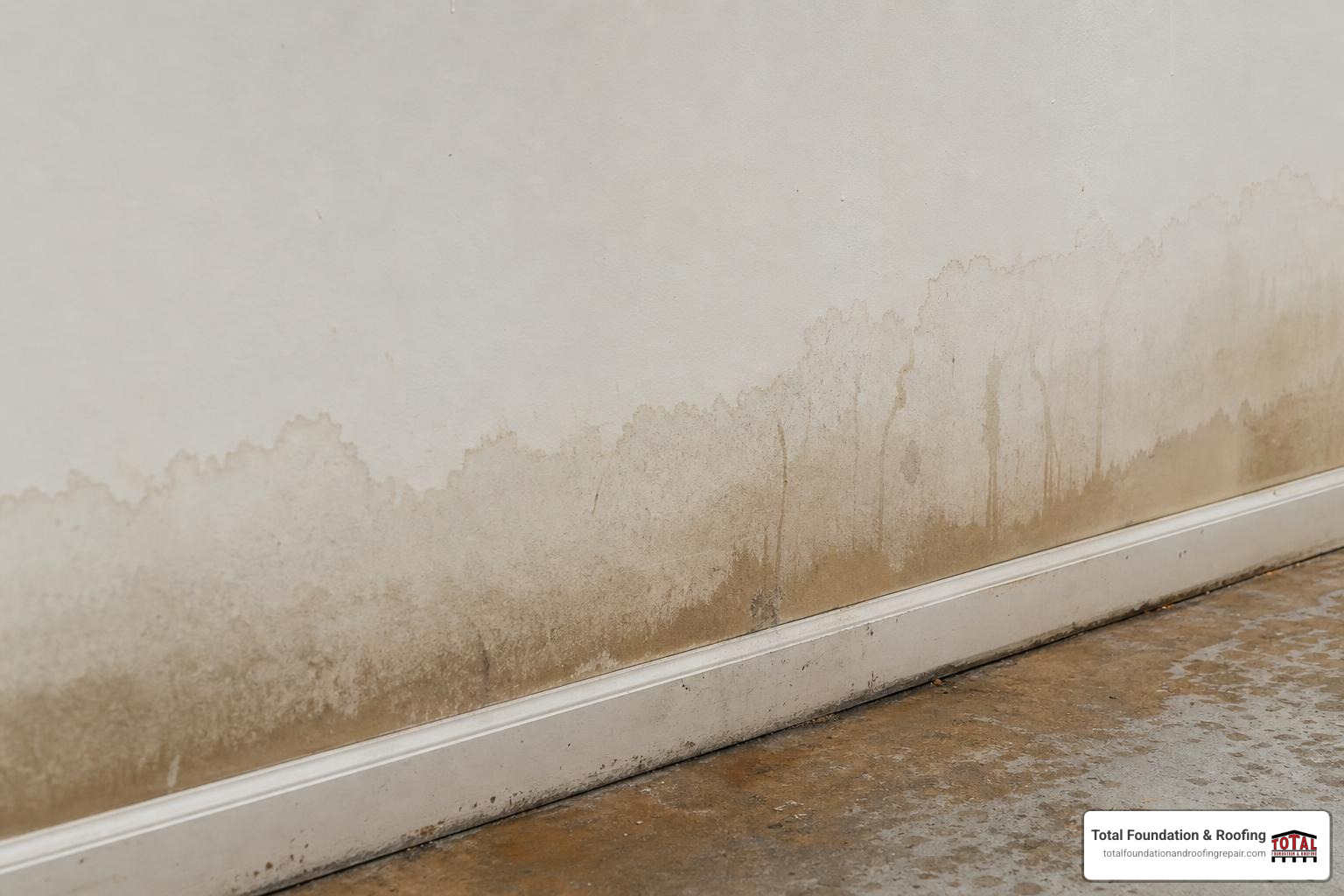
Because drywall acts like a giant sponge, moisture will wick upward far above the actual standing water line. Our standard practice is to cut drywall 24 to 48 inches above the visible water line to ensure we remove all damp material. Failing to do this can trap moisture inside the wall cavity, leading to hidden structural rot and toxic mold growth.
To learn how we detect hidden moisture plumes before they lead to mold outbreaks, read about Kerrville Leak Detection: Uncovering Hidden Water Damage.
Navigating Insurance Claims and Documentation
Filing an insurance claim for flood damage is notoriously stressful. Because standard homeowners insurance doesn’t cover rising water, you must document every detail to satisfy NFIP or private flood policy requirements.
To protect your claim:
- Take Photos and Videos: Before any cleanup begins, document the high-water marks inside and outside the home. Take photos of every damaged item, wall, and floor.
- Keep Damaged Items: Do not throw away expensive items or appliances until an adjuster has inspected them.
- Create an Inventory: Compile a detailed list of damaged personal property, including estimated values, purchase dates, and receipts if available.
- Utilize Professional Moisture Mapping: We provide comprehensive moisture logs and drying documentation that prove to your insurer exactly what was wet and why it required professional extraction and drying.
For guidance on finding certified local professionals who can assist with this documentation, read our guide on how to Find the Best Flood Damage Restoration Near Me Before You Sink.
When to Hire a Professional for Flood Damage Restoration
While minor Category 1 water damage (like a clean water spill on tile) can sometimes be handled as a DIY project, Category 3 floodwater should never be cleaned up without professional help.
Attempting to clean up floodwater yourself exposes you to serious health risks, including hepatitis, salmonella, and respiratory issues from mold. Furthermore, without commercial-grade dehumidifiers and moisture meters, it is virtually impossible to dry a home’s structural framing completely. This leads to dry rot, structural settling, and long-term foundation issues.
If your roof was also damaged during the storm, allowing rainwater to pour in from above, you will need to coordinate both structural drying and roof repairs. We recommend using high-quality materials from trusted manufacturers like GAF to ensure long-term wind and water resistance. Learn more about managing this dual threat in our article on Roof Water Damage Repair.
Protecting Your Property Investment and Restoring Peace of Mind
At Total Foundation & Roofing, we understand that a flooded home is an emotional and financial crisis. Serving our neighbors in Kerrville, Fredericksburg, and Comfort, Texas, we provide the rapid-response, high-quality restoration services you need to protect your foundation, your roof, and your family’s health.
Whether you need foundation stabilization after severe soil erosion, concrete repairs, or comprehensive storm damage repair services, our experienced local team is ready to help.
Do not wait for mold to take over or structural damage to worsen. Contact us today to schedule an inspection and secure your home’s foundation.