

When Every Minute Counts: Finding Flood Damage Restoration Near Me
Flood damage restoration near me is one of the most urgent searches a homeowner can make — and getting the right answer fast can mean the difference between a quick recovery and a months-long nightmare. At Total Foundation & Roofing Repair, we specialize in rapid response and comprehensive recovery for homeowners facing the devastating effects of water intrusion. Whether the cause is a sudden flash flood or a slow, hidden leak, our team is dedicated to restoring your property to its pre-loss condition.
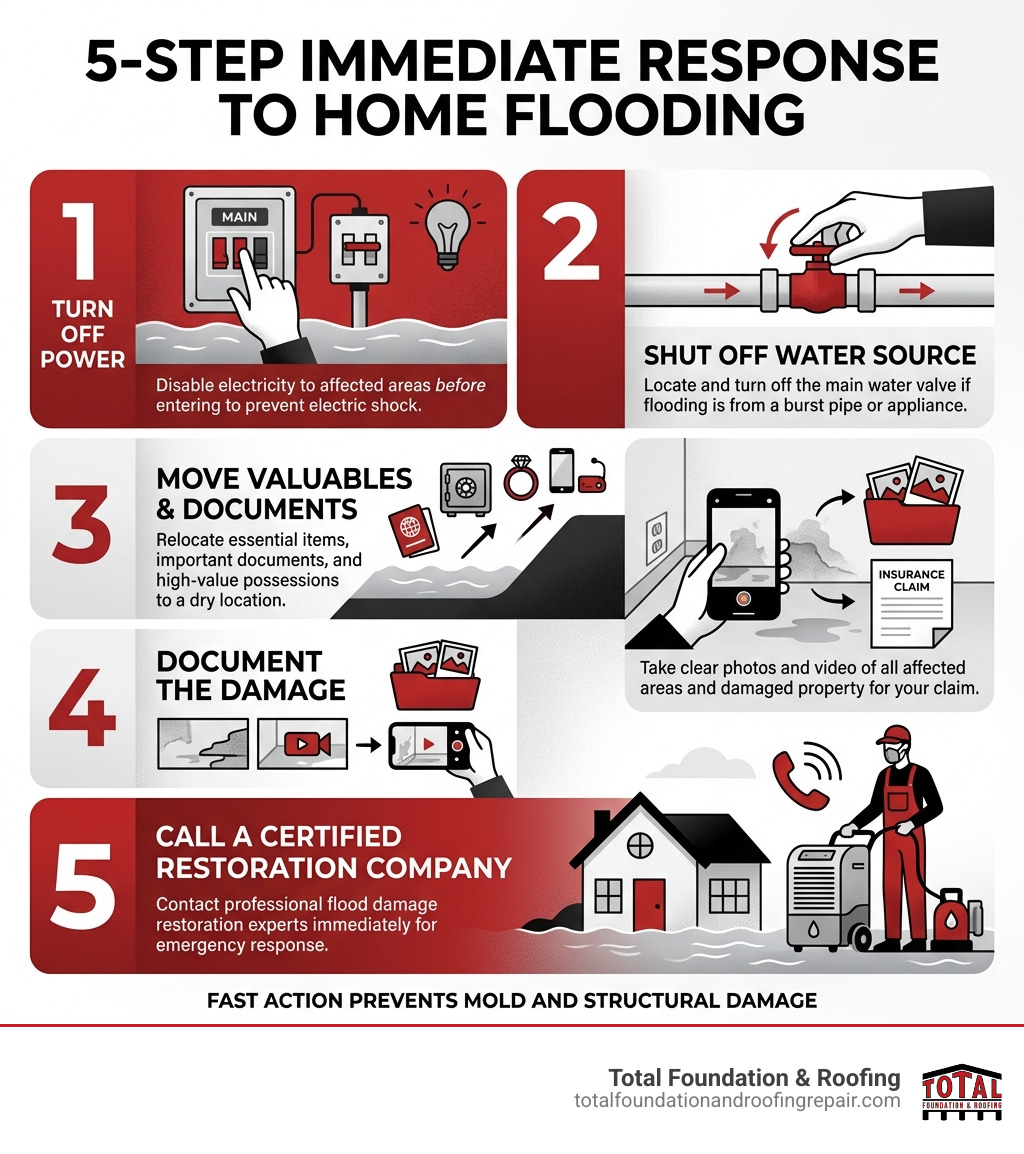
Here’s what to do right now if you’re dealing with active flooding:
- Turn off power to any flooded areas before entering to prevent electrical hazards.
- Shut off the water source immediately if the flooding is originating from a burst pipe, failed appliance, or internal plumbing issue.
- Move valuables, electronics, and important documents to a dry, elevated location.
- Document everything with high-resolution photos and video to provide clear evidence for your insurance claim.
- Call a certified restoration company — ideally one that offers 24/7 emergency response and has experience with the specific climate challenges of Texas.
Mold can begin growing within 24 to 48 hours after water damage. Fast action isn’t optional — it’s essential for the health of your family and the stability of your home.
For Texas Hill Country homeowners, flood damage carries extra risk. Heavy rains, flash floods, and aging infrastructure can turn a minor leak into a full structural crisis. The average residential water damage restoration job runs between $4,000 and $7,000 — and that number climbs fast if hidden moisture is left untreated.
I’m Daniel Sowell, owner of Total Foundation & Roofing Repair with over 18 years of experience helping Texas homeowners recover from storm and flood damage. I’ve seen how choosing the wrong response — or waiting too long — turns manageable flood damage restoration near me situations into costly foundation and structural failures.
Similar topics to flood damage restoration near me:
Essential Steps for flood damage restoration near me
When you are standing in an inch of water in your living room, the “near me” part of your search is about more than just geography—it is about speed. In the Texas Hill Country, from Kerrville to Fredericksburg, weather can turn on a dime. Whether it’s a burst pipe or a flash flood from a sudden storm, the clock is ticking against your home’s structural integrity. If the flooding was caused by a roof failure during a storm, it is important to note that high-quality materials from manufacturers like GAF or Owens Corning are specifically engineered to resist the high winds and heavy rains that lead to such disasters.
Professional flood damage restoration near me involves more than just mopping up. It requires industrial-grade equipment like truck-mounted extractors, high-velocity air movers, and LGR dehumidifiers. Using a standard shop-vac simply won’t cut it when moisture has seeped into your subflooring and wall studs. For a deeper dive into handling these emergencies, check out our Local Flooding Repair Guide.

Identifying Water Categories and Mold Risks
Not all floodwater is created equal. Understanding the “Category” of water in your home is vital for your health and determines the restoration protocol we use. According to IICRC S500 water damage standards, water is classified into three main groups based on the level of contamination. This classification dictates the safety equipment our technicians must wear and whether certain materials, like carpets or drywall, can be salvaged or must be disposed of as hazardous waste:
- Category 1: Clean Water. This comes from a sanitary source, like a broken water supply line or a leaking faucet. While it’s the “safest,” it can degrade into Category 2 within 24–48 hours if left standing.
- Category 2: Gray Water. This contains significant contamination and has the potential to cause discomfort or sickness if consumed. Think dishwasher or washing machine overflows.
- Category 3: Black Water. This is highly contaminated and contains pathogenic, toxigenic, or other harmful agents. This includes sewage, rising floodwaters from rivers/streams, and any water that has traveled over the ground.
The 24-48 Hour Mold Window: Mold doesn’t wait for your insurance adjuster to arrive. In our humid Texas climate, mold spores can colonize wet drywall and carpeting in less than two days. This is why rapid response is the single most important factor in preventing a total loss of your interior finishes.
| Water Category | Source Examples | Contamination Level | Safety Protocol |
|---|---|---|---|
| Clean (Cat 1) | Supply lines, melting snow | Low | Safe for basic DIY initial blotting |
| Gray (Cat 2) | Sump pump failure, washers | Medium | Requires chemical biocides and PPE |
| Black (Cat 3) | Sewage, river flooding, sea water | High | Danger: Professional biohazard cleanup only |
The Step-by-Step Process of flood damage restoration near me
When we arrive for a storm damage restoration service, we follow a rigorous, scientific process to ensure your home is actually dry, not just “dry to the touch.”
- Inspection and Assessment: We use moisture meters and thermal imaging to find water hidden behind “dry” walls.
- Water Extraction: Using powerful pumps and vacuums, we remove thousands of gallons of water in minutes.
- Demolition (if needed): We remove unsalvageable materials like saturated carpet padding or “blown” insulation.
- Structural Drying: This is the most critical phase. Industrial dehumidifiers and air movers must typically run for 3 to 5 days to reach “dry standards.”
- Cleaning and Sanitization: We apply antimicrobial treatments to prevent mold and eliminate odors.
- Restoration: The final step is repairing the drywall, flooring, and paint to make it look like the flood never happened.
Signs of Hidden Damage Requiring Inspection
Sometimes the worst damage is the kind you can’t see. If you’ve had a minor leak or a small storm event, you might think you’re in the clear. However, moisture trapped in wall cavities or under floorboards can cause slow-motion destruction.
Keep an eye out for these red flags:
- Musty Odors: That “old basement” smell is often the first sign of active mold growth.
- Warped Baseboards: If your trim is pulling away from the wall or looks “wavy,” there is moisture behind it.
- Sagging Drywall: Water pooling on the upper side of a ceiling will eventually cause it to swell and sag. This is a major collapse risk.
- Peeling Paint: Moisture pushes against the paint film from the inside out, causing bubbles or flakes.
If you notice these signs, you need a professional roof water damage repair inspection immediately. We use thermal imaging cameras that “see” temperature differences, allowing us to pinpoint wet spots without cutting holes in your walls.
Navigating Costs, Insurance, and Local Experts
Dealing with the aftermath of a flood is stressful enough without the “sticker shock” of restoration bills. Being prepared and knowing how to navigate the financial side of flood damage restoration near me can save you thousands.
Understanding Restoration Costs and Insurance Claims
Let’s talk numbers. Based on industry data, an average residential water damage mitigation invoice ranges from $4,000 to $7,000. However, this can vary wildly based on:
- The Square Footage: Drying out a single bathroom is vastly different from a flooded basement.
- The Water Category: Black water (sewage) restoration costs significantly more due to the hazardous waste disposal fees and intensive sanitization required.
- Material Replacement: Hardwood floors are often more expensive to save or replace than laminate or carpet.
Insurance Tips: Most standard homeowner’s insurance policies cover “sudden and accidental” water damage (like a burst pipe). However, they frequently exclude “flood damage” caused by rising ground water or storms unless you have a separate flood insurance policy through the NFIP.
To ensure your claim is successful:
- Document everything: Take “before” and “after” photos. Use a ruler to show the depth of the water against a wall if possible.
- Keep damaged items: Don’t throw away that ruined rug until the adjuster sees it.
- Act fast: Insurance companies can deny claims if they feel you didn’t take “reasonable steps” to prevent further damage (like calling for mitigation).
For a comprehensive look at what to expect this year, see our Storm Damage Repair Guide 2025. You can also verify local company standings through the BBB water damage restoration accreditation portal to ensure you’re working with a reputable firm.
Choosing Certified flood damage restoration near me
When searching for flood damage restoration near me, don’t just hire the guy with a van and a fan. You need certified experts who understand the complex science of drying. Look for the following:
- IICRC Certification: The Institute of Inspection, Cleaning and Restoration Certification is the “gold standard” in our industry. It ensures the technicians know the science of psychrometry (the study of air and water vapor).
- 24/7 Availability: Floods don’t happen at 2 PM on a Tuesday. They happen at 3 AM on Christmas Eve. A company that doesn’t answer the phone immediately isn’t a restoration company—it’s a contractor.
- Local Reputation: We live and work in the Texas Hill Country. We understand the specific soil conditions in Comfort, TX and the historic home structures in Fredericksburg.
- Advanced Equipment: Ask if they use HEPA air scrubbers and thermal imaging. If they don’t, they are leaving your health to chance.
If you are in our neck of the woods, you can find more specific info about services in Kerrville, TX on our dedicated location page.
Long-Term Prevention and Structural Recovery
Once the water is gone and the fans are turned off, the real work of protecting your home begins. At Total Foundation & Roofing, we believe the best restoration is the one you never have to repeat.
Prevention Strategies:
- Foundation Waterproofing: In the Hill Country, our limestone and clay soils can shift, creating cracks that allow water to seep into your crawlspace or basement. Investing in foundation waterproofing services is the best way to keep your home’s “feet” dry.
- Gutter Maintenance: Ensure your gutters are cleaned twice a year. Clogged gutters lead to water overflowing and pooling at your foundation, which is the #1 cause of basement flooding.
- Sump Pump Testing: If you have a sump pump, test it every quarter. Pour a bucket of water into the pit to ensure the float switch triggers the pump.
- Smart Sensors: Consider installing devices like LeakSmart or Flo by Moen. These can alert your phone the second a leak is detected and even shut off your main water valve automatically.
- Grade Your Landscape: Ensure the soil around your home slopes away from the foundation to prevent water from pooling against your exterior walls.
Whether you need immediate storm damage repair or you are looking to waterproof your home against future disasters, our team is ready to help. We pride ourselves on prompt, reliable service tailored to the unique conditions of Texas.
Don’t wait for the mold to move in. If you’re facing a water emergency, call us today for 24/7 emergency assistance at (830) 257-3707. We’ll get you back on dry ground before you sink.
Quick Links for Texas Hill Country Residents: