
What Every Homeowner Needs to Know About Exterior Wall Cracks
Exterior wall cracks can be harmless cosmetic blemishes or red flags for serious structural problems. Spotting a fissure on your home’s facade is unsettling, but not all cracks signal a catastrophe. Many are a natural part of a home's aging, especially in the Texas Hill Country where expansive soils and weather stress foundations. Knowing the difference between a minor patch job and a crack demanding professional attention is crucial for protecting your property. As the Texas Hill Country's trusted experts, Total Foundation & Roofing Repair has over 18 years of experience diagnosing and fixing every type of crack imaginable.
Quick Assessment Guide:
- Hairline cracks (< 1mm wide): Usually cosmetic, often from normal settling or stucco shrinkage
- Vertical cracks (< 1/4 inch): Typically minor, monitor for growth
- Horizontal or diagonal cracks: Potential structural concern, especially if wide
- Cracks > 1/4 inch wide: Require professional evaluation
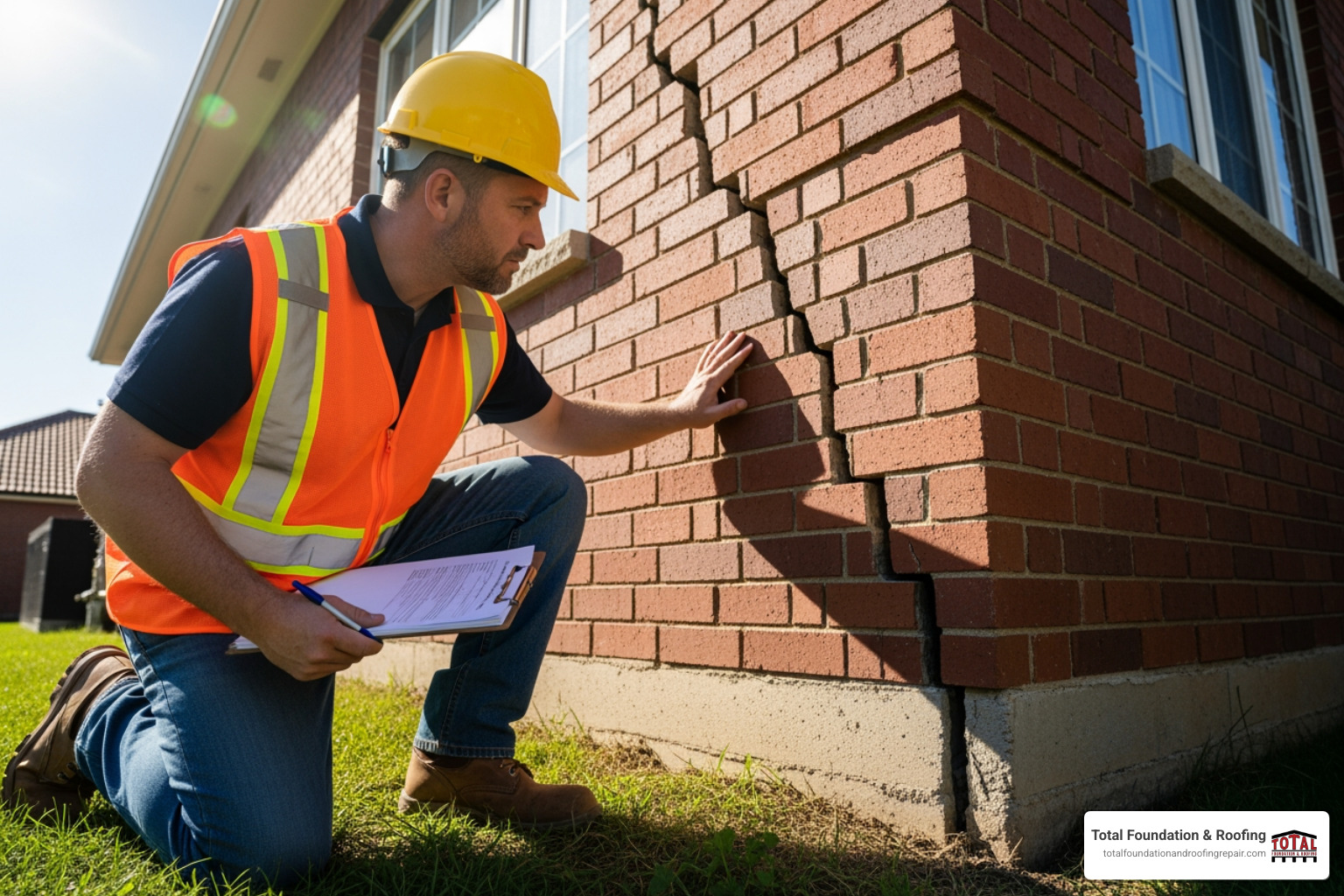
- Stair-step cracks in brick: Often indicate foundation settlement
- Cracks with displacement or water intrusion: Serious warning signs
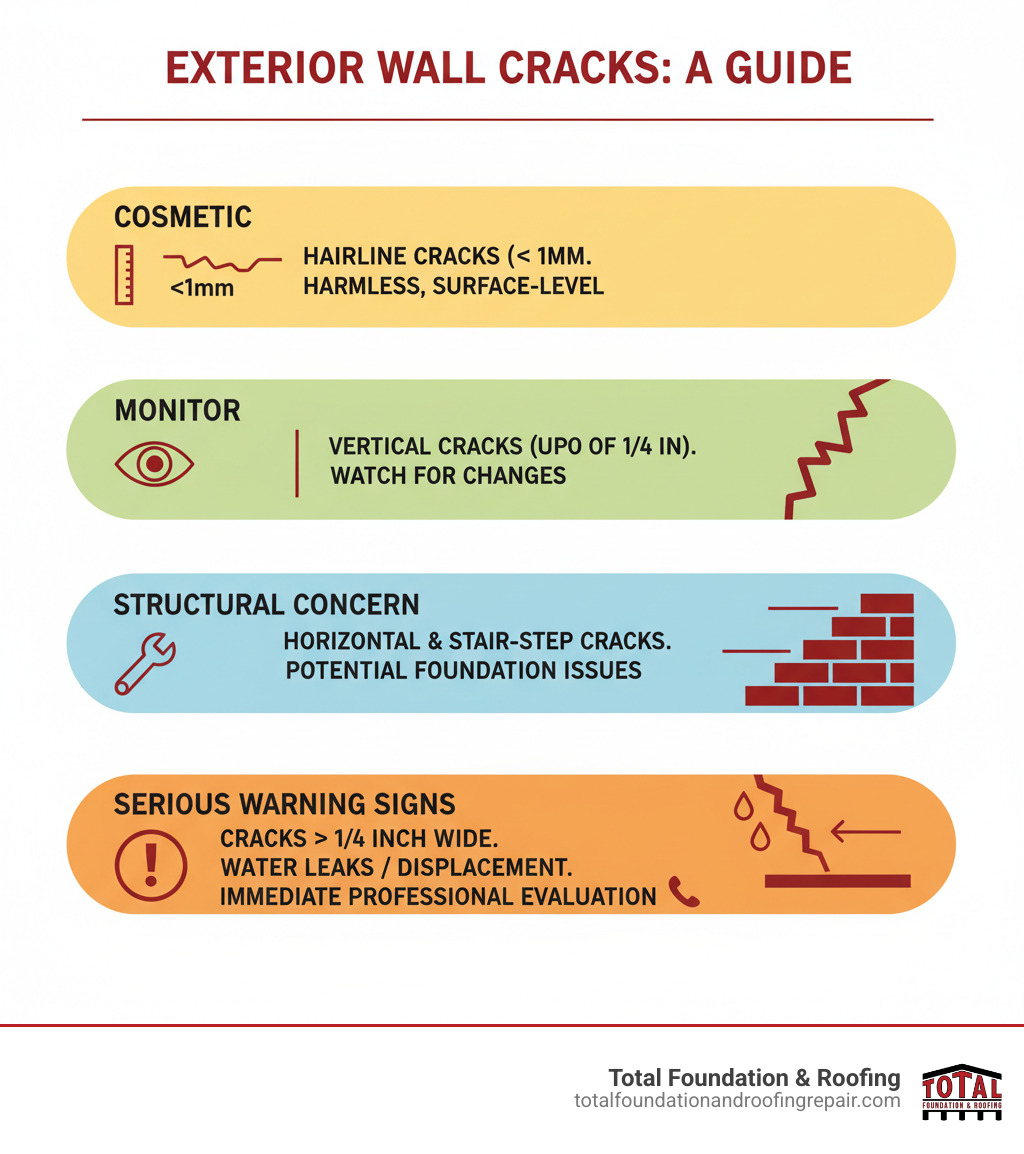
Basic Exterior wall cracks terms:
Common Causes of Cracks in Texas Homes
Why do exterior wall cracks appear? The answer is usually a combination of environmental factors unique to the Texas Hill Country.
Foundation Settlement
All homes settle over time, which can put stress on walls. While minor settling is normal, significant or uneven movement can cause serious cracks, indicating a foundational problem that needs to be addressed.
Expansive Clay Soil
The Texas Hill Country, including areas like Kerrville, is known for expansive clay soils. These soils swell with moisture and shrink when dry. This constant cycle puts immense pressure on foundations, causing movement that leads to cracks.
Poor Drainage
Excess water pooling near your foundation from clogged gutters or improper grading saturates the soil. This worsens expansive soil issues, causing uneven foundation movement and stress cracks. Water seeping through a crack indicates a more severe problem.
Thermal Expansion and Contraction
Extreme Texas temperature swings cause building materials like brick and stucco to expand and contract. This constant, subtle movement accumulates stress over time, eventually resulting in cracks. All Portland cement also shrinks as it cures, contributing to minor cracking.
Tree Root Intrusion
Large tree roots seeking water can grow under your foundation, exerting immense pressure that causes it to crack. They can also dry out soil unevenly, leading to localized settlement.
Understanding these culprits is the first step in diagnosing exterior wall cracks. For technical insights, see this guide on the role of soil and settlement in foundation issues or our post on understanding home foundation problems.
Identifying Different Types of Exterior Wall Cracks
Not all cracks are created equal. Each type tells a different story about your home's health.
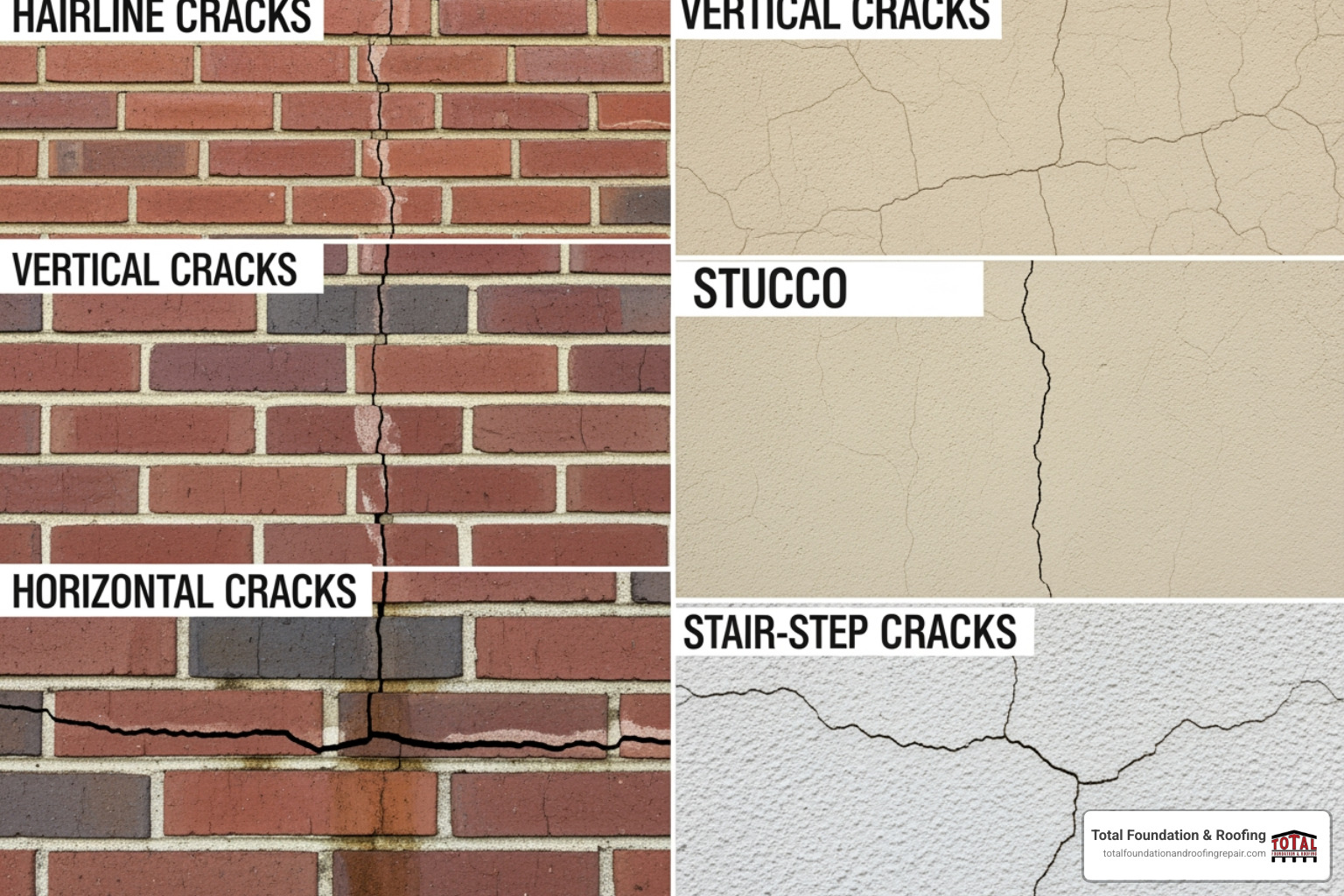
Hairline Cracks
Typically less than 1mm wide, these are common in stucco and concrete due to material curing and minor thermal shifts. They are usually cosmetic but should be monitored to ensure they don't widen.
Vertical Cracks
Cracks running up and down a wall may indicate settling. If less than 1/4 inch wide, they are often minor. Wider cracks suggest more significant foundation movement and require professional evaluation.
Horizontal Cracks
Running parallel to the ground, these are a serious warning sign. They often indicate intense pressure against the foundation from soil or water and demand immediate professional assessment.
Diagonal (Stair-Step) Cracks
Common in brickwork, these cracks follow mortar lines in a stair-step pattern. They are a strong indicator of differential foundation settlement, where one part of the foundation is sinking more than another.
How Cracks Appear on Different Materials
Cracks manifest differently by material: brick often shows stair-step patterns in mortar, stucco displays fine map-like cracks or larger fissures indicating structural movement, and concrete can have vertical, horizontal, or diagonal cracks.
Cosmetic vs. Structural: When an Exterior Wall Crack Is a Serious Problem
Is that crack a superficial flaw or a sign of a deeper issue? This comparison highlights the key differences.
| Sign | Cosmetic Crack (Usually Safe) | Structural Crack (Warning Sign) |
|---|---|---|
| Crack Width | Hairline to 1/8 inch wide (less than 3mm) | Greater than 1/4 inch wide (or rapidly widening) |
| Crack Direction | Mostly vertical, sometimes random hairline patterns | Horizontal, diagonal (stair-step in masonry), or large vertical |
| Displacement | None, surfaces remain flush | One side of the crack is offset from the other (vertical or horizontal) |
| Related Issues | No other visible problems | Sticking doors/windows, sloping floors, bowing walls, roof leaks |
| Water Intrusion | No water seeping through | Water seeping through, dampness, mold |
| Growth over Time | Stable, does not grow in length or width | Actively growing longer, wider, or changing direction |
Key Red Flags:
- Crack Width: A crack wider than 1/4 inch is a significant warning sign. Cracks from 3/16” to 9/16” are considered moderate, while those over 1 inch are severe.
- Crack Direction: While narrow vertical cracks are often cosmetic, horizontal and diagonal (stair-step) cracks are strong indicators of foundation movement.
- Displacement: If one side of the crack is offset from the other (not flush), it signals significant structural movement and is a serious concern.
- Related Issues: Structural cracks are rarely isolated. Look for accompanying signs like sticking doors and windows, sloping floors, or bowing walls.
- Water Intrusion: Water seeping through a crack is a serious problem. It indicates the crack is wide enough to allow moisture in, which can lead to mold, water damage, and accelerated structural decay.
Ignoring serious exterior wall cracks can lead to compromised structural integrity, extensive property damage, and increasingly expensive repairs. For more details, see our foundation repair advice guide.
Your Action Plan for Repair and Prevention
Now that you can identify exterior wall cracks, what's the action plan? The right approach depends on the crack's severity, ranging from a simple DIY fix to a professional repair from Total Foundation & Roofing.
DIY Options for Repairing Minor Exterior Wall Cracks
For small, stable hairline cracks (less than 1/8 inch wide) that are purely cosmetic, a DIY repair is a satisfying weekend project.
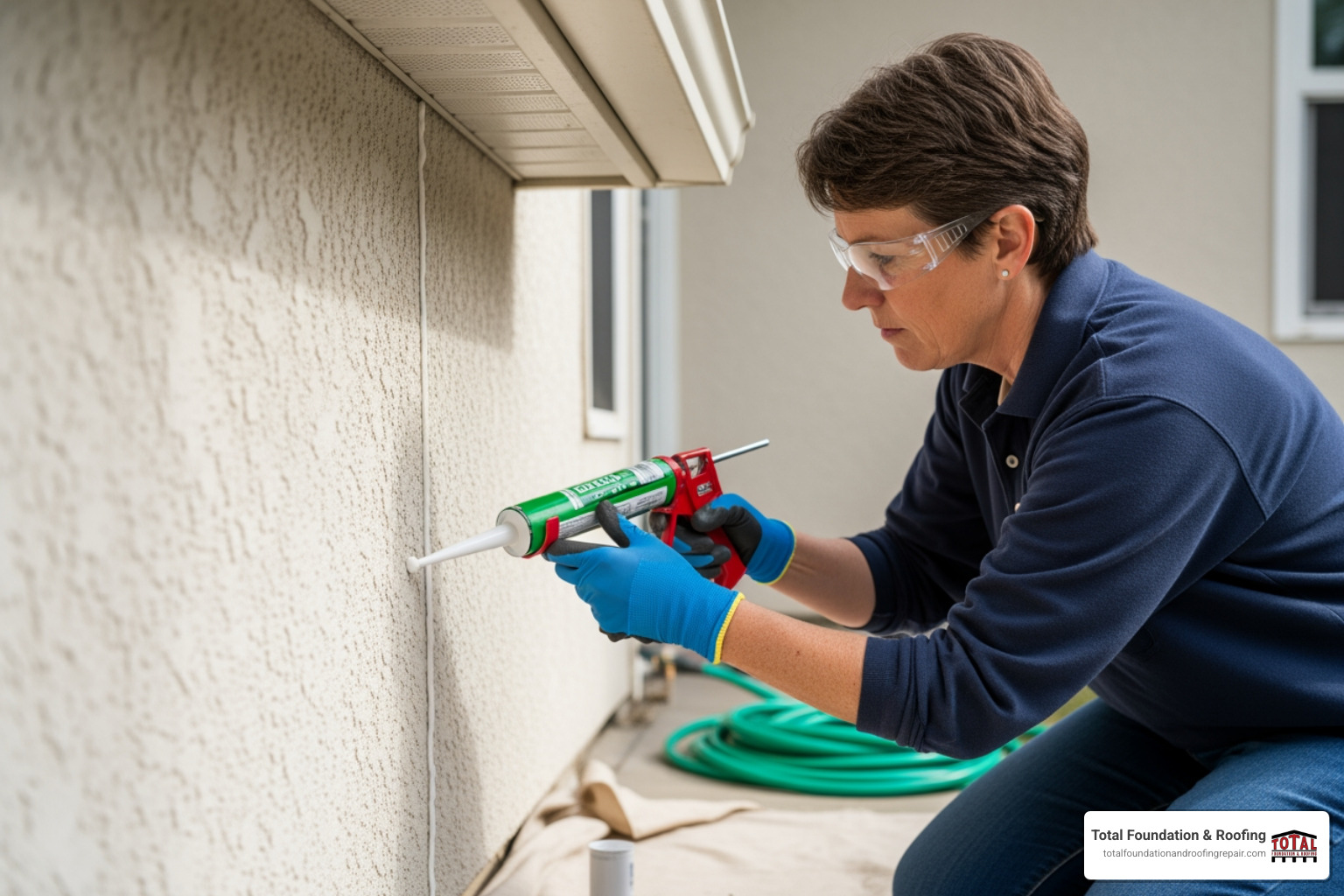
Gather safety glasses, gloves, a wire brush, and a high-quality elastomeric sealant for exterior use.
- Clean: Use the wire brush to remove all loose debris from the crack.
- Apply: Fill the crack with the elastomeric sealant using a caulk gun.
- Smooth: Use a putty knife or damp finger to smooth the sealant flush with the wall. Let it cure as directed.
Patching a crack without addressing the root cause is a temporary solution. If the crack returns or new ones appear, it's a sign of a deeper issue.
When to Call a Professional for Exterior Wall Crack Repair
Some exterior wall cracks are clear warnings of structural problems that require professional intervention. Calling for a certified foundation repair contractor promptly can prevent further damage. Contact us if you see:
- Horizontal cracks: These almost always indicate severe pressure against your foundation wall.
- Diagonal or stair-step cracks: A classic sign of uneven foundation settlement.
- Wide cracks: Any crack wider than 1/4 inch signals significant stress.
- Growing cracks: Cracks that get longer or wider over time indicate active foundation movement.
- Bowing or leaning walls: This is a structural emergency that requires immediate attention.
- Water leakage: Moisture seeping through a crack will accelerate damage and can lead to mold.
If you're unsure about a crack, it's always best to get a professional evaluation. We serve the entire Texas Hill Country, from Kerrville to Fredericksburg and Comfort.
Long-Term Prevention and Maintenance
Proactive maintenance is the best way to prevent exterior wall cracks from forming.
- Regular Inspections: Walk around your home twice a year (spring and fall) to check for new or growing cracks.
- Gutter Maintenance: Keep gutters clean and ensure downspouts direct water at least 5-10 feet away from the foundation.
- Proper Yard Drainage: Ensure your yard slopes away from the house. If not, consider regrading or installing French drains. Effective foundation waterproofing is a key preventative measure.
- Consistent Soil Moisture: During droughts, use a soaker hose around the foundation to prevent the expansive clay soil from shrinking and causing settlement.
- Tree Management: Be mindful of large trees close to your home. Their roots can damage the foundation. Consult an arborist about root barriers if trees are within 10-15 feet.
Addressing cracks promptly prevents them from worsening and safeguards your home's structural integrity. Prevention and early action are always less expensive than major repairs. For a comprehensive assessment and lasting solutions custom to the unique challenges of the Texas Hill Country, explore our crack repair services. We're here to help you protect your home, one wall at a time.