
Why Your Commercial Property’s Foundation is its Most Critical Asset
A commercial building’s foundation is its most vital asset, ensuring structural integrity, safety, and long-term value. For property owners in areas like Kerrville, understanding the health of this core component is essential for protecting your investment. Partnering with a specialized commercial foundation repair and inspection contractor is the most reliable way to diagnose issues early and extend the life of your building. At Total Foundation & Roofing, we know that neglecting the base can lead to catastrophic problems. A professional commercial foundation inspection is a proactive measure that can save hundreds of thousands in unforeseen repairs.
Unlike residential structures, commercial buildings bear heavier loads and house equipment that demands stability. Foundation movements of even an inch can significantly impact operations. An inspection is crucial before purchasing property, when visible signs like cracks or uneven floors appear, during annual maintenance, after environmental events, or when planning renovations. It involves evaluating footings, slabs, and walls; assessing structural loads; detecting damage; and verifying code compliance.
The consequences of foundation problems extend beyond repair costs. Structural instability can lead to business interruption, safety hazards, and diminished property value. In the Texas Hill Country, where clay soils shrink and swell, this expertise is even more critical. A $4,500 inspection once resulted in a $350,000 price reduction and seller-funded repairs—an almost 80x return on investment.
I’m Daniel Sowell, owner of Total Foundation & Roofing Repair, LLC, with over 18 years of experience in commercial foundation inspection and structural foundation repair services in the Texas Hill Country. This guide will walk you through protecting your commercial property’s most critical asset.
The Complete Guide to Commercial Foundation Inspection
A commercial foundation inspection is a detailed evaluation of a building’s substructure to identify existing issues and prevent future failures. Unlike residential inspections, these assessments account for heavier structural loads, complex building systems, and stricter code compliance, making them a critical part of property management. An inspection is an early warning system, as underfunded local building departments may not catch all structural issues, placing the responsibility on property owners.
Commercial buildings use several foundation types, each requiring specialized assessment:
- Slab-on-Grade: A concrete slab poured on the ground, common in Texas and frequently supported by slab foundation repair services.
- Spread Footings: Distribute heavy loads from columns and walls over a wider soil area.
- Mat (Raft) Foundations: A large, thick slab covering the building’s entire footprint, used for heavy loads or weak soil.
- Deep Foundations (Piers and Piles): Extend deep into the earth to transfer loads to stronger soil or rock and are often stabilized with specialized pier & beam foundation repair.
Telltale Signs: When to Schedule a Commercial Foundation Inspection
Recognizing distress signals early can prevent costly repairs. Our experience in Fredericksburg and Comfort, TX, shows that property owners often overlook subtle cues.
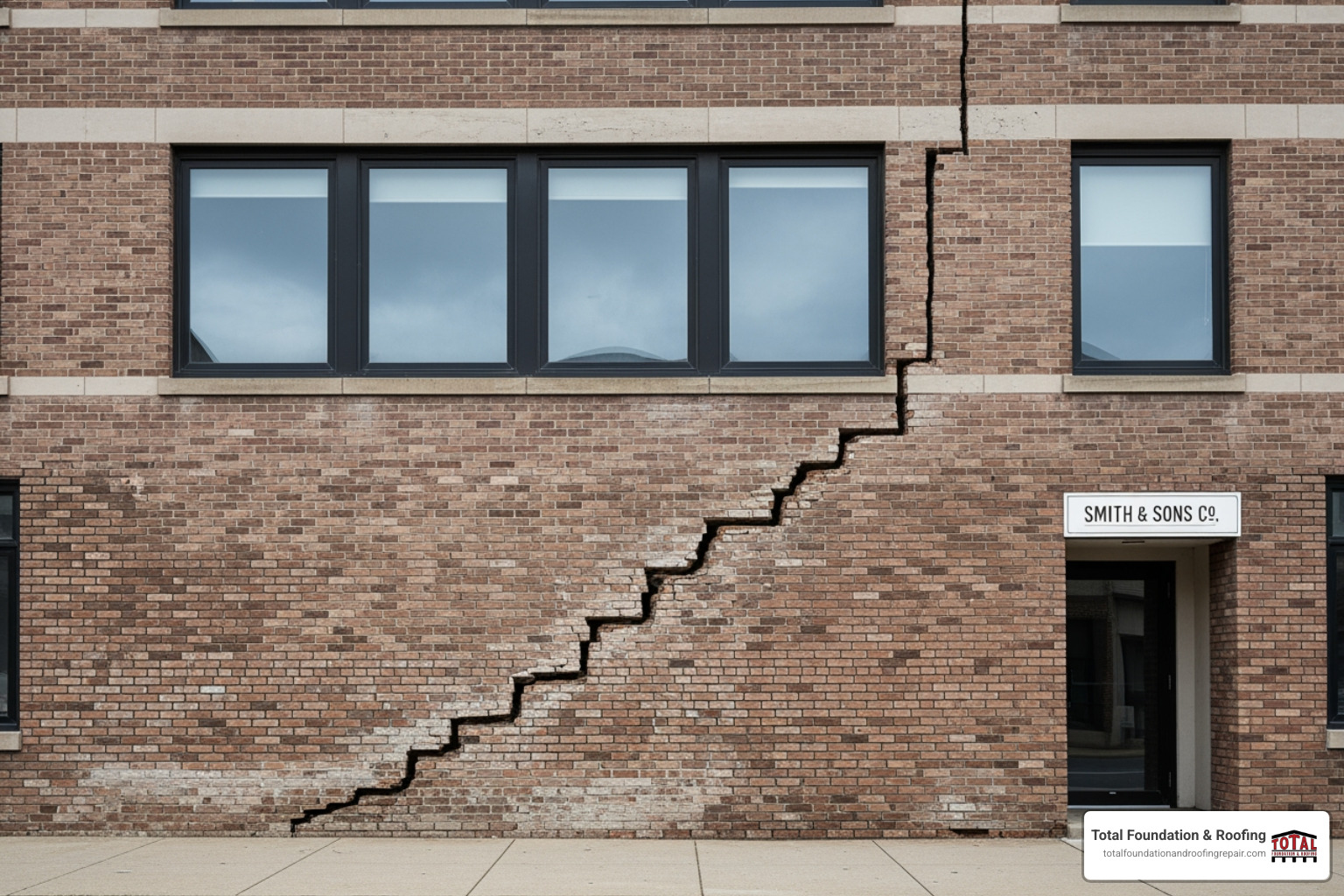
Here are top warning signs that you need a commercial foundation inspection:
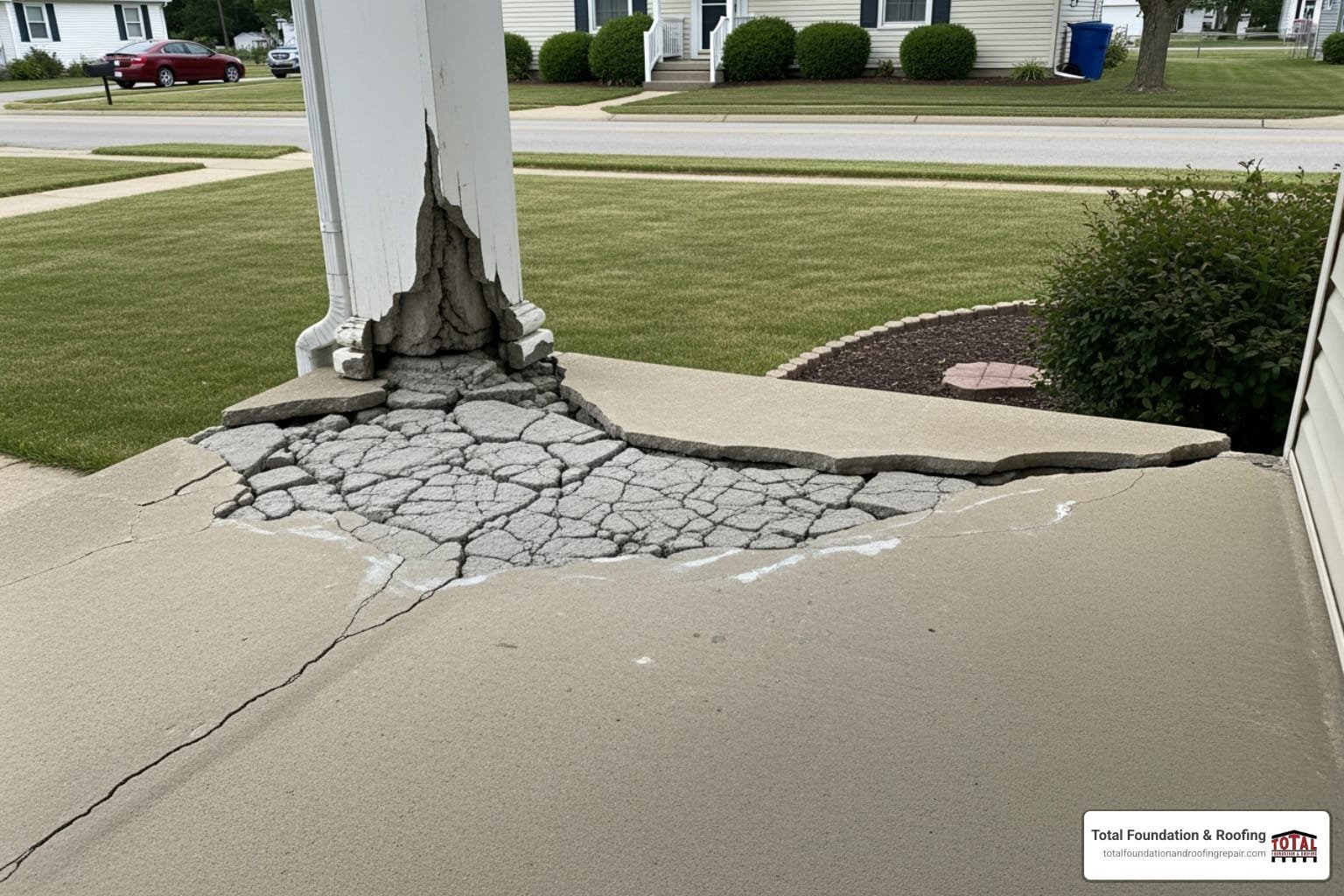
- Cracks in Walls and Floors: Look for stair-step cracks in brick, vertical cracks in drywall, or cracks in concrete slabs. A crack wider than ¼-inch is a deficiency requiring correction and often calls for professional foundation crack repair services.
- Uneven or Sloping Floors: In commercial settings, uneven floors are a clear sign of foundation movement and a safety hazard.
- Sticking Doors and Windows: Doors that jam or windows that are difficult to operate indicate the building’s frame has shifted.
- Structural Shifts: Visible movement in columns, support beams, or load-bearing walls signals serious instability and should be addressed immediately.
- Gaps and Separations: Gaps between walls and ceilings/floors or between the roof and exterior walls point to foundation settling or heaving.
- Water Intrusion: Pooling water, dampness on foundation walls, or mold are signs of water damage. If you see frequent moisture problems, an inspection can determine if damage has occurred.
For more details, see our guide to foundation problems and our in-depth resource on commercial building maintenance checklists for property managers.
The Inspection Process: What to Expect
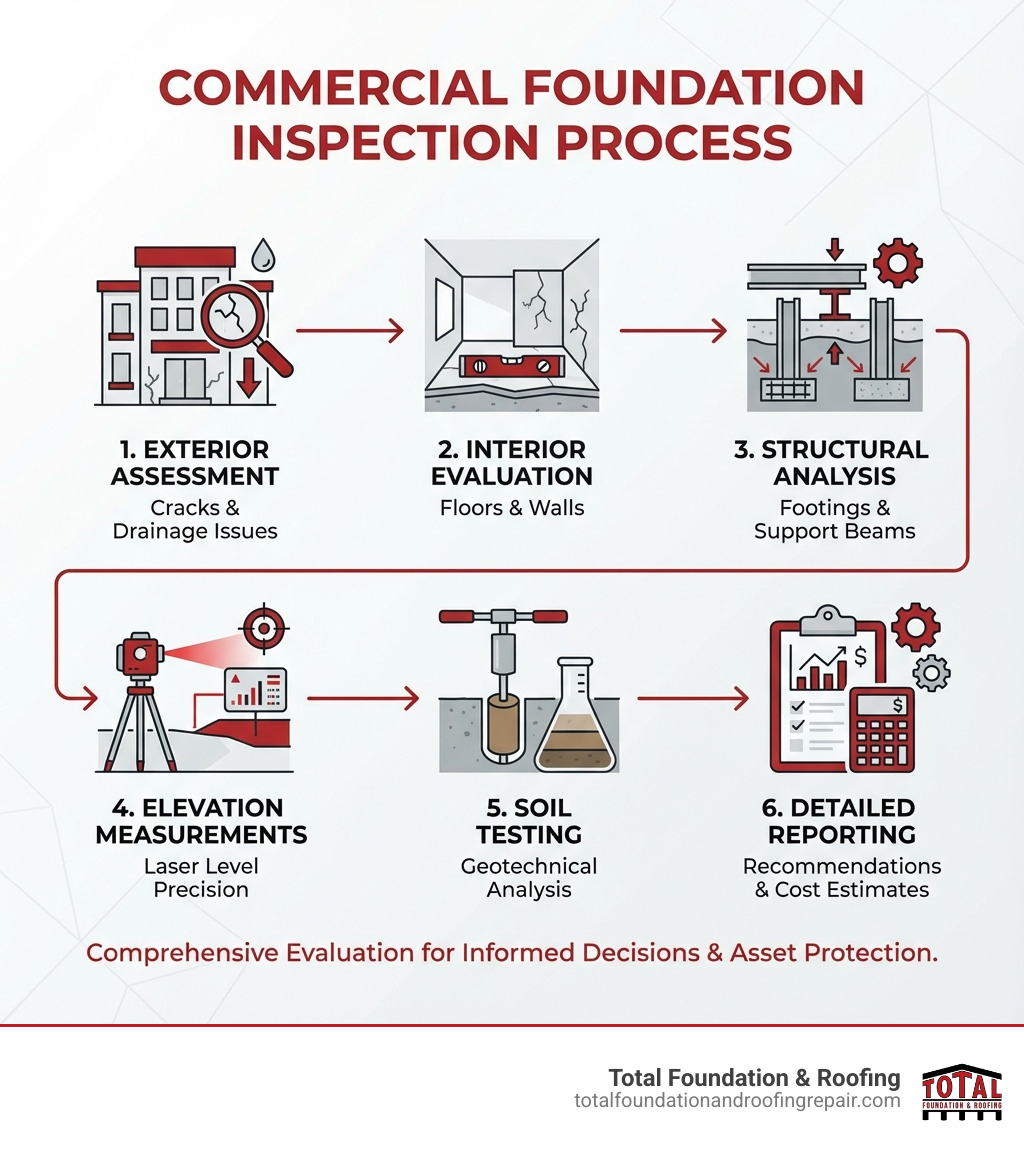
A comprehensive commercial foundation inspection is a systematic evaluation to uncover both obvious and hidden issues.

- Document Review: We review building plans, permits, and maintenance records. As noted in checklists like Austin’s Building Layout Foundation Inspection Checklist, approved plans are often required on site.
- Exterior Evaluation: We examine the foundation, check for wood-to-ground contact, and evaluate drainage, looking for cracks or signs of movement. When we identify settlement or washout, we often recommend targeted drainage correction services to protect the structure long term.
- Interior Assessment: We inspect visible structural components, check for water entry, and identify interior signs of movement like wall cracks or misaligned doors.
- Elevation Measurements: Using tools like laser levels, we take precise measurements to identify settlement or heaving.
- Drainage and Soil Analysis: We assess the property’s drainage system. A deeper investigation may include soil sampling, which is critical in the Texas Hill Country with its expansive clay soils. The Texas Section of the American Society of Civil Engineers has consistently highlighted expansive soils as a leading cause of structural distress in low- and mid-rise buildings.
- Foundation Inspection Report: We provide a detailed report outlining findings, severity, recommended repairs, and cost estimates to help you forecast expenses. Property owners often pair this report with our ultimate foundation repair cost guide to plan long-term capital improvements.
Learn more in our complete guide on foundation inspection.
Common Problems and Their Causes in Commercial Foundations
Understanding the root causes of foundation problems is key to effective maintenance.
1. Foundation Settlement & Heaving: Settlement occurs when soil compacts or erodes, causing the building to sink. Heaving is the opposite, where soil expands and pushes the foundation up. Both are often caused by the expansive clay soils common in the Texas Hill Country. Learn more about expansive soil foundations.
2. Water Damage: Water is a primary threat. Poor drainage, pooling water, and plumbing leaks can saturate soil, leading to movement. Water infiltration is a deficiency requiring prompt correction. Many owners combine structural work with commercial roofing services to address roof leaks that accelerate foundation movement.
3. Concrete Deterioration: Concrete can crack from stress or shrinkage. Spalling (flaking) and exposed rebar are also serious issues that compromise structural integrity. A crack wider than ¼-inch or spalling deeper than ¾-inch over a 12×12 inch area are considered deficiencies. The American Concrete Institute publishes performance criteria widely used to benchmark commercial concrete durability.
4. Environmental Factors: Extreme weather, like droughts and heavy rains, causes soil to shrink and swell. Flooding and invasive tree roots can also erode or damage the foundation. Long-term climate data from the National Oceanic and Atmospheric Administration shows that rainfall intensity in many parts of Texas has increased over the last several decades, which directly elevates foundation risk for unprotected properties.
Protecting Your Investment: Next Steps and Maintenance
Regular inspections and proactive maintenance are the most effective strategies for ensuring your building’s longevity. Addressing minor issues like poor drainage or small cracks early prevents them from becoming major structural problems.
Choosing a Qualified Inspector
The quality of your commercial foundation inspection depends on the expert performing it. Look for a licensed structural engineer, a certified commercial building inspector, or a specialized foundation specialist with local expertise. A qualified professional will have experience with commercial properties and understand regional conditions, like the expansive clays in the Texas Hill Country. Ensure they have proper licensing, relevant experience, and local knowledge. Our team of qualified foundation repair contractors is ready to serve your needs across Kerrville, Fredericksburg, and Comfort, and can coordinate related roofing inspection services when structural movement has impacted the roof system.
Your Post-Inspection Action Plan
Your inspection report is a roadmap for protecting your investment.
- Review and Prioritize: Thoroughly review the report. Prioritize critical repairs, such as those for significant cracks or water infiltration, to prevent further damage.
- Budget and Act: Integrate foundation maintenance into your operational budget. Address drainage issues swiftly by improving grading or installing drains. For specific solutions, like fixing cracks, explore our crack repair services. Owners who pair crack repair with scheduled roof maintenance services consistently report lower lifecycle costs for their buildings.
- Schedule Follow-Ups: Regular annual inspections are a best practice, especially for properties with ongoing concerns or after major repairs, to ensure long-term stability. Many facility managers align annual foundation inspections with roof inspections recommended by manufacturers like GAF and Owens Corning, creating a single, data-driven capital planning cycle.
A professional commercial foundation inspection is a wise investment in safety and peace of mind. For a comprehensive evaluation and expert repair plan in the Fredericksburg, TX area, request a free estimate online. We’re here to ensure your business stands on a solid foundation for years to come.