
Why Replacing an Asphalt Shingle Roof Is One of the Most Important Home Decisions You’ll Make
Replacing an asphalt shingle roof is the process of removing your old shingles and installing a complete new roofing system — including deck inspection, underlayment, flashing, and new shingles — to restore your home’s protection and curb appeal. For homeowners seeking reliable roofing and foundation repair, this process ensures the structural integrity of the entire property against harsh weather. This is not merely a cosmetic upgrade; it is a fundamental restoration of your home’s primary defense mechanism. When you choose to invest in a full replacement, you are addressing potential issues that a simple patch job cannot fix, such as hidden wood rot or compromised structural supports that could lead to catastrophic failure during a storm.
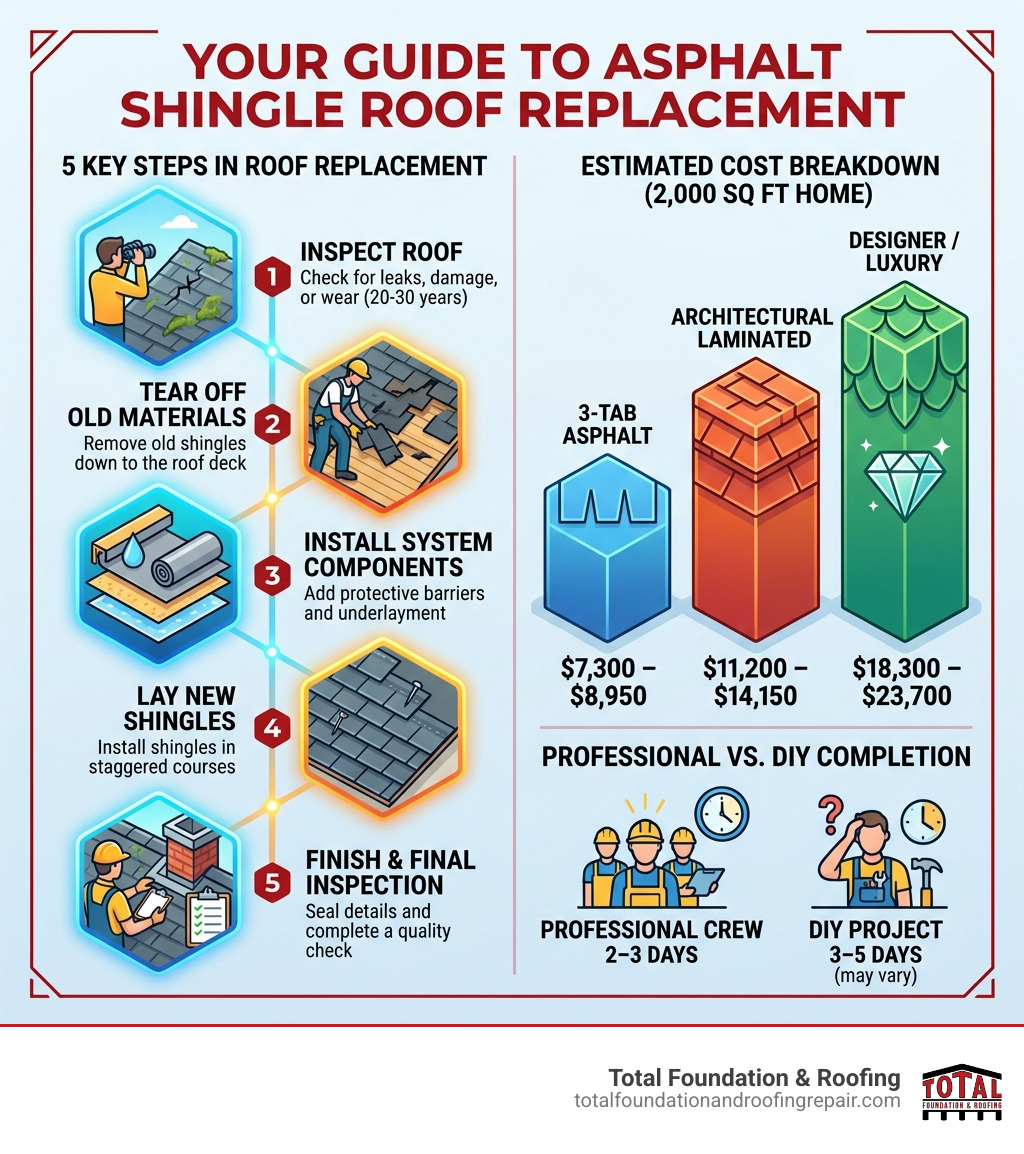
Here’s a quick overview of what the process involves:
- Inspect your current roof for signs of failure (curling, granule loss, leaks, age over 20–30 years)
- Tear off existing shingles and inspect the roof deck for rot or damage
- Install underlayment, drip edge, and ice and water shield
- Lay new asphalt shingles in staggered courses with proper nailing
- Finish with flashing, ridge caps, and a final inspection
Quick cost reference for a 2,000 sq ft home:
| Shingle Type | Estimated Cost |
|---|---|
| 3-Tab Asphalt | $7,300 – $8,950 |
| Architectural Laminated | $11,200 – $14,150 |
| Designer / Luxury | $18,300 – $23,700 |
Professionals typically complete the job in 2–3 days. DIY projects on the same roof may take 3–5 days.
Most asphalt shingle roofs last between 20 and 30 years. But in a climate like the Texas Hill Country — where intense heat, hail, and sudden storms are part of life — that timeline can be shorter. When a roof starts to fail, it’s not just a cosmetic problem. It puts your entire home at risk: water damage, mold, structural decay, and falling property value. The weight of water-saturated insulation and wood can even impact your foundation over time, making a timely replacement a critical part of whole-home maintenance.
Knowing when to replace, what to replace it with, and how the process works can save you thousands of dollars and a lot of frustration. Whether you’re dealing with storm damage or an aging roof that’s simply reached the end of its life, this guide walks you through everything you need to know — from the first warning signs to the final ridge cap.
For homeowners and small business owners across the region, Total Foundation & Roofing Repair has been a trusted name for reliable, honest roofing work since 2007.
I’m Daniel Sowell, owner and operator of Total Foundation & Roofing Repair in Kerrville, Texas, and I’ve spent over 18 years replacing asphalt shingle roofs across the Texas Hill Country. I’ll walk you through this process the same way I’d explain it to a neighbor standing in their driveway, looking up at a roof that’s seen better days.
The Process of Replacing Asphalt Shingle Roof Systems
When we talk about replacing asphalt shingle roof systems, we aren’t just talking about swapping out some “tiles” on top. A roof is a complex, multi-layered shield. If one layer fails, the whole system is compromised. In April 2026, modern building codes in Texas emphasize the importance of a “total system” approach to ensure longevity against our unique weather patterns.
The roof replacement process begins with a complete tear-off. Some homeowners ask if they can just “recover” their roof (installing new shingles over old ones). While most building codes allow up to two layers, we strongly advise against it. Recovering adds immense weight to your home’s structure and prevents us from seeing the “bones” of your roof. Without a full tear-off, you cannot inspect the decking for mold or rot, which are common in older homes in the Hill Country.
The Critical Steps of a Professional Replacement
According to the Angi guide on the roof replacement process, a professional job follows a strict sequence:
- Full Tear-Off: We remove every old shingle, nail, and piece of felt paper.
- Deck Inspection: This is where we look for rot, soft spots, or “delamination” in the plywood or OSB sheathing.
- Underlayment Installation: We apply a secondary barrier, usually a synthetic felt or traditional 30-pound felt, to keep moisture out.
- Flashing & Drip Edge: Metal components are installed in valleys and along edges to direct water into the gutters.
- Ventilation Check: We ensure your attic can breathe, which prevents shingles from “cooking” from the inside out during our 100-degree Kerrville summers.

The Anatomy of an Asphalt Shingle
To understand why quality matters, you have to look at what makes up a modern shingle. Leading manufacturers like GAF and Owens Corning have engineered shingles to be far more durable than those of twenty years ago.
- Fiberglass Mat: The core of the shingle, providing strength and fire resistance.
- Asphalt Layer: This provides the waterproofing. High-quality asphalt remains flexible even as it ages.
- Granules: These ceramic-coated minerals protect the asphalt from UV rays and provide the color. They also offer impact resistance against hail.
- Adhesive Strips: These are heat-activated strips that bond the shingles together to resist high winds.
Signs You Need a New Roof vs. Simple Repairs
Not every leak means you need a full replacement. However, if your roof is approaching the 20-year mark, it’s time to start looking for warning signs. In the Texas Hill Country, the sun’s UV rays are the primary enemy of asphalt shingles.
Look for these red flags:
- Granule Loss: If your gutters look like they’re filled with coffee grounds, your shingles are losing their protective coating.
- Curling or Buckling: When shingles turn upward at the edges like potato chips, they are no longer shedding water.
- Missing Shingles: High winds in Fredericksburg or Comfort can strip shingles away, leaving the underlayment exposed.
- Interior Water Stains: If you see brown spots on your ceiling, the barrier has been breached.
- Cracked Shingles: This is often a sign of thermal shock or age.
If you only have a few missing shingles from a minor storm, you might just need repairing roof shingles to get a few more years out of the system. But if more than 30% of the roof shows these signs, a full replacement is the more cost-effective long-term move.
Choosing Between 3-Tab and Architectural Shingles
In 2026, the market offers three main categories of asphalt shingles. Choosing the right one depends on your budget and how long you plan to stay in your home.
- 3-Tab Shingles: These are the traditional, flat shingles. They are the most affordable but have the shortest lifespan (15–20 years) and lower wind resistance. They are becoming less common in areas prone to high winds.
- Architectural (Laminated) Shingles: These are the industry standard today. They are thicker, have a “dimensional” look, and typically carry 30- to 50-year warranties. They offer significantly better wind resistance, which is vital for homes in open areas like Comfort, TX.
- Luxury/Designer Shingles: These are top-of-the-line products designed to mimic the look of slate or cedar shakes. They are heavy-duty and offer the best curb appeal.
For a deep dive into the best options, check out our best 50-year roof shingles guide to see which brands hold up best under the Texas sun.
The Importance of Ventilation and Insulation
A roof replacement is the perfect time to evaluate your attic’s health. Without proper ventilation, heat and moisture build up in your attic, which can warp your roof deck and cause shingles to deteriorate prematurely. According to Owens Corning’s ventilation guide, a balanced system of intake and exhaust vents is essential for maintaining a cool roof. This not only extends the life of your shingles but also reduces your cooling costs during the brutal Texas summers.
Essential Tools and Materials for Replacing Asphalt Shingle Roofs
If you’re considering the DIY route, you’ll need more than just a hammer and a ladder. Professional roofing is physically demanding and requires specialized equipment to ensure safety and quality.
The Essential Checklist:
- Safety Gear: OSHA-approved harnesses, anchors, and non-slip roofing shoes. Roof work causes 150,000 injuries per year, so safety is non-negotiable.
- Tear-Off Shovel: A serrated shovel designed to pry up shingles and nails simultaneously.
- Pneumatic Nail Gun: Essential for consistent nail depth. Incorrect nail placement is a leading cause of roof failure.
- Materials: High-quality asphalt shingle roofing materials, including starter strips, underlayment, and drip edges.
- Chalk Line: For ensuring your courses stay perfectly straight across the roof.
Experts at This Old House emphasize that the layout is the most critical part of the job. If your first row is crooked, the whole roof will be.
Step-by-Step Guide to Replacing Asphalt Shingle Roof Layers
Once the deck is clean and the underlayment is down, the actual shingling begins. This is a rhythmic process that requires attention to detail.
- Install the Drip Edge: This metal flashing goes under the underlayment at the eaves and over it at the rakes.
- Apply Starter Shingles: Never skip this. Asphalt starter shingles provide the initial seal at the roof’s edge to prevent wind uplift.
- Lay the First Course: Start at the bottom corner and work across.
- Stagger the Courses: Offset each row of shingles (usually by 6 inches) so the seams don’t align. This prevents water from finding a direct path to the deck.
- Nailing Pattern: Use 4 to 6 nails per shingle, placed exactly in the “nailing zone” specified by the manufacturer.
- Flashing and Vents: Install metal flashing around chimneys and pipes. Ensure ridge vents are cut in for proper attic airflow.
- Ridge Caps: Finish the peak of the roof with specialized ridge shingles that overlap to provide a watertight seal.
Cost Factors and Professional vs. DIY Considerations
The average cost to replace a shingle roof in the USA ranges from $3 to $7 per square foot. However, your actual home roof replacement cost will depend on several variables.
What affects the price?
- Roof Pitch: Steeper roofs are more dangerous and take longer to navigate, increasing labor costs.
- Complexity: Multiple valleys, dormers, and chimneys add to the material and labor requirements.
- Waste Factor: We typically add 10–15% to the material order to account for cuts and trimmings.
- Permits: Most cities, including Fredericksburg and Kerrville, require building permits for full replacements.
DIY vs. Professional: While DIY can save you about 60% in labor costs, it comes with high risks. Professionals can complete a 2,000 sq ft home in 2–3 days, whereas a DIYer might spend two weekends on the roof, leaving the home vulnerable to weather in between. Furthermore, most manufacturer warranties, such as those offered by GAF, are only valid if the roof is installed by a certified contractor. For an updated look at pricing, see our roof replacement estimate guide 2025.
Maintenance and Longevity in the Texas Hill Country
In our region, a “25-year” roof might only last 18 years if neglected. The extreme heat of July and August can cause shingles to become brittle, while spring hail storms can knock the protective granules right off.
To maximize your roof’s life:
- Annual Inspections: Check for loose flashing or debris in the valleys.
- Keep Gutters Clean: Clogged gutters cause water to back up under the shingles at the eaves.
- Ensure Proper Ventilation: A hot attic will bake your shingles from below. Ensure your soffit and ridge vents are clear.
- Trim Overhanging Branches: Trees provide shade, but scraping branches will destroy shingles in a single season.
Our ultimate roof replacement guide provides a full checklist for homeowners looking to stay ahead of the weather.
Conclusion
Replacing asphalt shingle roof systems is a major investment, but it’s the best way to ensure your home remains a safe haven for your family. From the initial tear-off to the final cleanup, every step must be handled with precision to withstand the Texas elements. A new roof provides more than just protection; it offers peace of mind, knowing that your largest asset is shielded by modern engineering and expert craftsmanship.
At Total Foundation & Roofing, we’ve built our reputation on providing the residents of Kerrville, Fredericksburg, and Comfort with honest assessments and high-quality workmanship. We don’t just “shingle” a roof; we build a protection system that lasts, backed by the industry’s leading manufacturers and our own commitment to excellence.
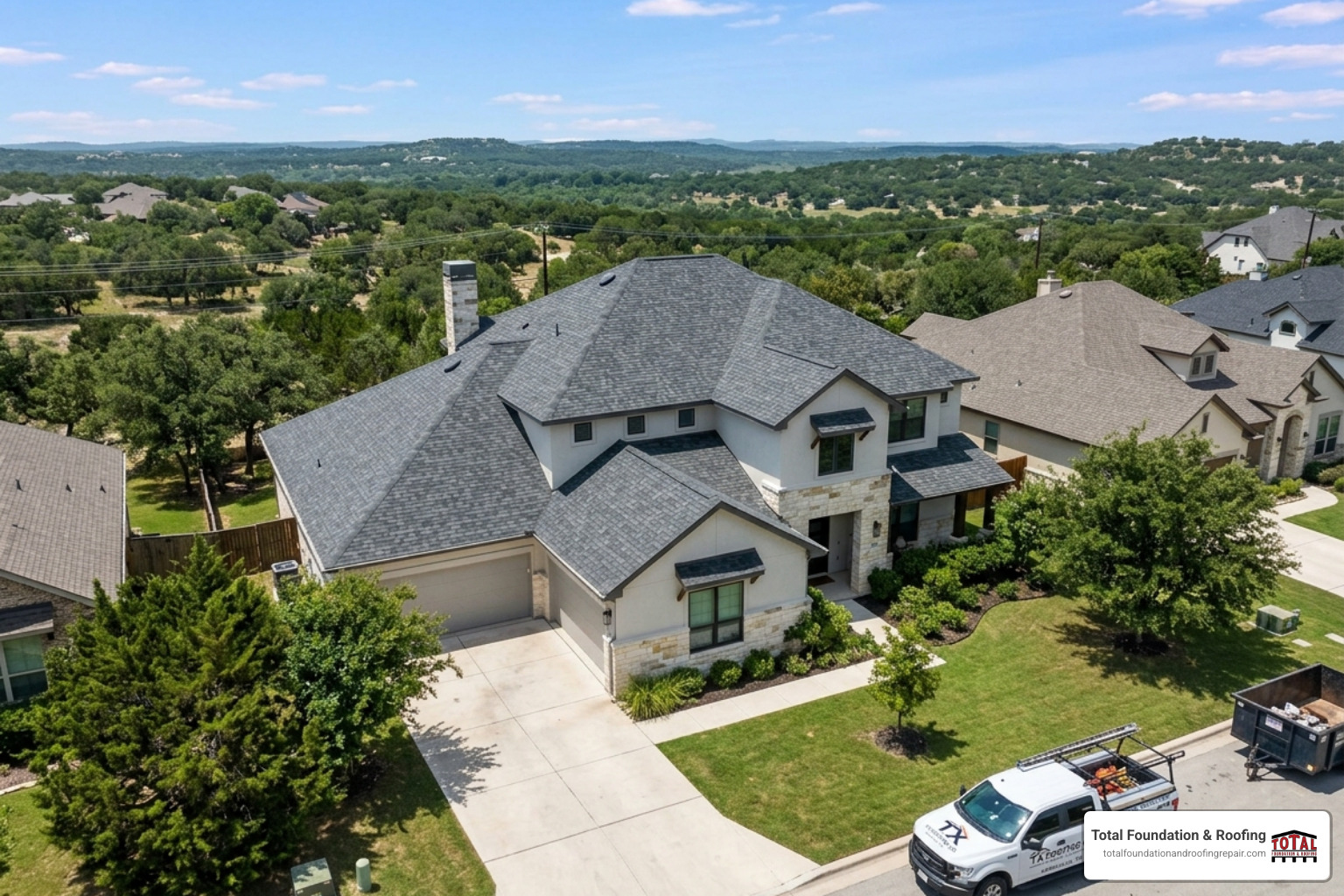
If you’re noticing granules in your gutters or water spots on your ceiling, don’t wait for the next big storm to act. Delaying a replacement can lead to more expensive repairs down the road, including foundation issues and interior mold remediation.
Ready to protect your home? Get a professional asphalt shingle roofing estimate from our local experts.
Total Foundation & Roofing Serving Kerrville, Fredericksburg, Comfort, and the surrounding Texas Hill Country.