
Why an Energy Efficient Metal Roof Is One of the Smartest Home Upgrades in 2026
An energy efficient metal roof is a roofing system designed to reflect solar heat away from your home rather than absorb it — cutting cooling costs by up to 40% compared to standard asphalt shingles. As a premier provider of Texas Hill Country roofing solutions, Total Foundation & Roofing helps homeowners transition to sustainable metal roofing services that withstand the intense heat of the region. In the first 100-150 words, it is important to note that choosing the right material is the foundation of long-term home protection.
Quick answer — what makes metal roofs energy efficient:
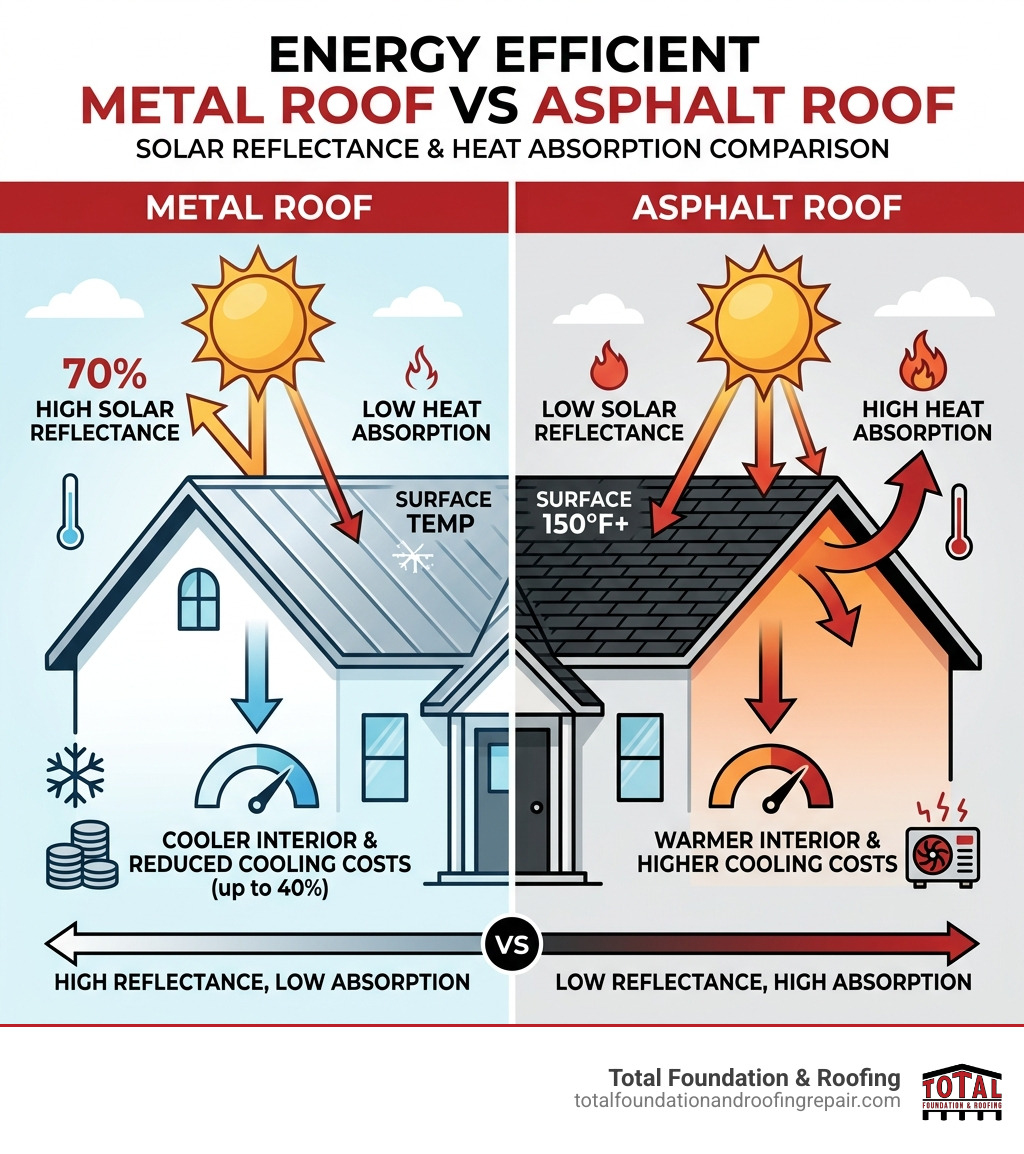
- High reflectivity: Metal roofs reflect up to 70% of the sun’s energy back into the atmosphere
- Low thermal mass: Metal sheds heat quickly instead of storing it like asphalt does
- Cool-roof coatings: Factory-applied paints re-emit up to 90% of absorbed solar radiation
- Ventilation: Batten installation creates air gaps that flush out trapped heat
- Long lifespan: 40–80 years means fewer replacements and more long-term savings
If you live in a hot climate — like the Texas Hill Country — your roof is fighting the sun every single day. A conventional asphalt shingle roof can reach surface temperatures of 150°F or more on a summer afternoon. That heat bleeds into your attic, forces your AC to work harder, and drives up your energy bills month after month. This thermal transfer is a primary reason why homeowners are seeking more advanced alternatives.
A metal roof changes that equation entirely. It’s one of the most impactful home energy efficiency upgrades available to Texas homeowners today — and the savings start from day one. By reducing the workload on your HVAC system, you extend the life of your appliances while enjoying a more consistent indoor temperature.
I’m Daniel Sowell, owner of Total Foundation & Roofing Repair with over 18 years of hands-on roofing experience in Kerrville and the surrounding Texas Hill Country. I’ve installed and inspected hundreds of energy efficient metal roofs across this region, and I’ll walk you through exactly how they work and what to look for.
Energy efficient metal roof helpful reading:
The Science Behind an Energy Efficient Metal Roof
To understand why an energy efficient metal roof is so effective, we have to look at the physics of heat. Most traditional roofing materials, like asphalt shingles, act like a thermal sponge. They absorb solar radiation throughout the day and hold onto that heat long after the sun goes down. If you’ve ever walked barefoot on a driveway at 8:00 PM in July, you know exactly what I mean. While traditional asphalt manufacturers like Owens Corning offer various shingle grades, the physical properties of asphalt mean it will always absorb more heat than a reflective metal surface.
Metal behaves differently. Because of its atomic structure, metal has low thermal mass. It doesn’t store heat; it transfers it. More importantly, when treated with the right coatings, it reflects the vast majority of solar energy before it ever enters your home’s structure. This prevents the “oven effect” where heat radiates downward into the living space long after sunset.
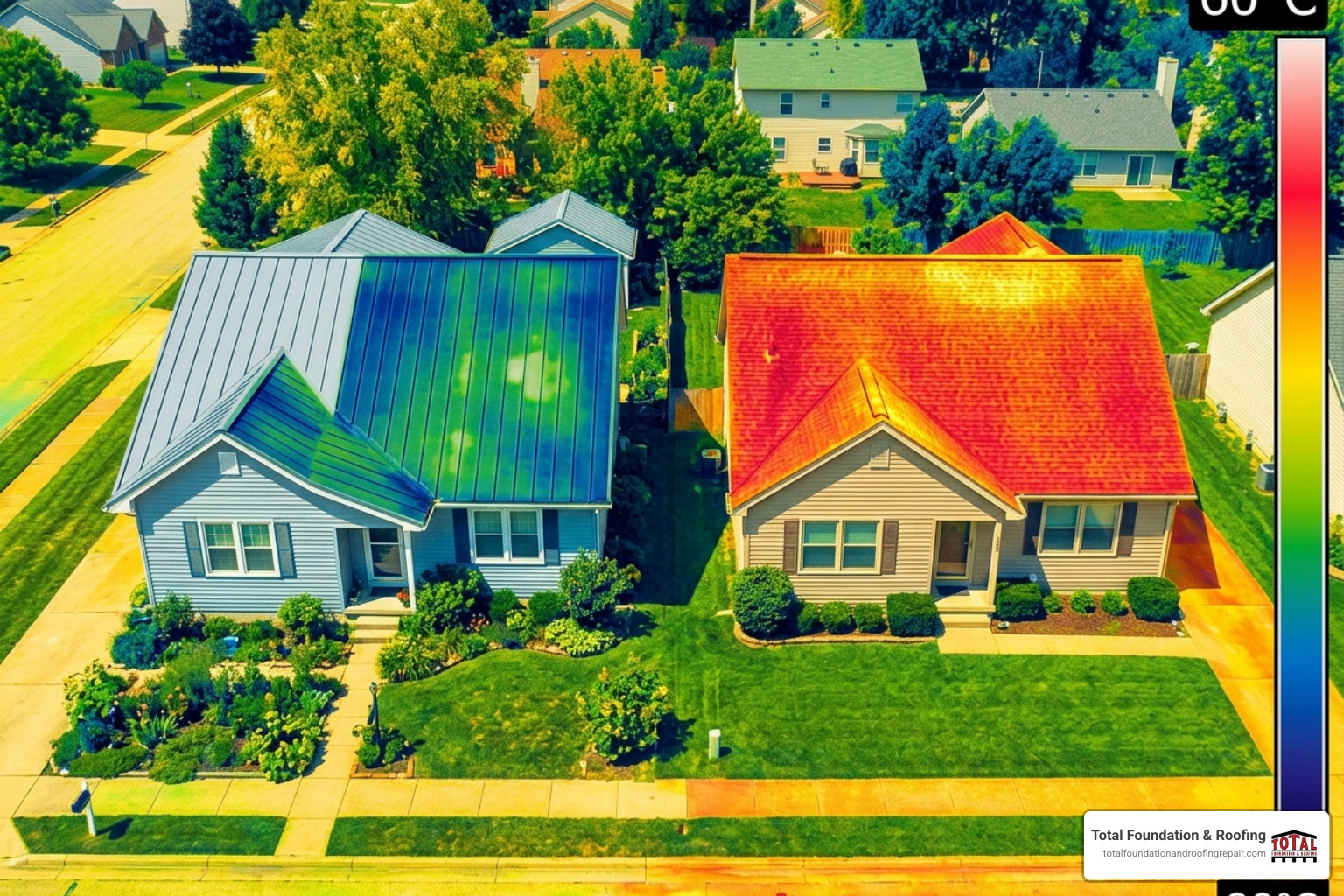
The three pillars of metal roof efficiency are:
- Reflectivity: The ability to bounce sunlight (UV and infrared) away from the surface.
- Emissivity: The ability to release any heat that is absorbed back into the atmosphere.
- Ventilation: The physical air gap between the metal and the roof deck that prevents conductive heat transfer.
According to data on Cool Metal Roofing, these systems stay significantly cooler than conventional roofs, often by as much as 50°F or more on a sunny afternoon. This temperature difference is what keeps your attic from turning into an oven. By maintaining a cooler attic, you protect the structural integrity of your roof deck and reduce the risk of moisture-related issues.
How Reflectivity Defines an Energy Efficient Metal Roof
Reflectivity is the “star player” of the energy efficient metal roof. While a dark asphalt shingle might reflect only 5% to 20% of solar energy, a high-quality metal roof can reflect up to 70%. This performance is measured by the Solar Reflectance Index (SRI). SRI is a scale from 0 to 100 that combines reflectivity and emissivity. A higher SRI means a cooler roof. For example, a standard white metal roof usually boasts an SRI of 80 or higher, whereas a dark shingle might sit in the low double digits.
In 2026, we also utilize advanced IR-reflective pigments. These are specialized factory-applied coatings that allow even darker colors—like forest green or charcoal gray—to reflect infrared light. This means you don’t have to choose between a beautiful aesthetic and a cool house. According to Sustainable Metal Roofing research, pre-painted metal options can re-emit up to 90% of solar radiation, making them a powerhouse for Southern climates.
Installation Methods for Peak Energy Efficient Metal Roof Performance
How we install your roof matters just as much as the material itself. At Total Foundation & Roofing, we often discuss two primary methods with our clients in Kerrville and Fredericksburg: Direct-to-Deck and Batten Systems. Proper installation ensures that the thermal break is maintained throughout the life of the structure.
- Batten Systems: This involves installing the metal panels over a grid of wood or metal strips (battens). This creates a continuous airspace between the metal and the roof deck. This “Above Sheathing Ventilation” acts as a natural thermal break. Studies show that batten-installed products can increase energy efficiency by up to 48.7% compared to asphalt shingles.
- Direct-to-Deck: While simpler, many modern direct-to-deck metal products now include built-in airspaces or offsets to mimic the ventilation benefits of battens. These still offer a massive upgrade, improving efficiency by roughly 30.3% over shingles.
To push efficiency even further, we recommend a Radiant Barrier Underlayment. When installed with an appropriate air gap (like in a batten system), a radiant barrier can increase thermal efficiency by a staggering 113.9%. You can learn more about these technical details in our Metal Roof Installation Complete Guide.
Metal vs. Asphalt: A Performance Comparison
If you’re still on the fence, let’s look at the raw numbers. Asphalt shingles are the most common roofing material in North America because they are cheap upfront. However, as noted by industry leaders like GAF, traditional shingles are essentially made of oil and paper, which degrades quickly under the intense Texas sun. This degradation leads to a loss of granules and a further decrease in whatever minimal reflectivity the shingles originally possessed.
| Feature | Asphalt Shingles | Energy Efficient Metal Roof |
|---|---|---|
| Solar Reflection | 5% – 25% | 60% – 70% |
| Lifespan | 12 – 20 Years | 40 – 80 Years |
| Cooling Cost Savings | Baseline | Up to 40% Savings |
| Surface Temperature | 150°F+ | ~100°F (Cooler) |
| Recyclability | Ends in Landfill | 100% Recyclable |
As you can see, the Ultimate Guide to Asphalt vs Metal Roofing highlights that while metal costs more initially, the long-term ROI is undeniable. A metal roof is a “one-and-done” investment, whereas you might replace an asphalt roof three or four times over the same period.
Maximizing ROI and Sustainability in the Texas Hill Country
For homeowners in the Texas Hill Country, an energy efficient metal roof isn’t just about the environment; it’s about financial wisdom. Between the soaring summer temperatures and the frequent hailstorms we see in areas like Fredericksburg, TX and Comfort, metal is the only material that truly stands up to the challenge.
Beyond energy savings, a metal roof significantly boosts your home’s resale value. Appraisers and buyers recognize the value of a lifetime roof that lowers utility bills. Furthermore, many insurance companies offer discounts for metal roofs because of their Class A fire rating and high impact resistance against hail. If you are in the Fredericksburg area, these insurance savings can often offset a portion of the installation cost.
Financial Incentives and Climate Savings
As of April 2026, there are several ways to make the transition to metal more affordable:
- Tax Credits: Federal energy incentives often apply to “pigmented” metal roofs that meet certain SRI requirements.
- Insurance Discounts: Many Texas insurers offer 25% to 35% discounts on premiums for homes with hail-resistant metal roofing.
- Utility Rebates: Some local cooperatives offer incentives for “Cool Roof” installations that reduce the strain on the local power grid.
According to Energy Star Metal Roofing data, homeowners in warmer climates can expect cooling savings of about 50% during peak summer months. In a place like Kerrville, where the AC runs from April through October, those savings add up to thousands of dollars over the life of the roof.
Sustainability and Solar Compatibility
If you’re looking to go green, metal is the clear winner. Most metal roofs are made with up to 95% recycled content and are 100% recyclable at the end of their long life. Compare that to the 11 million tons of asphalt shingles that end up in U.S. landfills every year.
Metal is also the perfect partner for solar energy. Because a metal roof lasts 40 to 80 years, it will easily outlast the 25-year lifespan of solar panels. This means you won’t have to pay thousands of dollars to detach and reset your solar array just to replace a worn-out shingle roof underneath. Standing seam metal roofs are particularly great because solar panels can be clamped directly to the ribs, meaning zero penetrations in your roof deck. This is a major factor our professional metal roofers consider when designing a system for you.
Conclusion: Professional Installation in Texas
An energy efficient metal roof is more than just a shelter; it’s a high-performance thermal shield for your home. By reflecting the sun, venting heat, and lasting for generations, it provides a level of comfort and financial security that asphalt simply can’t match.
At Total Foundation & Roofing, we specialize in tailoring these systems to the unique conditions of the Texas Hill Country. Whether you are in Kerrville, Fredericksburg, or Comfort, we provide the certified, high-quality workmanship required to ensure your roof performs at its peak for decades. We understand the local climate, the local building codes, and exactly what it takes to keep a Texas home cool.
Ready to stop overpaying the electric company and start investing in your home’s future?
Contact us today for a free consultation and estimate:
- Visit our Metal Roofing Services page
Let’s build a roof that works as hard as you do.
Frequently Asked Questions
Are metal roofs noisier than shingles when it rains? This is a common myth! When installed with solid sheathing and modern underlayment, a metal roof is no noisier than any other roof type. In fact, the attic insulation does most of the heavy lifting for sound dampening.
Do metal roofs attract lightning? No. While metal conducts electricity, it does not “attract” it. Lightning hits the highest point in an area, regardless of material. Because metal is non-combustible, it’s actually safer if a strike does occur.
Will a dark-colored metal roof make my house hotter? Not necessarily. Thanks to modern “cool-roof” pigments, even dark colors can have high solar reflectance. However, for maximum efficiency in the Texas Hill Country, lighter colors like white, tan, or light gray are still the top performers.
Can I install a metal roof over my existing shingles? In many cases, yes! This is a great way to reduce landfill waste and add an extra layer of insulation. However, we always perform a thorough inspection of the roof deck first to ensure it can handle the (albeit light) weight and that there is no existing rot. Check out our guide on shingle and metal roof transitions for more info.