

Why Understanding Garage Floor Cracks Matters
Garage floor cracks are one of the most common concerns Texas homeowners face, and if you’re reading this, you’re likely staring at one right now wondering if it’s serious. The good news: most garage floor cracks are completely normal and harmless. The challenge: knowing which ones need immediate attention. If you want a clear, local baseline from a team that works on slabs every day, start with Total Foundation & Roofing’s foundation, roofing, and concrete services.
Quick Answer Guide:
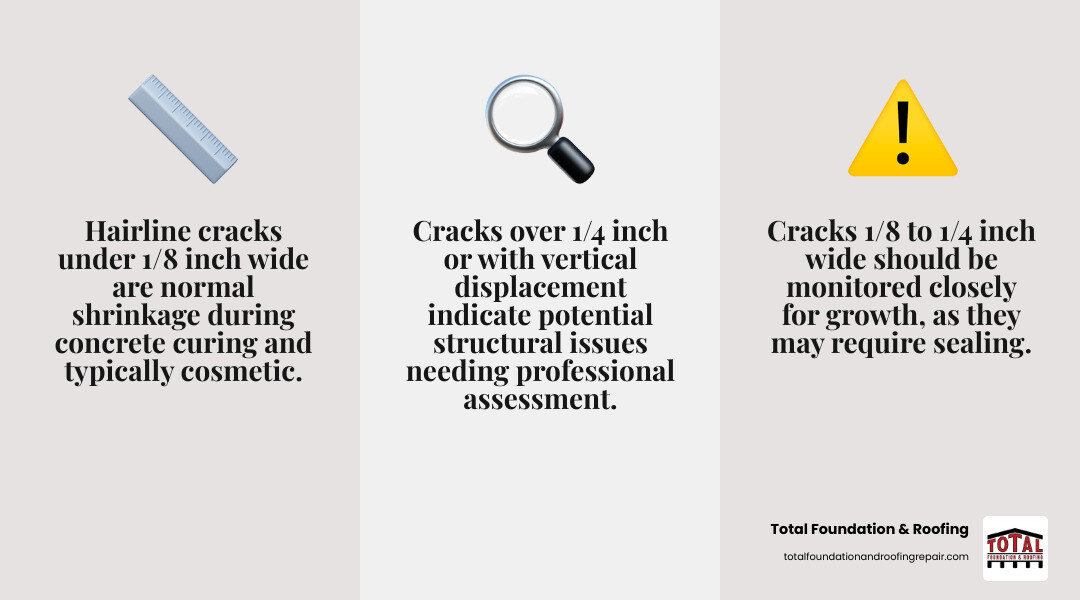
- Hairline cracks (less than 1/8 inch wide): These are almost always the result of normal shrinkage during the concrete curing process. They are usually cosmetic and do not threaten the home’s structure.
- Small cracks (1/8 to 1/4 inch): These should be monitored for growth. While they may not be structural yet, they can allow moisture to seep under the slab, which may lead to future issues. Sealing is often recommended.
- Large cracks (over 1/4 inch): These represent a potential structural concern. When a crack reaches this width, it often indicates that the soil beneath has shifted significantly, requiring a professional assessment.
- Uneven cracks (one side raised): This is a classic sign of foundation settlement or “heaving.” If you can trip over the edge of the crack, it is a priority repair.
- Growing cracks: Active movement is the biggest red flag. If a crack is getting longer or wider over a period of weeks, it indicates underlying soil instability.
When to worry: If cracks are wider than 1/8 inch, show vertical displacement, extend to walls, or appear suddenly with other signs like sticking doors or sloping floors, you need professional evaluation. If you notice multiple concerning symptoms, Total Foundation & Roofing offers free inspections throughout the Texas Hill Country.
Garage floors crack for many reasons, from normal concrete shrinkage during curing to serious foundation settlement caused by our region’s expansive clay soils. Not every crack signals disaster, but knowing the difference can save you thousands in future repairs and protect your home’s structural integrity.
I’m Daniel Sowell, owner of Total Foundation & Roofing Repair in Kerrville, and over 18 years I’ve assessed hundreds of garage floor cracks across the Hill Country, from harmless hairline fractures to serious settlement issues requiring foundation intervention. This guide will help you identify what’s normal, what’s not, and when to take action.
Garage floor cracks basics:
- Concrete crack solutions
- Patching concrete floor
- Patching cracks in concrete
- When cracks indicate movement, start with professional crack repair services
Understanding Garage Floor Cracks: Causes and Types
To understand why your garage floor is behaving like a jigsaw puzzle, we first have to look at what concrete actually is. Think of concrete as a giant, rigid sponge. When it’s poured, it’s full of water. As it dries—a process we call curing—that water evaporates, and the entire slab slightly shrinks. Concrete doesn’t just “dry”; it undergoes a chemical reaction called hydration. According to the Portland Cement Association, maintaining proper moisture and temperature during the first few days of this process is critical to preventing excessive shrinkage and ensuring long-term durability.
If you’ve ever left a loaf of bread out on the counter too long, you know it gets smaller and develops cracks. Concrete does the same thing, just on a much more expensive scale. This is why we provide comprehensive foundation and concrete services to help homeowners navigate these natural shifts.
The Role of Curing and Temperature
Temperature swings in the Texas Hill Country are legendary. We can have a 40-degree drop in a single afternoon in Fredericksburg or Comfort. Concrete expands when it’s hot and contracts when it’s cold. Without room to move, it will eventually snap.
To manage this, builders use control joints. These are the straight lines you see saw-cut into your floor. They are essentially “pre-planned cracks” designed to encourage the concrete to break in a straight line rather than a jagged mess. If your garage floor cracks are following these lines, congratulations! Your floor is doing exactly what it was designed to do. However, if the cracks are wandering off on their own, you might need our Patching Concrete Floor Complete Guide to understand the next steps.
Common Causes of Concrete Cracking
While shrinkage is the most common culprit, several other factors can lead to garage floor cracks. We see these issues daily in our local service areas:
- Soil Settlement: This is the big one in our region. If the soil underneath the slab wasn’t properly compacted before the pour, the weight of the concrete (and your heavy SUV) will cause the ground to compress. This creates a void under the slab, leading to “settlement cracks” as the concrete sinks to fill that space.
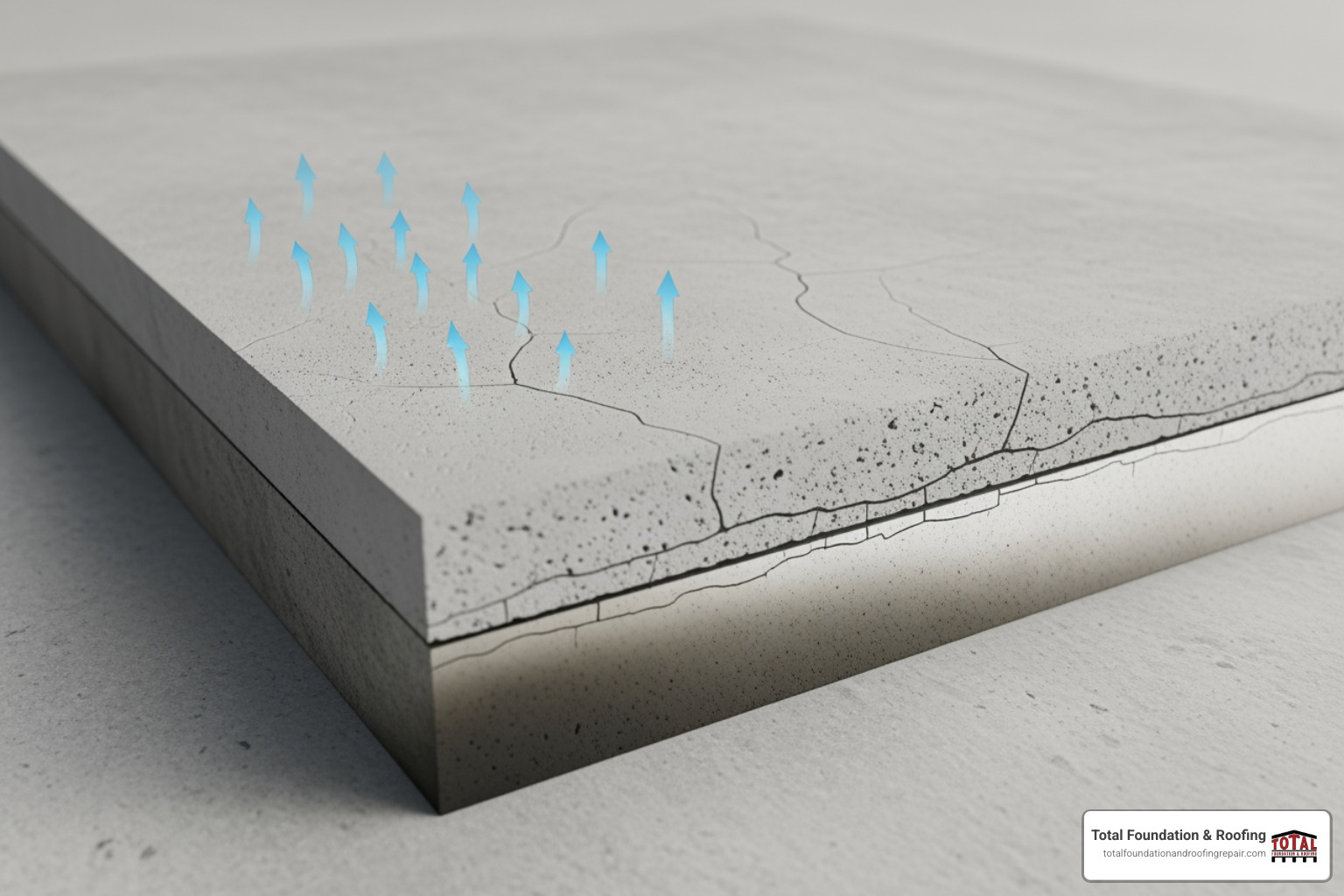
- Hydrostatic Pressure: When we get those heavy Texas downpours, water can pool under your garage. This moisture creates upward pressure that pushes against the slab, causing it to heave and crack. This is especially common in areas with poor drainage.
- Heavy Loads: Most residential garage floors are 4 inches thick. If you’re parking heavy machinery, a massive RV, or a boat on a slab not designed for those specific point loads, you’re asking for trouble.
- Poor Construction: Sometimes, the rebar wasn’t placed at the right depth, or the concrete mix had too much water added to make it easier to pour. These “short-cuts” often result in cracks within the first two years of a home’s life.
If you are dealing with these issues, exploring Concrete Crack Solutions is the best way to prevent a small gap from becoming a major structural failure.
Identifying Normal vs. Structural Garage Floor Cracks
How do you know if you should just buy some filler or call a structural engineer? It usually comes down to the “Rule of Quarters.” If you can fit two quarters side-by-side into the crack (about 1/8 inch), it’s time to pay attention. If it’s wider than 1/4 inch, it’s a red flag.
Normal Cracks:
- Hairline fractures: Usually less than 1/8 inch wide. These are almost always cosmetic and result from the initial curing process.
- Crazing: This looks like a spiderweb or a cracked desert floor. It’s a surface-level issue caused by the top layer of concrete drying too fast during installation.
Structural Cracks:
- Vertical Displacement: This is the most serious sign. If one side of the crack is higher than the other, the slab has shifted. This is a cracked slab in garage issue that indicates the sub-surface has failed or settled unevenly.
- Continuous Growth: If you mark the ends of a crack with a pencil and notice it has traveled another inch a month later, you have active movement.
- Wall-to-Wall Cracks: Cracks that travel across the entire floor and continue up the foundation walls are a major concern.
For a deeper dive into these distinctions, check out our Concrete Crack Repair Complete Guide.
The Impact of Texas Hill Country Soil
In places like Kerrville and Fredericksburg, we deal with “expansive clay.” This soil acts like a sponge—it swells when it rains and shrinks during our frequent droughts. This constant “breathing” of the earth puts immense stress on concrete slabs. Because the clay expands with such force, it can actually lift entire sections of a garage floor, only to let them drop months later when the soil dries out.
If your home is built on a hillside or has poor drainage, the soil under your garage might wash away or settle unevenly. Proper grading and gutter systems are your first line of defense. We often tell our clients that managing the water outside the garage is the best way to fix the floor inside. If the soil movement has already affected your home’s bones, you may need to look into Repairing Cracks in Concrete Foundation.
Assessing Severity and Professional Solutions
Once you’ve identified that your garage floor cracks are more than just an eyesore, the next step is assessment. We recommend homeowners monitor their cracks for at least one full season. If a crack opens up in the summer and closes in the winter, it’s likely related to thermal expansion. If it just keeps getting wider, you have a settlement problem.
When the slab has actually sunk or tilted, traditional “patching” won’t work because the void underneath still exists. This is where Foundation Crack Solutions like slab leveling come into play. Understanding Concrete Crack Repair Costs early can help you budget for these necessary interventions.
DIY vs. Professional Garage Floor Cracks Repair
Can you fix it yourself? Maybe. But there is a massive difference between “sealing” a crack and “repairing” a slab. DIY methods are generally temporary fixes for cosmetic issues.
| Feature | DIY Sealants (Caulk/Liquid Filler) | Professional Polyurethane Injection |
|---|---|---|
| Purpose | Keeps water/debris out of the crack | Lifts, levels, and stabilizes the slab |
| Structural Strength | Zero | High (restores support) |
| Longevity | 1-3 years (often peels) | Permanent solution |
| Aesthetics | Visible “scar” on the floor | Nearly invisible finish |
| Cost | $20 – $100 | Varies by project size |
For minor, non-moving hairline cracks, Patching Cracks in Concrete with a high-quality epoxy or polyurea filler is a great Saturday afternoon project. However, if the slab is unlevel, DIY fillers will just crack again within months because they don’t address the lack of support beneath the concrete.
Professionals use methods like Polyurethane Foam Injection (often called Poly-leveling). We drill small, penny-sized holes in the slab and inject a high-density foam that expands to fill the voids and lift the concrete back to its original position. It’s faster and cleaner than the old “mudjacking” method, which used a heavy grout slurry. If you’re seeing signs of foundation movement, you’ll need to Fix Foundation Crack issues before addressing the cosmetic floor finish.
For cracks that are actively widening or show displacement, the most reliable next step is an on-site evaluation tied to a documented repair plan. Start with Total Foundation & Roofing’s crack repair services so the underlying cause is addressed, not just the symptom.
Risks of Ignoring Slab Deterioration
It’s tempting to just throw a rug over those garage floor cracks and forget about them. But ignoring concrete damage is like ignoring a toothache; it only gets more expensive over time.
- Safety Hazards: Uneven slabs are tripping hazards. In a garage, where you’re often carrying heavy boxes or tools, a 1/2-inch lip in the concrete can lead to a nasty fall.
- Water Damage: Cracks allow water to seep under the slab. This can lead to soil erosion, which causes even more cracking, creating a vicious cycle of deterioration.
- Vehicle Damage: Constant vibration and the impact of driving over jagged cracks can take a toll on your car’s tires and suspension over time.
- Property Value: When you go to sell your home, a cracked garage floor is a giant red flag. Home inspectors, following standards from organizations like InterNACHI, will meticulously document any slab displacement as a potential structural defect. This suggests foundation issues to buyers, even if the problem is localized to the garage.
- Foundation Issues: In many homes, the garage slab is a “floating slab,” meaning it’s not connected to the main foundation. However, in some designs, a sinking garage floor can pull on the adjacent house walls. Refer to our Repairing Large Concrete Wall Cracks Guide to see if your floor issues are spreading.
The Foundation Crack Repair Cost is always lower when the problem is caught early.
Professional Inspection and Repair Services
At Total Foundation & Roofing, we specialize in the unique challenges of the Texas Hill Country. We know the difference between a house that’s settling into the limestone and one that’s being pushed around by expansive clay. Our team provides certified, high-quality workmanship tailored to residential and commercial clients in Kerrville, Fredericksburg, and Comfort. We don’t just “fill” cracks; we address the underlying cause to help ensure your garage remains a safe, durable part of your home.
If you’re concerned about your garage floor cracks, don’t guess. We offer professional Crack Repair Services and free, no-obligation inspections. We’ll tell you exactly what’s happening under your feet and provide a clear, honest plan to fix it.
Ready to get your garage floor back on solid ground? Contact Total Foundation & Roofing today to schedule your free inspection.
Summary Checklist for Homeowners:
- Measure: Is it wider than 1/8 inch?
- Level: Is one side higher than the other?
- Location: Does it go through a control joint or is it random?
- Growth: Has it changed in size or shape in the last 6 months?
By staying proactive and understanding the difference between a cosmetic blemish and a structural threat, you can keep your Texas home standing strong for generations. Whether you need a simple patch or a full slab stabilization, we’re here to help.