

Understanding and Addressing Foundation Cracks
Finding a crack in your concrete foundation can be unsettling. However, not all cracks signal a disaster. Understanding the difference between minor flaws and serious structural issues is the first step toward a secure home and effective foundation repair. Knowing when to handle a simple fix and when to call for professional repairing cracks in concrete foundation can save you significant stress and money.
Here’s a quick guide to understanding foundation cracks:
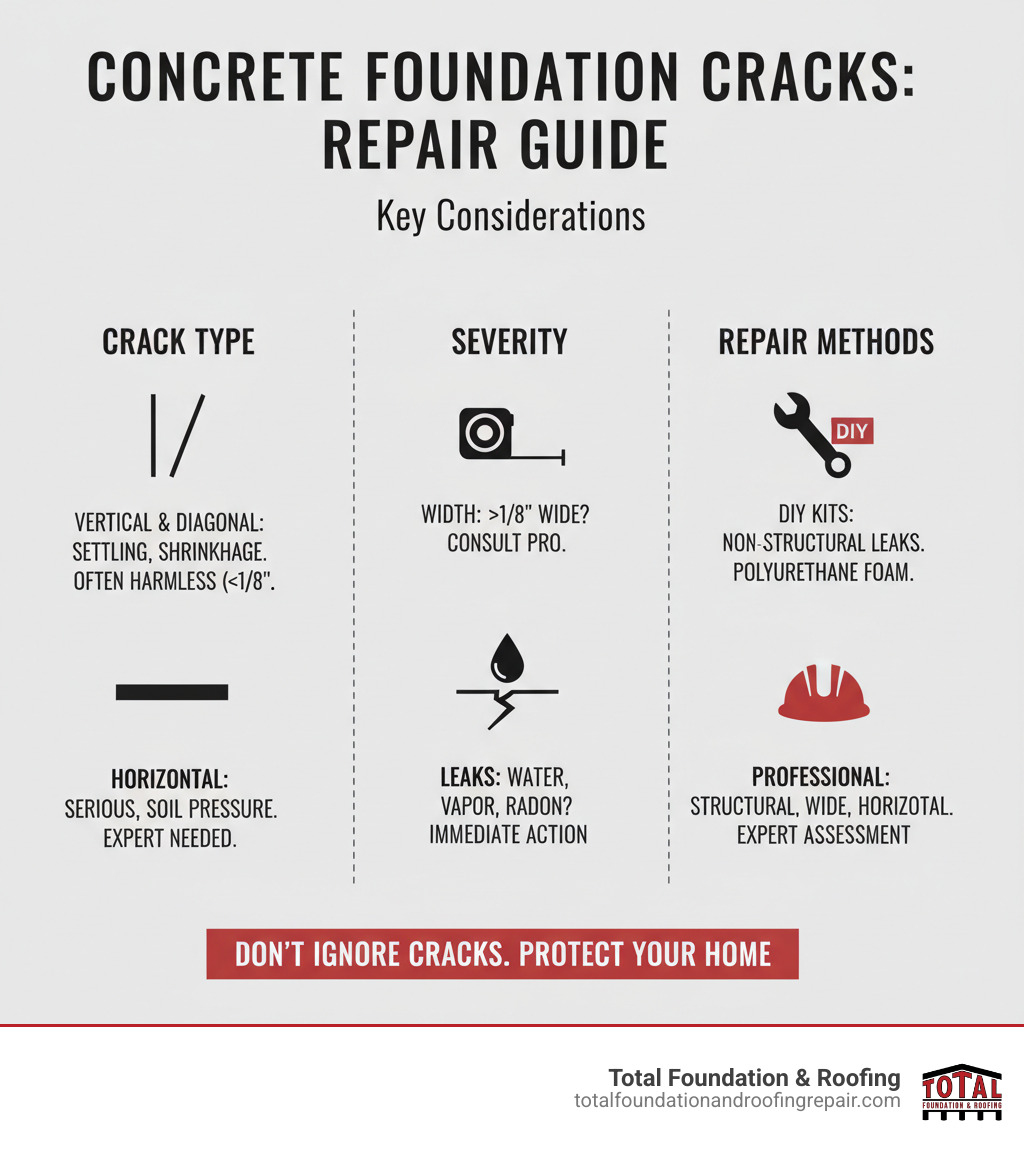
- Vertical or Diagonal Cracks: Often from normal concrete shrinkage or settling. Typically not serious if less than 1/8-inch wide.
- Horizontal Cracks: A major red flag indicating serious structural problems, usually from external soil pressure.
- Crack Width: Any crack wider than 1/8 inch warrants a professional inspection.
- Water Leaks: Cracks allowing water, vapor, or radon gas entry require immediate repair.
- DIY vs. Pro: Minor, non-structural leaks can often be a DIY job. Structural issues, especially horizontal cracks, require a professional.
If you notice active leaks, wide cracks, or any other foundation concerns, it’s crucial to act. Our experts provide lasting foundation crack repair solutions to prevent minor issues from becoming major problems. Ignoring foundation damage can lead to more extensive and costly repairs later.
A Homeowner’s Guide to Repairing Cracks in Concrete Foundation
Spotting a crack in your concrete foundation can be alarming. At Total Foundation & Roofing, we want to provide the knowledge you need to assess these issues confidently. Repairing cracks in concrete foundation is a common homeowner task, and this guide will help you determine when a DIY approach is suitable and when it’s time to call a professional.
Decoding the Damage: Identifying Types of Foundation Cracks
Not all cracks are created equal. The first step in effective repair is understanding what caused the crack and whether it poses a structural threat.
Common Causes of Foundation Cracks
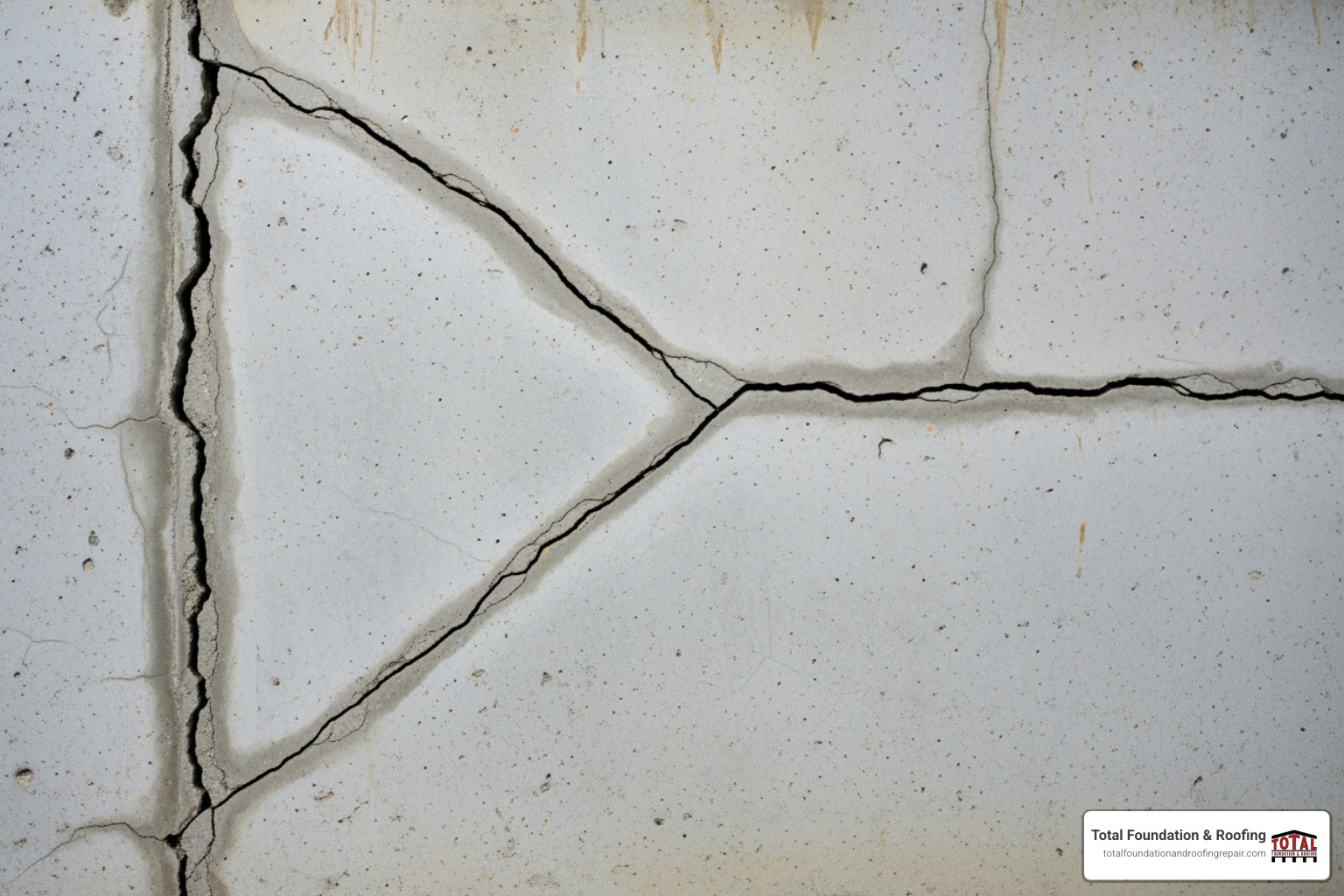
Concrete foundation cracks appear for several reasons. Minor vertical or diagonal cracks often result from natural concrete curing (shrinkage) or minor, even settling of the home. More serious issues stem from external pressures. Hydrostatic pressure, caused by water-saturated soil pushing against foundation walls, is a primary culprit, especially in the Texas Hill Country. This pressure, often exacerbated by expansive clay soils and poor property grading, can lead to severe horizontal cracks and water intrusion.
Telling Harmless Cracks from Serious Ones
The key to repairing cracks in concrete foundation is distinguishing harmless flaws from serious structural threats. Here’s how to tell them apart:
- Vertical and Diagonal Cracks: Generally less concerning. If they are hairline-thin (under 1/8 inch) and not leaking, they are likely simple shrinkage or minor settlement cracks. However, if they are wider than 1/8 inch, growing, or accompanied by other signs like bulging walls or sloping floors, they require a professional assessment.
- Horizontal Cracks: These are almost always a serious structural warning. A horizontal crack indicates intense external pressure on the foundation wall, which can lead to bowing and eventual failure. These cracks demand immediate professional attention.
- Stair-Step Cracks: Found in block or brick foundations, these follow the mortar lines and typically indicate uneven settling or lateral pressure.
In summary, call a professional for any horizontal crack, any crack wider than 1/8 inch, actively leaking cracks, or cracks that are visibly growing. Other red flags include bulging walls, sloping floors, and doors or windows that suddenly stick. When in doubt, a professional opinion is the safest bet. For a deeper look at identifying issues, see our complete guide to home foundation problems or schedule a foundation inspection in Kerrville, TX.
DIY vs. Professional: When to Tackle Repairing Cracks in Concrete Foundation Yourself
For small, non-structural cracks, DIY repair kits can be an effective and cost-efficient solution. These kits, typically using polyurethane foam injection, are excellent for sealing minor leaks to prevent water, vapor, and even radon gas from entering. You can often see how simple the application is. However, their limitation is critical: DIY kits do not provide structural reinforcement. They seal, but they don’t strengthen. Using them on structural cracks, especially horizontal cracks, or trying to patch serious issues with temporary fixes like hydraulic cement, will not solve the underlying problem and can lead to more significant damage.
It’s time to call one of our foundation repair contractors when you encounter:
- Horizontal cracks of any size.
- Any crack wider than 1/4 inch.
- Cracks that are actively growing or changing.
- Associated structural signs like bulging walls or sloping floors.
- Any situation where you are uncertain about the severity.
Attempting a DIY fix on a structural problem can lead to much higher foundation crack repair costs in the long run.
The Pro’s Toolkit: Understanding Modern Repair Methods
When repairing cracks in concrete foundation, professionals use advanced injection methods custom to the problem.
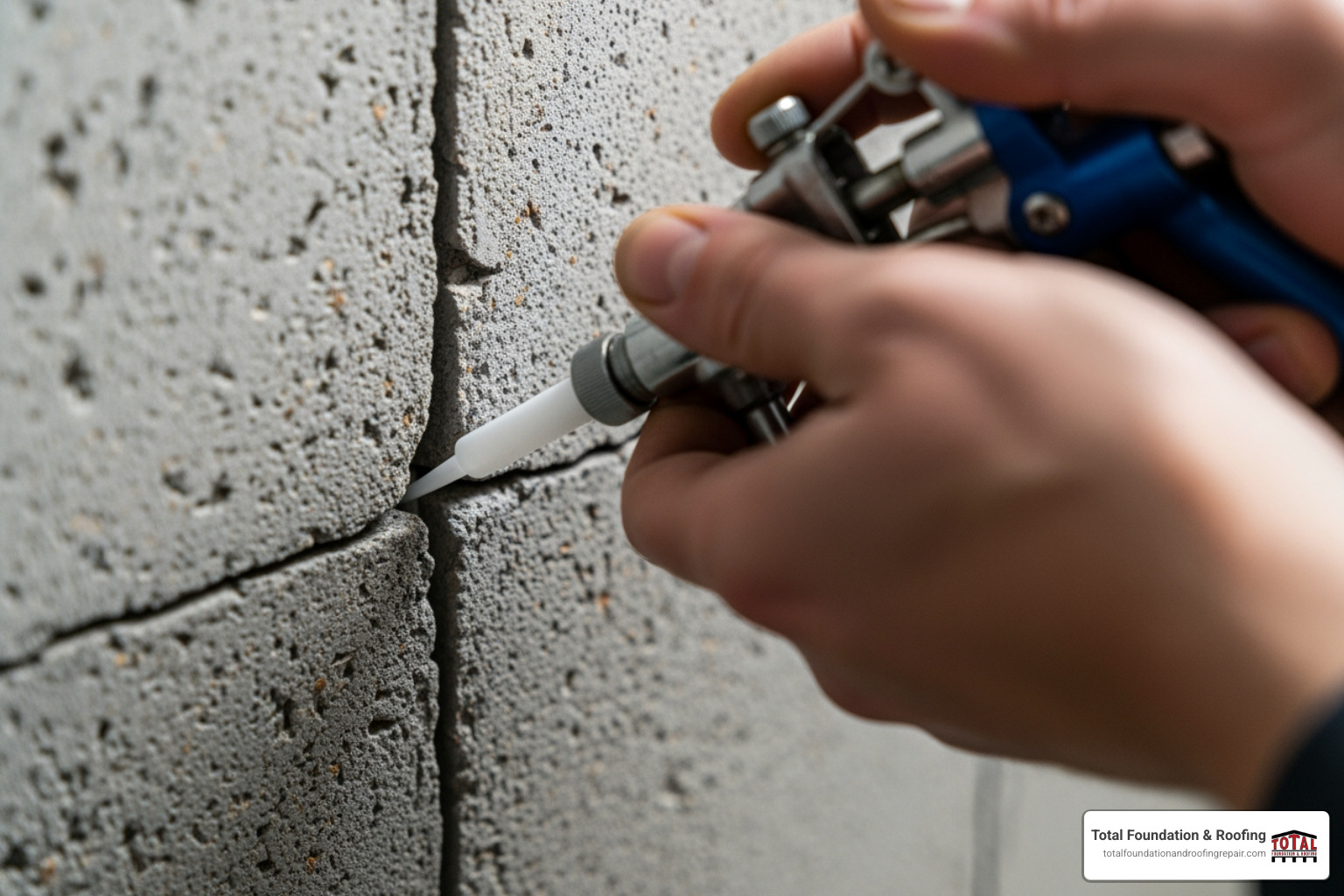
- Polyurethane Injection: This is our primary method for waterproofing. A flexible polyurethane resin is injected into non-structural cracks. It expands to create a durable, watertight seal, making it ideal for stopping active leaks in vertical or diagonal cracks.
- Epoxy Injection: This is the solution for structural reinforcement. A high-strength epoxy resin is injected to bond the concrete back together, restoring its original strength. It’s often stronger than the concrete itself, making it essential for repairing wider cracks or any crack that has compromised the foundation’s integrity.
Carbon Fiber Reinforcement is often used with epoxy injection for added structural support, especially for bowing walls with horizontal cracks. Carbon fiber straps or staples, which are 10 times stronger than steel, are bonded to the wall to prevent further movement and provide immense tensile strength. This lightweight, non-invasive method is a game-changer for stabilizing compromised foundation walls.
A professional repair follows a precise process: We start with a thorough inspection, prepare the crack surface, install injection ports, and inject the appropriate material (epoxy or polyurethane). If needed, we add carbon fiber reinforcement. This systematic approach is part of our comprehensive concrete repair methods and ensures a lasting repair. For underlying settlement issues, we may also recommend solutions like concrete leveling with foam injection to provide complete foundation crack solutions.
Protect Your Investment: Professional Repair and Prevention
Your home is likely your biggest investment, and its stability starts with the foundation. Properly repairing cracks in concrete foundation is just one piece of the puzzle; long-term protection involves managing environmental factors and addressing problems early.
Beyond the Fill: The Importance of Proper Drainage and Grading
Simply repairing a crack is not enough; you must also address the root cause, which is often water. Effective water management is key to preventing future damage from hydrostatic pressure.
- Proper Grading: Ensure the ground around your home slopes away from the foundation—ideally a 6-inch drop over the first 10 feet.
- Gutters and Downspouts: Keep gutters clean and extend downspouts at least 5-10 feet away from the house to prevent water from saturating the soil near the foundation.
- Drainage Systems: For persistent water problems, a French drain can collect and redirect groundwater. Comprehensive foundation waterproofing provides the ultimate protection, which can sometimes involve digging out the foundation to waterproof it externally. You can find more waterproofing tips from resources like Waterproof! Magazine.
Long-Term Consequences of Neglecting Foundation Issues
Ignoring foundation cracks or using improper repair methods can lead to severe consequences. A small issue can escalate into worsening structural damage, including bowing walls and uneven floors. Water intrusion through cracks invites mold, mildew, pests, and wood rot, creating health hazards and further damage. Unaddressed foundation problems significantly decrease your property’s value and can pose serious safety risks.
While it’s rare for a foundation to be truly beyond repair, severe, widespread damage can occur. In most cases, even significant issues can be addressed with advanced techniques like underpinning or house leveling. Our foundation problems repair guide offers more detail on these solutions. Early intervention is always the most cost-effective approach.
Your Next Steps for a Stable, Crack-Free Foundation
A crack in your foundation is a manageable problem with the right approach. This guide should empower you to make informed decisions about repairing cracks in concrete foundation. While minor hairline cracks can be normal, any crack that is horizontal, widening, or leaking requires professional attention to prevent it from becoming a major structural issue.
For homeowners in the Texas Hill Country, our unique soil and climate demand prompt action. If you’ve noticed concerning cracks in your home in Kerrville or Fredericksburg, don’t wait. Contact our team of certified experts to schedule a thorough inspection. We provide lasting foundation crack repair solutions custom to our region, ensuring your home remains safe and stable for years to come.