
Protecting Your Home: Repairing Roof Shingles
Learning how to effectively handle repairing roof shingles is a crucial skill for any homeowner. A damaged shingle can quickly escalate from a minor issue to a major headache, leading to leaks and costly water damage. For homeowners in the Texas Hill Country, timely roof maintenance is vital for protecting your home from harsh weather. At Total Foundation & Roofing Repair, we provide expert roofing and foundation solutions to keep your home safe and secure. This guide will walk you through identifying damage, gathering the right tools, and making the repair yourself.
My name is Daniel Sowell. As the Owner and Operator of Total Foundation & Roofing Repair, LLC, I bring over 18 years of experience to every job, ensuring your home’s integrity.
A Homeowner’s Guide to Repairing Roof Shingles
Addressing damaged roof shingles promptly is key to maintaining your home’s structural integrity. This guide covers the essential steps for repairing roof shingles, from identifying problems to performing the fixes and knowing when to call the pros.
Spotting the Signs: When Do Shingles Need Repair?
Your roof is your home’s first line of defense. Regular inspections, ideally in the spring and fall, can help you catch damage early. Here are common signs that your shingles need attention:
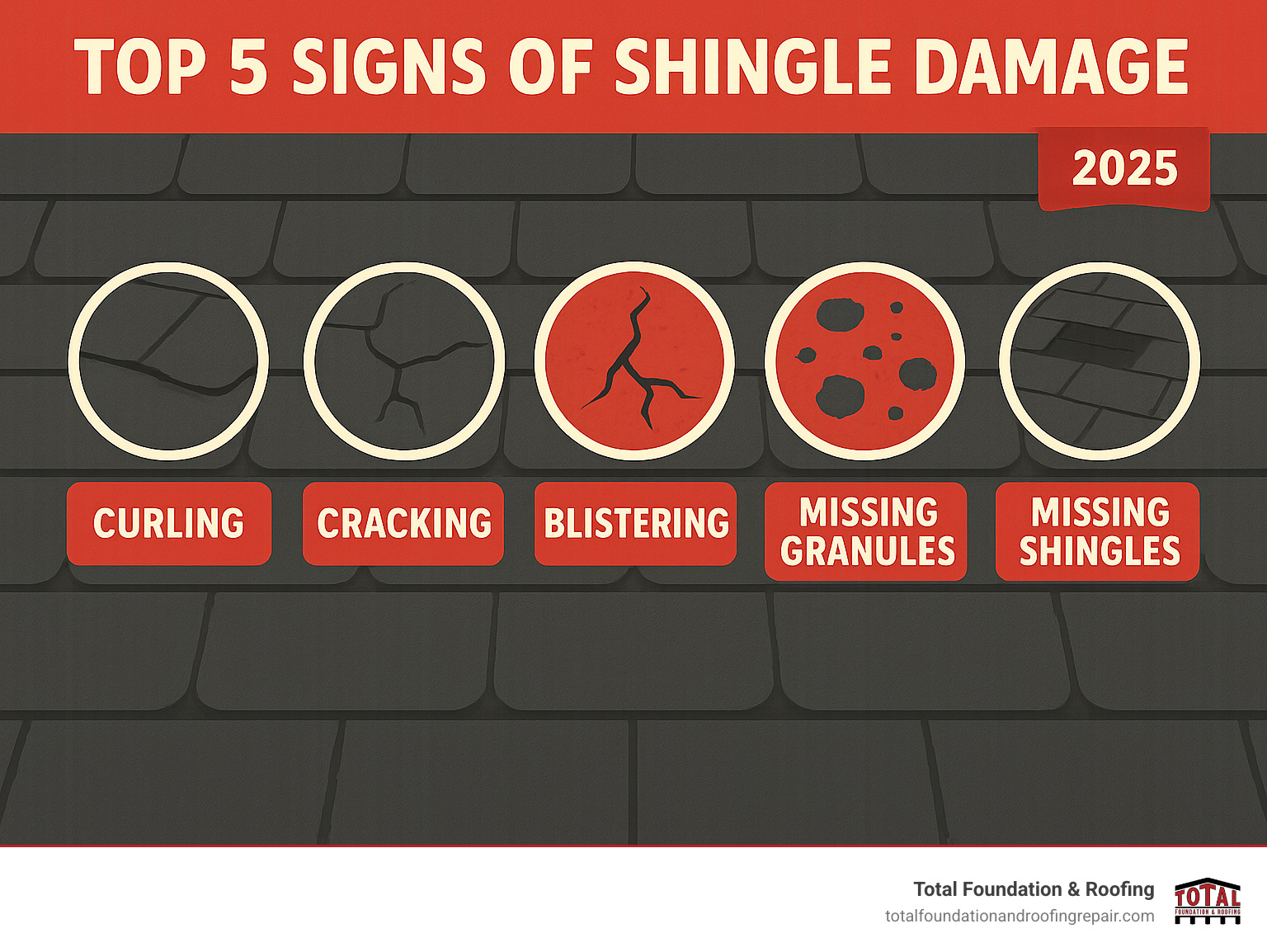
- Curling or Clawing: Shingle edges turn upward (cupping) or the middle rises (clawing). This is often due to age or heat and creates paths for water to seep underneath.
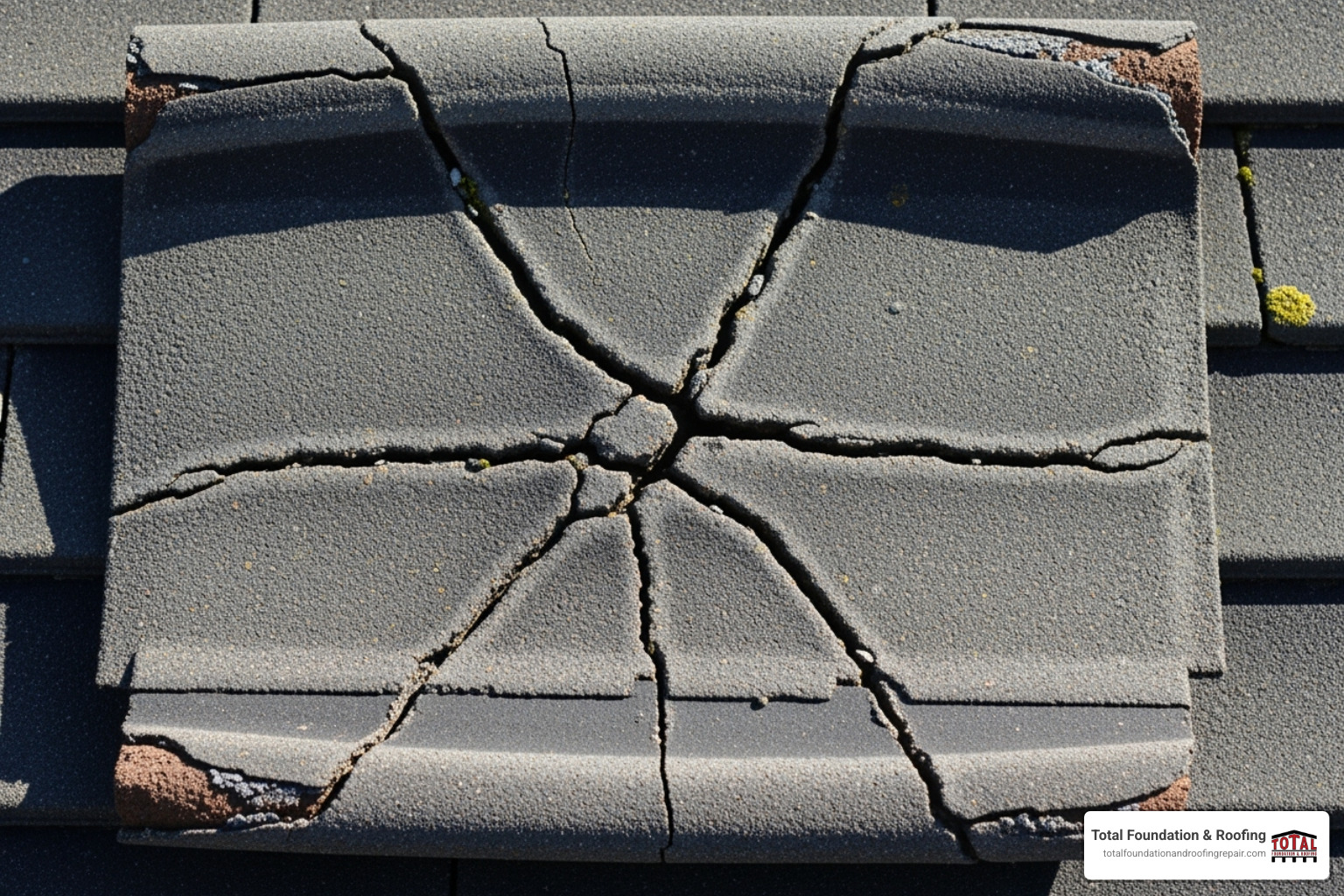
- Cracking or Splitting: Caused by temperature extremes and UV exposure, these cracks are direct invitations for water to penetrate your roof.
- Blistering: Small, bubble-like formations indicate trapped moisture. While not an immediate leak, blisters can pop and lead to granule loss.
- Missing Granules: Finding coarse, sand-like material in your gutters or seeing bald spots on shingles means the protective layer is wearing away, accelerating deterioration.
- Missing Shingles: High winds or storms can blow shingles off entirely, leaving your roof vulnerable to water damage.
- Interior Water Stains: Discoloration or damp spots on ceilings or walls are a strong indicator that a leak has already occurred.
- Sagging Roof Deck: A dipping or sagging roofline is a severe sign of structural weakness, often from prolonged water damage, and requires immediate professional attention.
Delaying repairs can lead to interior water damage, mold growth, and structural rot. A minor fix is far cheaper than extensive repairs down the line.
Gearing Up: Tools and Materials for Shingle Repair
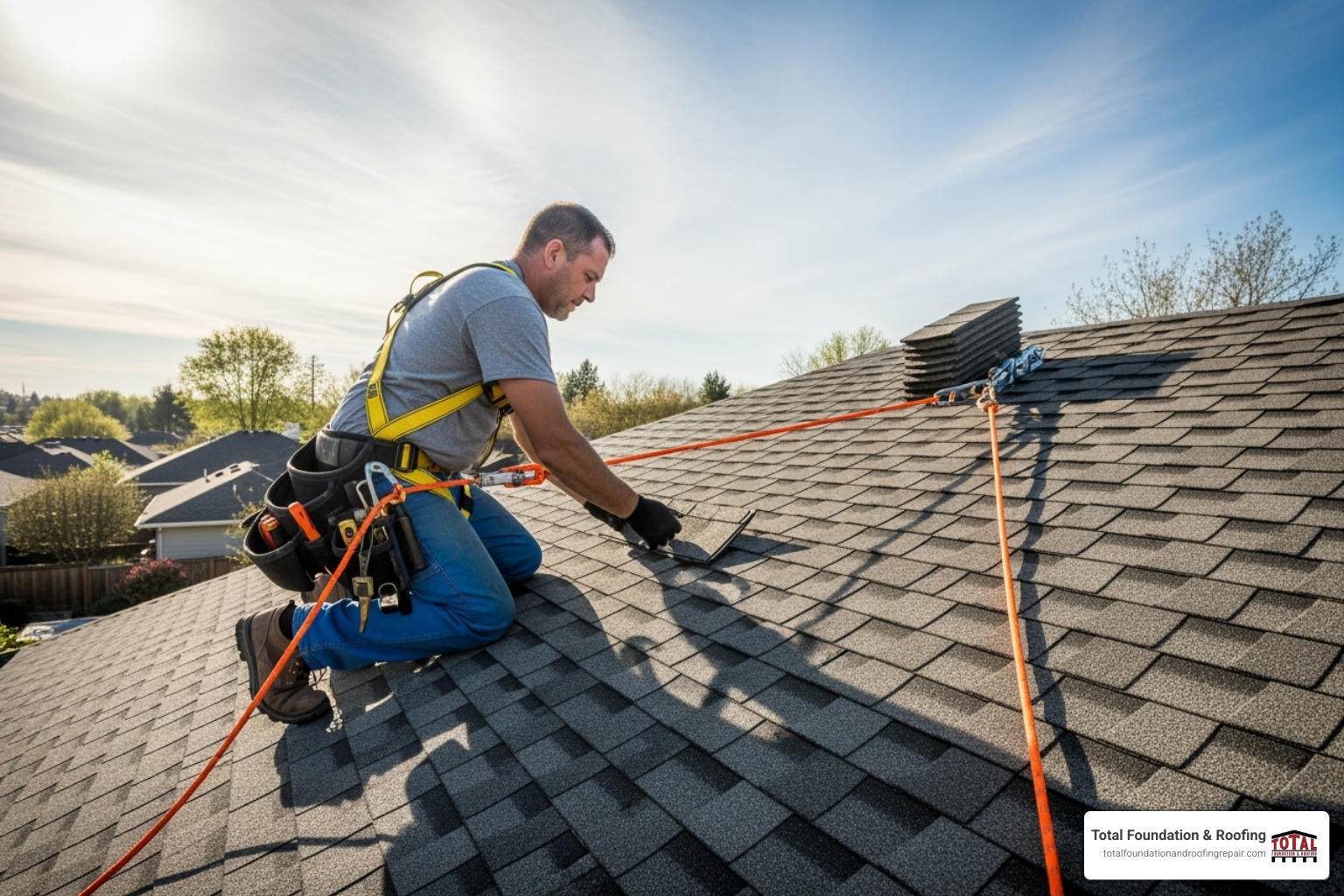
Before you climb onto the roof, gathering the right tools and materials is essential for a safe and effective repair. Having everything on hand prevents multiple trips up and down the ladder and ensures the job is done correctly the first time. Safety should always be your top priority.
Essential Tools and Materials:
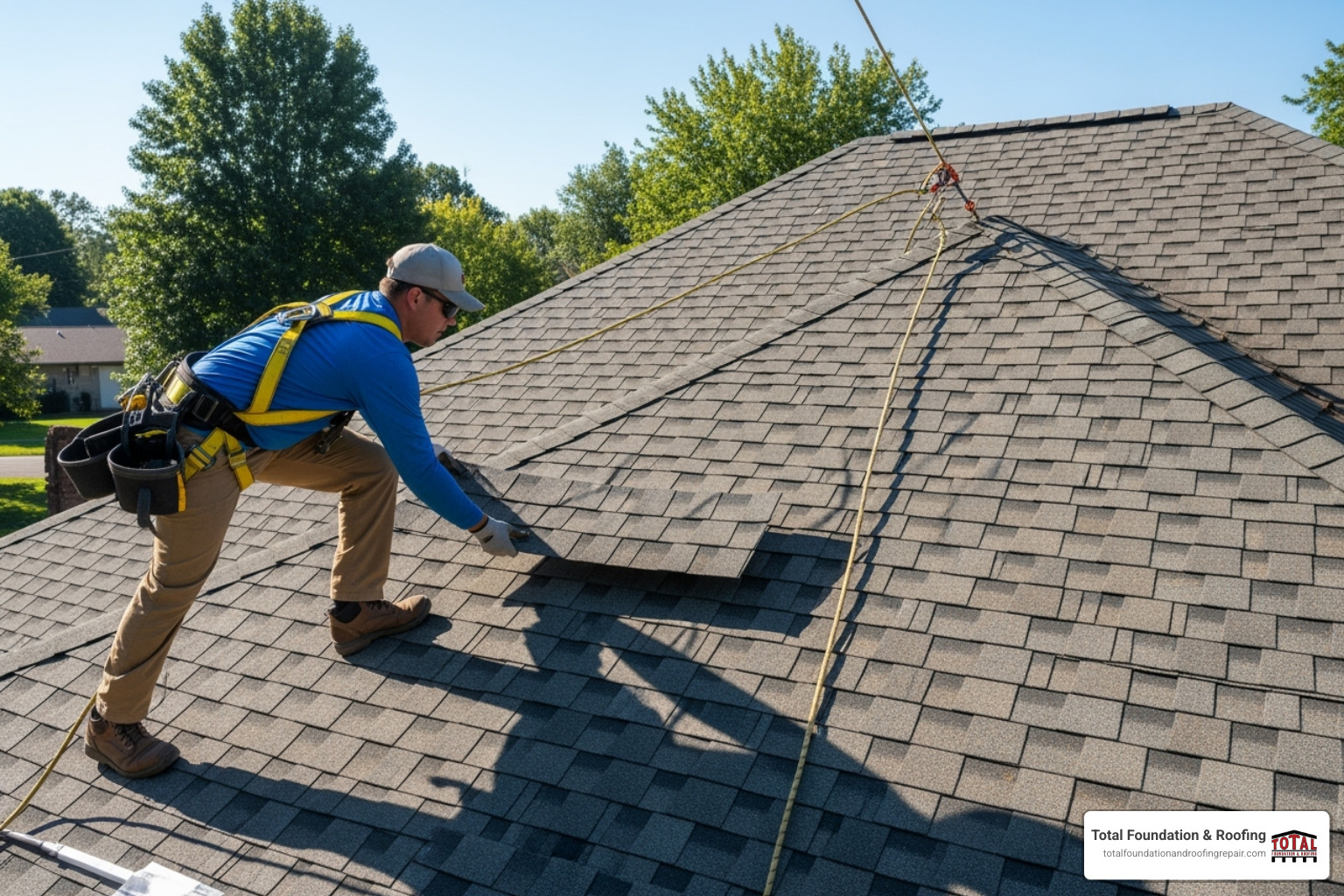
- Safety Gear: A sturdy, properly-angled ladder is non-negotiable. For any roof with a noticeable slope, a safety harness anchored to a secure point is crucial to prevent falls. Also, wear heavy-duty gloves to protect your hands from rough shingle surfaces and sharp tools, protective eyewear to shield your eyes from debris, and slip-resistant, soft-soled shoes for better grip.
- Tools: A flat pry bar is needed to gently break the seals of surrounding shingles. A hammer is for driving and removing nails. A utility knife with a sharp blade will be used for trimming shingles if necessary. A caulk gun is for applying roofing cement, and a small putty knife helps spread the sealant smoothly for a watertight finish.
- Materials: You’ll need replacement shingles that match your current roof, 1 1/4-inch galvanized roofing nails (galvanized to prevent rust), and a tube of high-quality roofing cement or sealant designed for asphalt shingles.
Matching new shingles to your existing roof can be one of the biggest challenges due to weathering, sun bleaching, and manufacturer variations. The best-case scenario is finding leftover shingles from the original installation, often stored in a garage or shed. If none are available, take a small piece of the damaged shingle to a roofing supply store for a match. If you can’t find a perfect match, a common trick is to take a shingle from a less visible part of the roof (like the back side) to use for the repair, and then place the new, slightly mismatched shingle in that hidden spot. For larger projects where matching is critical, it’s best to consult a professional. Our Home Roof Replacement Cost Guide can help with budgeting for more extensive work.
The Step-by-Step Process for Repairing Roof Shingles
Here’s how to replace a single damaged shingle. Always prioritize safety and never work on a roof alone.
- Check the Weather: Work on a warm, dry day so shingles are pliable and sealant can cure properly.
- Loosen Seals: Gently slide a pry bar under the shingles above and around the damaged one to break the adhesive seals.
- Pry Up Nails: Lift the shingle directly above the damaged one to expose the nails. Carefully pry them up.
- Remove Damaged Shingle: Slide the old shingle out. Inspect the underlayment for damage.
- Slide in New Shingle: Position the new shingle, sliding its top half under the shingle above it. Align it with the surrounding shingles.
- Nail It Down: Lift the tab of the shingle above and drive 4-6 roofing nails through the new shingle, about an inch above the cutouts. The nails should be covered by the overlapping shingle.
- Apply Roofing Cement: Use a caulk gun to apply a quarter-sized dab of roofing cement under each tab of the new shingle and any others you loosened. Press down firmly to seal. Our Asphalt Shingle Roofing services use only the highest quality materials for lasting repairs.
Quick Fixes: Repairing Roof Shingles Without Full Replacement
For minor issues, a full replacement isn’t always needed.
- Curled Shingles: If a shingle is just curled but not brittle, apply a bead of roofing cement under the curled edge. Press it down and place a weight (like a brick) on it for 24 hours to help it re-bond.
- Cracked Shingles: For a small crack, apply roofing cement under the crack and press the shingle down. Then, apply another layer of cement on top of the crack and use a putty knife to spread it smoothly.
These fixes are for isolated problems. If shingles are brittle or damage is widespread, replacement is the better option.
Professional Help and Preventative Care
While DIY repairs can be satisfying, some jobs are best left to professionals. Knowing when to call for help is key to a successful and safe repair.
DIY vs. Pro: Cost and When to Call for Help
The decision to DIY or hire a pro often comes down to cost, complexity, and safety. While a DIY repair might save on labor costs, professional service offers experience, speed, and warranties.
| Factor | DIY Shingle Repair | Professional Service |
|---|---|---|
| Materials | $50-$200 for minor repairs | Included in service fee |
| Labor | Your time and effort | $45-$75 per hour |
| Time | Several hours | Faster completion |
| Warranty | None on workmanship | Labor and material warranties |
| Overall Cost | $150-$300 for a few shingles | $150-$500 for minor repairs |
A professional repair offers peace of mind that the job is done correctly and safely.
When to Call a Professional:
- Widespread Damage: If more than 30% of your roof is damaged, a replacement may be more cost-effective.
- Sagging Roof Deck: This indicates a serious structural problem that requires an expert.
- Major Leaks: If you have significant water damage inside, the problem is likely beyond a simple shingle fix.
- Roof Age: If your roof is nearing the end of its 15-25 year lifespan, patching may not be the best investment.
- Safety Concerns: For steep or high roofs, or if you’re uncomfortable with heights, always hire a pro.
If you’re uncertain about the extent of the damage, it’s wise to get a professional opinion. For expert assistance, check out our Roof Repair Kerrville services.
Extending Shingle Life: Maintenance and Weather Considerations
A little preventative maintenance goes a long way in extending the life of your roof. Regular inspections in the spring and fall are essential for catching small issues early. Keep your gutters clean to prevent water from backing up under shingles, and trim any overhanging tree branches that could scrape away protective granules or cause impact damage. Proper attic ventilation is also crucial, as it prevents heat and moisture buildup that can prematurely age your roof.
In the Texas Hill Country, the weather poses a significant challenge. Intense summer heat can cause shingles to crack and blister, while severe storms can bring high winds and hail. After any major weather event, perform a visual inspection from the ground. Avoid working on shingles in extreme cold, as they can become brittle, or in scorching heat, which makes them too soft. Understanding these factors helps you plan repairs and maintenance effectively. While ice dams are less common here, good insulation helps prevent ice dams during rare cold snaps.
Regular maintenance is your best defense against costly repairs. For extensive damage in the Kerrville area, our team can assess your situation and recommend the most cost-effective long-term solution for your home and budget.