
Why Understanding Concrete Slab Settling Matters for Your Property
Concrete slab settling is a common issue for Texas property owners, but it’s more than just an aesthetic problem. It occurs when the soil beneath a slab can no longer support its weight, causing it to sink, crack, and create safety hazards. For homeowners who rely on the stability of their foundation and concrete structures, understanding the signs and causes is the first step toward a lasting solution.
Quick Answer: What You Need to Know About Concrete Slab Settling
- What it is: The downward movement of a concrete slab due to the loss of support from the underlying soil.
- Common causes: Poor soil compaction, water erosion, expansive clay soils, and plumbing leaks.
- Warning signs: Cracks, uneven surfaces, gaps next to walls, water pooling, and sticking doors.
- Why it matters: It creates safety hazards, can lead to structural damage, and becomes more expensive to fix over time.
- Solutions: Professional repairs like polyurethane injection (polyjacking), slab piers, or, in severe cases, slab replacement.
A settling slab can signal deeper foundation problems that threaten your property’s structural integrity. Industry data shows that delaying repairs significantly increases costs; a minor fix today can prevent tens of thousands of dollars in damage later. This is especially true in the Texas Hill Country, where our expansive clay soils shrink and swell with moisture changes, creating ideal conditions for slab movement.
This guide breaks down everything you need to know about why your concrete is sinking and what you can do about it.
Understanding Concrete Slab Settling: Causes, Signs, and Solutions
When a concrete slab begins to sink, crack, or tilt, it’s a sign that the ground beneath it has lost stability. Understanding why concrete slab settling happens is just as important as knowing how to fix it. Without addressing the root cause, any repair will likely be temporary.
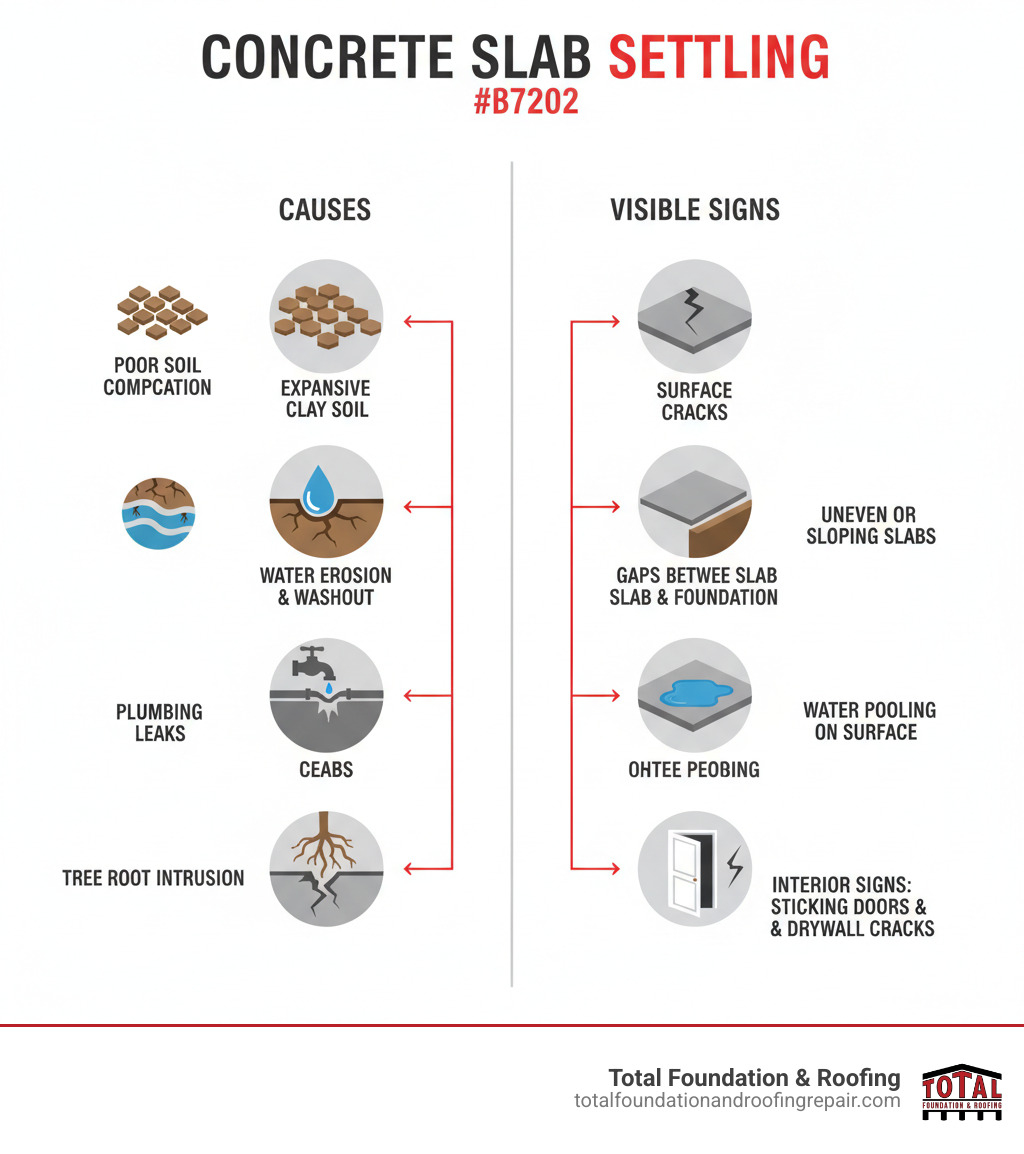
What Causes Concrete Slabs to Settle?
The primary cause of slab settlement is unstable soil that can no longer support the concrete’s weight. Addressing the root cause is critical for a lasting repair.
- Poor Soil Compaction: If the ground was not properly compacted during construction, the loose soil will settle over time, creating voids beneath the slab and causing it to sink. This sub-base, known as the subgrade, must be compacted to a specific density to provide a stable platform. Failure to achieve this density means the soil will inevitably compress under the immense weight of the concrete.
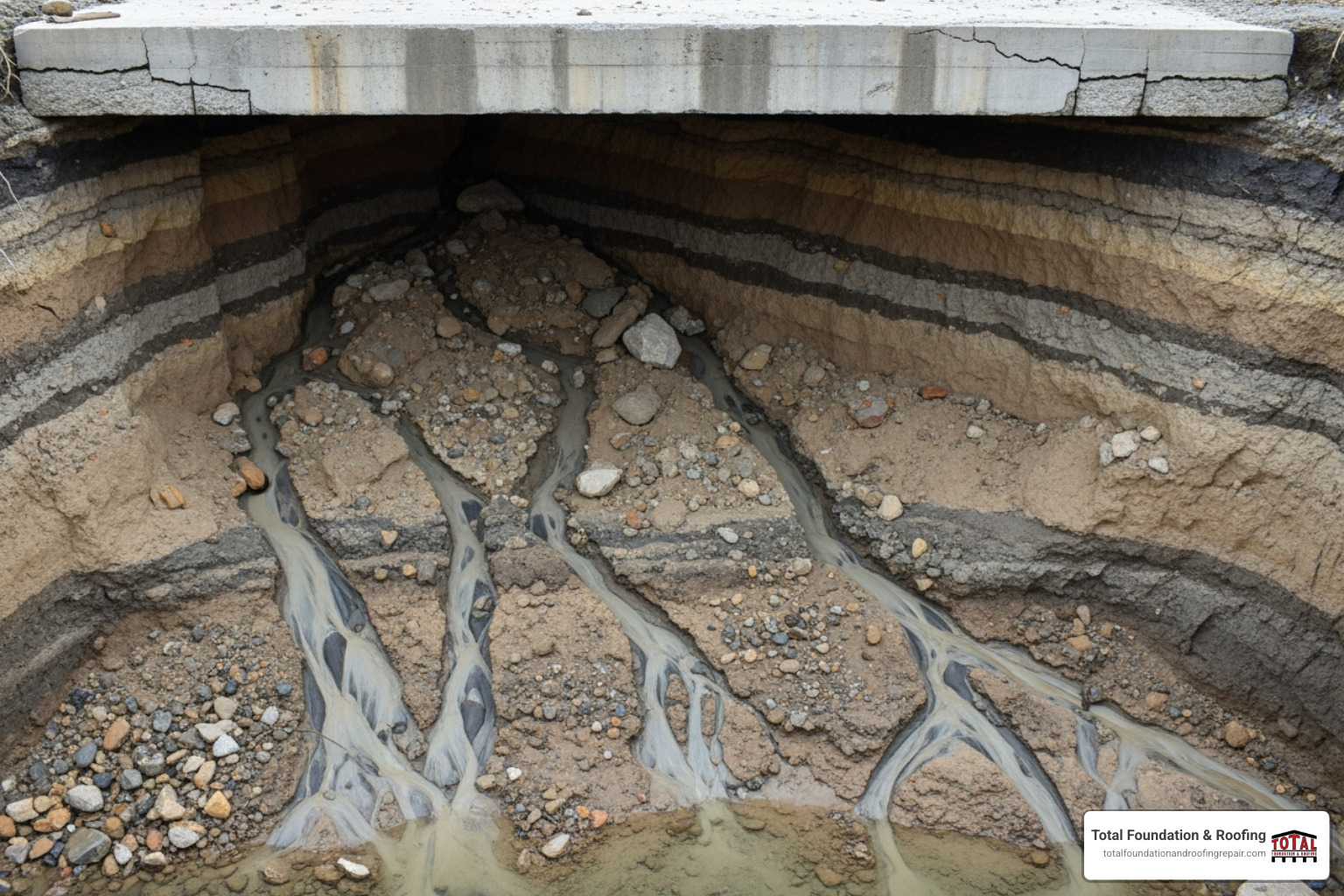
- Soil Erosion and Washout: Water from heavy rain, poor drainage, or leaking pipes can wash away the soil supporting the slab, creating empty pockets that lead to settlement. This is often caused by clogged gutters, downspouts that discharge too close to the foundation, or improper grading that directs water toward the slab instead of away from it.
- Expansive Clay Soils: Common in Texas, these soils shrink dramatically during dry periods and swell when wet. This constant cycle of contraction and expansion, as detailed by the Geological Society of America, puts immense stress on concrete, leading to cracks and settlement. During droughts, the clay loses moisture and shrinks, causing the ground to subside and the slab to sink. When heavy rains return, the clay swells with tremendous force, pushing the slab upward. This cyclical movement is a primary driver of foundation and slab failure in the region.
- Plumbing Leaks: A hidden leak from an underground pipe can cause a house foundation leak repair issue by continuously washing away soil or over-saturating expansive clays. Even a small, slow leak can create a significant void or a pocket of super-saturated soil over months or years, leading to localized, severe settlement.
- Other Causes: Tree roots drawing moisture from the soil, burrowing pests creating tunnels, and the decomposition of buried organic material can also create voids and cause slabs to settle.
Telltale Signs Your Concrete is Settling
A sinking slab usually provides clear warning signs. Catching them early can save you significant time and money.
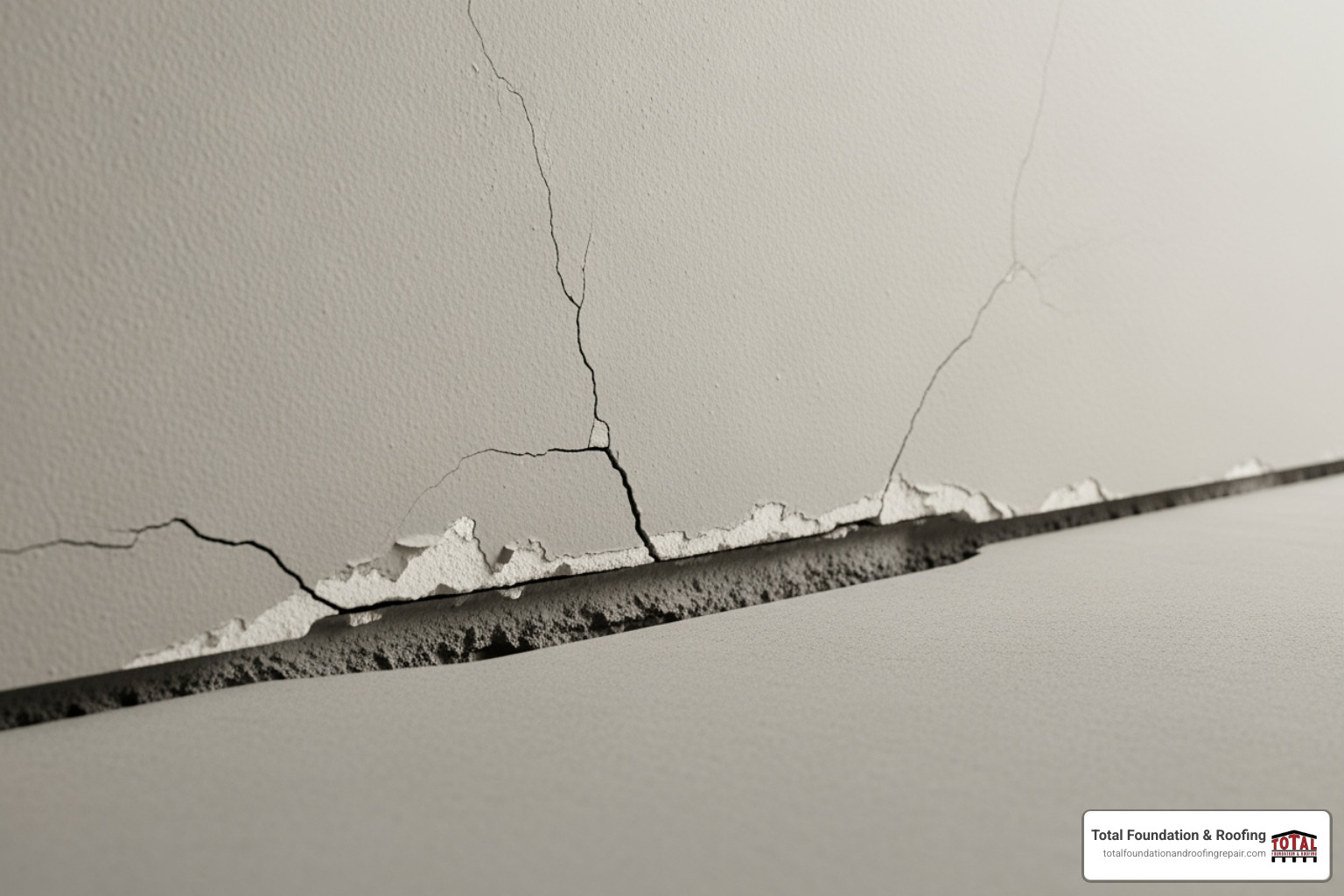
- Visible Cracks: Hairline fractures that grow, spread, or form stair-step patterns are a primary indicator. Any crack wider than 1/8 inch warrants a professional look. It’s important to distinguish between minor shrinkage cracks, which are common in new concrete, and structural cracks, which are wider, run from edge to edge, or have one side higher than the other. These are clear signs of movement.
- Uneven or Sloping Surfaces: Noticeable dips or slopes on your driveway, patio, or garage floor create tripping hazards and show that the slab has settled unevenly.
- Gaps Near Structures: Spaces opening up between your slab and your home’s foundation or walls are a clear sign the slab has sunk or pulled away. These often point to developing home foundation problems. This separation can also occur around porch steps, columns, or at expansion joints.
- Water Pooling: If water collects on your slab where it didn’t before, it indicates the surface is no longer level. This standing water can worsen the problem by seeping underneath.
- Interior Signs: When a home’s foundation slab settles, you may notice sticking doors and windows, or new cracks in drywall, especially around frames. In severe cases, walls may pull away from the ceiling or floor. You might also see gaps appearing between the floor and your baseboards.
- Leaning Chimney: A chimney that appears to be tilting away from the house is a strong indicator of foundation settlement.

The Risks of Ignoring a Settling Concrete Slab
Postponing repairs on a settling slab is a costly mistake. The problem will not fix itself and will lead to more significant consequences.
- Safety Hazards: Uneven concrete is a primary cause of trips and falls, creating a liability risk for homeowners.
- Structural Damage: A settling slab connected to your home can transfer stress to the entire structure, causing foundation cracks, wall damage, and water intrusion that leads to mold and further decay.
- Plumbing and Utility Line Damage: A sinking slab can put immense stress on pipes and conduits running beneath or through it. This movement can cause pipes to crack or break, leading to hidden water leaks that accelerate soil erosion or even dangerous gas leaks.
- Increased Repair Costs: The longer you wait, the more extensive and expensive the damage becomes. Early intervention with concrete lifting is far more affordable than full slab replacement or major foundation work. Addressing issues early is the best way to manage concrete repair costs.
- Decreased Property Value: Obvious settlement issues and related structural damage will lower your home’s market value and deter potential buyers.
Professional Repair Methods for Concrete Slab Settling
Several effective concrete repair methods can fix a settled slab. The right choice depends on the severity of the settlement and its underlying cause.
- Polyurethane Foam Injection (Polyjacking): This is the modern standard for concrete leveling. High-density foam is injected through small holes to fill voids, stabilize the soil, and lift the slab back to level. It’s fast, minimally invasive, and provides a durable, long-term solution by addressing the soil instability. The injection holes are typically only 5/8-inch in diameter. The two-part polymer expands to fill voids, cures in minutes, and is hydrophobic, meaning it repels water and will not wash away. This makes it an excellent choice for stabilizing soil and preventing future water-related settlement.
- Slab Piers: For severe settlement or unstable soil, steel piers are driven deep into the ground to load-bearing strata. These piers transfer the slab’s weight to stable soil, providing permanent support and lifting the slab. This method offers the highest level of stabilization for structural foundations. These piers, which can be either hydraulically driven push piers or screw-like helical piers, bypass the unstable upper soil layers to anchor the slab to solid bedrock or competent soil, offering a permanent fix for the most serious settlement issues.
- Mudjacking: An older method that pumps a cement-based slurry under the slab. While sometimes cheaper, the heavy material can cause further settlement, and it doesn’t stabilize the soil as effectively as polyurethane foam. This method requires larger injection holes (2 inches or more) and the heavy slurry can add significant weight to already unstable soil. The material can also shrink as it dries and is susceptible to washing out over time.
- Full Slab Replacement: This is a last resort for concrete that is too cracked or deteriorated to save. It is expensive, disruptive, and does not fix the underlying soil problem unless the sub-base is properly re-engineered. If replacement is necessary, it is critical that the underlying soil issues are addressed first. This involves removing the old soil, bringing in new engineered fill, and compacting it properly according to industry best practices, such as those outlined by the American Concrete Institute (ACI). Failing to do so means the new slab will likely suffer the same fate.
Temporary fixes like concrete grinding or re-leveling grout only address the surface symptoms and do not solve the root cause of the settlement.

How to Prevent Future Concrete Slab Settling
Preventing settlement is always more cost-effective than repairing it. These measures can significantly reduce your risk.
- Manage Water Effectively: This is the most critical step. Keep gutters clean, extend downspouts away from the foundation, and ensure the ground slopes away from all slabs. Address plumbing leaks immediately and consider professional foundation waterproofing for persistent water issues. Creating a positive grade of at least 6 inches of fall over 10 feet is essential. For properties with significant drainage challenges, installing a French drain or a surface swale can redirect large volumes of water safely away from your foundation. As recommended in guides from agencies like FEMA, controlling water is the number one defense against foundation problems.
- Ensure Proper Soil Compaction: For any new concrete work, insist that the soil sub-base is properly prepared and compacted to prevent future settling.
- Seal Cracks Promptly: Regularly inspect your concrete and seal any cracks to prevent water from seeping underneath and eroding the soil.
- Strategic Landscaping: Avoid planting large trees or shrubs too close to slabs, as their roots can draw moisture from the soil or grow underneath, causing damage. As a general rule, keep large trees at a distance equal to their mature height from your foundation and slabs. For smaller shrubs, maintain a distance of at least 3-5 feet.
- Routine Inspections: Periodically check your concrete for early signs of trouble. Early detection allows for minor, less expensive interventions.
When to Call a Professional for Your Settling Slab
While minor hairline cracks may not require immediate action, certain signs indicate it’s time to call an expert. Recognizing when a problem has moved beyond a simple DIY fix is crucial for protecting your property from escalating damage and costs.
You should seek a professional assessment for concrete slab settling if you observe any of the following:
- Large or Expanding Cracks: Any crack wider than 1/8 inch, or smaller cracks that are actively growing.
- Significant Sinking: A noticeable drop in the slab, especially if it exceeds an inch, creating a trip hazard.
- Related Structural Issues: Sticking doors or windows, new drywall cracks, or a leaning chimney all suggest the settlement is affecting your home’s foundation.
- Persistent Water Problems: Pooling water on the slab or water intrusion elsewhere indicates a drainage issue that is likely accelerating the settlement.
A thorough professional inspection involves more than just a visual check. An expert will use specialized tools like a laser level or a Ziplevel altimeter to map the elevation changes across the slab with precision. They will assess soil conditions and drainage patterns to identify the root cause of the settlement. This comprehensive diagnosis ensures that the recommended repair is not just a temporary fix but a long-term solution tailored to your property’s specific needs.
If you are uncertain about the cause or want a permanent solution instead of a temporary patch, a foundation specialist is your best resource. They can diagnose complex soil issues and recommend a lasting repair.
For homeowners in the Texas Hill Country, including areas like Kerrville, the certified experts at Total Foundation & Roofing understand our region’s unique soil and climate challenges. This local expertise allows us to tailor our concrete contractor services to provide solutions that last.
Don’t wait for a small problem to become a major structural issue. Contact our team today for a free estimate to restore the safety, stability, and value of your property.