
Why Proper Drainage System Installation Protects Your Home’s Foundation
Drainage system installation is the process of placing pipes, gravel, and water-diversion structures around or beneath your property to move excess water away from your foundation before it causes damage. As a leader in professional foundation and roofing services, we understand that proper water diversion is the first line of defense for any structure. Without a functional system, water pools against the foundation, leading to hydrostatic pressure that can crack concrete, flood basements, and cause significant structural shifts. Protecting your home starts with understanding how water interacts with your soil and your home’s footprint.
Here’s a quick overview of the most common drainage system types and when you need them:
| System Type | Best For | Typical Cost |
|---|---|---|
| French drain | Groundwater around foundation | $2,100 – $6,700 |
| Channel drain | Surface water on driveways/patios | $45 – $100 per 6 ft |
| Footing drain | High water table, foundation walls | $20 – $60 per linear ft (pro) |
| Interior drain tile | Finished basement waterproofing | $5,000 – $20,000 |
| Grading | Mild surface runoff | Lowest cost option |
Water is patient. It will find every crack, gap, and weak point in your foundation – and once it gets in, the damage adds up fast. According to the American Society of Civil Engineers (ASCE), soil-related foundation issues cost homeowners billions annually. Foundation repairs in the U.S. typically run between $4,000 and $8,000, and that figure can climb much higher when water damage has been building for years undetected. In many cases, these costs could have been entirely avoided with a proactive investment in a high-quality drainage solution.
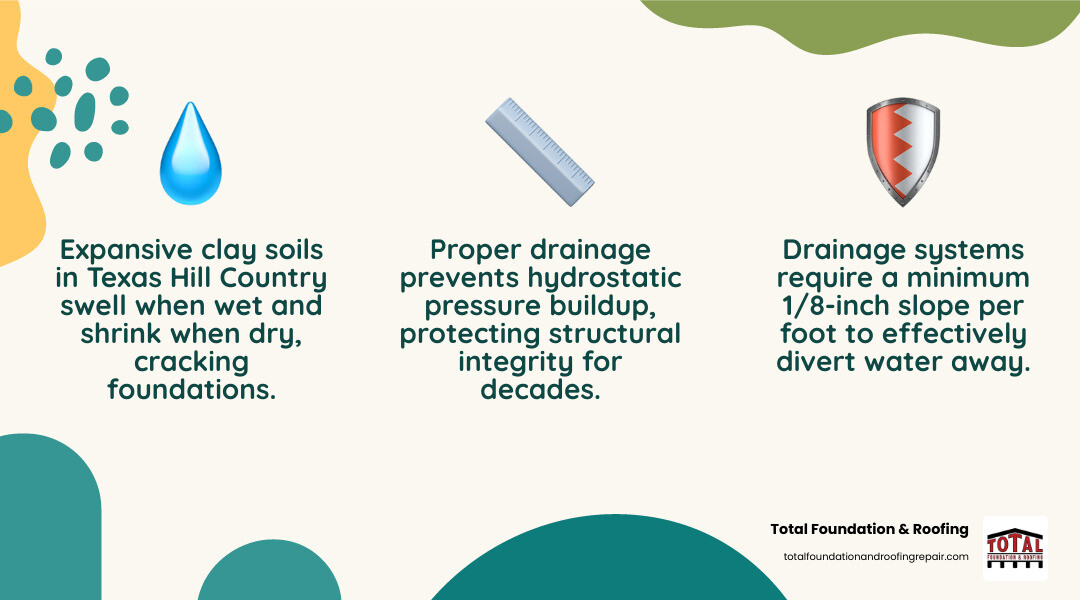
For Texas Hill Country homeowners, the challenge is especially real. The region’s expansive clay soils hold moisture and swell, putting direct pressure on foundation walls. Then they dry out and shrink. That cycle – wet, swell, dry, shrink – is one of the leading causes of foundation cracking in the area. This constant movement stresses the concrete and can lead to doors that won’t close, windows that stick, and visible gaps in the masonry.
The good news? A properly installed drainage system stops this cycle before it starts. Whether you’re dealing with a soggy backyard, water pooling near your foundation, or a damp basement, the right drainage solution can protect your property for decades. Our foundation repair solutions are built around exactly this kind of long-term protection, ensuring that your home remains stable regardless of the weather patterns.
I’m Daniel Sowell, owner of Total Foundation & Roofing Repair in Kerrville, Texas, and I’ve spent over 18 years solving drainage and foundation problems across the Texas Hill Country – drainage system installation is one of the most impactful services we provide for keeping homes structurally sound. In this guide, I’ll walk you through everything you need to know, from choosing the right system to installing it correctly and keeping it working for years to come.
Drainage system installation basics:
Essential Types and Planning for Drainage System Installation
Planning is the most critical stage of any drainage system installation. Without a clear understanding of your soil type, property slope, and water sources, you risk installing a system that either fails to move enough water or, worse, directs it toward a neighbor’s foundation. A poorly planned system can actually exacerbate problems by concentrating water in areas where it cannot escape, leading to localized erosion or sinkholes.
In the Texas Hill Country, we often deal with “caliche” or heavy clay. These soils have poor natural permeability, meaning water sits on top rather than soaking in. According to research on agricultural drainage benefits, artificial drainage is essential in such soils to prevent saturation. For a homeowner, this saturation leads to hydrostatic pressure—the force exerted by water against your foundation walls. This pressure is strong enough to bow basement walls inward or cause slab-on-grade foundations to heave and crack.
When planning, you must adhere to the International Residential Code (IRC). Key requirements include:
- Extension: Foundation drainage must extend at least 12 inches beyond the footing’s edge to ensure water is moved away from the load-bearing soil.
- Slope: You must maintain a minimum fall of 1/8 inch per foot (though we prefer 1/4 inch or a 1% grade for better flow). Without proper slope, sediment will settle in the pipes and cause clogs.
- Discharge: Water must be channeled to a legal disposal point, such as a storm sewer or a lower area of the property away from structures. You cannot simply dump your water onto a neighbor’s property, as this can lead to legal liabilities.
Before you even pick up a shovel, you must visit the 811 website or call 811 to have your underground utility lines marked. Striking a gas or electric line is not just expensive—it’s deadly. In many areas, water and sewer lines are buried at similar depths to drainage trenches, making this step non-negotiable.
Comparing French Drains, Footing Drains, and Channel Drains for Drainage System Installation
Choosing the right tool for the job is half the battle. While people often use these terms interchangeably, they serve very different purposes and require different installation techniques.
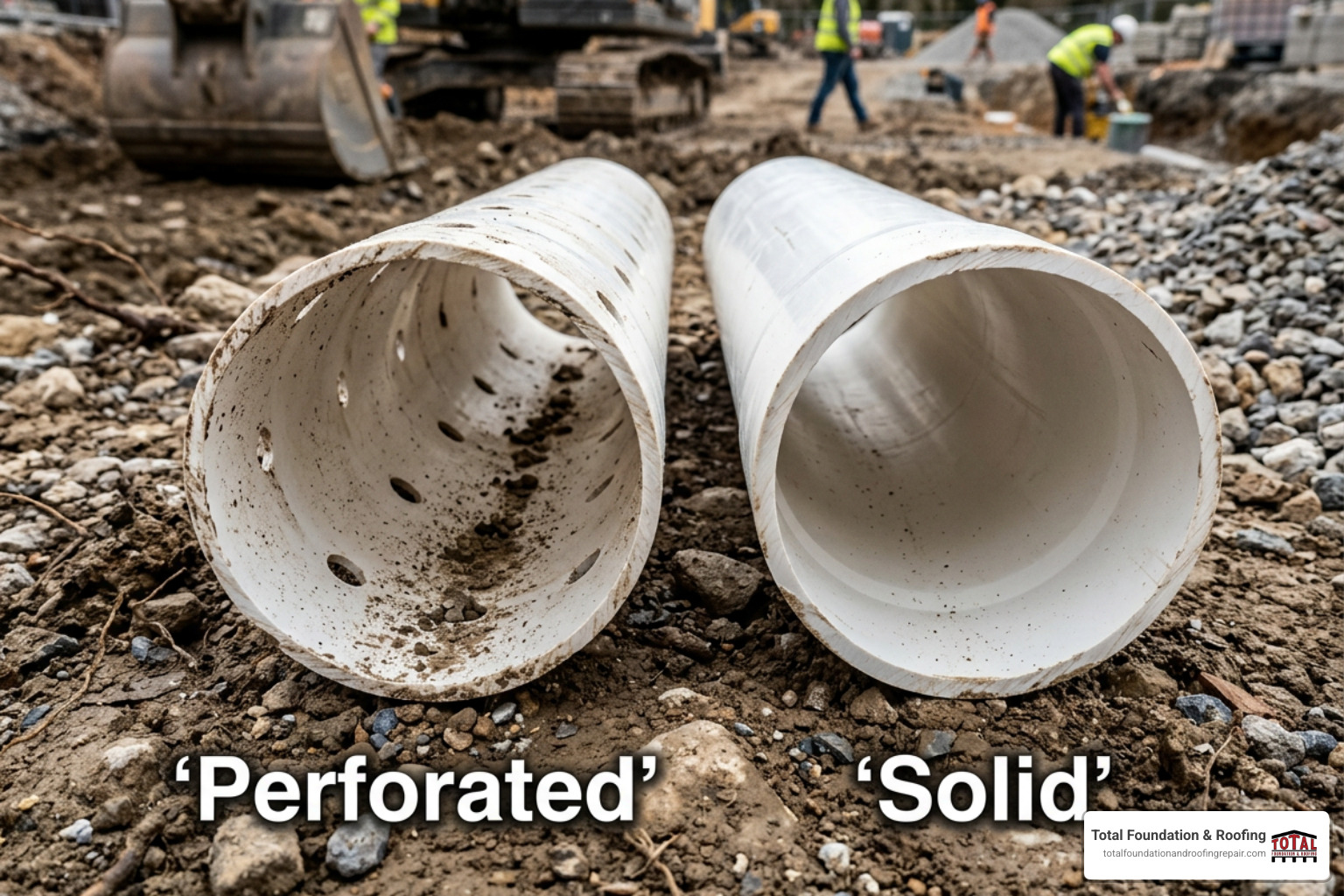
- French Drains: These are designed to manage groundwater. They consist of a perforated pipe buried in a trench filled with gravel. Water enters the pipe through the holes and is carried away. If you have a soggy yard or water seeping into a crawl space, a French drain is often the answer. They are excellent for lowering the water table around a specific area.
- Footing Drains: These are installed at the very base of your foundation (the footing) during construction or through major excavation. They are the “gold standard” for preventing basement leaks and can last up to 50 years. For more on how to identify leaks early, check out our Foundation Leak Repair Kerrville Guide.
- Channel Drains: Unlike French drains, channel drains handle surface runoff. You’ll typically see these long, narrow grates across driveways or at the edge of a patio. They stop water from “sheeting” into your garage or house during heavy downpours.
| Feature | French Drain | Footing Drain | Channel Drain |
|---|---|---|---|
| Primary Goal | Groundwater removal | Foundation protection | Surface water capture |
| Pipe Type | Perforated | Perforated | Solid (connected to grate) |
| Installation Depth | 18–24 inches | At footing depth | Surface level |
| Best Location | Yards/Perimeters | Foundation base | Driveways/Patios |
Site Assessment and Building Code Requirements
A professional drainage system installation starts with a laser level. We use these to find the “low spot” on your property. Gravity is your best friend in drainage, but it can also be your enemy if the slope isn’t consistent. Even a small rise in the pipe can create a “trap” where water sits and debris accumulates.
In Fredericksburg and Kerrville, many properties have varying elevations. If your yard slopes toward your house, you have “negative grading.” The IRC suggests that the ground should drop at least 6 inches within the first 10 feet away from the foundation. If your landscape doesn’t allow for this, a subsurface system becomes mandatory to prevent water from pooling against the slab. Soil analysis is equally important. Clay acts like a sponge, expanding when wet and putting thousands of pounds of pressure on your home. If you are noticing cracks in your drywall or sticking doors, you should look into Foundation Waterproofing Near Me to see if a drainage upgrade is needed.
Step-by-Step Process for Professional Drainage System Installation
Once the planning is complete and utilities are marked, the physical work begins. A successful drainage system installation depends on the “envelope” – the layers of material surrounding the pipe that keep it from clogging. Without this protective envelope, fine silt and clay particles will eventually fill the pipe, rendering the entire system useless within a few seasons.
Excavation and Trenching Best Practices
The trench is the “highway” for your water. For a standard yard or French drain, we typically dig a trench 9 to 12 inches wide and 18 to 24 inches deep. This depth ensures the pipe is below the root zone of most grasses but still shallow enough to discharge effectively via gravity.
- Digging: If you’re doing this yourself, a walk-behind trencher is a lifesaver. In the rocky terrain of the Hill Country, you might even need a backhoe or a jackhammer attachment to break through limestone layers.
- Bedding: Never lay your pipe directly on the dirt. You need a 2-3 inch base of washed 3/4-inch gravel. This provides a stable subgrade and allows water to flow into the pipe from underneath, preventing the perforations from sitting in mud.
- Slope Check: We use a string line or laser level to ensure a consistent 1% grade. A common mistake is “dips” in the trench where sediment can collect and eventually cause a clog. We check the slope every 5 to 10 feet during the digging process.
Managing obstructions is also key. If you encounter large tree roots, it is often better to reroute the trench than to cut the roots, which can destabilize the tree or lead to future root intrusion into the pipe. For more tips on protecting your home from environmental factors, read our guide on how to Protect from Light, Heat, and Moisture.
Pipe Placement and Backfilling for Drainage System Installation
The most debated topic in drainage is: “Which way do the holes go?”
The answer is: Down.
By placing the perforations at the 4 o’clock and 8 o’clock positions, water rises into the pipe from the bottom of the trench. This allows the pipe to whisk the water away as soon as the water table reaches the bottom of the pipe. If the holes face up, the entire trench must fill with water before the pipe begins to work, which defeats the purpose of keeping the soil dry.
- Filter Fabric: Wrap the gravel and pipe in a non-woven geotextile fabric. This acts like a coffee filter, letting water in but keeping silt and clay out. Avoid woven fabrics, as they can clog more easily over time.
- Gravel Cover: Add another 6 inches of gravel over the pipe. This creates a large surface area for water to enter the system.
- Backfilling: Top the trench with a few inches of soil and sod. If you are connecting gutter downspouts, ensure you are using solid pipe for those sections to prevent roof water from saturating the soil near the foundation. For expert gutter help, see our Gutter Installation Kerrville TX services.
Interior vs. Exterior Drain Tile Solutions
Sometimes, the water is already inside. If you have a finished basement or a crawl space that constantly floods, you may need an interior drain tile system. This is often necessary when exterior excavation is impossible due to landscaping, decks, or proximity to other buildings.
Interior systems involve jackhammering the perimeter of the floor and installing a “Type C” cavity drainage system. Pairing your drain tile with a heavy-duty vapor barrier, such as those recommended by Owens Corning, ensures moisture doesn’t turn into mold or mildew behind your finished walls.
- Sump Pumps: These are the heart of an interior system. We always recommend a primary pump plus a battery backup. In the event of a power outage during a storm, the backup pump is the only thing standing between you and a flooded basement.
- Vapor Barriers: These prevent moisture from migrating through foundation walls, which is essential for maintaining indoor air quality.
If your issues are related to the main lines leaving your home, you may also need to look into Sewer Line Repairs in Kerrville, TX to ensure your entire waste and water management system is cohesive and functioning as intended.
Maintenance and Troubleshooting Post-Installation
A drainage system installation is not a “set it and forget it” project. Like your gutters, your underground drains need regular attention to ensure they remain clear of debris and biological growth.
- Annual Flushing: Once a year, stick a garden hose into the cleanout ports and flush the system. This moves any accumulated silt out to the discharge point. If the water doesn’t flow freely, you may need a professional camera inspection.
- Gutter Maintenance: Most drainage clogs start at the roof. Leaves and twigs can wash down the downspouts and into your underground pipes. We recommend regular Gutter Installation Hill Country inspections to keep the whole system clear, adhering to the high standards set by industry leaders like GAF.
- Check Outlets: Ensure the “pop-up” emitter or exit pipe isn’t buried under mulch or blocked by overgrown grass. If the exit is blocked, the water will back up into the system.
Common Mistakes to Avoid:
- Using Corrugated Pipe: While cheaper and easier to bend, corrugated pipe has ridges that catch debris and make it nearly impossible to clean with a snake or jetter. We prefer smooth-wall PVC (Schedule 40 or SDR 35) for its longevity and ease of maintenance.
- No Gravel: Skipping the gravel is a recipe for a clogged, useless pipe within two years. The gravel is what actually collects the water; the pipe just moves it.
- Improper Slope: Water doesn’t run uphill. Even a small flat spot in your pipe can collect sediment, leading to a total blockage over time.
At Total Foundation & Roofing, we specialize in the unique conditions of the Kerrville, Texas area. Whether you need a simple French drain or a complex foundation waterproofing solution, we bring nearly two decades of local expertise to every job. We understand the local geology and the specific challenges posed by our climate.
If you’ve noticed standing water, foundation cracks, or damp smells in your home, don’t wait for the next big Hill Country storm. We offer specialized Foundation Crack Repair Services and comprehensive drainage evaluations to give you peace of mind.
Protect your biggest investment today. Contact Total Foundation & Roofing for a comprehensive drainage evaluation and free estimate.