

Why Immediate Action Matters When You See a Ceiling Leak
Seeing water coming through ceiling is an urgent structural and safety warning for any homeowner. Taking immediate, correct action prevents a small ceiling leak from escalating into major structural failure, mold contamination, and costly reconstruction. For homeowners in the Texas Hill Country, the team at Total Foundation & Roofing Repair has documented dozens of cases where a rapid response reduced repair costs by more than 50% compared to delayed action.
If you see drips, stains, or bulging, do this immediately:
- Place buckets under drips to catch water.
- Turn off electricity to the room at the breaker panel.
- Move furniture and valuables away from the leak.
- Call a professional to find and fix the source.
- Document the damage with photos for your insurance claim.
The urgency is critical. Water damage is the second most common insurance claim, and mold can grow within 24-48 hours. Accumulated water also adds dangerous weight to your ceilinga gallon weighs about 8.5 pounds, quickly compromising structural integrity. Whether it’s a roof leak, burst pipe, or HVAC issue, a swift and proper response is key to protecting your home.
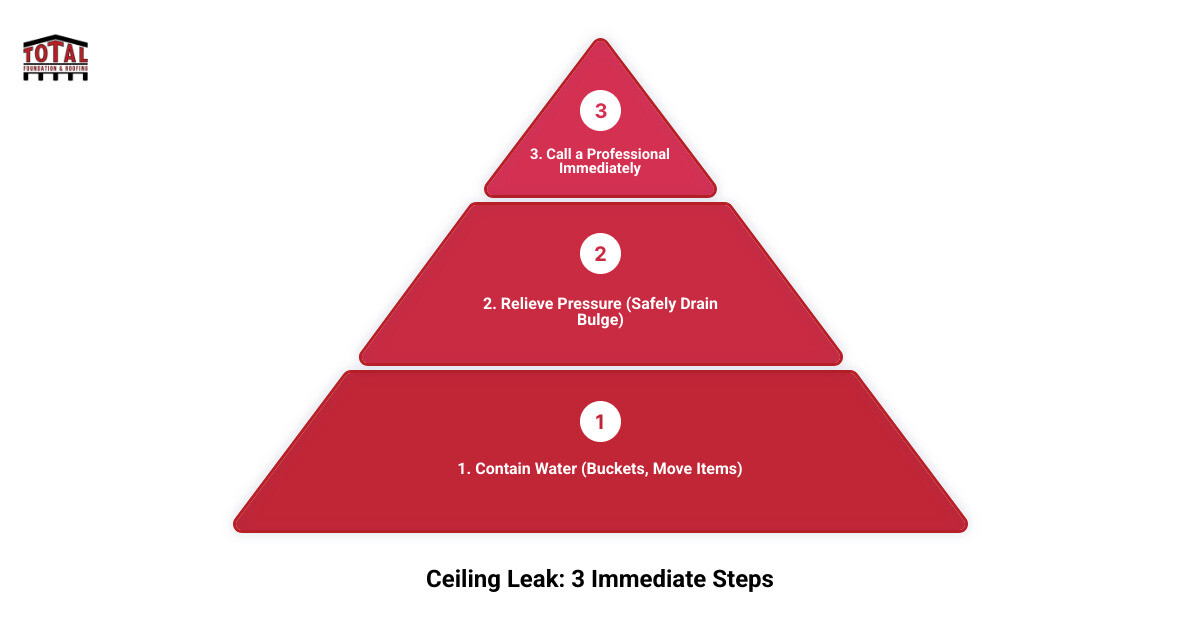
Your Immediate Action Plan for Water Coming Through the Ceiling
Seeing water coming through ceiling can send anyone into a panic. But before you call us (which you definitely should!), there are crucial immediate steps you can take to mitigate damage and ensure your family’s safety. Acting fast is the key to minimizing repair costs and protecting your home’s integrity.
For urgent situations, homeowners can request 24/7 help through our emergency roof repair services, which are designed specifically for active leaks and storm damage.
Step 1: Contain the Damage & Ensure Safety
Your first priority is safety and preventing further damage. Your immediate actions can significantly impact the outcome.
- Contain Water & Protect Valuables: Place buckets or large containers directly under the drip. Use towels or plastic sheeting to protect flooring. Move furniture, electronics, and other valuables away from the area, or cover them with waterproof tarps.
- Address Ceiling Bulges Carefully: A bulge in your ceiling means water has accumulated, creating a collapse risk. To relieve this pressure safely, position a large bucket underneath and gently poke a small hole in the center of the bulge with a screwdriver. This allows for a controlled drain instead of an uncontrolled burst.
- Manage Electrical Hazards: Water and electricity are a dangerous mix. If the leak is near light fixtures, fans, or outlets, turn off power to that circuit at your home’s main electrical panel. If you’re unsure which circuit it is, turn off the main breaker. Do not touch wet electrical components or use appliances in the wet area, and keep children and pets away.
Step 2: How to Identify the Source of a Ceiling Leak
After containing the immediate threat, find the water’s source. Water can travel along beams and pipes, so the source may not be directly above the drip.
- Check the Water’s Appearance: The water’s color is a key clue. Clear water often indicates a plumbing supply line leak. Brown or dirty water typically suggests a roof leak where water has collected debris, or a problem with a drain line.
- Inspect the Area Above the Leak:
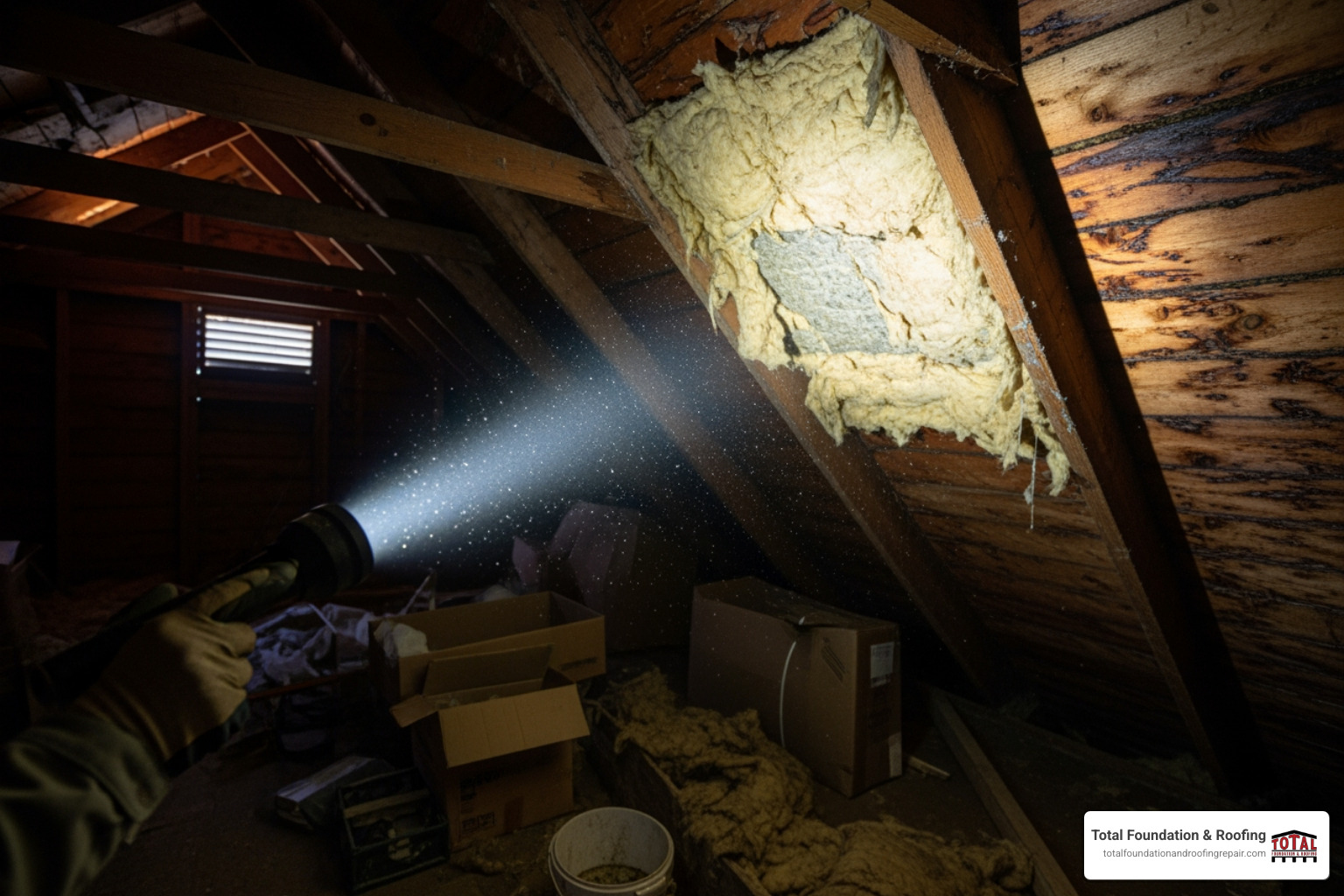
- Roof Leaks: For top-floor leaks, especially after rain, check the attic for wet insulation or water stains on the rafters. Common culprits are damaged shingles, faulty flashing around chimneys or vents, and ice dams. For hidden issues, professional thermal imaging can detect roof leaks without invasive methods. Manufacturers like GAF explain how shingle failure leads to leaks, reinforcing the importance of early detection.
- Plumbing Issues: If the leak is below a bathroom or kitchen, inspect for leaking pipes, faulty toilet seals, or overflowing drains. According to the EPA, household leaks can waste nearly 10,000 gallons of water annually.
- HVAC System: A clogged or overflowing condensate drain pan in your AC unit, often located in the attic, is a frequent cause of ceiling leaks.
- Clogged Gutters & Leaky Windows: Overflowing gutters can force water into your roof structure. Similarly, damaged window seals on upper floors can allow water to enter walls and travel down to the ceiling.
Step 3: Understanding the Long-Term Risks of Ignoring a Leak
Ignoring water coming through ceiling leads to severe, costly, and dangerous consequences.
- Structural Damage: Persistent moisture weakens ceiling materials, wooden beams, and insulation, leading to sagging and potential collapse. The weight of water (8.5 pounds per gallon) adds hundreds of pounds of stress to your home’s frame.
- Mold Growth and Health Risks: Mold can grow within 24-48 hours of water exposure. It colonizes drywall, insulation, and wood, and can cause respiratory problems, allergies, and other health issues. The EPA’s brief guide to mold, moisture and your home emphasizes that controlling moisture is the key to preventing mold.
- Wood Rot and Foundation Problems: Prolonged moisture causes wood rot in joists and rafters. Water pooling near your home’s base from roof or gutter issues can also lead to soil erosion and foundation damage. Our foundation problems repair guide offers more insight on prevention.
- Decreased Property Value and Increased Costs: Water stains and mold damage reduce your home’s market value. A minor leak can quickly escalate into a major reconstruction project, with costs ranging from a few hundred dollars to thousands for a full ceiling replacement and mold remediation.
Fixing the Leak and Preventing Future Problems
Once the immediate crisis is managed and the water flow is stopped, the focus shifts to permanent repairs and implementing a proactive maintenance plan to prevent future leaks. Our goal at Total Foundation & Roofing is not just to fix the problem, but to provide lasting solutions.
DIY Fixes vs. When to Call a Professional for Water Coming Through the Ceiling
While it’s tempting to DIY a fix for water coming through ceiling, most situations require a professional.
- Potential DIY Fixes: For minor, easily accessible issues, you might attempt a temporary fix. This includes applying epoxy putty to a tiny pipe leak, using roofing cement on a single loose shingle, or re-caulking a bathtub or sink. These are not permanent solutions.
- When to Call a Professional: Always call a professional for:
- Unknown Source: Experts use tools like moisture meters and thermal cameras to find hidden leaks.
- Structural Sagging: A bowing or sagging ceiling is a sign of serious structural damage and requires immediate expert assessment.
- Electrical Risk: Never attempt repairs near wet electrical wiring or fixtures.
- Large or Persistent Leaks: If a leak is large, recurring, or won’t stop, you need an expert.
- Significant Roof Damage: Multiple missing shingles or damaged flashing requires a professional roofer. An emergency roof repair specialist can prevent further damage during storms. Homeowners looking for reliable roofing contractors in Fredericksburg TX should seek certified professionals, such as those recognized by the Roofing Contractors Association of Texas.
- HVAC Issues: A qualified HVAC technician must address leaks from your air conditioning system.

How to Prevent Water Coming Through Your Ceiling in the Future
Proactive maintenance is the best way to prevent water coming through ceiling and save thousands on future repairs.
- Regular Roof Inspections: Have your roof professionally inspected annually and after severe storms. This helps catch worn shingles or damaged flashing early. Leading manufacturers like Owens Corning outline roof inspection checklists that align with what qualified contractors perform. The Roofing Contractors Association of Texas (RCAT) provides resources for finding qualified professionals.
- Gutter Maintenance: Keep gutters and downspouts clear of debris to prevent water from overflowing against your roof and foundation. Professional gutter installation in Kerrville, TX can help manage heavy rainfall. Lowe’s also offers a helpful gutter cleaning and repair guide.
- Insulate Pipes: In colder climates, insulate exposed pipes in attics and crawl spaces to prevent bursting. The U.S. Department of Energy explains how to insulate pipes.
- Ensure Proper Attic Ventilation: Good ventilation prevents moisture buildup from condensation, which can mimic a leak.
- Check Seals and Fixtures: Periodically inspect caulking around windows and doors, as well as visible plumbing pipes for drips or corrosion.
- Schedule HVAC Maintenance: Annual service ensures your AC’s condensate line is clear and functioning correctly.
A proactive approach helps you budget for maintenance and understand potential expenses, and our roof repair cost complete guide can help you plan.
Your Next Steps: Professional Repair and Restoration
Dealing with water coming through ceiling is overwhelming, but you don’t have to do it alone. After containing the immediate damage, contact a qualified professional.
At Total Foundation & Roofing, we specialize in addressing the root causes of ceiling leaks. Our certified professionals understand the unique challenges of the Texas Hill Country and provide comprehensive services:
- Leak Detection: We use advanced techniques to accurately identify the source of any leak. For expert help in Kerrville, schedule a professional roof leak detection service with our team today.
- Roof Repair and Replacement: We offer durable roofing solutions designed to withstand the local climate and protect your home for years, including full roofing replacement and repair services.
- Foundation Repair: We address foundation concerns that can arise from or contribute to chronic water issues, ensuring your home’s overall stability through our foundation repair services.
- Restoration Guidance & Insurance Assistance: We guide you on water damage restoration and can provide the necessary documentation to support your insurance claim.
Don’t let a leak compromise your home’s safety and value. The longer you wait, the more extensive the damage becomes. Our team is ready to provide prompt, reliable service to resolve your ceiling leak issues effectively.