
Why Understanding Concrete Epoxy Injection Matters for Texas Property Owners
For property owners in the Texas Hill Country, concrete cracks are a common concern. Concrete epoxy injection offers a permanent solution by injecting a two-part resin under pressure to fill and bond cracked concrete. This method restores structural integrity and prevents water infiltration, making it a cornerstone of professional foundation repair and concrete work and specialized foundation crack repair services.
This technique is ideal for filling dormant (non-moving) structural cracks as fine as 0.002 inches in foundations, walls, and slabs, creating a waterproof seal that is often stronger than the original concrete. However, it is not recommended for actively leaking cracks or those that are still widening, as these issues require different solutions, such as polyurethane injection or broader foundation repair services.
This guide explains everything you need to know about concrete epoxy injection, from identifying the right cracks to understanding the repair process. I’m Daniel Sowell, owner of Total Foundation & Roofing in Kerrville, Texas. With over 18 years of experience, my team and I have repaired hundreds of foundation cracks across the region using proven methods like epoxy injection, and I’m here to share what works.
Basic concrete epoxy injection glossary:
What is Concrete Epoxy Injection?
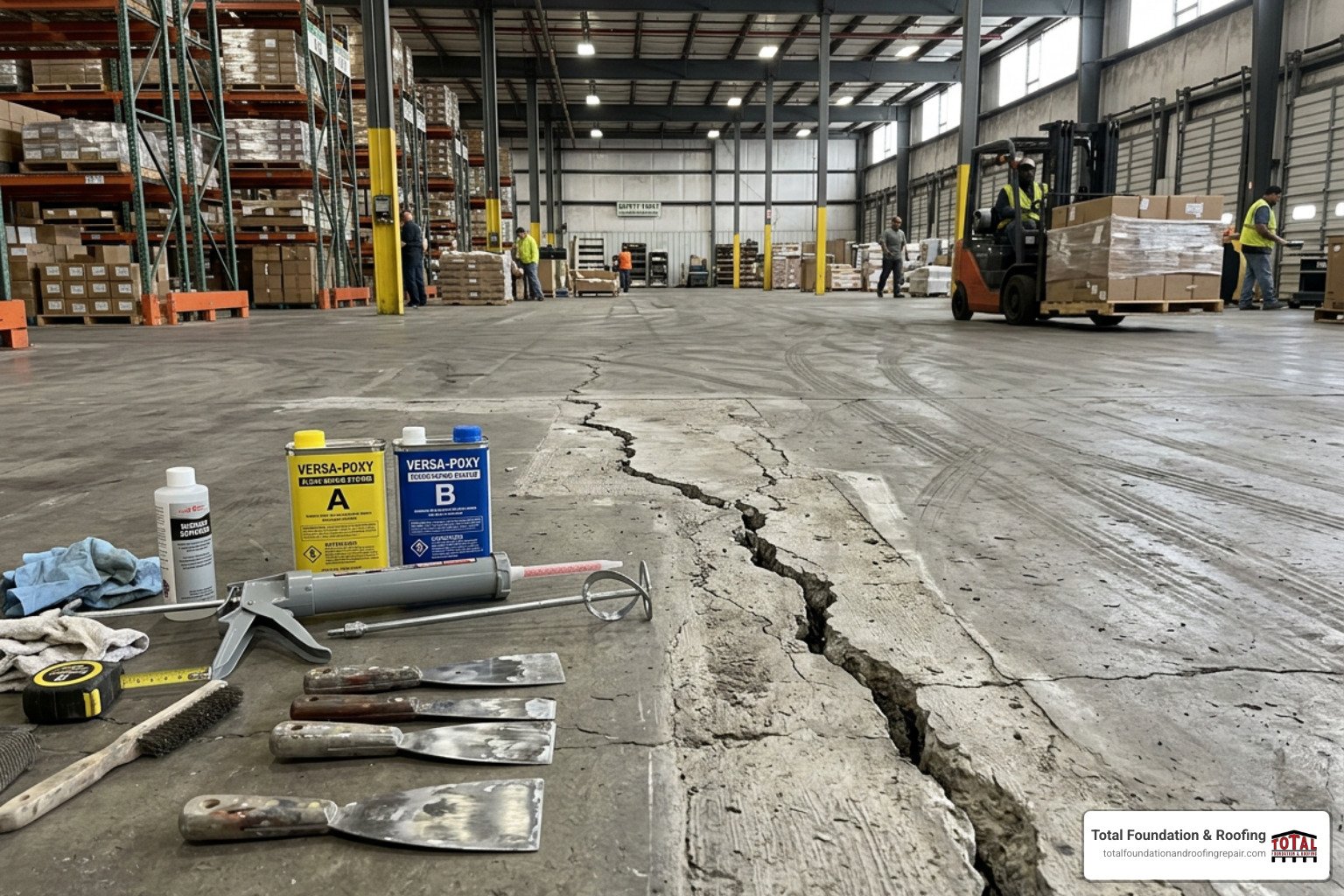
Concrete epoxy injection is a highly effective method for repairing cracks in concrete structures by restoring their structural integrity. The process involves injecting a specialized two-component epoxy resin into a crack. This resin cures to form a bond that is often stronger than the concrete itself, essentially “gluing” the structure back together and eliminating the crack as a weak point.
The key to this method is the epoxy’s ability to penetrate even the finest cracks, filling the entire void. Once cured, it restores the concrete’s original strength and creates an impermeable barrier, waterproofing the crack against moisture. This is crucial for foundations and basement walls, making it one of the most reliable concrete crack repair solutions available and a core component of professional structural foundation repair services.
The Complete Guide to Concrete Epoxy Injection
Is Epoxy Injection Right for Your Crack?
Not all cracks are suitable for concrete epoxy injection. A successful repair depends on correctly identifying the crack’s type, cause, and condition.
- Structural vs. Non-Structural Cracks: Epoxy injection is primarily for structural cracks that compromise a building’s load-bearing capacity, such as those in foundations or beams. It restores the concrete’s original strength. For non-structural, superficial cracks, other sealants may be more appropriate, including flexible sealants or colored concrete crack fillers.
- Dormant vs. Active Cracks: This method is ideal for dormant cracks that are no longer moving. Injecting rigid epoxy into an active (moving) crack can cause the repair to fail, as continued movement may re-crack the epoxy. The underlying cause of movement must be addressed first through comprehensive foundation repair services.
Crack Width Suitability:
Epoxy can repair cracks as small as 0.002 inches (0.05 mm). Low-viscosity epoxies are used for hairline cracks to ensure deep penetration, while higher-viscosity gels are suitable for wider gaps. Proper diagnosis is key to choosing the right material for your foundation crack repair.
When Not to Use Epoxy:
- Actively Leaking Cracks: Polyurethane injection, which reacts with water to form a seal, is often better for actively leaking cracks and is typically bundled with professional basement and crawl space moisture repair services.
- Cracks with Corroding Rebar: The underlying corrosion must be addressed first, as epoxy alone won’t stop it.
- Cracks Subject to Movement: A flexible material is needed if the crack is expected to continue moving.
Understanding Epoxy Materials and Systems
The effectiveness of concrete epoxy injection depends on the material. Epoxies used for this purpose are typically two-component systems (a resin and a hardener) that, once mixed, cure into a strong, permanent bond. Many modern formulations are moisture-insensitive, allowing them to bond to damp concrete, and are 100% solids with no harmful VOCs.
The epoxy’s viscosity (resistance to flow) is a critical selection factor.
| Feature | Low-Viscosity Epoxy | High-Viscosity (Gel) Epoxy |
|---|---|---|
| Typical Viscosity | 500 cps or less | 2,000 to 10,000+ cps |
| Crack Width | Fine cracks, 0.010 inches or smaller | Wider cracks or large voids |
| Penetration | Excellent deep penetration | Fills larger voids, less deep penetration |
| Primary Use | Structural bonding for very tight cracks | Structural bonding for wider cracks |
Professional repairs adhere to industry standards like ASTM C881, which classifies epoxy bonding systems, and ACI SPEC-548.15-20, which provides detailed specifications for the crack repair by epoxy injection process. This ensures the materials and methods meet strict performance criteria for a durable repair and aligns with best practices promoted by organizations such as the American Concrete Institute and the Portland Cement Association.
The Step-by-Step Concrete Epoxy Injection Process
Successful injection is a meticulous, multi-step process.
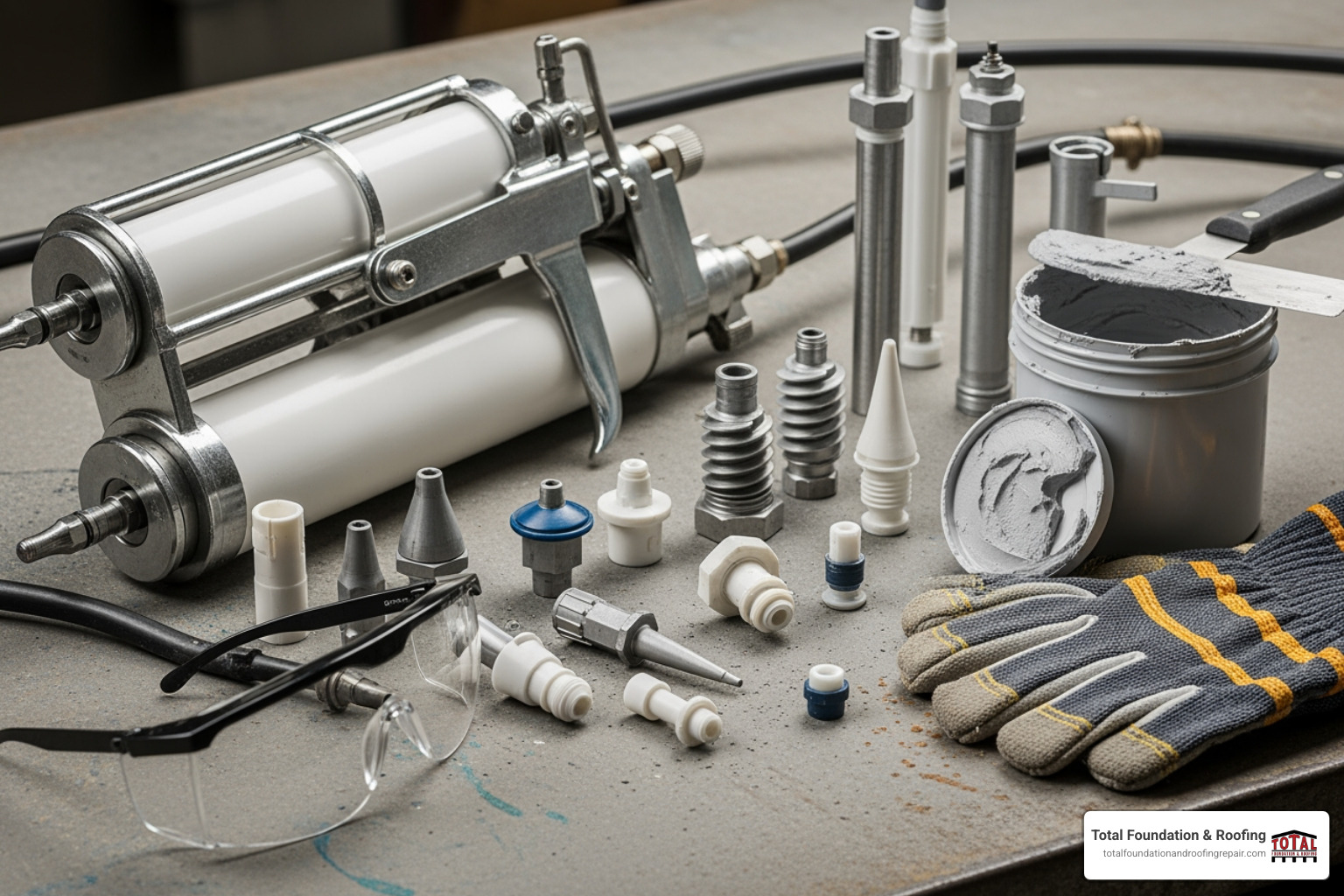
Essential Equipment:
- Two-component structural epoxy
- Surface seal paste
- Injection ports
- Dual-cartridge injection gun with mixing nozzles
- Cleaning supplies and PPE (gloves, safety glasses)
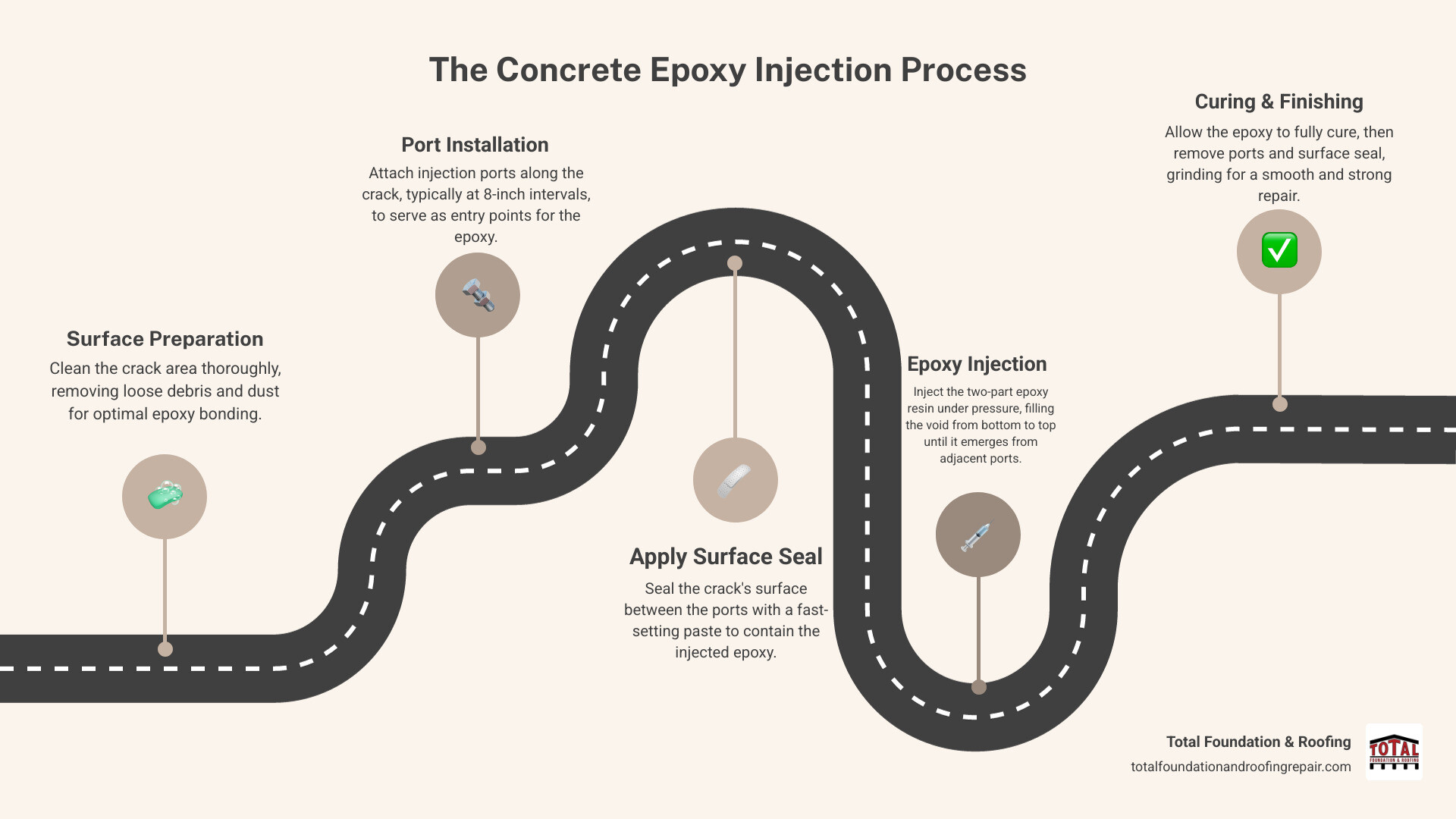
Step 1: Surface Preparation
Clean the crack and surrounding area of all dirt, dust, and loose debris using a wire brush and compressed air. A clean surface is essential for a strong bond.
Step 2: Port Installation
Place injection ports along the crack, typically spaced 8 inches apart. These ports serve as entry points for the epoxy.
Step 3: Applying the Surface Seal
Apply a fast-setting epoxy paste over the entire crack and around the base of the ports. This seal contains the injected epoxy under pressure, preventing it from leaking out.
Step 4: Injecting the Epoxy
Starting at the lowest port on a vertical crack, inject the epoxy under controlled pressure. Continue until epoxy flows out of the next port above. Cap the first port and move to the next, repeating until the entire crack is filled from the bottom up.
Step 5: Curing and Finishing
Allow the epoxy to cure fully according to the manufacturer’s instructions. Once cured, the ports and surface seal can be ground off, and the surface can be finished for a clean appearance.
For structural repairs, success can be verified by drilling test cores or using non-destructive methods to confirm the epoxy has fully penetrated and bonded the crack. This process is one of many professional concrete repair methods recommended by national bodies such as the U.S. General Services Administration.
Safety First: Handling Epoxy Materials
Working with epoxy requires strict safety protocols. These materials can be hazardous if handled improperly.
- Personal Protective Equipment (PPE): Always wear chemical-resistant gloves, safety glasses, and long sleeves. In poorly ventilated areas, a respirator is necessary.
- Ventilation: Ensure adequate airflow to disperse fumes, especially when working indoors.
- Material Safety Data Sheets (MSDS): Before use, review the manufacturer’s MSDS for specific handling, safety, and first-aid information, a practice outlined in GSA guidelines.
- Skin Contact: Avoid direct skin contact. If contact occurs, wash the area immediately and thoroughly.
- Cleanup: Clean spills of uncured epoxy with the recommended solvent. Dispose of all waste according to local hazardous waste regulations.
DIY vs. Professional Repair: Making the Right Choice
When faced with a concrete crack, property owners must decide between a DIY kit and hiring a professional. While DIY concrete epoxy injection kits are available, the complexity of foundation cracks often requires professional expertise.
Evaluating the Scope and Cost of Concrete Epoxy Injection
DIY kits, costing from $200 to over $1,000, may seem like a budget-friendly option for small, non-structural cracks. However, this price only covers basic materials and doesn’t account for the specialized equipment and diagnostic expertise needed for a lasting repair.
Professional services have a higher initial cost but provide significant long-term value. Pricing depends on crack length, width, and accessibility. A professional assesses the root cause of the crack, ensuring the repair is permanent. An improper DIY repair can fail, leading to more extensive damage and higher costs in the long run. We provide transparent estimates to clarify all foundation crack repair costs, and our crack repair services are designed for structural longevity.
When to Call a Professional for Your Foundation
For any crack that could be structural, calling a professional is the safest choice.
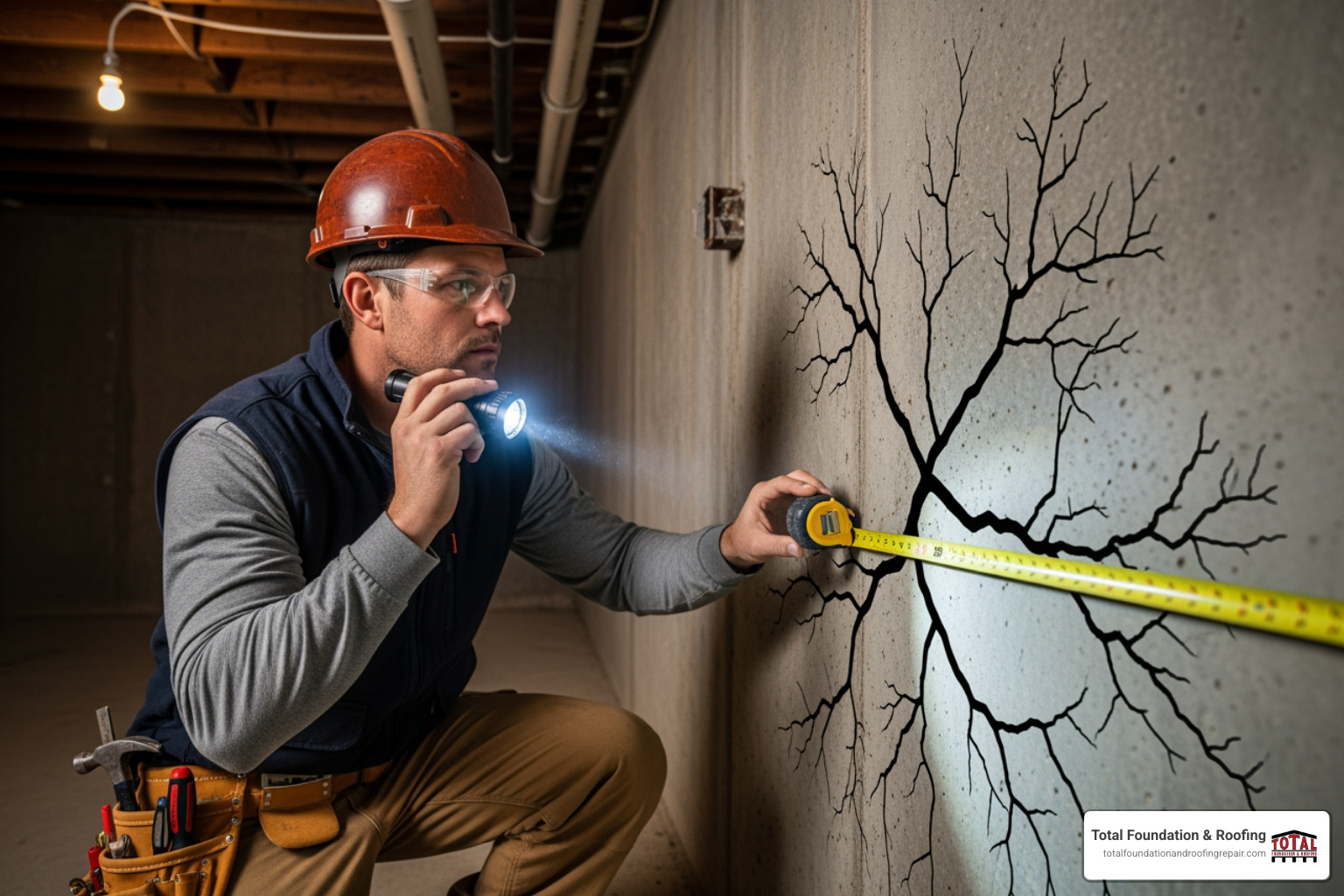
DIY kits are limited to minor, non-structural repairs. They lack the high-pressure equipment to inject fine cracks properly and the range of materials to address different conditions. More importantly, a DIY approach risks misdiagnosing a serious structural problem.
Signs You Need a Professional:
- Cracks wider than 1/8 inch
- Cracks that are actively growing
- Cracks accompanied by sticking doors, uneven floors, or bowing walls
- Any crack in a foundation wall, beam, or column
- Multiple cracks forming a pattern
A professional can accurately diagnose the cause, select the correct epoxy based on ASTM C881 standards, and ensure the repair is permanent. Our team at Total Foundation & Roofing has extensive experience with concrete epoxy injection in the unique conditions of the Texas Hill Country, serving areas like Kerrville, Fredericksburg, and Comfort. Our integrated roofing services also help protect repaired foundations from water intrusion by ensuring proper roof drainage and gutter performance.
Ensuring a permanent solution means understanding why a crack formed. For an expert assessment and reliable, custom solutions for your concrete and foundation needs, request a free estimate for our crack repair services or call us directly at (830) 337-9222 for fast, local assistance.