
Understanding What You’ll Really Pay for a Flat Roof Replacement
Flat roof replacement cost typically ranges from $3,300 to $11,500, with most homeowners paying around $7,400 for a complete replacement. Here’s what drives the price:
- Cost per square foot: $4–$35 installed
- Small roofs (500–1,000 sq ft): $2,000–$14,000
- Medium roofs (1,000–2,000 sq ft): $4,000–$28,000
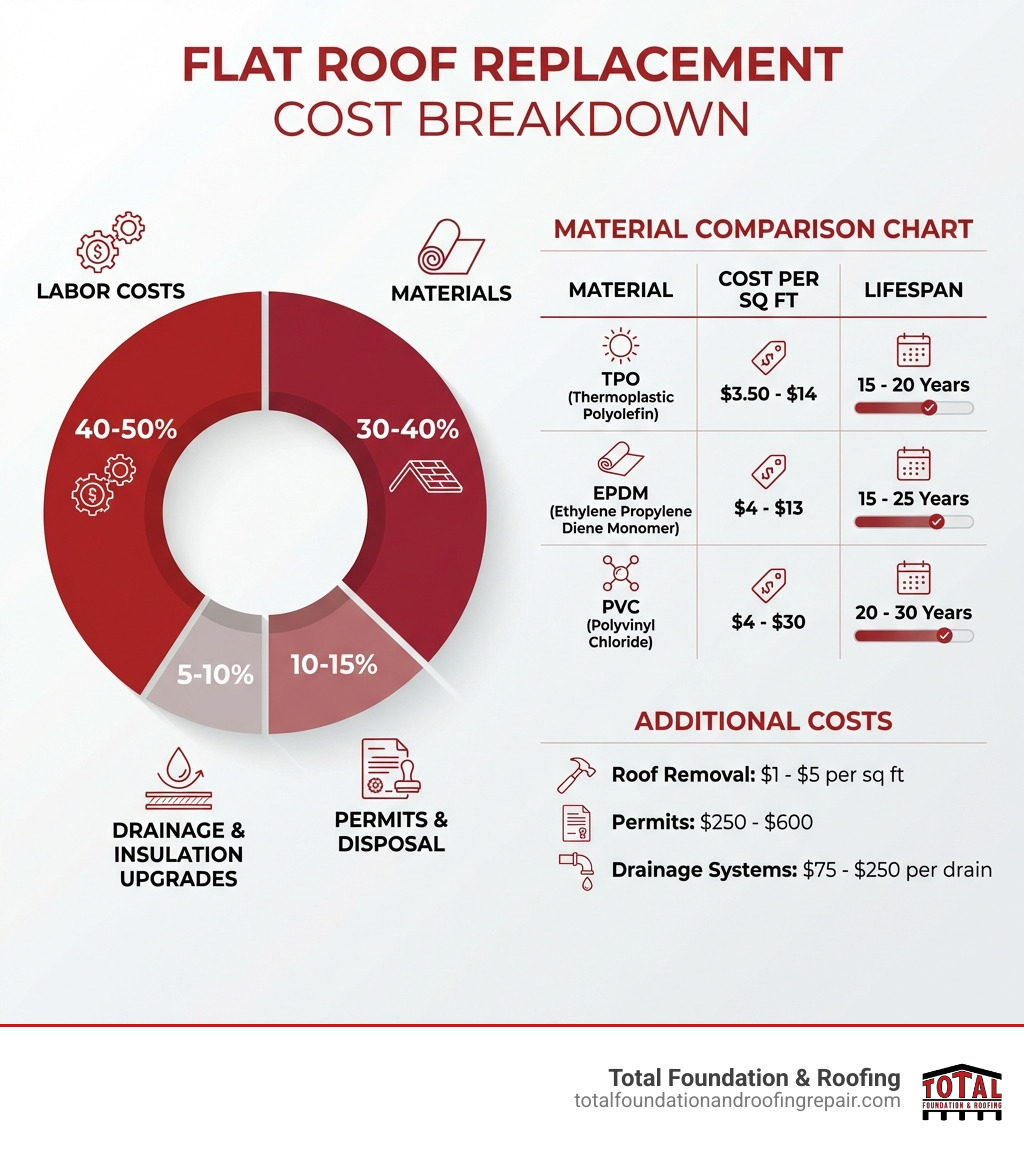
- Labor costs: 40%–50% of total bill ($40–$80/hour)
- Material choice: EPDM rubber ($4–$13/sq ft), TPO ($3.50–$14/sq ft), PVC ($4–$30/sq ft)
Additional expenses to budget for:
- Roof removal: $1–$5 per square foot
- Permits and inspections: $250–$600
- Drainage systems: $75–$250 per drain
- Insulation upgrades: $1–$4 per square foot
If you’re a Texas homeowner staring at water stains on your ceiling or dealing with pooling water after every storm, you know flat roofs present unique challenges. At Total Foundation & Roofing Repair, we understand that unlike pitched roofs that naturally shed water, flat roofs rely entirely on proper membrane installation and drainage systems—and when those fail, the damage spreads fast.
The Texas Hill Country brings its own complications. Extreme temperature swings, intense UV exposure, and occasional hail storms accelerate wear on flat roofing materials. What might last 25 years in a milder climate could need replacement in 15 years here. This phenomenon, often called “thermal shock,” occurs when a roof surface heated to 150 degrees by the Texas sun is suddenly cooled by a rapid thunderstorm, causing the material to contract violently. That’s why choosing the right material and understanding true replacement costs matters so much for your budget and peace of mind. According to industry leaders like GAF, the quality of the installation is just as critical as the material itself in these harsh environments.
Most contractors quote by the “roofing square” (100 square feet), and labor represents nearly half your total bill. Material selection dramatically impacts both upfront cost and long-term value. EPDM rubber offers the most affordable option at $4–$13 per square foot with a 15–25 year lifespan, while premium PVC roofing costs $4–$30 per square foot but provides superior durability and energy efficiency.
Beyond materials and labor, you’ll face costs for removing your old roof, upgrading drainage systems, adding insulation, and securing building permits. Many homeowners underestimate these additional expenses, which can add $1,500–$3,000 to the final bill. Properties in urban areas typically pay 20%–30% more than rural locations due to higher labor rates and stricter building codes. I’m Daniel Sowell, owner of Total Foundation & Roofing Repair in Kerrville, Texas, with over 18 years of experience helping Hill Country property owners steer flat roof replacement cost decisions and find solutions that protect their investments. Throughout this guide, I’ll break down exactly what you’re paying for, how to evaluate material options, and strategies to avoid costly surprises during your flat roof replacement project.
Flat roof replacement cost terms at a glance:
Primary Factors Affecting Flat Roof Replacement Cost
When we sit down with a homeowner in Kerrville, TX or Fredericksburg, the first question is always about the bottom line. While the average cost sits around $7,400, the “flat truth” is that no two roofs are identical. Several primary drivers determine whether your project lands on the lower or higher end of that $3,300 to $11,500 spectrum. When considering professional Roofing services, it is vital to understand that the complexity of the structure often dictates the final invoice more than the square footage alone.
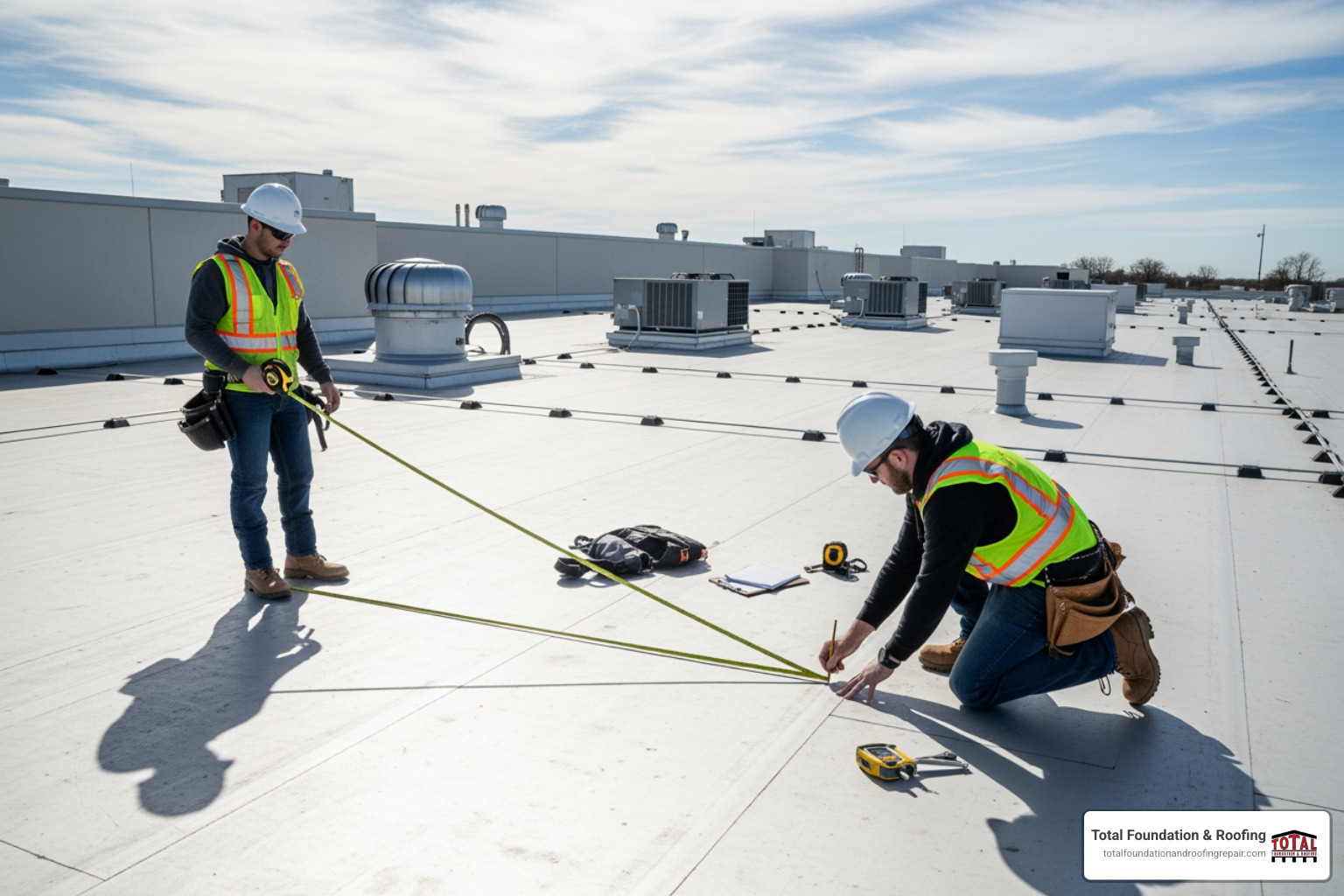
The most obvious factor is the size of the structure, but complexity plays a massive role. A simple, rectangular garage roof is much cheaper to replace than a residential roof with multiple levels, skylights, chimneys, or HVAC units. Every “penetration” (anything that pokes through the roof) requires specialized flashing and sealing, which adds both material and labor time. Furthermore, the height of the building can increase costs; a three-story commercial building requires more safety equipment and time for material transport than a single-story ranch home.
Our Roof replacement estimate guide 2025 highlights that geographic location also dictates pricing. In the Texas Hill Country, we must account for high heat and UV resistance. Materials that work in Maine might bake and crack here within a few seasons. Furthermore, labor rates in our service areas reflect the specialized skill required to handle these heat-sensitive membranes correctly. If the roof deck underneath is found to be rotted during the tear-off, this can add significant structural repair costs that were not visible during the initial walkthrough.
Impact of Square Footage and Labor on Flat Roof Replacement Cost
In the roofing industry, we measure by the “square.” One roofing square equals 100 square feet. If you have a 1,500-square-foot roof, you have a 15-square project. Labor is arguably the most significant portion of your flat roof replacement cost, typically accounting for 40% to 50% of the total bill. Professional roofing crews generally charge between $40 and $80 per hour, or $3 to $7 per square foot for installation alone.
Don’t forget the “tear-off.” Removing your old, heavy roofing material is labor-intensive. In Texas, building codes generally limit you to two layers of roofing; if you already have two, a full tear-off is mandatory. This process usually costs between $1 and $5 per square foot. If you are searching for a Roofer near me, ensure their quote explicitly states whether disposal fees and dumpster rentals are included in the tear-off price, as these can add hundreds to the total.
Additional Expenses: Permits, Drainage, and Insulation
Beyond the membrane itself, several “hidden” costs can surprise property owners. According to Forbes Home research on EPDM Membrane Repair, even minor structural fixes during replacement can add up.
- Building Permits: In local municipalities, you can expect permit fees to range from $250 to $600 depending on the project valuation.
- Inspections: A final professional inspection ensures the work meets local codes and usually costs between $120 and $300.
- Drainage Systems: Flat roofs aren’t actually flat; they have a slight slope (usually 1/4 inch per foot). If your drainage is poor, you may need to install internal drains ($150–$250 each) or scuppers ($75–$150 each) to prevent the issues detailed in our Flat roof water damage guide.
- Insulation: Upgrading to PIR (polyisocyanurate) insulation boards is a smart move for Texas heat. This adds roughly $1 to $4 per square foot but can slash your summer cooling bills significantly by providing a higher R-value.
Signs You Need a Replacement in the Texas Hill Country
How do you know if you can get away with a repair or if it’s time for a full replacement? In the Hill Country, the sun is often our biggest enemy, causing materials to become brittle over time.
- Water Pooling (Ponding): If water stands on your roof for more than 48 hours after a rain, your structure may be sagging or the drainage is blocked. This standing water adds immense weight and accelerates membrane degradation.
- Membrane Cracks and Blisters: Intense UV exposure causes materials to lose their elasticity. If you see “alligatoring” (cracks that look like lizard skin), the membrane is failing and can no longer protect the substrate.
- Storm Impact: Hail can puncture TPO or EPDM membranes, leading to immediate leaks. If you suspect Flat roof storm damage, you may need to call for Emergency roof repair to prevent interior mold and structural rot.
Material Selection and Long-Term Investment Value
Choosing the right material is the biggest lever you have to control your flat roof replacement cost. It is a balance between what you pay today and how often you want to see a roofing crew on your property over the next 30 years. For those specifically looking for Flat roofing solutions, the choice often comes down to the specific environmental stressors of the building’s location.
Flat Roof Replacement Cost by Material Type
Different materials offer different benefits for the Texas climate. Here is a breakdown of the most common options:
| Material Type | Cost Per Sq. Ft. (Installed) | Expected Lifespan | Best For |
|---|---|---|---|
| TPO (Thermoplastic Polyolefin) | $3.50 – $14 | 15 – 20 Years | Energy efficiency/Heat reflection |
| EPDM (Rubber) | $4 – $13 | 15 – 25 Years | Budget-friendly durability |
| Modified Bitumen | $4 – $8 | 10 – 20 Years | High foot traffic areas |
| PVC (Polyvinyl Chloride) | $4 – $30 | 20 – 30 Years | Maximum longevity & chemical resistance |
| Built-Up Roof (BUR) | $4 – $10 | 15 – 30 Years | Proven multi-layer protection |
According to HomeGuide research on Modified bitumen roof cost, this asphalt-based material is excellent for those seeking a durable roof at a lower price point. However, it requires an open flame or high heat for installation, which carries its own risks. Manufacturers like Owens Corning emphasize that proper ventilation and insulation are key components of any roofing system, regardless of the top membrane used.
TPO is currently the “gold standard” for many in our region because its white surface reflects the brutal Texas sun, keeping the building cooler. On the other hand, if you are looking at a detached structure, you might want to compare Flat roof vs garage roof: unpacking repair costs to see if a simpler EPDM solution fits your budget better. PVC remains the premium choice for commercial kitchens or buildings where chemical exhaust is a factor, as it is highly resistant to oils and greases that would dissolve an EPDM roof.
Lifespan and Long-Term Cost-Effectiveness
While a $4,000 roof sounds better than a $10,000 roof, the cheaper option might cost you more over time. A high-quality PVC or TPO roof installed by professionals can last 25 years with minimal maintenance. A cheaper roll-roofing DIY job might fail in 5 to 7 years, leading to repeated labor costs and potential interior damage. To maximize your Return on Investment (ROI):
- Apply Reflective Coatings: Every five to seven years, applying a silicone or elastomeric coating can extend the life of your membrane by reflecting UV rays and sealing minor hairline fractures.
- Routine Maintenance: Clean your scuppers, gutters, and drains twice a year. Debris buildup is the #1 cause of premature flat roof failure because it traps moisture against the seams.
- Energy Efficiency: A “Cool Roof” (white TPO or PVC) can reduce cooling costs by 15% to 30% in the summer, which is a significant saving in the Texas heat.
For more details on maintaining your system, check out our Roof repair cost complete guide.
Professional Installation vs. DIY Risks
We get it—saving 50% on labor by doing it yourself is tempting. However, flat roofing is incredibly technical. Unlike shingles, where gravity does most of the work, flat roof membranes must be perfectly heat-welded or chemically adhered to be waterproof. A single cold-weld or a gap of one-sixteenth of an inch in a seam can allow thousands of gallons of water into your home over a single season.
The risks of DIY flat roofing include:
- Voiding Warranties: Most manufacturers will only honor material warranties if the roof is installed by a certified contractor who follows specific installation protocols.
- Safety Hazards: Working with heat welders, heavy rubber rolls, and industrial adhesives on a hot Texas day is dangerous without proper training and safety gear.
- Structural Integrity: If you don’t catch rotted decking or failing joists during the tear-off, your new roof will fail almost immediately, and you may face a total structural collapse.
At Total Foundation & Roofing, we provide the certified, high-quality workmanship the Texas Hill Country demands. We understand the local building codes and ensure every seam is watertight. Don’t leave your property’s safety to chance. Request a free estimate today or call us directly at 830-257-7663 to discuss your project. Whether you need a full replacement or high-quality Roofing services to extend the life of your current roof, we are here to help you find the best value for your investment.