
Introduction: Choosing Your Home’s Crown
When deciding between a shingle and metal roof, here are the key differences:
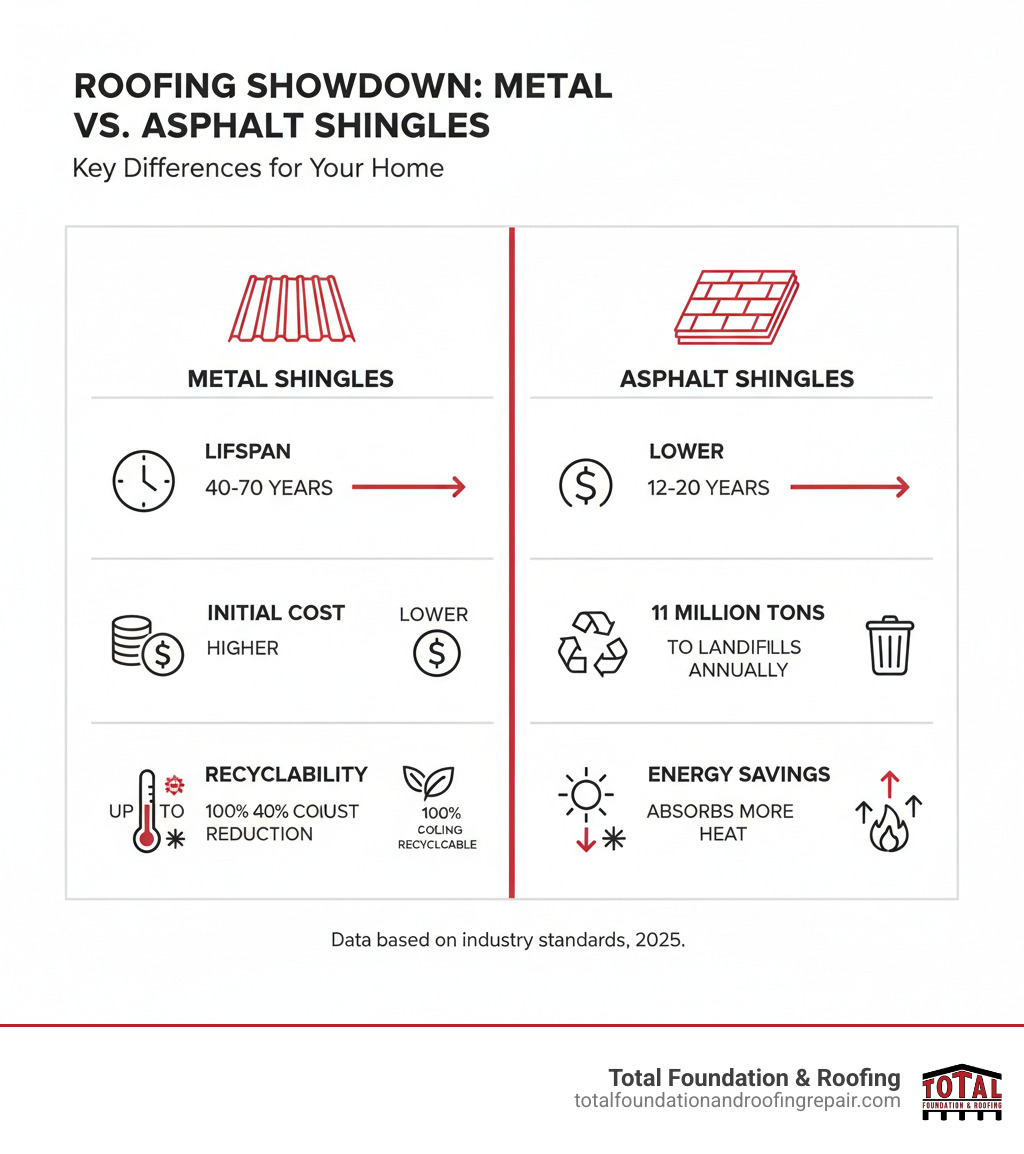
- Longevity: Metal roofs last 40-70 years. Asphalt shingles typically last 12-20 years.
- Durability: Metal roofs offer superior resistance to wind, hail, and fire. Asphalt shingles are less resilient.
- Initial Cost: Asphalt shingles are significantly cheaper upfront. Metal roofs have a higher initial cost.
- Long-Term Cost: Metal roofs are often more cost-effective over 60 years. Asphalt shingles become more expensive due to frequent replacements.
- Energy Efficiency: Metal roofs can reduce cooling costs by up to 40%. Asphalt shingles absorb more heat.
- Recyclability: Metal roofs are 100% recyclable. Asphalt shingles contribute over 11 million tons of waste to U.S. landfills annually, according to the EPA.
Choosing the right Shingle and metal roof for your home is a big decision. It shapes your home’s look and protects it for decades. This choice affects everything from daily energy costs to how well your home handles Texas weather. Many homeowners seek expert roofing solutions for their home, wanting the best balance of looks, durability, and value. But with so many options, picking the perfect roof can feel overwhelming.
Especially in the unique Texas Hill Country climate, where sun, hail, and wind are common, your roof needs to be tough. This guide will compare metal and asphalt shingle roofs. We’ll help you understand the differences to make an informed choice. It’s about finding a roof that looks great, lasts long, and fits your budget. Whether you’re considering Asphalt Shingle Roofing Services or exploring Metal Roofing Services, we’re here to help you choose your home’s crown wisely.
I’m Daniel Sowell, owner of Total Foundation & Roofing Repair, LLC. With over 18 years in the industry, my team and I specialize in high-quality foundation and roofing solutions, including expert Shingle and metal roof installations, for homes across the Texas Hill Country.
Shingle and Metal Roof: A Detailed Comparison
When you’re looking up at your home, thinking about a new roof, you’re not just choosing materials; you’re investing in your peace of mind, your home’s protection, and its beauty for decades to come. Many homeowners wonder about the real differences between a Shingle and metal roof – things like how long they last, how tough they are, and, of course, the cost. Let’s really dig into these crucial aspects to give you a clear, honest picture.
Cost vs. Lifespan: The Shingle and Metal Roof Investment
It’s natural to look at the price tag first, but with a roof, the true value goes far beyond that initial sticker shock. When comparing a Shingle and metal roof, the upfront cost can feel worlds apart, but so does what you get for your money over the years.
Upfront Cost: Let’s talk numbers. Asphalt shingles are usually the more budget-friendly choice right off the bat. Architectural shingles, a popular choice for their aesthetic appeal, cost approximately $4.76 per square foot. But if you’re curious about the Cost to Replace Roof Shingles, you’ll find more details there. On the flip side, a sleek standing seam metal roof can be closer to $15.00 per square foot. For a full breakdown, check out our guide on Metal Roof Cost Per Square Foot Installed. While standing seam is a premium choice, other options like corrugated metal or metal shingles offer different price points. The type of metal itself—be it steel (the most common), aluminum (great for coastal areas), or high-end options like copper and zinc—also significantly influences the final cost. This big difference sometimes leads homeowners to choose asphalt, especially if they’re planning a quick move or need to stick to a tight budget.
Long-Term Value and Lifespan: Now, here’s where the story takes a turn! Asphalt shingle roofs, like those from leading manufacturers such as GAF or Owens Corning, typically last between 15-20 years, though some architectural styles might stretch to 25. Metal roofs, however, are in a league of their own, boasting an impressive lifespan of 40 to 70 years. Imagine that – one metal roof can easily outlast two or three asphalt roofs! This incredible longevity means you’ll face fewer replacements, saving you a whole lot of time, money, and hassle over many decades.
Think about it this way: over 60 years, you might pay for three asphalt shingle roofs, each time dealing with materials, labor, and the disruption of replacement. With a metal roof, you pay once and enjoy decades of worry-free protection. While the initial investment for a metal roof is higher, its extended life often makes it more cost-effective in the long run. Homeowners are finding that they can recoup between 85.9% and 95.5% of the cost of a new metal roof when they sell their home, boosting its resale value significantly. Furthermore, the durability of a metal roof can sometimes lead to discounts on homeowner’s insurance policies, as insurers recognize the lower risk of damage from fire and severe weather. When you factor in these potential savings alongside the impressive resale value, the long-term financial picture for metal roofing becomes even more compelling.
To give you a clearer picture, here’s a look at how the costs might stack up over 60 years for a typical home:
| Factor | Asphalt Shingle Roof | Metal Roof |
|---|---|---|
| Initial Cost | $10,000 | $25,000 |
| Lifespan | 20 years | 60 years |
| Replacements (60 yrs) | 2 (after initial) | 0 (after initial) |
| Total Cost (60 yrs) | $30,000 (3 roofs) | $25,000 (1 roof) |
| Resale Value Boost | Minimal | Significant (85.9%-95.5% ROI) |
(Please note: These are general figures for illustration. Actual costs can vary widely based on your location, roof size, and the specific materials chosen.)
Durability Showdown: Shingle and Metal Roof Performance
Beyond cost, how well your roof stands up to Mother Nature is incredibly important, especially here in the Texas Hill Country. This is where the durability of a Shingle and metal roof really separates them.
Weather Resistance: Metal roofs are champions when it comes to weather. They’re excellent at resisting wind uplift, meaning they’re less likely to peel back or blow off in strong gusts. Asphalt shingles, on the other hand, are particularly susceptible to wind uplift and can suffer significant damage in high winds. Metal roofs also excel in hail impact resistance, often achieving a UL 2218 Class 4 rating, the highest possible classification. To put this into perspective, it means the roofing material can withstand impacts from a 2-inch steel ball dropped from 20 feet without splitting or tearing. This simulates the force of large, dense hailstones, providing homeowners with significant peace of mind during the notorious Texas hail season. While no roof is completely ‘hail-proof,’ a Class 4 rated metal roof offers the highest level of protection available. Plus, metal roofs typically hold a Class A fire rating, offering superior protection against external fires.
Maintenance and Repairs: While both roof types need some care, their maintenance needs differ. Asphalt shingles can be prone to cracking, curling, and granule loss over time, requiring periodic repairs. Maintenance often involves checking for ‘granule baldness’ where the protective top layer has worn away, leaving the shingle vulnerable to UV degradation. If you need help with Repairing Roof Shingles, we’re here for you. After a big storm, asphalt roofs are often the first to show damage, leading to the need for Storm Damage Repair. Metal roof maintenance is generally less intensive, typically involving an annual inspection to ensure fasteners are secure and that sealant around vents and flashing is intact. It’s also wise to clear any debris like leaves or branches that can trap moisture, but they generally demand less frequent attention.
Installation Expertise: Installing any roof correctly is key, but metal roofs, especially standing seam, require specialized skills and tools. The precise fitting and sealing of metal panels demand experienced hands to ensure maximum performance and longevity. Improper installation can lead to leaks, reduced wind resistance, and aesthetic issues like ‘oil canning’ (visible waviness in the flat areas of the panels). For a deeper dive into what goes into putting on a metal roof, check out our Metal Roof Installation Complete Guide. Asphalt shingles, while still needing professional installation from a certified contractor to ensure warranty compliance, are a more common and less specialized job. Working with a member of the Roofing Contractors Association of Texas (RCAT) can provide additional peace of mind that your installer is qualified.
Aesthetics, Efficiency, and Eco-Friendliness
Your roof isn’t just a shield; it’s a huge part of your home’s curb appeal and its overall impact on the environment. Let’s explore how a Shingle and metal roof compare in terms of looks, how they save you money on energy, and their green footprint.
Appearance Options: When it comes to looks, both options offer plenty to choose from. Asphalt shingles come in a wide array of colors and styles, including popular architectural shingles that mimic the look of wood shakes or slate. Metal roofs have come a long way from just looking like barn roofs! They now offer stunning metal shingle styles that can replicate cedar shakes, slate, or even clay tiles. Modern metal roofing finishes, often featuring advanced Kynar 500® coatings, provide exceptional color retention and resistance to fading from harsh UV exposure. This means a metal roof installed today will look vibrant for many years. Whether you desire the bold, clean lines of a standing seam panel or a textured metal shingle that mimics Spanish tile, the design possibilities are vast. Sometimes, homes even feature a Shingle Metal Transition Flashing Guide where these two materials meet!
Energy Efficiency: Here’s a big win for your wallet, especially in the Texas heat! Metal roofs are known for their superior energy efficiency. Their reflective surfaces can significantly reduce the amount of heat absorbed by your home. This ‘cool roof’ effect is a result of high solar reflectance and thermal emittance—the roof reflects a high percentage of the sun’s rays back into the atmosphere and efficiently radiates away the heat it does absorb. This means less work for your air conditioner and potential cooling cost reductions of up to 40%. While some manufacturers now offer ‘cool shingles’ with reflective granules, they typically don’t achieve the same level of energy savings as a properly coated metal roof system.
Sustainability and Eco-Friendliness: For environmentally conscious homeowners, the choice is clear. Metal roofs are incredibly sustainable. They are 100% recyclable at the end of their life cycle and often made from a significant percentage of recycled materials. Another green benefit is that, in some cases, a metal roof can be installed directly over an existing asphalt shingle roof. This practice, where local building codes permit, avoids a tear-off, reducing the amount of waste sent to the landfill from the get-go. Asphalt shingles, on the other hand, contribute a staggering 11 million tons of waste to landfills annually in the US alone, a major environmental concern that has led to increased interest in shingle recycling programs. Choosing metal is a big step towards a greener home.
When considering a new roof for your home in the Texas Hill Country, here are some key factors we always recommend thinking about:
- Intense Sun: Our powerful Texas sun can really beat down on a roof, making solar reflectivity and UV resistance important.
- Hail: Hailstorms are a common occurrence, so a high impact rating is a huge plus.
- High Winds: Strong winds are also a factor, so excellent wind uplift resistance is crucial for protecting your home.
- Energy Costs: With our hot summers, a roof that helps lower cooling bills is a smart investment.
- Aesthetics: You want a roof that complements your home’s style and fits the local landscape.
- Long-Term Investment: How long do you plan to stay in your home? This impacts whether the long-term value outweighs the upfront cost.