
Your First Line of Defense Against Water Intrusion
Roof water damage repair is a critical service for any commercial property owner. When water breaches your roof, immediate action is the only way to prevent catastrophic damage to your building, inventory, and operations. For business owners in Kerrville and the Texas Hill Country, a roof leak is a direct threat to your investment, and finding a reliable partner for expert foundation and roofing repair is paramount.
Quick Action Steps for Commercial Roof Water Damage:
- Contain the leak – Place buckets or tarps under drips.
- Document everything – Take photos and videos for insurance.
- Move valuable assets – Relocate equipment and inventory away from the water.
- Shut off electricity in affected zones to prevent hazards.
- Call a professional – Contact certified commercial roofing contractors immediately.
- Schedule inspection – A professional assessment identifies hidden damage.
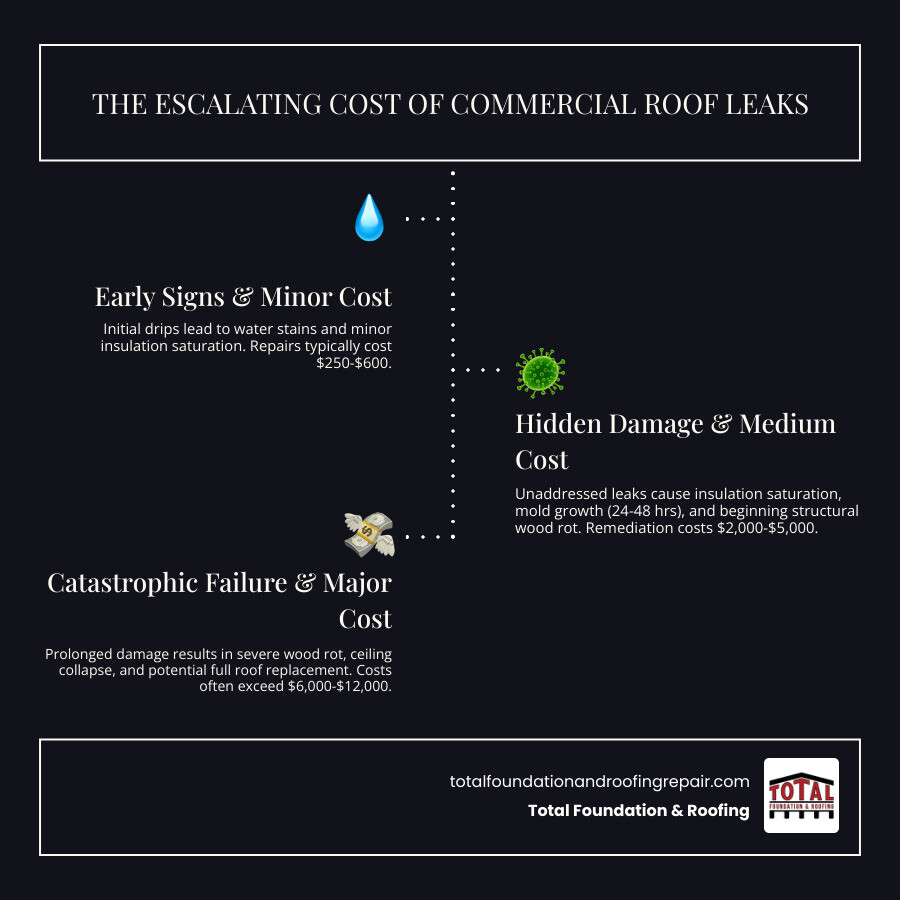
Water damage spreads quietly, compromising structural integrity and creating mold within 24-48 hours. Ignoring it is costly: a minor leak repair might cost $250-$600, but delaying can lead to structural rot and mold remediation costing $2,000-$5,000 or more. Severe cases requiring a full roof replacement can exceed $12,000 for commercial properties.
Addressing issues promptly with professional commercial roofing services is the only way to prevent minor problems from escalating into costly structural failures. This guide provides a definitive roadmap for commercial roof water damage repair, from identifying the first signs to knowing when replacement is necessary.
I’m Daniel Sowell, owner of Total Foundation & Roofing Repair in Kerrville, Texas. With over 18 years of experience in the Texas Hill Country, my team understands the urgency of roof water damage repair. We’ve handled hundreds of emergency leaks and know that time is your most valuable asset when water intrudes.
The Commercial Roof Water Damage Repair Process
Understanding how water damages your roof, how to spot the signs, and what professionals do to fix it is crucial for protecting your investment.
Identifying the Source: Common Signs and Causes
Effective roof water damage repair begins with accurate identification. Early detection is vital as damage often spreads silently.
What are the common signs of water damage on a roof?
- Indoor Signs:
- Water stains: Brown or yellow spots on ceilings and walls.
- Sagging ceilings: Bulging drywall or ceiling tiles indicate trapped water.
- Mold or mildew odor: A musty smell signals hidden moisture and mold growth, which can start in 24-48 hours.
- Peeling paint: Bubbling or cracking paint on walls or ceilings.
- Drips or puddles: Active dripping is an unmistakable sign of a serious leak.
- Outdoor Signs (often require professional inspection):
- Damaged flashing: Cracked or missing seals around vents, chimneys, and skylights.
- Clogged gutters: Debris causing water to back up onto the roof.
- Deteriorated roofing materials: Aged shingles, membranes, or panels showing cracks, curling, or weak seams.
- Missing or curled shingles: Direct pathways for water to enter.
- Granule loss: Shingle granules in gutters signal advanced wear.
- Sagging roofline: Suggests structural rot from prolonged water saturation.
What causes water damage to a roof?
- Storm damage: High winds and hail in the Texas Hill Country can tear off or crack shingles and flashing. Learn more about our storm damage restoration service.
- Punctures: Debris, tree branches, or foot traffic can create holes in the roof membrane.
- Faulty installation: Poor workmanship leads to premature leaks.
- Lack of maintenance: Neglecting inspections allows small issues to become major leaks.
- Age: All roofing materials degrade over time and become prone to failure.
- Attic condensation: Poor ventilation can cause moisture buildup that mimics a leak. Learn how to prevent attic water leaks.
Immediate Steps to Mitigate Damage
Once you spot a leak, act fast to minimize damage and control costs.
What are the immediate steps to take when you find a roof leak?
- Contain the water: Place buckets or tarps under drips to protect floors and equipment.
- Move assets: Relocate valuable inventory, furniture, and electronics from the area.
- Shut off electricity: If water is near wiring or fixtures, turn off power at the circuit breaker.
- Document the damage: Take clear photos and videos for your insurance claim.
- Call for emergency roof repair: Contact a professional commercial roofer immediately. We offer emergency roof repair services for time-sensitive situations.
- Consider emergency tarping: If more rain is expected, emergency roof tarping can prevent further water intrusion.
The Professional Roof Water Damage Repair Method
Our team at Total Foundation & Roofing performs a comprehensive roof water damage repair to ensure a lasting solution.
How do roofing professionals inspect and repair water damage?
- Professional Inspection: We conduct a thorough interior and exterior inspection to find the water’s entry point and assess damage to the decking, underlayment, and insulation.
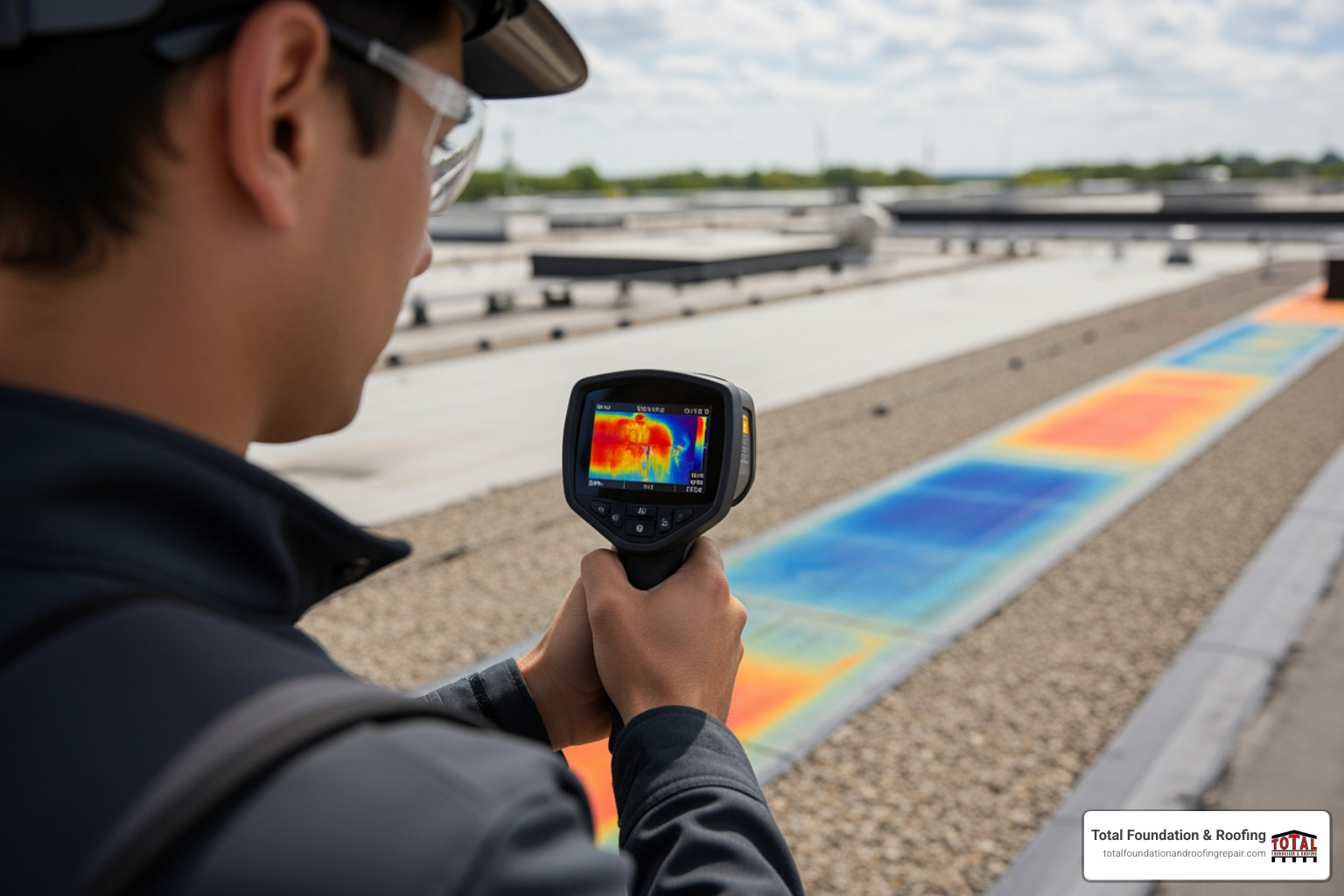
- Thermal Imaging Leak Detection: We use advanced tools like thermal cameras to pinpoint hidden moisture without destructive investigation. Learn more about thermal imaging to detect roof leaks.
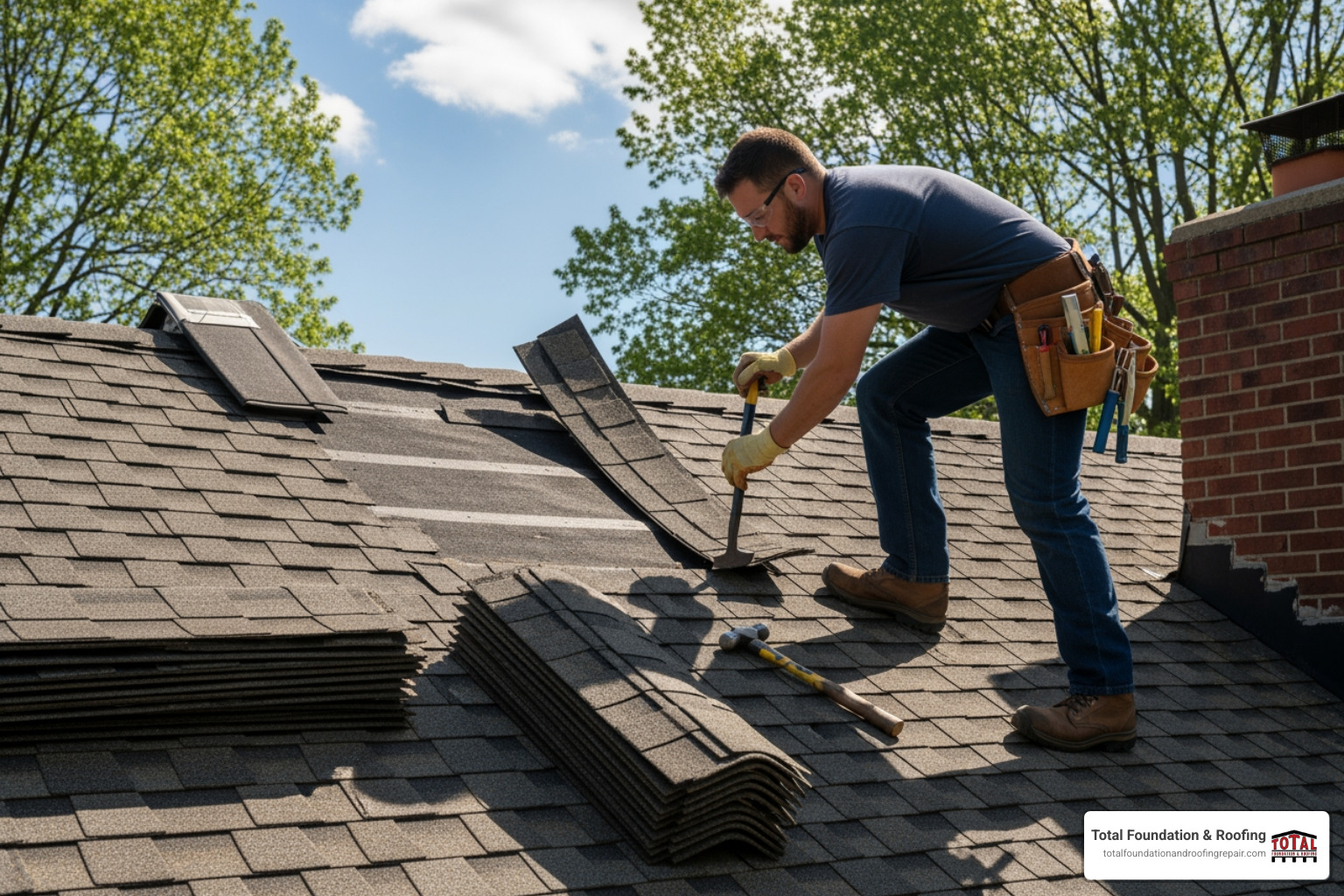
- Material Replacement: All damaged materials are removed and replaced. This includes replacing compromised shingles, wet underlayment, rotted roof decking (plywood/OSB), and faulty flashing. We use high-quality materials like GAF asphalt shingles and apply fresh sealants to ensure a waterproof seal.
How long does a typical roof water damage repair take?
- Minor repairs: 1–2 hours.
- Moderate repairs (shingle sections): ~1 day.
- Structural repairs (decking/rafters): 2–3 days.
- Full roof replacement: 3–5 days, weather permitting.
What is the average cost of roof water damage repair in the Texas Hill Country?
Costs vary based on the scope of damage, materials, and complexity.
- Small leak repairs: $250–$600.
- Moderate repairs: $800–$1,500.
- Structural rot or mold remediation: $2,000–$5,000+.
- Full commercial roof replacement: $6,000–$12,000+.
For a detailed breakdown, consult our complete roof repair estimate guide.
Repair vs. Replacement: Making the Right Call for Your Property
Deciding whether to repair or replace your roof is a critical decision for your budget and property’s long-term health.
When is a roof repair insufficient, and a full roof replacement necessary?
A full replacement is often the better choice in these situations:
- Extent of Damage: Repair is for localized issues. If damage is widespread (over 25% of the roof) or affects the structure, replacement is more cost-effective.
- Age of Roof: Patching a roof near the end of its lifespan (e.g., 15-20 years for asphalt shingles) is a temporary fix.
- Frequent Leaks: Recurring leaks signal a systemic failure that repairs won’t solve.
- Structural Integrity: Widespread rot or sagging in the roof deck or rafters requires a replacement to ensure safety.
- Cost-Benefit: If the cost of extensive repairs approaches that of a replacement, a new roof with a full warranty is a smarter investment.
For a deeper dive, refer to our ultimate roof replacement guide.
| Feature | Extensive Repair (Pros) | Extensive Repair (Cons) | Full Roof Replacement (Pros) | Full Roof Replacement (Cons) |
|---|---|---|---|---|
| Cost | Lower initial outlay | Can lead to recurring costs if not a permanent solution | Long-term cost-effectiveness, single investment | Higher initial investment |
| Longevity | Extends life of existing roof if damage is localized | May not significantly extend roof life if underlying issues exist | Maximizes roof lifespan with new materials | Significant upfront cost |
| Warranty | Typically limited to the repaired section | No new comprehensive warranty for the entire roof | New, comprehensive warranty on materials and workmanship | Disruptive process, can take several days |
| Effectiveness | Good for isolated, minor damage | May not address widespread or systemic issues | Addresses all underlying problems, provides uniform protection | Waste disposal and environmental impact of old roof materials |
| Aesthetics | Can result in mismatched patches | May detract from property’s appearance | Uniform, refreshed appearance, improves curb appeal |
Navigating Insurance and Long-Term Consequences
Dealing with water damage involves insurance claims and understanding the risks of inaction.
Does commercial property insurance cover roof water damage?
Coverage depends on the cause.
- Covered: Most policies cover “sudden and accidental” damage from events like storms or fallen trees.
- Not Covered: Damage from gradual wear, neglect, or lack of maintenance is typically denied.
- Action: Review your policy, document everything, and file your claim promptly.
Can water damage lead to mold growth?
Yes. Mold is a serious consequence of water damage.
- Rapid Growth: Mold can appear within 24-48 hours in damp conditions.
- Health Risks: Spores can trigger allergies and respiratory issues for building occupants.
- Property Damage: Mold destroys wood, drywall, and insulation, requiring costly remediation. Scientific studies confirm the link between water damage and mold.
What are the potential structural damages from an ignored roof leak?
- Structural Rot: Moisture rots wood decking, rafters, and joists, weakening the roof and risking collapse.
- Compromised Insulation: Wet insulation loses its R-value, increasing energy costs.
- Electrical Hazards: Water contacting wiring creates a fire and electrocution risk.
- Pest Infestations: Damp wood attracts termites and other destructive pests.
Proactive Prevention for Future Protection
The best defense against costly roof water damage repair is proactive maintenance.
What are the best practices for preventing future roof water damage?
- Regular Inspections: Schedule professional inspections twice a year (spring and fall) and after major storms.
- Gutter Maintenance: Keep gutters clean to ensure proper water drainage away from the roof and foundation.
- Debris Removal: Keep your roof clear of leaves and branches that trap moisture.
- Proper Attic Ventilation: Prevents heat and moisture buildup that can damage your roof from the inside out.
- Seal Penetrations: Regularly check seals around vents, pipes, and skylights.
- Trim Trees: Keep branches away from the roof to prevent scratches and falling debris.
- Invest in Quality: When replacing your roof, use durable materials designed for the Texas climate, such as high-performance asphalt shingles.
- Scheduled Maintenance: Partner with a local contractor for routine roofing services to keep your commercial property in Kerrville, TX protected.
Your Partner in Protecting Your Commercial Investment
A leaking roof on your commercial property is an emergency that demands immediate, expert action. Protecting your building and business operations means understanding the signs, taking swift containment measures, and engaging certified professionals. For business owners in the Texas Hill Country, Total Foundation & Roofing offers comprehensive solutions custom to our unique climate. Don’t let water damage compromise your investment. For a thorough inspection and lasting roof repair, contact our expert team today.