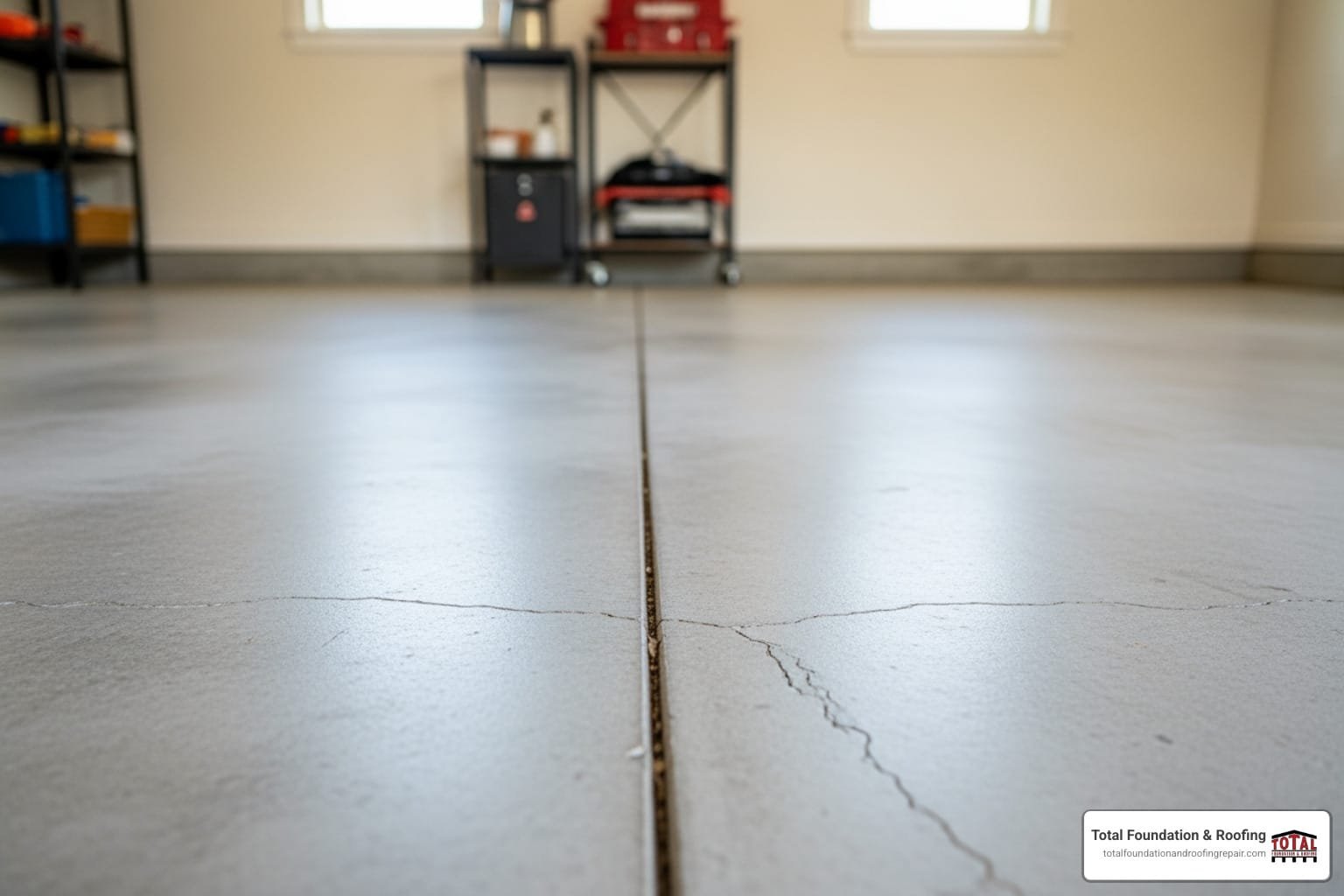

Why a Small Stucco Hole is a Big Deal
Patching stucco holes is a critical maintenance task that protects your home from serious water damage and structural issues. Here’s what you need to know:
Quick Answer: How to Patch Small Stucco Holes
- Clean the hole – Remove loose debris with a wire brush
- Seal with caulk – Apply polyurethane caulking to create a waterproof barrier
- Fill with patch – Use textured stucco patch in thin layers (1/4 inch maximum)
- Match texture – Blend with existing surface using a damp sponge or brush
- Paint if needed – Allow full curing before painting to match color
That small hole in your stucco wall is an open invitation for trouble. Because stucco is porous, it’s vulnerable to moisture infiltration through even tiny openings.
Common causes include drilling for fixtures, minor impacts, and general wear. When left unrepaired, these holes allow water to seep behind the stucco, damaging the metal lath, sheathing, and wood framing underneath. For homes in the Texas Hill Country, maintaining your home’s exterior is essential. Total Foundation & Roofing has seen how these small issues escalate into costly repairs.
The good news? Most small stucco holes (up to 3/4 inch) are straightforward DIY repairs. The key is using the right materials and techniques promptly.
I’m Daniel Sowell, owner of Total Foundation & Roofing Repair in Kerrville, Texas. With over 18 years of experience, I’ve helped countless Hill Country homeowners with patching stucco holes and preventing the extensive water damage that can result from delayed repairs.

The Complete DIY Guide to Patching Stucco Holes
Stucco’s reputation for durability is well-earned, but even the toughest exterior gets occasional scars. A misplaced drill bit or an errant branch can leave small holes that threaten your wall’s integrity. Since stucco is porous, these openings become highways for moisture, leading to wood rot, mold, and structural damage. The good news is that for homeowners comfortable with basic foundation and exterior repair, most small stucco holes are manageable weekend projects.
Step 1: Preparation is Key
Proper preparation is the most important step for a lasting repair. A rushed job might fail within months.
What are the common causes of small holes in stucco walls? Common causes include drilling for fixtures, minor impacts from equipment, foundation settling, and pests like woodpeckers. If multiple holes appear without an obvious cause, it may signal a deeper issue.
What safety precautions should be taken before starting stucco repair? Prioritize safety. Since you’ll be creating dust and handling tools, wear safety goggles, work gloves, a dust mask, and long sleeves. This protects you from stucco dust, abrasions, and skin irritation.
What tools and materials are needed for patching small stucco holes? Gather your tools and materials first. You will need a wire brush, putty knife or small trowel, and a rubber float or damp sponge. The critical materials are a high-quality polyurethane caulking and a stucco patching compound, such as a ready-mix acrylic or cement-based formula. A 5-in-1 tool and compressed air are also helpful.
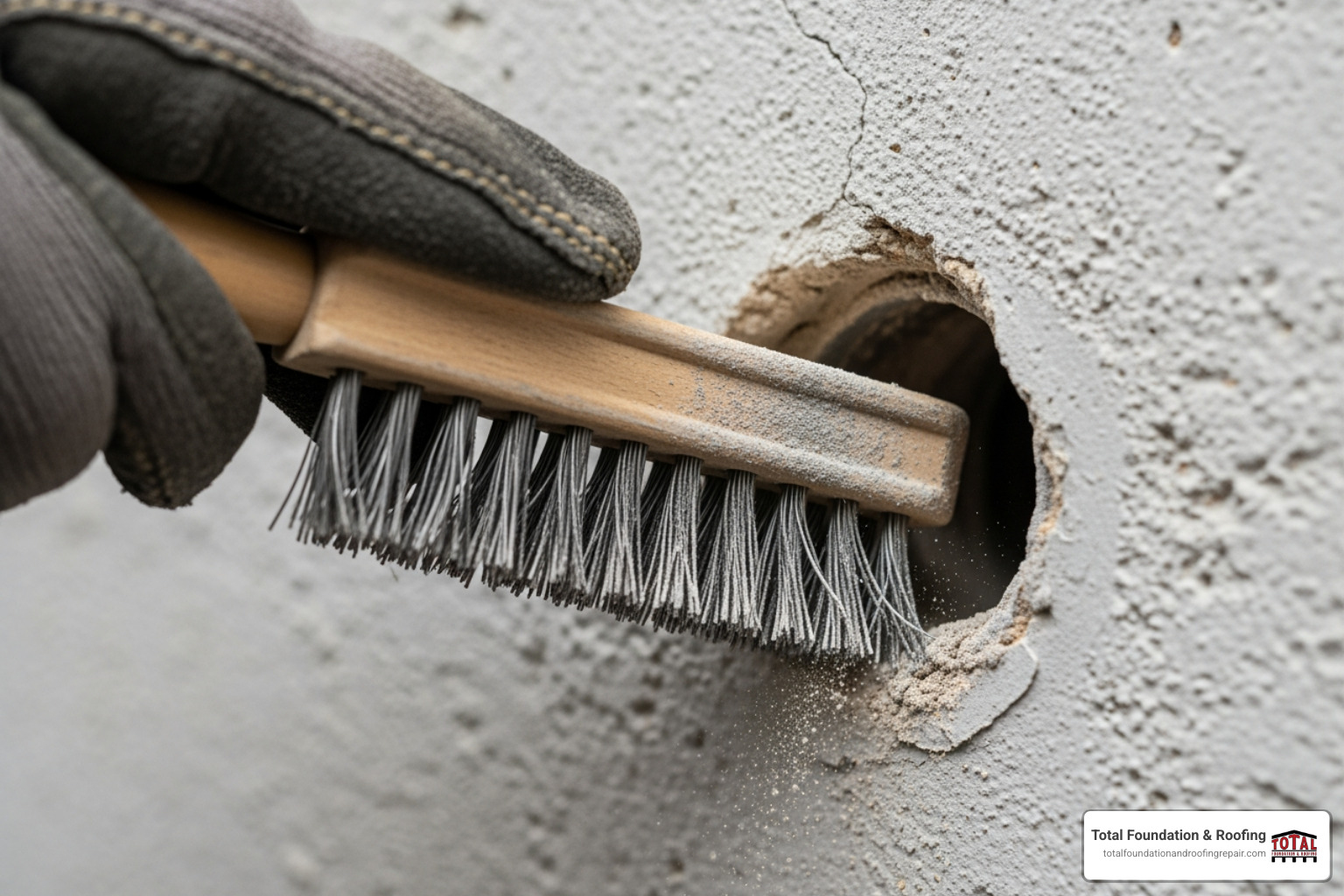
How do you properly clean and prepare a stucco hole for repair? Proper cleaning is crucial for a lasting patch. Use a wire brush to scrub away all loose stucco, paint, and debris. For narrow cracks, widen them to at least 1/4 inch with a chisel or 5-in-1 tool to ensure a strong bond. Blow out any remaining dust with compressed air. Finally, lightly dampen the hole’s edges with a sponge to prevent the new patch from drying too quickly and cracking.
What is the best type of filler or patching compound for small stucco holes? For holes up to 3/4 inch, a ready-mix, acrylic-based stucco patch is ideal. These products are convenient, often pre-textured, and provide a moisture-resistant, paintable finish that meets rigorous industry benchmarks like ASTM C926, the standard for plaster application. An acrylic-based patch is essential for synthetic stucco (EIFS) due to its flexibility.
Step 2: Applying the Patch for a Durable Bond
This is where patience pays off. Rush this step, and you’ll be doing it again next year.
What is the role of polyurethane caulking in stucco hole repair? Polyurethane caulk is your first line of defense against moisture. Before patching, you must seal the void to create a waterproof barrier, as stucco is porous. This flexible, durable caulk protects against humidity in the Texas Hill Country and is easily applied with a standard caulk tube.
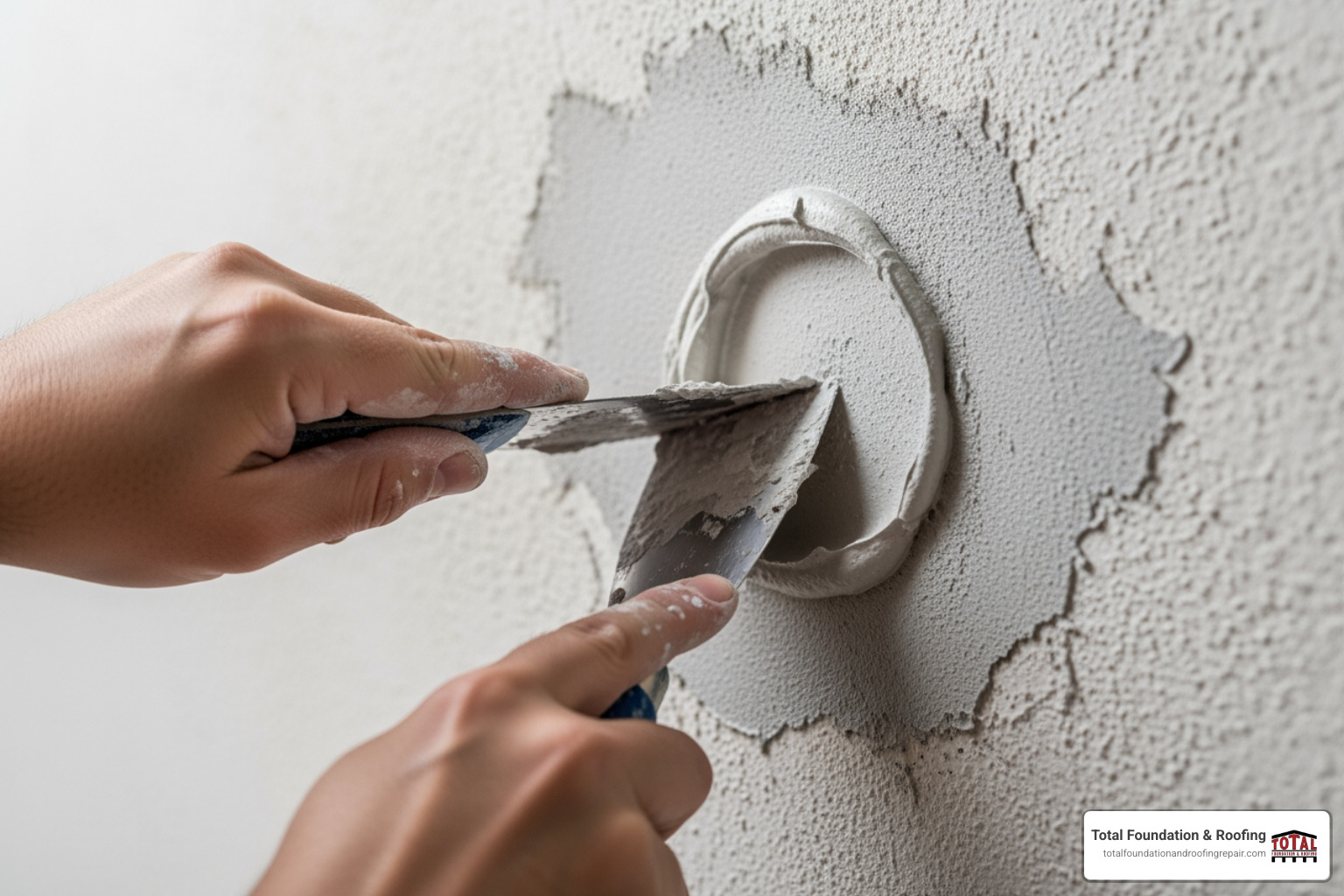
How do you apply the patching material to ensure a good bond and texture match? First, inject polyurethane caulk deep into the hole, leaving about 1/4 inch of space for the patch. Let the caulk dry per the manufacturer’s instructions. If using a dry mix, prepare your stucco patch to a thick, peanut-butter-like consistency. The key is to apply the patch in thin layers, no more than 1/4 inch thick, to prevent cracking. Press each layer firmly into the hole, letting it set slightly before adding the next. Build up layers until the patch is nearly flush with the wall. For a visual guide, this stucco repair tutorial is a helpful resource.
Step 3: Finishing Touches for a Seamless Repair
The final step in patching stucco holes is making the repair disappear.
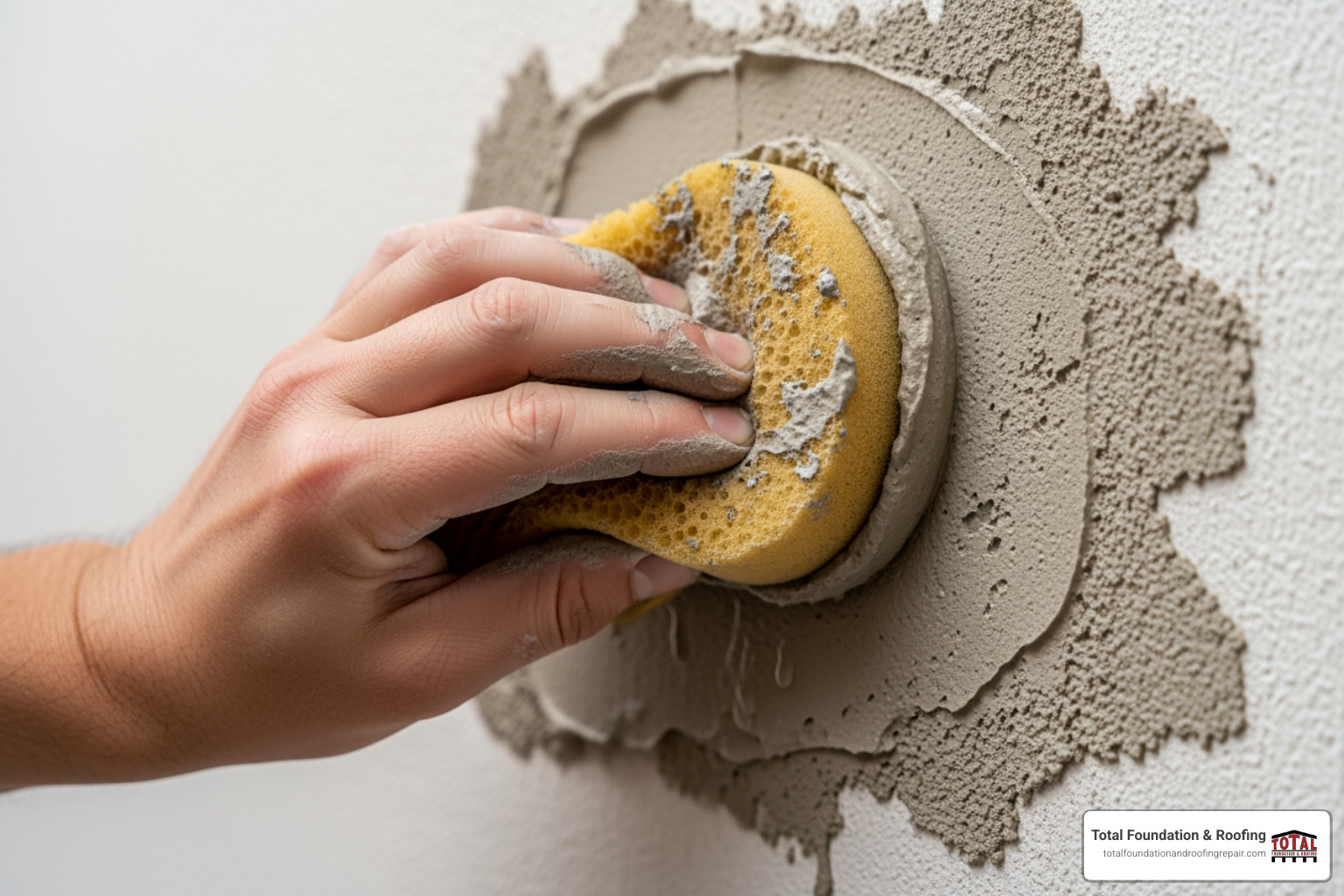
How can you achieve a seamless color and texture match for the repaired area? Achieving a seamless repair means matching both texture and color. Address texture while the final patch layer is still wet. Examine your existing stucco and practice your technique on scrap plywood first. Use a damp sponge float for swirls, a stiff-bristled brush for sandy finishes, or the edge of your trowel for distinct lines. Feather the edges of the patch into the surrounding wall to avoid a visible outline. For color matching, use a pigmented mix for unpainted stucco. If it’s painted, prime the cured patch and then paint to match. Always test your color in an inconspicuous area. Most importantly, allow the patch to cure completely before painting to prevent peeling and ensure your repair is a long-lasting success.
Advanced Stucco Care and Professional Solutions
While patching stucco holes is often a manageable DIY task, knowing when to call the professionals—and how to prevent damage—is key to a lasting solution.
Repairing Larger Holes and Preventing Future Damage
What are the steps for repairing larger cracks or holes in stucco?
Holes larger than 3/4 inch require a complex, multi-layered repair process best left to professionals. This involves removing all damaged stucco, inspecting and replacing the underlying moisture barrier and metal lath if needed, and then applying three distinct layers: a scratch coat, a brown coat, and a final finish coat. Each layer requires specific application techniques and curing times. These larger issues often point to underlying problems, much like how foundation settlement can cause widespread damage requiring professional foundation repair services.
How can regular maintenance help prevent future stucco damage?
Regular maintenance is the cheapest way to prevent future damage. Inspect your stucco twice a year, especially after severe weather, looking for hairline cracks, chips, or water stains. Address any damage promptly to prevent it from worsening. Applying a breathable, water-repellent (silane/siloxane) sealer can also add a layer of protection against moisture without trapping it inside the wall. Reputable manufacturers like Prosoco offer products specifically designed for masonry and stucco, which is critical for longevity in our climate.
The Risks of Improperly Patching Stucco Holes
What are the potential risks associated with improper stucco hole repair?
An improper patch is a significant risk, primarily due to moisture intrusion. If a patch isn’t sealed correctly, trapped moisture leads to wood rot, mold growth, and structural degradation. This hidden damage can compromise your home’s framing, create health hazards, and attract pests like termites. Freeze-thaw cycles can cause the faulty patch to fail, leading to more cracking and spalling. In severe cases, this can become as urgent as needing emergency roof repair after a storm, turning a small issue into a costly renovation.
When to Call a Stucco Repair Professional
When should a professional stucco contractor be consulted for repairs?
Knowing when to call a professional can save you thousands in the long run. Consult a pro if you find:
- Holes larger than 3/4 inch or numerous small holes.
- Water stains, mold, or mildew, which indicate deeper moisture issues.
- Structural concerns like significant cracking, bulging walls, or damage related to foundation settlement.
- Damaged metal lath or wood sheathing behind the stucco.
- The home has a synthetic stucco system (EIFS), which requires special materials.
For homeowners in the Texas Hill Country, hiring a local expert who understands our climate’s challenges is crucial. If the job feels beyond your scope, trust the experts at Total Foundation & Roofing. For a comprehensive assessment of your home’s exterior needs, learn more about our foundation and exterior repair services. We’re here to help you maintain a flawless, protected home.