
Why Gutters are a Non-Negotiable for Metal Buildings
A metal building gutter is a drainage system designed to collect and divert rainwater from metal structures, protecting them from water damage. A proper gutter system is the most effective way to protect your building’s foundation and structural integrity. Without gutters, rainwater saturates the soil at the base of your building, leading to foundation problems—a critical issue in the Texas Hill Country, where expansive clay soils can damage foundations when wet. For comprehensive protection for your property, explore the expert roofing and foundation services available to safeguard your investment.
Key Functions of Metal Building Gutters:
- Foundation Protection: Prevents water pooling that causes soil erosion and foundation settlement.
- Structural Integrity: Stops water infiltration that leads to corrosion at walls and seams.
- Cost Prevention: Avoids expensive repairs from water damage and foundation cracks.
- Sizing Standards: Typically 6-7 inches wide with downspouts every 20-40 feet.
- Material Options: Steel, aluminum, or copper offer varying durability and rust resistance.
Installing gutters costs between $900 to over $5,000, but this investment prevents far costlier foundation repairs. Metal buildings face unique challenges like thermal expansion and the absence of fascia boards, requiring robust systems to handle Texas downpours. A metal building gutter is the first line of defense, managing runoff and extending the life of your building by keeping it dry.
Key Benefits: Protecting Your Investment from the Top Down
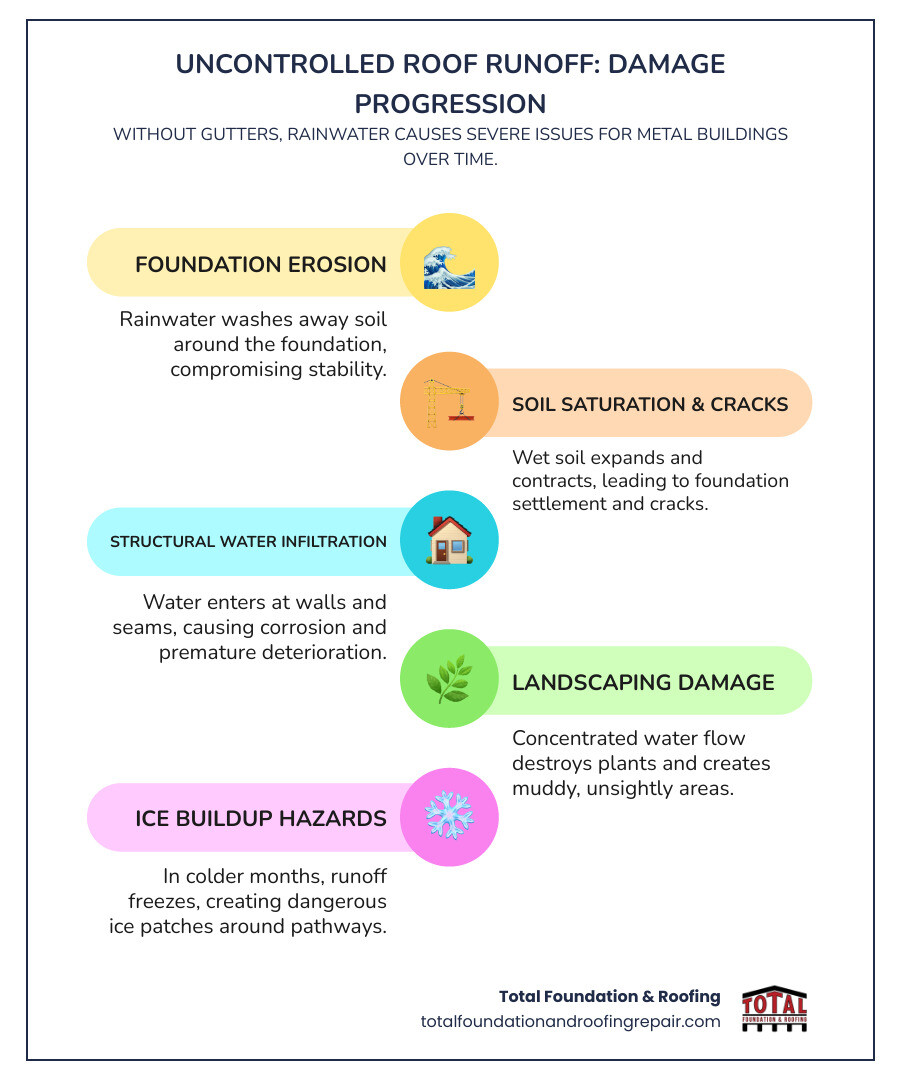
A metal building gutter system offers multifaceted protection for your entire investment.
- Foundation Protection: The primary benefit is protecting the foundation. Gutters channel water away, preventing soil erosion and saturation that can cause slab foundations to settle or crack, a common problem with the clay-rich soils in the Texas Hill Country. Our foundation repair services can address existing issues.
- Structural Longevity: Uncontrolled runoff leads to corrosion and leaks. Gutters divert water from seams and seals, preventing rust and extending the lifespan of metal panels and steel doors.
- Preventing Leaks: By guiding water from walls and entry points, gutters reduce the risk of water infiltration, protecting your building’s interior, insulation, and valuable contents.
- Landscaping Preservation: A controlled drainage system prevents heavy roof runoff from eroding mulch beds, washing away gravel, or damaging plants around your building.
- Avoiding Costly Repairs: Investing in gutters is a financially prudent choice that prevents expensive repairs from foundation cracks, corrosion, and leaks, which are often not covered by insurance.
- Aesthetically Pleasing: Gutters prevent mud from splashing onto your building’s exterior, keeping the panels clean and preventing stains for a more professional appearance.
Choosing the Best Materials for a Metal Building Gutter
The right material ensures durability and performance in the varied weather of the Texas Hill Country.
| Material | Durability | Cost | Rust Resistance | Weight | Thermal Expansion |
|---|---|---|---|---|---|
| Steel | Excellent | Moderate-High | Good (coated) | Heavy | Moderate |
| Aluminum | Very Good | Moderate | Excellent | Light | High |
| Copper | Exceptional | High | Excellent | Moderate | Moderate |
| Vinyl (PVC) | Good | Low | Excellent | Very Light | High |
- Steel: Typically 26-gauge, steel is highly durable and damage-resistant. It’s galvanized and coated to prevent rust, but the coating must remain intact. Its weight requires strong support.
- Aluminum: A popular, lightweight choice that is easy to install and offers excellent rust resistance. It is more prone to denting than steel and has higher thermal expansion.
- Copper: The most expensive option, copper provides exceptional durability and a unique aesthetic patina over time. It is a premium, long-lasting solution highly resistant to rust.
- Vinyl (PVC): The most budget-friendly and lightest option, vinyl is rust-proof but less durable than metal. It can become brittle in extreme temperatures and may not be ideal for commercial metal buildings.
When selecting materials, note that metal roofing materials pair best with steel or aluminum gutters to prevent galvanic corrosion, which occurs when dissimilar metals are in contact.
Critical Design: Sizing, Slope, and Downspouts
An effective metal building gutter system depends on proper design to manage water and prevent overflow.
- Gutter Sizing: Gutters must handle your region’s maximum rainfall. For metal buildings in areas with heavy downpours like the Texas Hill Country, 7-inch or larger box gutters are recommended over standard 6-inch gutters.
- Roof Pitch Impact: A steeper roof sheds water faster, potentially requiring larger gutters or more downspouts to manage the flow.
- Downspout Spacing: Downspouts carry water away and should be placed every 20-40 feet to prevent overflow. Larger buildings or those in high-rainfall areas may need closer spacing.
- Secondary Drainage Systems: Complex roofs may require secondary systems like scuppers or emergency overflow drains to prevent water accumulation during extreme weather.
- MBMA Guidelines: The Metal Building Manufacturers Association (MBMA) provides design standards for drainage. According to these guidelines for commercial metal buildings, systems must be designed for specific rainfall intensities, and it is the building owner’s responsibility to specify them.
- Gutter Slope: To ensure proper drainage and prevent standing water, a metal building gutter must be sloped approximately 1/4 inch for every 10 feet of run toward a downspout.
Installation, Maintenance, and Troubleshooting Your Metal Building Gutter
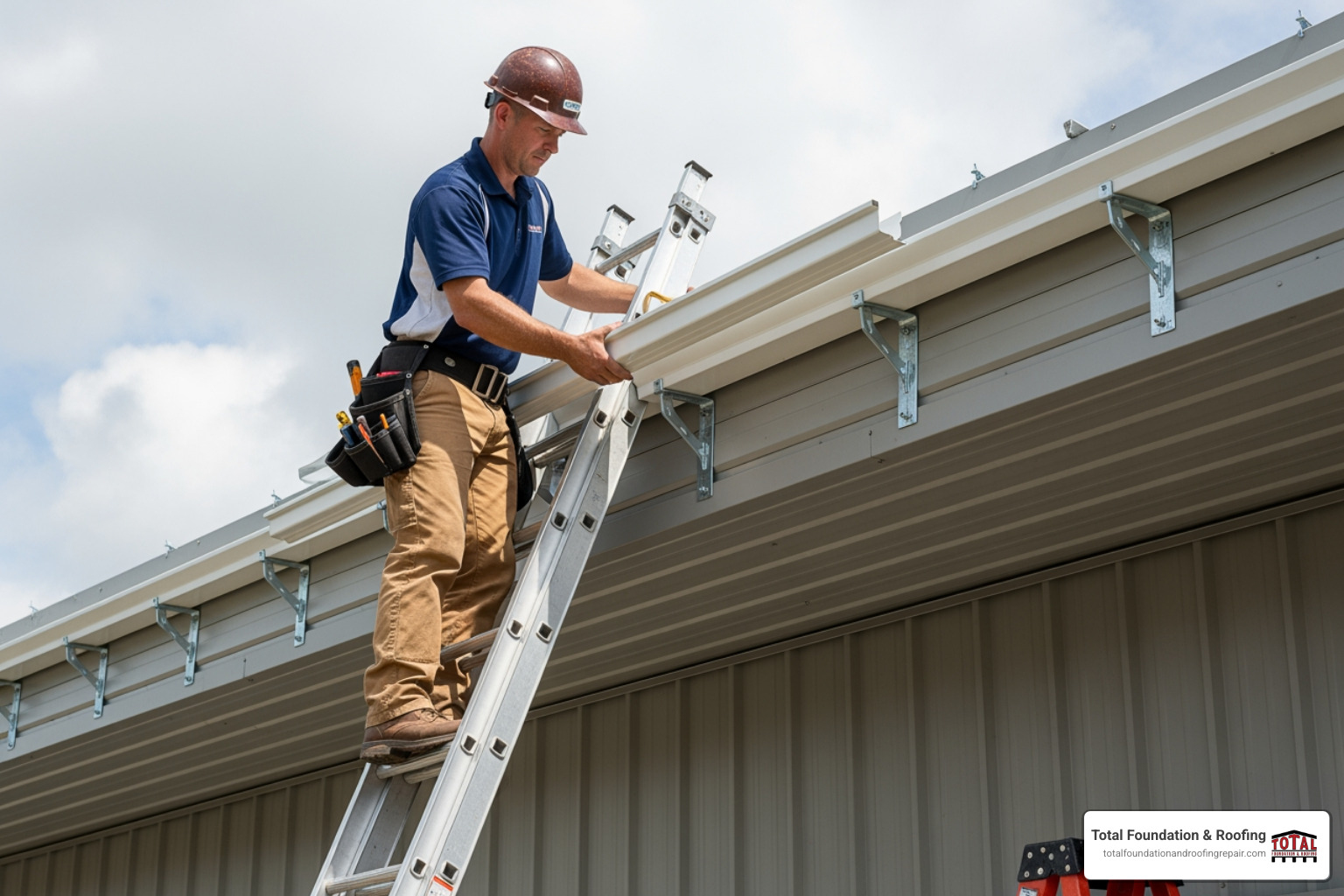
The installation process for a metal building gutter requires specific techniques, especially without a traditional fascia board. Proper installation is key to performance, and at Total Foundation & Roofing, we understand the unique challenges of metal structures in the Texas Hill Country.
Step-by-Step Metal Building Gutter Installation Guide
Installing gutters on a metal building requires specialized mounting techniques due to the common absence of fascia boards.
- Gather Materials: You will need gutter sections, downspouts, elbows, end caps, specialized gutter hangers (roof straps), self-tapping screws, and high-quality outdoor sealant.
- Measure and Mark: Calculate the total roofline length and plan downspout locations (every 20-40 feet). Use a chalk line to mark a slope of 1/4 inch for every 10 feet of run toward the downspout.
- Attach Brackets: Since there is no fascia, use roof straps or hidden hangers that attach directly to the roof panels or purlins. Space brackets every 24-32 inches—or closer (18 inches) in areas with heavy rain—to prevent sagging.
- Install and Seal Sections: Starting from the high point, overlap gutter sections by a few inches and secure them with screws or rivets. Apply a generous bead of sealant at all joints and end caps.
- Install Downspouts: Cut an outlet in the gutter bottom, install the ferrule, and seal it thoroughly. Use elbows to direct the downspout along the wall and secure it with straps. Ensure water discharges well away from the foundation.
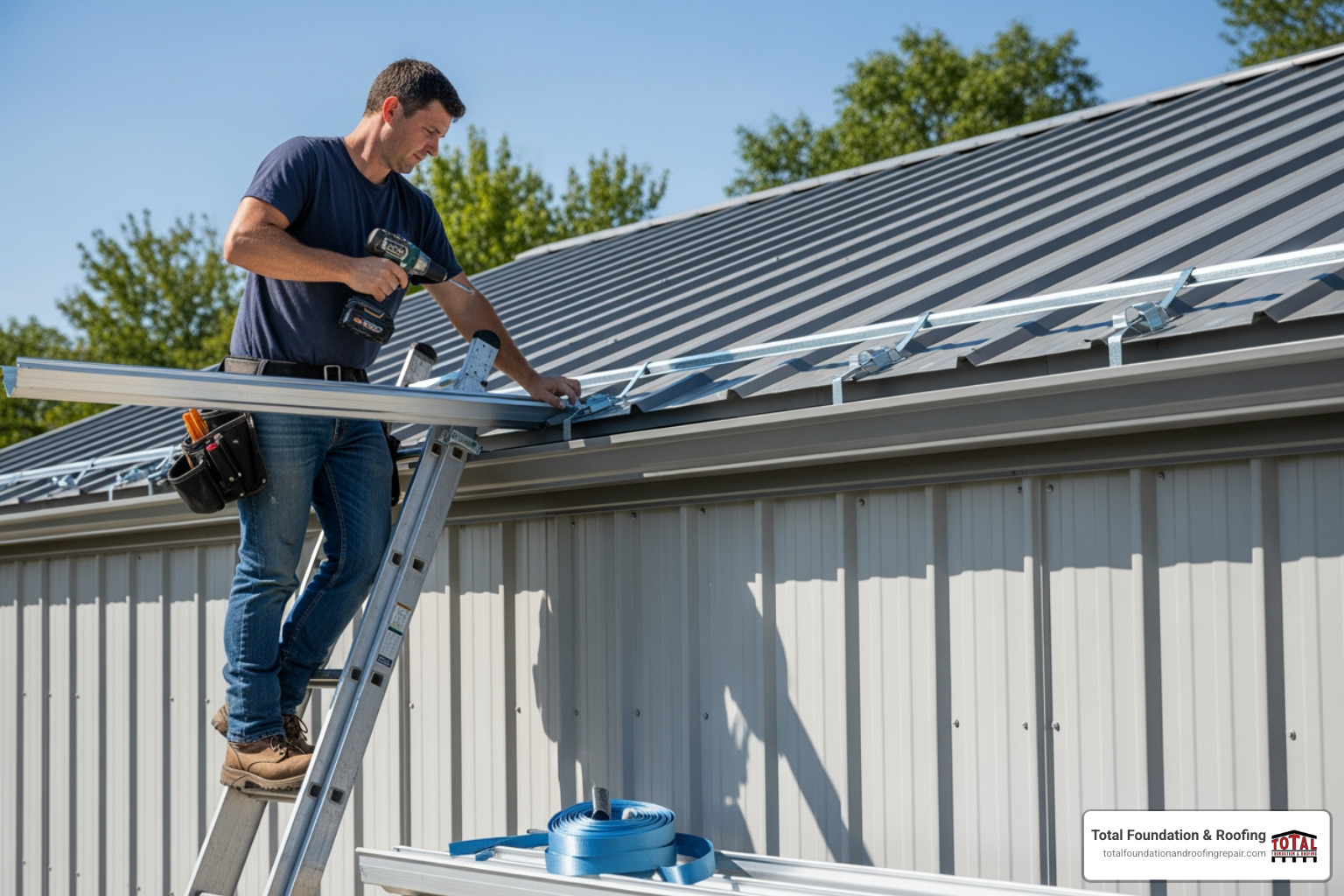
The cost to install metal gutters varies, but professional installation ensures the system is correctly sized and secured. For local expertise, consider our gutter installation in Kerrville, TX.
Solving Common Challenges: From Leaks to Corrosion
Even well-installed metal building gutter systems can face issues. Addressing them early prevents serious damage.
- Thermal Expansion: Metal expands and contracts with temperature, which can warp gutters or break seals. Solution: Use expansion joints on long runs (every 40-50 feet) and hangers that permit slight movement.
- Galvanic Corrosion: This occurs when dissimilar metals touch in the presence of moisture. Solution: Always use fasteners made of the same or a compatible material as the gutters (e.g., stainless steel fasteners for aluminum).
- Improper Slope: This causes standing water, leading to debris buildup and corrosion. Solution: Ensure gutters have a consistent slope of 1/4 inch per 10 feet toward the downspouts.
- Leaky Seams: Leaks develop at joints and end caps as sealant degrades. Solution: Clean the joint, remove old sealant, and apply a fresh bead of high-quality outdoor sealant.
- Bracket Spacing: If brackets are too far apart, gutters will sag. Solution: Space brackets 24-32 inches apart, or closer in areas with heavy rainfall, to provide adequate support.
Proper water management also involves using compatible metals and correct flashing techniques to prevent water intrusion.
Essential Maintenance for Gutter Longevity
Regular maintenance extends the life of your metal building gutter system and prevents costly repairs.
- Regular Cleaning: Clean gutters at least twice a year (spring and fall). Buildings in the Texas Hill Country near oak trees may require quarterly cleaning.
- Check Downspouts: Ensure downspout openings are clear. Flush them with a hose to remove internal clogs.
- Consider Gutter Guards: These screens block large debris, reducing cleaning frequency and preventing major clogs.
- Inspect for Leaks: After cleaning, run water through the gutters and check for drips at seams. Seal any leaks immediately.
- Tighten Fasteners: Check and tighten any loose brackets, hangers, or straps to ensure the gutter remains secure and properly sloped.
- Ensure Proper Drainage: Verify that downspouts discharge water at least 4-6 feet away from your foundation.
- Look for Damage: Regularly inspect for sagging, dents, or cracks and address them promptly.
By following this routine, you can prevent costly foundation repairs and structural damage. For professional maintenance or repairs, request an inspection from our team.
Get Professional Gutter Solutions for Your Metal Building
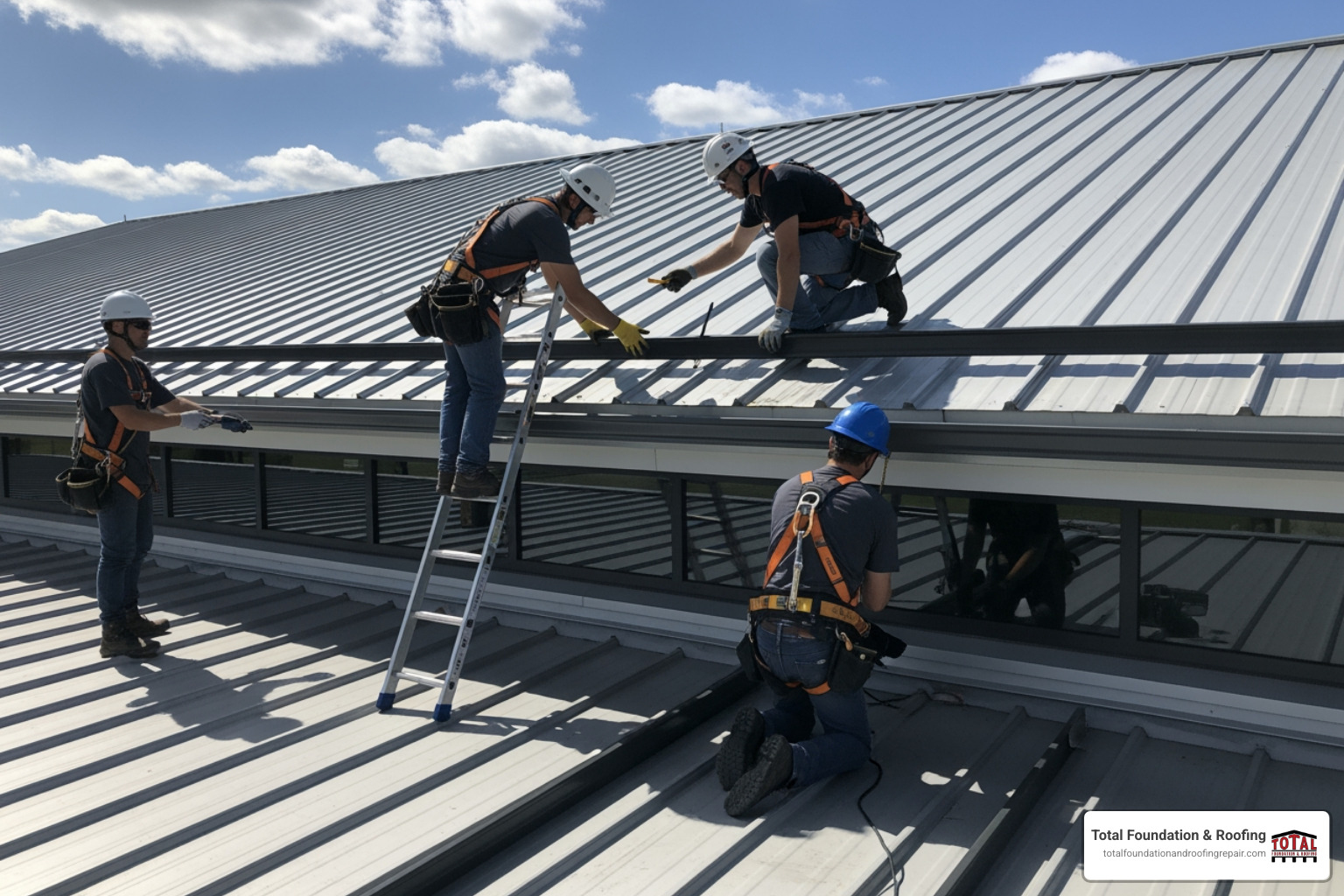
While DIY is an option, professional installation of a metal building gutter system ensures it is correctly sized, sloped, and secured to protect your investment. An improperly installed gutter can fail during a heavy Texas thunderstorm, channeling water directly to your foundation and causing significant damage.
At Total Foundation & Roofing Repair, we have over 18 years of experience protecting properties in the Texas Hill Country. We understand our region’s challenges, from expansive clay soils to intense downpours, and provide certified workmanship custom to these conditions. A professional gutter installation is a crucial investment in your property’s health, preventing costly foundation repairs, water intrusion, and corrosion.
We offer comprehensive solutions where our metal roofing services integrate with your drainage system for complete water management. Don’t leave your commercial warehouse, agricultural building, or workshop vulnerable. Trust professionals to install an industrial-strength drainage system engineered for durability.
Contact us today for a free estimate and let our team help you safeguard your investment with a metal building gutter system built to last.