
Why Your Metal Roof Needs Gutter Guards
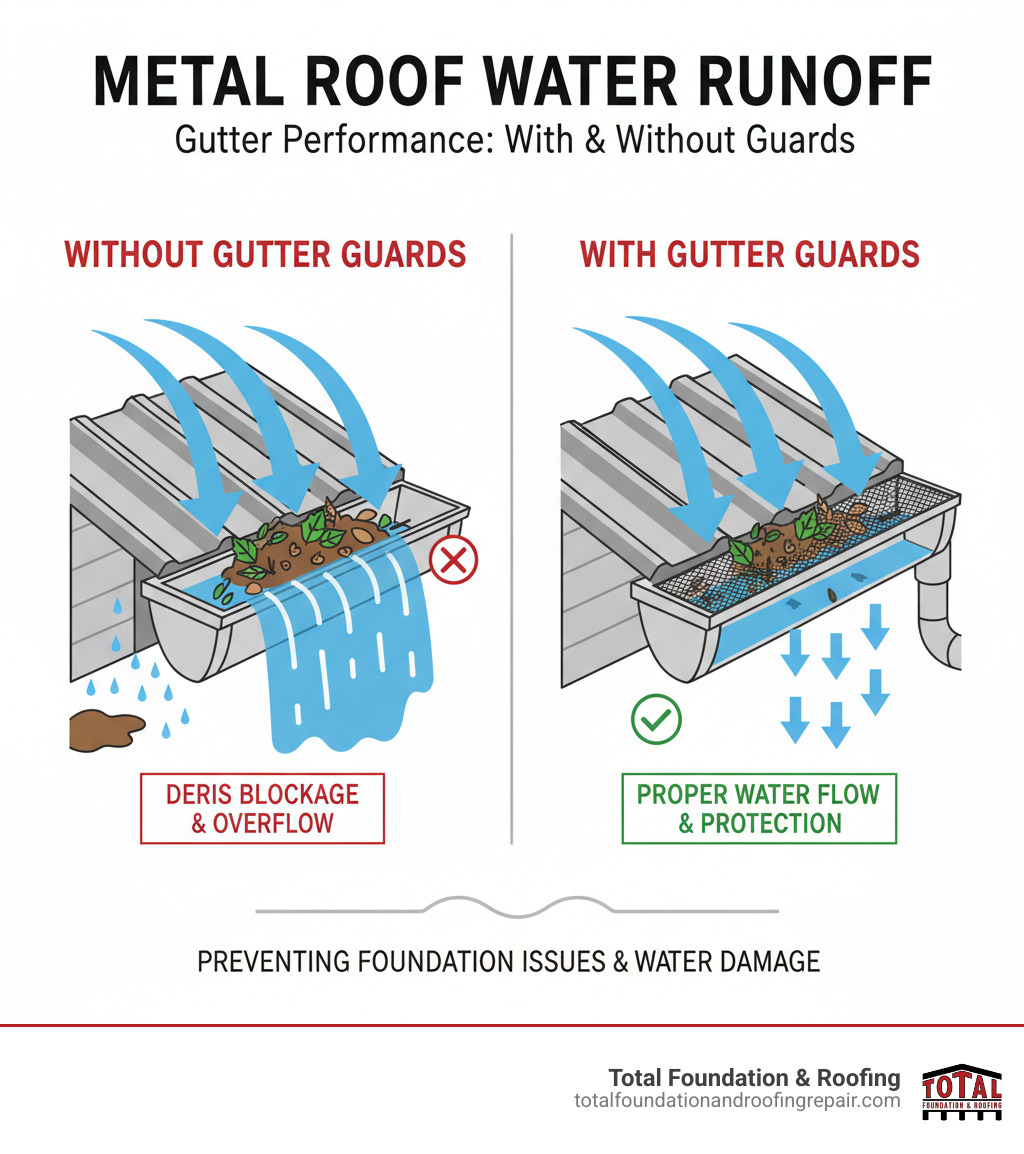
Installing gutter guards on metal roof systems is a critical step to protect your Texas Hill Country home from water damage and foundation issues. Metal roofs shed water up to twice as fast as shingles, and this rapid runoff can overwhelm unprotected gutters, leading to costly damage. As the leading roofing and foundation experts in the Texas Hill Country, we’ve seen how proper gutter protection is essential for local homes.
Quick Answer: How to Install Gutter Guards on a Metal Roof
- Clean gutters thoroughly and ensure proper pitch (1 inch per 30 feet).
- Choose compatible guards; micro-mesh is ideal for a metal roof’s fast water flow.
- Measure and cut guards to fit, allowing for overlap between sections.
- Secure guards to the gutter edge with clips or screws.
- Attach the back edge by sliding it under roof panels or screwing it to the fascia.
- Make relief cuts for contoured metal roofs to ensure a snug fit.
- Seal all gaps with silicone caulk to prevent leaks.
- Test water flow with a hose to check for overflow.
Beyond preventing clogs, gutter guards also block pests like mosquitoes and rodents from nesting and reduce fire risk by keeping dry debris out of your gutters. With over 18 years of experience installing gutter guards on metal roof systems in Kerrville and the surrounding area, our team at Total Foundation & Roofing Repair understands how to prevent the water damage that leads to serious foundation problems. This guide will walk you through the process.
Terms related to installing gutter guards on metal roof:
- metal roof installation
- installing metal roof transition flashing
- metal roof cost per square foot installed
A Homeowner’s Guide to Installing Gutter Guards on Metal Roofs
If you own a metal roof in the Texas Hill Country, you know its sleek surface sheds water with incredible efficiency. However, that same feature sends leaves and debris racing into your gutters, making installing gutter guards on metal roof systems essential protection for your home’s foundation and fascia.
Without guards, the fast-moving water from a metal roof can overwhelm gutters during a downpour, leading to clogs, overflows, and the foundation problems we regularly repair at Total Foundation & Roofing. Installing the right guards is a manageable project, but it requires specific knowledge about working with metal roofing.
Choosing the Best Gutter Guards for a Metal Roof
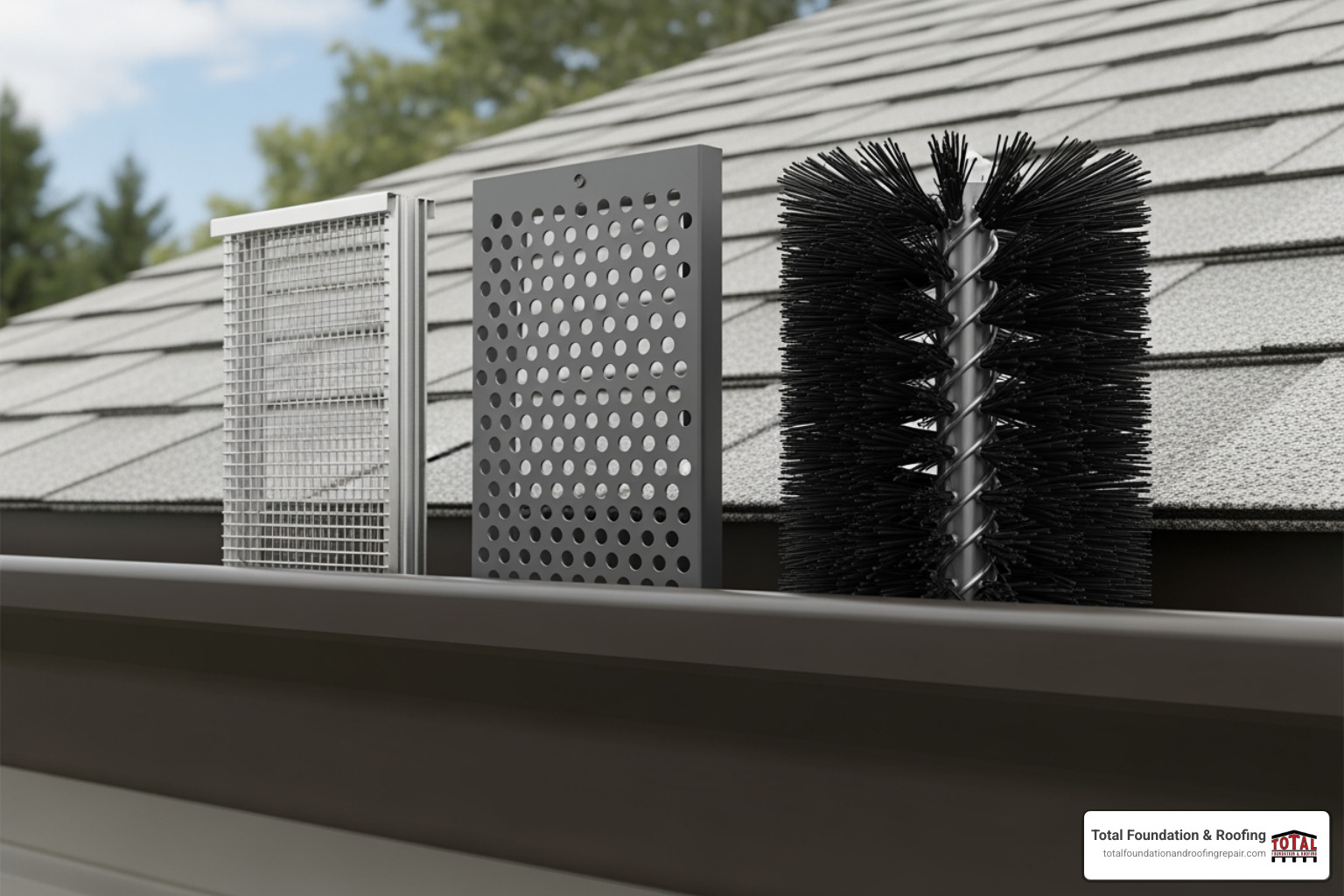
Not all gutter guards can handle the high-velocity runoff from a metal roof. The best guards must filter fine debris while processing large volumes of water.
- Micro-mesh guards: These are the gold standard for metal roofs. Their surgical-grade stainless steel mesh blocks particles as small as pine needles and pollen while allowing water to flow through freely. When we install Metal Roofing systems, we recommend micro-mesh for its superior performance.
- Screen guards: A budget-friendly option, aluminum or plastic screens catch leaves and large twigs. However, smaller debris can pass through, potentially creating sludge over time. They are a reasonable choice for homes with few surrounding trees.
- Brush and Reverse-Curve Guards: Brush guards, which resemble large pipe cleaners, tend to trap debris in their bristles and are not recommended for metal roofs. Reverse-curve guards use surface tension to separate water and debris, but they require precise installation to prevent water from overshooting—a common issue with the fast flow from metal roofs.
Two critical factors are material compatibility and roof pitch. To prevent galvanic corrosion, match your guard material to your roof (e.g., aluminum guards for an aluminum roof). Additionally, a steeper roof pitch increases water velocity, so choose guards rated for high water capacity to prevent overflow during heavy Texas storms.
Tools, Materials, and Pre-Installation Prep
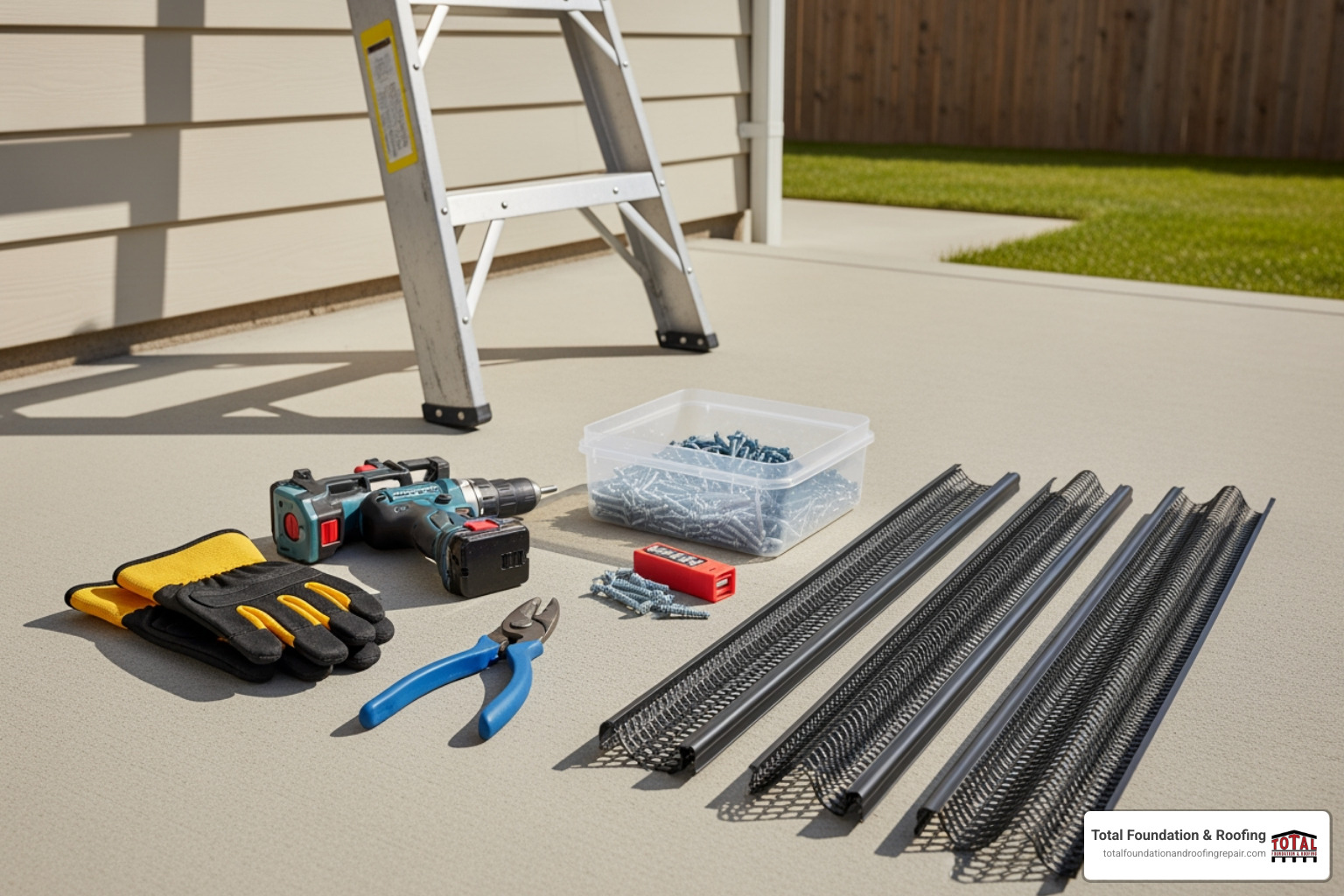
Proper preparation and safety are non-negotiable. Before starting, gather the necessary tools and materials and ensure your gutters are ready for the installation.
Essential Tools & Safety Gear:
- Safety First: A sturdy extension ladder with standoffs, heavy-duty work gloves, safety glasses, and non-slip shoes are mandatory. For steep or high roofs, use a safety harness and follow proper protocols, like those outlined in OSHA’s ladder safety guidelines. If you’re uncomfortable with heights, call professionals like us at (830) 302-4182.
- Cleaning: Gutter scoop, leaf blower, and a garden hose for flushing debris.
- Installation: Measuring tape, sharp tin snips for cutting metal guards, and a drill with self-tapping screws or rivets.
Required Materials:
- Gutter guards compatible with your roof type.
- High-quality, outdoor-rated silicone sealant.
- Mounting clips or straps as required by your guard system.
Pre-Installation Checklist:
- Clean Gutters Thoroughly: Remove all leaves, sludge, and debris. Installing guards over dirty gutters will cause immediate overflow. We see this mistake often during our gutter services projects.
- Inspect and Repair: Check for and fix any sagging or damaged gutters. Ensure they have the correct slope (about 1 inch per 30 feet) toward the downspouts.
- Clear Downspouts: Verify that downspouts are clear and water can flow freely.
The Step-by-Step Process for Installing Gutter Guards on Metal Roofs
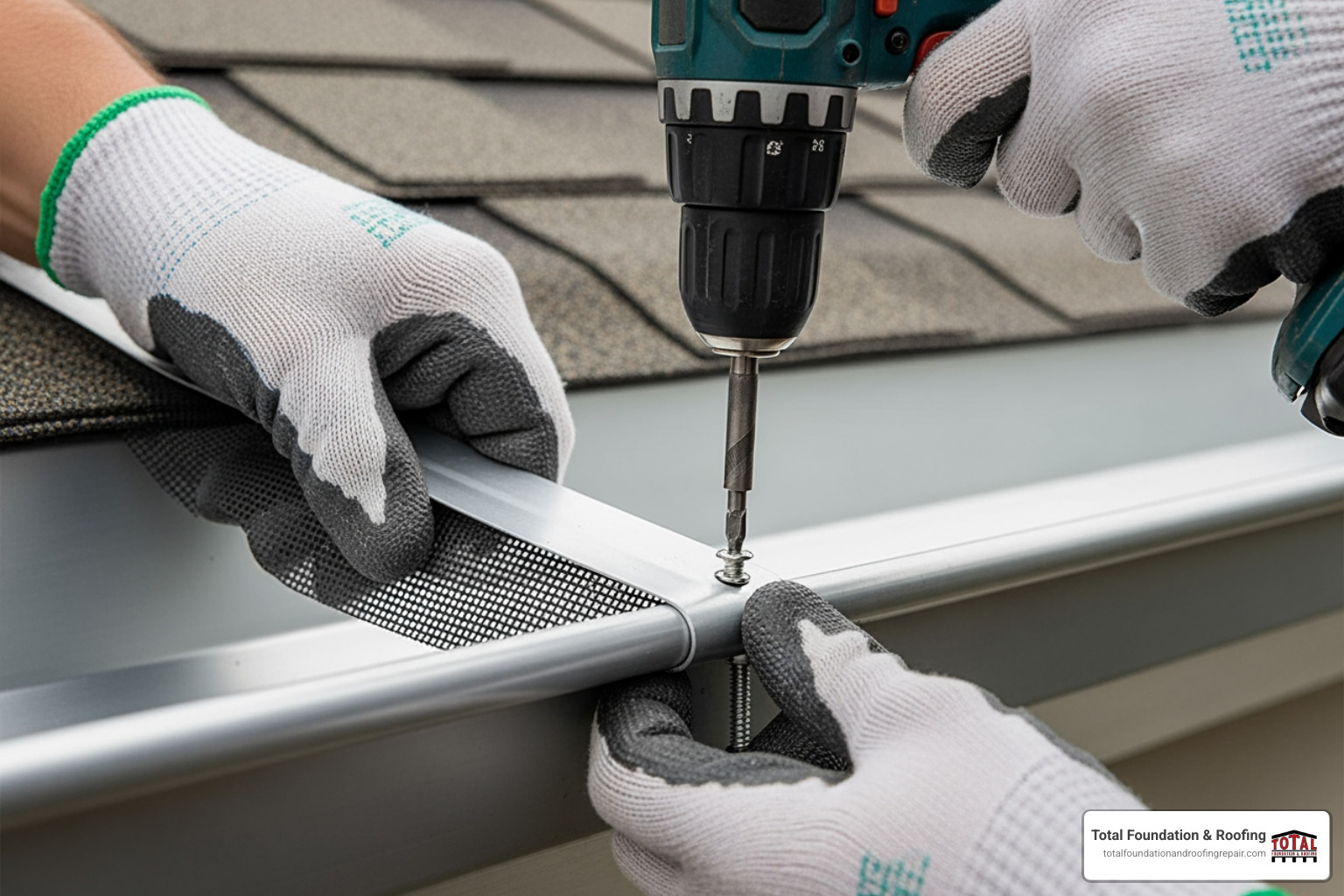
With your prep work done, you can begin installing gutter guards on metal roof systems. Precision is key—work methodically and prioritize safety.
- Measure and Cut: Measure each gutter run individually. Cut guard sections to size with tin snips, adding enough overlap (typically 10-20 inches) where sections will meet to prevent debris gaps. For corners, make precise mitre cuts or use pre-formed corner pieces.
- Attach to Gutter Lip: Position the first guard section along the outer gutter edge. Secure it with self-tapping screws spaced about every 10 inches. Do not overtighten, as this can strip the threads or damage the gutter.
- Secure the Back Edge: The back edge of the guard typically slides under the leading edge of your metal roof panels. Work gently to avoid scratching the roof’s protective coating, which could void its warranty. Alternatively, if gutters are hung low or the roof pitch is steep, you can mount the guards directly to the fascia board.
- Address Corrugated Roofs: For contoured metal roofs, you must shape the guard to the roof’s profile. Make small relief cuts in the mesh at every second corrugation. Use saddles placed over these cuts to screw the guard securely to the roof panel, ensuring a snug fit without crushing the mesh. The Metal Roofing Alliance offers excellent resources and technical bulletins that can provide further guidance on working with metal roof profiles.
- Handle Corners and Valleys: For corners, mitre cut the mesh to meet cleanly. For roof valleys, which handle concentrated water flow, ensure the valley mesh overlaps the gutter mesh. Secure the valley mesh with saddles on every corrugation to handle the intense water flow and prevent the damage that leads to high roof valley repair costs.
- Seal and Test: Apply weather-resistant silicone caulk to all seams, corners, and gaps to create a watertight seal. Once complete, run a hose on the roof to test the system. Watch for any overshooting or leaks and make adjustments as needed.
Common Mistakes to Avoid During Installation
Avoid these common pitfalls when installing gutter guards on metal roof systems to ensure a successful, long-lasting installation:
- Improper Slope: Guards must follow the gutter’s slope (1 inch per 30 feet) toward the downspout. A flat or incorrect angle causes water to pool or overshoot.
- Gaps Between Sections: Failing to overlap sections properly creates entry points for debris. Ensure a tight fit and seal all seams.
- Wrong Fasteners or Overtightening: Using incompatible metals causes galvanic corrosion. Overtightening screws can strip threads and damage the guards or gutters.
- Damaging the Roof Finish: Scratching the metal roof’s coating while sliding guards underneath can lead to rust and may void your roof warranty. This risk is a key reason many homeowners opt for professional roof repair to handle such delicate tasks.
- Skipping the Water Test: Always test your work with a hose. Finding a problem on a sunny day is far better than finding it during a downpour.
Maintaining and Troubleshooting Your Gutter Guards
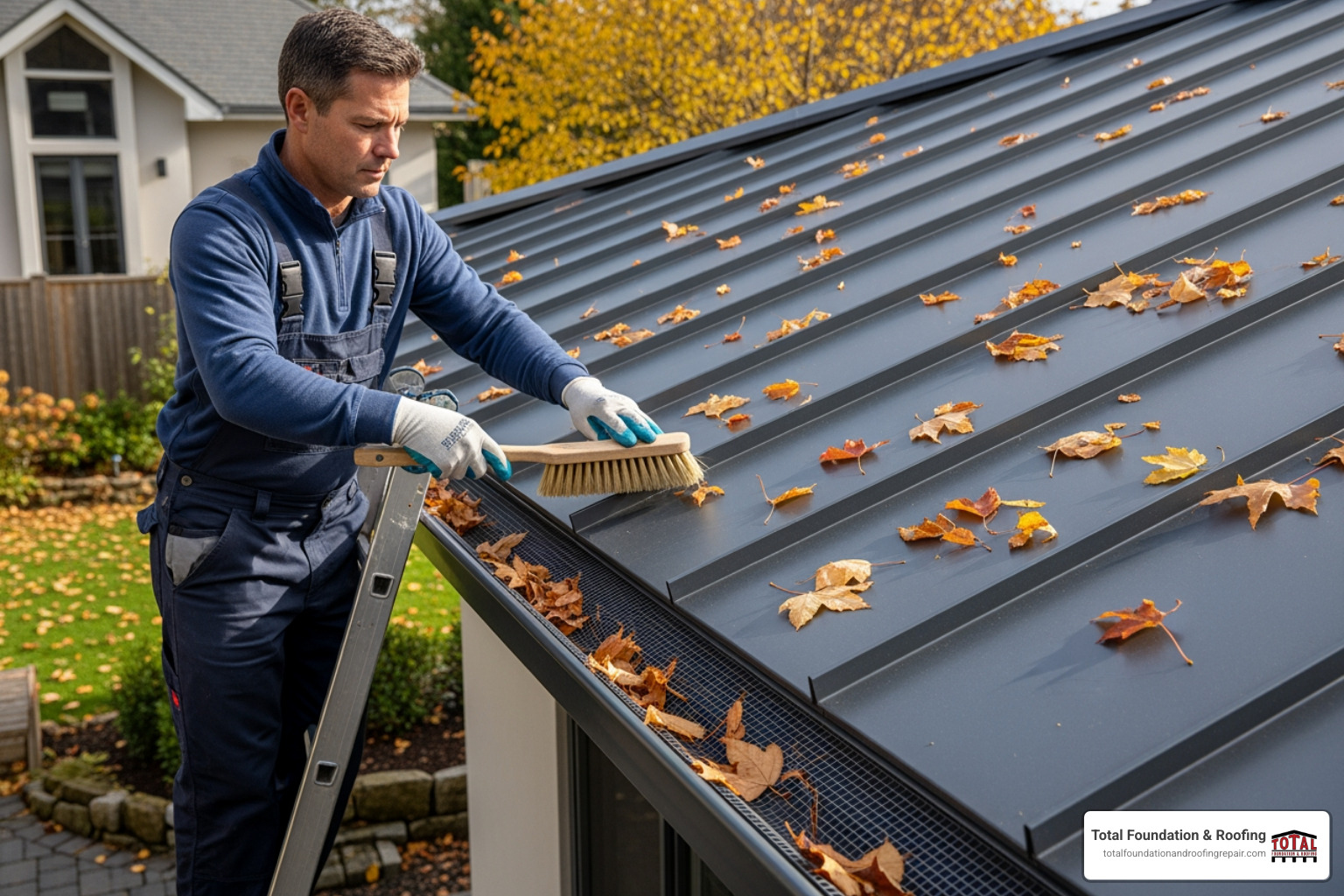
Gutter guards significantly reduce maintenance but don’t eliminate it. A little upkeep ensures they perform correctly for years.
Maintenance Schedule:
- Inspect Twice a Year: Check for debris buildup, loose fittings, or damage in the spring and fall, and after major storms.
- Clean as Needed: Use a leaf blower or soft brush to remove surface debris. A garden hose can rinse away fine particles. Avoid high-pressure washers, which can damage the mesh.
Troubleshooting Common Issues:
- Overflowing Gutters: The most common cause is debris buildup on the guard’s surface. If the guards are clean, check that the underlying gutters have the proper slope and are not clogged.
- Leaks at Seams: This usually indicates failed sealant. Clean the area and reapply a high-quality, weather-resistant silicone caulk.
- Sagging Guards: This can be caused by heavy debris or insufficient support. Check that all clips and fasteners are secure and add more if needed.
- Ice Dams: While less common in the Texas Hill Country, rapid snowmelt from a metal roof can cause ice buildup. If you experience storm damage from ice, our Storm Damage Repair services can restore your system.
DIY vs. Professional Installation: Making the Right Choice
When it comes to installing gutter guards on metal roof systems, homeowners face a key decision: DIY or hire a professional? The right choice depends on your budget, skill level, and how you value your time and safety.
Comparing Costs and Considerations for Installing Gutter Guards on Metal Roofs
A DIY project costs between $0.50 to $6.00 per linear foot for materials, while professional installation typically runs from $5.00 to $15.00 per linear foot, including labor, materials, and warranty. While DIY is cheaper upfront, professional installation offers significant value in expertise, safety, and peace of mind.
| Feature | DIY Installation | Professional Installation |
|---|---|---|
| Cost Per Linear Foot | $0.50 to $6.00 (materials only) | $5.00 to $15.00 (materials, labor, expertise) |
| Time Investment | Significant (research, prep, installation, learning curve) | Minimal (scheduling, supervision) |
| Required Skill | Moderate to High (precision, safety knowledge) | None (experts handle everything) |
| Safety | High Risk (working at heights, ladder safety) | Minimal Risk (trained, insured professionals) |
| Warranty | Product-specific, may be voided by improper install | Often includes labor warranty, proper installation ensures product warranty |
| Metal Roof Specifics | Requires careful attention to avoid roof damage | Expertise in metal roof profiles and attachment methods |
Beyond the cost, consider these factors:
- Skill and Safety: Installing guards on a metal roof is more complex than on shingles. The surface can be slippery, and improper fastening can damage the roof or void its warranty. Professionals are trained, insured, and use proper safety equipment, mitigating the high risk of falls from ladders.
- Warranties: A professional install typically comes with a labor warranty. Crucially, an expert ensures the installation adheres to the metal roof manufacturer’s guidelines, protecting your expensive roof warranty from being voided by a DIY mistake.
- Access to Better Products: Professionals often have access to commercial-grade gutter guards specifically engineered for metal roofs, which may not be available at retail stores. These products are designed to handle the unique water velocity and prevent galvanic corrosion.
For homeowners in the Texas Hill Country, including communities like Kerrville, a professional installation ensures your gutter system can handle our region’s intense storms. With over 18 years of experience, the certified experts at Total Foundation & Roofing have the local knowledge to do the job right.
Protect your home and your investment. Request a free estimate for your metal roofing and gutter needs. We provide flawless installations with transparent pricing and no surprises.