
Why Driveways Crack and How to Assess the Damage
The best way to fix cracked concrete driveway depends on the crack’s size and cause. A cracked driveway can be an eyesore, but not all cracks spell disaster. Understanding the severity is the first step toward a lasting repair. For homeowners seeking reliable solutions, our team at Total Foundation & Roofing offers expert concrete services to restore your property’s integrity and appearance.
Quick Answer for Narrow Cracks (Under ¼ inch):
- Clean the crack with a wire brush and pressure washer.
- Apply flexible polyurethane concrete caulk.
- Smooth with a putty knife and let cure for 24-48 hours.
Quick Answer for Wide Cracks (Over ¼ inch):
- Chisel out loose concrete to create an inverted V-shape.
- Clean and dry the area.
- Insert a foam backer rod ½ inch below the surface.
- Fill with concrete patching compound and feather the edges.
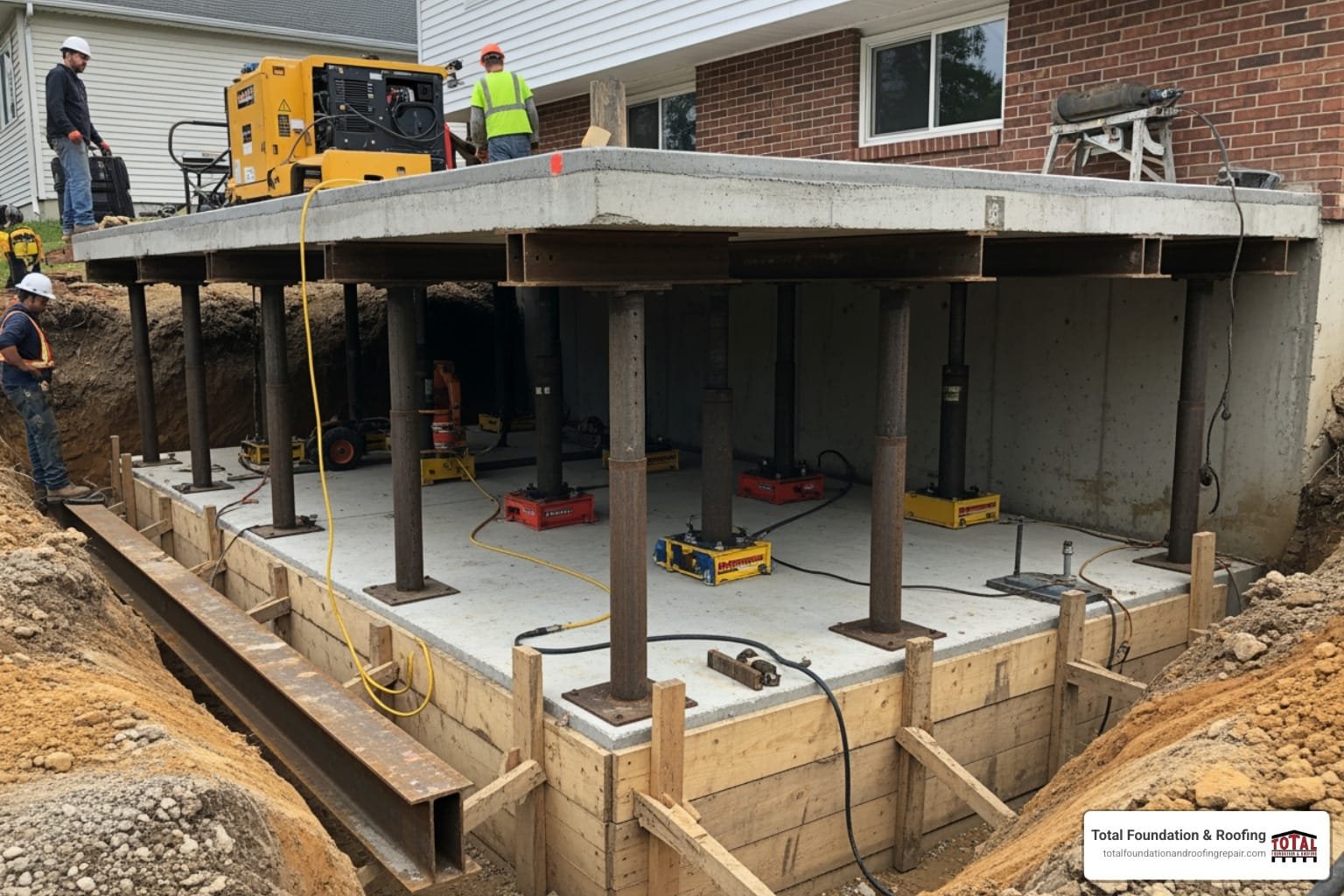
Concrete driveways crack for several predictable reasons, including soil settlement, poor drainage, heavy vehicle loads, and freeze-thaw cycles. While a well-built driveway can last 50 years or more, problems with the base can shorten its lifespan.
Common Causes and When to Repair vs. Replace
Understanding why your driveway is cracking is key to a successful fix.
Common Causes of Concrete Cracks:
- Soil Movement: Expansive clay soils, common in the Texas Hill Country, swell and shrink, causing slabs to shift and crack.
- Poor Drainage: Water seeping under the driveway erodes the base, leading to a loss of support and cracking.
- Heavy Loads: Regularly parking heavy vehicles like RVs can stress the concrete beyond its design limits.
- Freeze-Thaw Cycles: Water in small cracks freezes and expands, widening them over time.
- Improper Installation: A weak concrete mix, poor curing, or not enough control joints can cause premature cracking.
When to Repair vs. Replace:
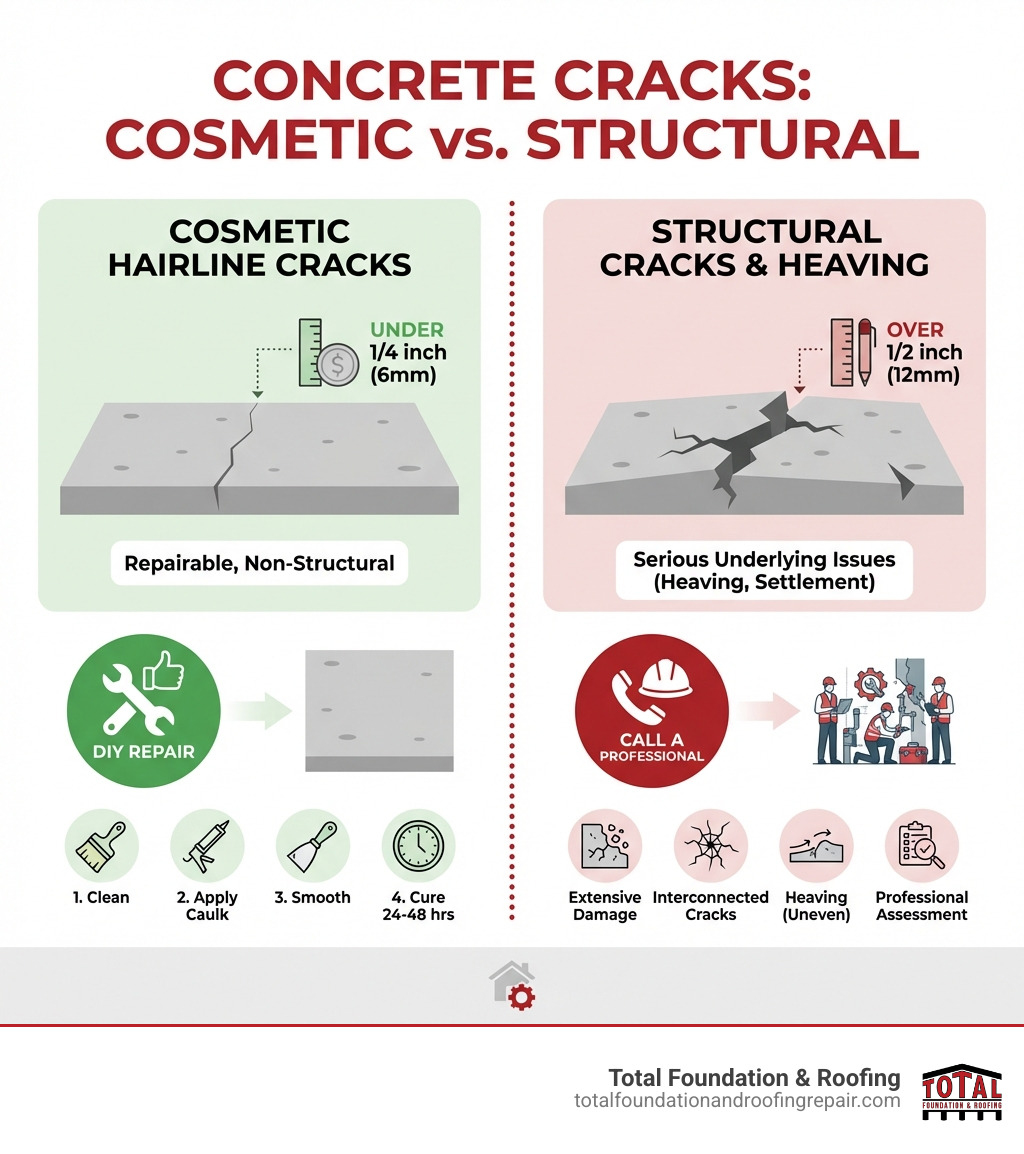
Repair is a good option for:
- Cracks less than ½ inch wide.
- Level concrete slabs with no heaving or settling.
- Cosmetic issues like hairline cracks or minor surface flaws.
Replacement or professional repair is needed for:
- Cracks wider than ½ inch, especially if they are deep.
- Uneven slabs where one side is higher than the other (heaving).
- Widespread “spiderweb” cracking, indicating a failed base.
- If you’re considering a full makeover, you might look into the average cost of concrete driveway resurfacing or a complete concrete driveway refinishing.
For complex issues in the Kerrville area, our team can provide a thorough assessment.
Preparation: Tools, Materials, and Cleaning
Proper preparation is the foundation of a durable repair. Skipping this stage leads to repairs that fail prematurely.
What you’ll need:
- Tools: Safety glasses, gloves, hammer and chisel, wire brush, pressure washer (or hose and stiff brush), shop vacuum, caulk gun, and a putty knife or trowel.
- Materials: Flexible polyurethane concrete caulk (for narrow cracks), concrete patching compound (for wider cracks), foam backer rod, and optional bonding adhesive.
How to prepare the crack:
- Safety First: Wear your safety glasses and gloves.
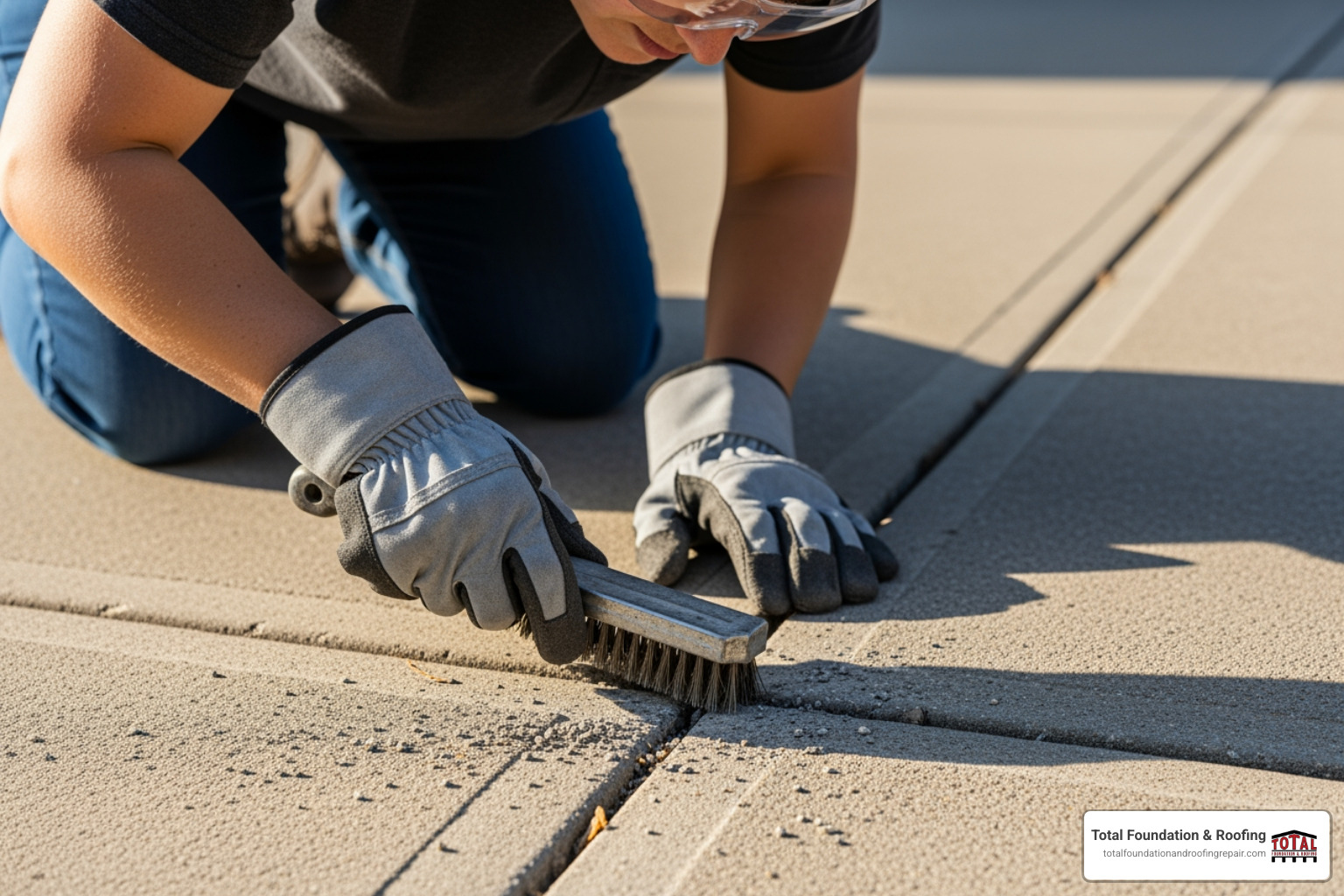
- Clean Out Debris: Remove all loose concrete, dirt, and weeds from the crack using a hammer, chisel, and wire brush. For wider cracks, chisel the edges into an inverted “V” shape to help lock the patch in place.
- Wash Thoroughly: Use a pressure washer to blast out all remaining grime and fine particles.
- Dry Completely: Use a shop vacuum to remove water and let the crack air-dry for at least 24 hours. The concrete must be completely dry for the repair material to bond correctly.
The Best Way to Fix a Cracked Concrete Driveway: A Step-by-Step Guide
With your driveway prepped, you can now apply the repair materials. The method depends on the crack’s width.
What is the best way to fill narrow cracks in a concrete driveway? (Under 1/4 Inch)
For hairline cracks up to 1/4 inch wide, a flexible filler is essential. Rigid patches will crack again as the concrete expands and contracts.
- Choose a Flexible Sealant: The best way to fix cracked concrete driveway for narrow cracks is with a flexible polyurethane concrete caulk. It moves with the concrete and keeps water out.
- Apply the Sealant: Use a caulk gun to apply a steady bead deep into the crack.
- Smooth the Surface: Use a putty knife or gloved finger to smooth the caulk level with the driveway. For a textured finish, you can sprinkle sand over the wet caulk.
- Cure: Let the sealant cure for 24-48 hours, or as directed by the manufacturer, before use.
This DIY method is effective for minor issues. However, if you have numerous cracks or prefer professional help, our team offers specialized crack repair services.
What is the best way to repair wider or deeper cracks in a concrete driveway? (Over 1/4 Inch)
Cracks wider than 1/4 inch require a more robust patching compound and often a backer rod.
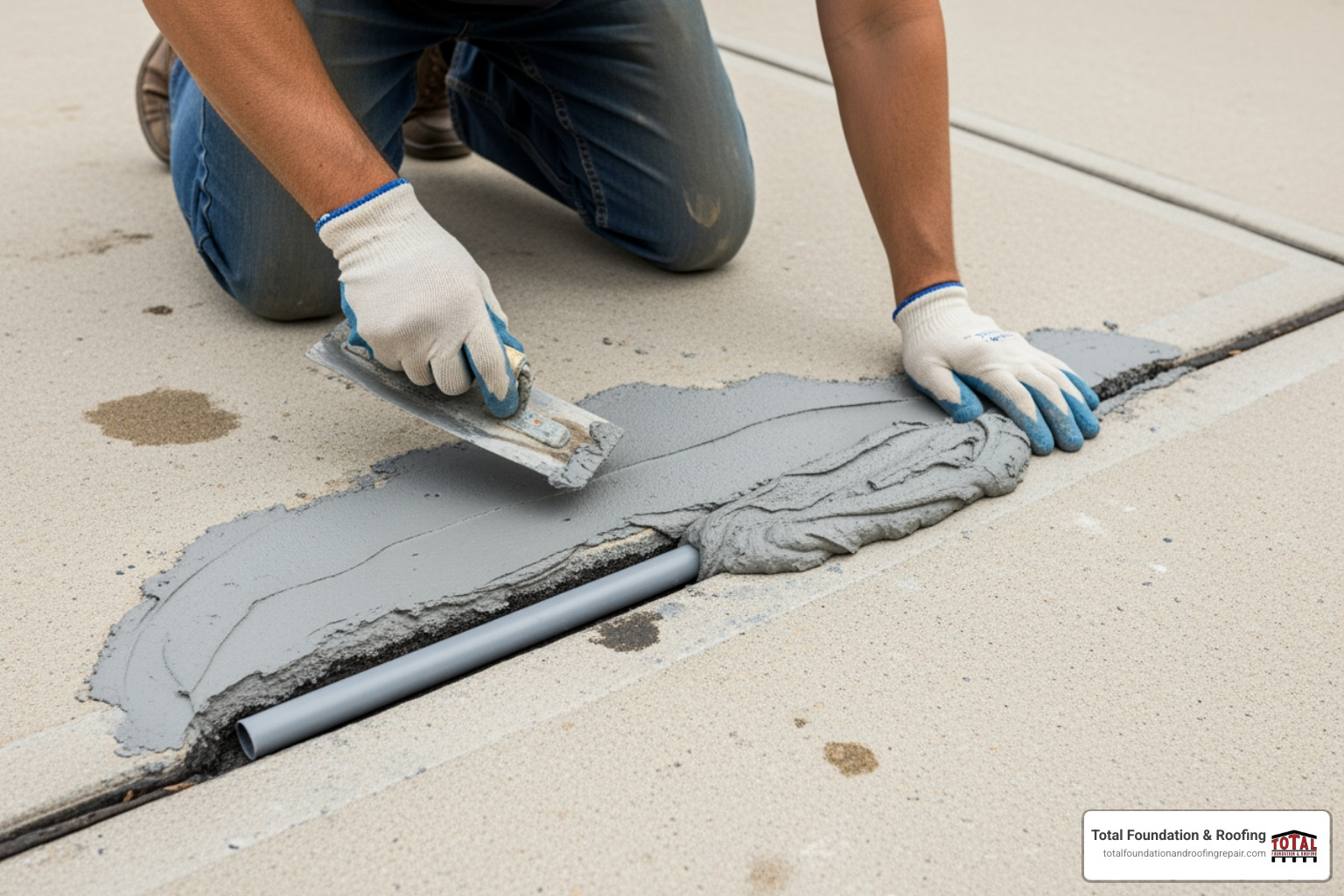
- Insert Backer Rod: For cracks wider than 1/2 inch or deeper than 1 inch, push a foam backer rod into the crack until it’s about 1/2 inch below the surface. This saves material and creates a stronger repair.
- Mix and Apply Patching Compound: Prepare a high-quality concrete patching compound according to the instructions. For the best bond, you can apply a concrete bonding adhesive first.
- Fill the Crack: Use a trowel to press the patching compound firmly into the crack, eliminating air pockets. Slightly overfill the crack.
- Smooth and Feather: Smooth the patch level with the driveway surface. Feather the edges to create a seamless transition.
- Cure Properly: Follow the manufacturer’s curing instructions. This may involve keeping the patch moist for several days to ensure maximum strength.
Ensuring a Lasting Repair and Preventing Future Damage
A successful repair is one that lasts. Avoiding common mistakes and taking preventative steps are key to maintaining your driveway’s integrity.
Common Mistakes and How to Prevent Future Cracks
Even the best way to fix cracked concrete driveway can fail if not done correctly. Avoid these common pitfalls:
- Inadequate Preparation: Failing to thoroughly clean and dry the crack will cause the repair to fail.
- Using the Wrong Materials: Using a rigid patch for a narrow crack or a flexible caulk for a wide, deep one will not last. Match the product to the crack size.
- Ignoring the Root Cause: Patching a crack caused by soil settlement or poor drainage is a temporary fix. The crack will likely return if the underlying issue isn’t addressed.
How to Prevent Future Cracks:
Proactive maintenance is the best defense against new cracks.
- Apply a Concrete Sealer: A quality concrete sealer is your best preventative measure. It creates a barrier against water, chemicals, and UV damage. Reapply every 2-5 years.
- Ensure Proper Drainage: The base beneath your driveway is critical. Grade the surrounding land to direct water away from the concrete. Poor drainage saturates the base, causing erosion and settlement that leads to cracks.
- Manage Heavy Loads: Avoid parking very heavy vehicles, like RVs, on your driveway for long periods.
- Inspect Regularly: Check your driveway a few times a year for new cracks or signs of settling. Early detection makes repairs easier and more effective. A well-executed DIY repair on a narrow crack can last for several years, but it requires monitoring.
Your Local Concrete Repair Experts in the Texas Hill Country
While DIY repairs are suitable for minor, cosmetic cracks, professional help is recommended for more significant issues.
Call a professional for:
- Cracks wider than 1/2 inch.
- Uneven or “heaved” slabs that create a trip hazard.
- Widespread, interconnected cracking.
- Cracks that reappear after being repaired.
These signs point to underlying structural problems with the base or soil that require professional solutions like concrete lifting and leveling.
At Total Foundation & Roofing, we understand the unique challenges of the Texas Hill Country soil. Our certified team provides high-quality concrete services in Kerrville, Fredericksburg, and Comfort, addressing the root cause of cracking.
If your driveway problem seems beyond a simple fix, or if you want the job done right the first time, we can help. For a comprehensive assessment and a free, no-obligation estimate, schedule a professional concrete inspection online. We’re here to help you find the best way to fix cracked concrete driveway and restore your property’s safety and value.