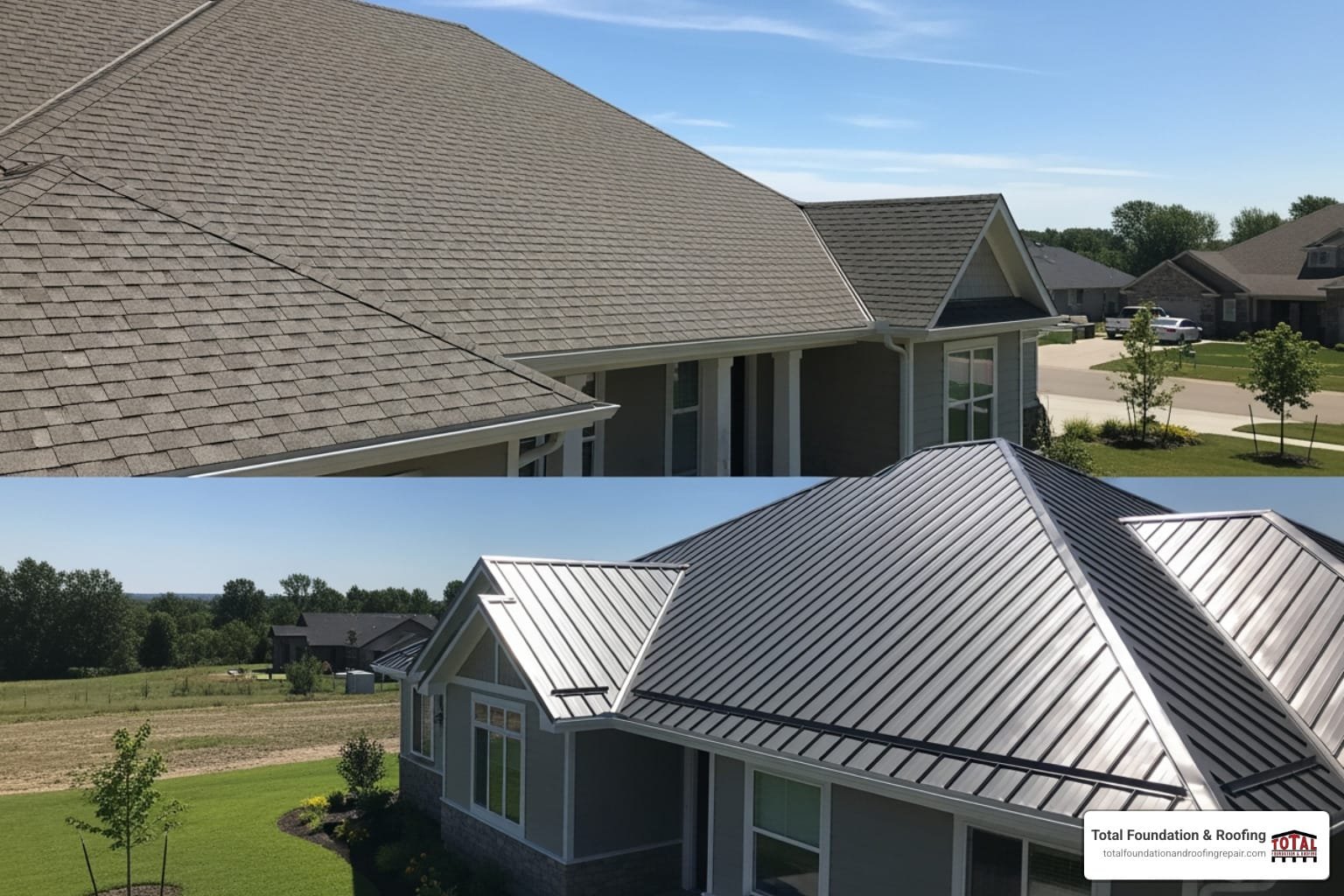

Why Moisture Protection Matters for Your Texas Home
Moisture protection is the use of materials and techniques that prevent water from entering and damaging your home’s structure. For Texas Hill Country homeowners, moisture control isn’t optional—it’s essential for preventing costly foundation damage, mold growth, and structural deterioration. Total Foundation & Roofing provides the expert Texas Hill Country foundation and roofing services necessary to protect your investment from the elements. In our region, the combination of expansive clay soils and intense weather patterns makes a robust defense system the only way to ensure long-term property value and safety.
Quick Answer: What is Moisture Protection?
- Definition: Barriers and systems that stop water movement through walls, foundations, roofs, and floors
- Primary Purpose: Prevent structural damage, mold growth, and energy loss
- Key Materials: Polyethylene sheeting (6-14 mil), vapor barriers, waterproof membranes, and drainage systems
- Critical Areas: Under concrete slabs, crawl spaces, foundation walls, roof decks, and exterior walls
- Main Benefit: Protects your home’s structural integrity while reducing energy costs and health risks
The stakes are high. Research shows that air movement accounts for more than 98% of all water vapor movement in building cavities—meaning even small gaps in your moisture protection system can lead to serious problems. Poor moisture control causes mold growth that threatens your family’s health, wood rot that compromises structural integrity, and energy inefficiency that drives up utility bills month after month. In the Texas Hill Country’s unique climate, where intense summer humidity meets occasional flooding conditions, we see how moisture wreaks havoc on homes without proper protection.
Foundation cracks allow groundwater intrusion, which is particularly dangerous in areas with high limestone content or shifting clay. Roof leaks let rainwater saturate insulation and framing, leading to a rapid decline in R-value and structural strength. Crawl spaces without vapor barriers become breeding grounds for mold and wood-destroying organisms like termites and carpenter ants. The difference between a home that lasts decades and one that requires constant expensive repairs often comes down to moisture protection installed correctly from the start. Whether you’re building new, repairing damage, or upgrading an older home, understanding moisture protection helps you make informed decisions that protect your investment.
As Daniel Sowell, owner of Total Foundation & Roofing Repair in Kerrville, I’ve spent over 18 years implementing moisture protection solutions throughout the Texas Hill Country, from foundation waterproofing to complete crawl space encapsulation systems. This comprehensive guide draws on that hands-on experience to help you understand exactly what moisture protection is, why it matters, and how to implement it effectively in your home.
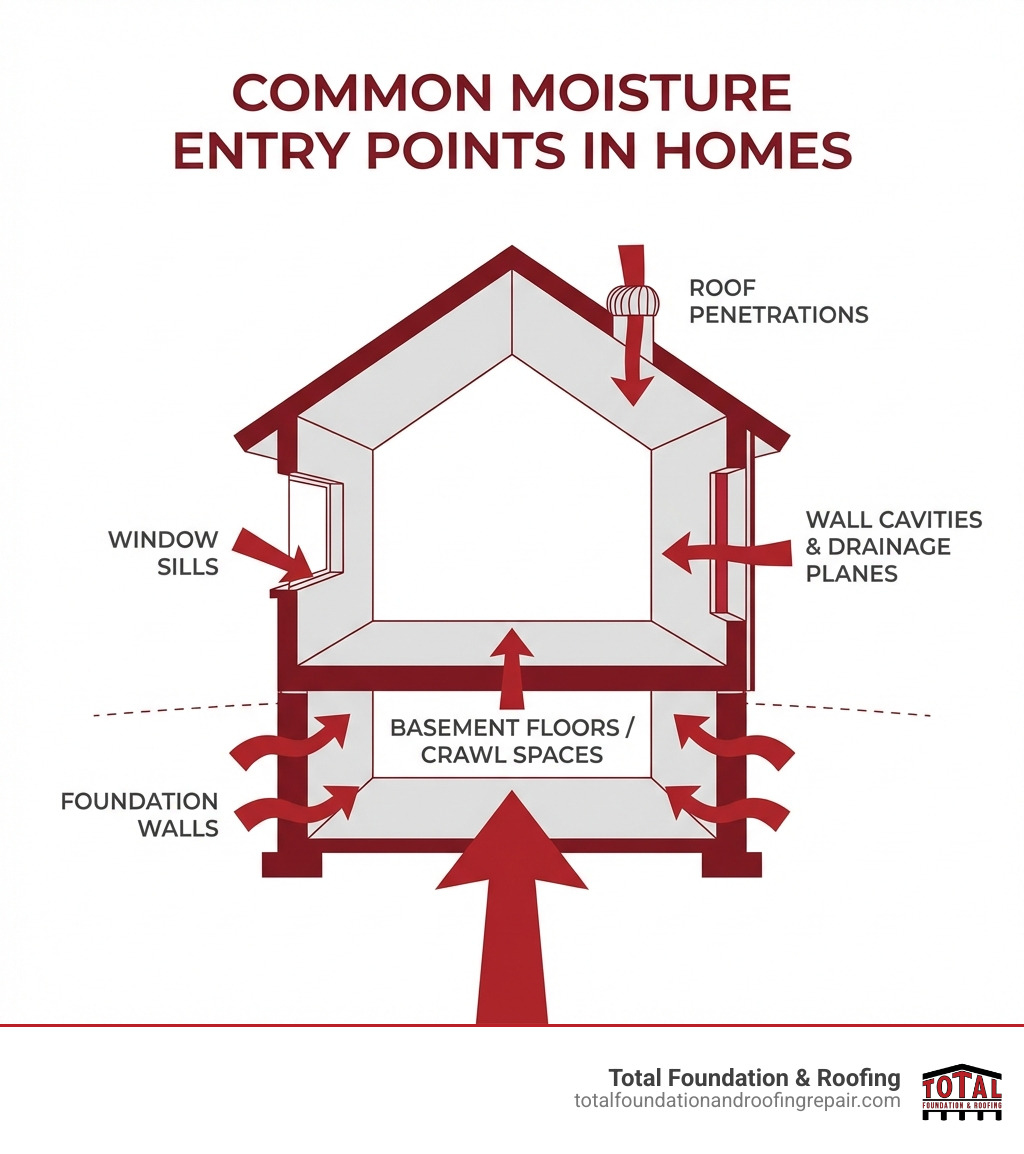
Moisture protection terms to know:
- Does paint protect wood from moisture
- How to protect subfloor from moisture
- Protect from light heat and moisture
The Science and Strategy of Moisture Protection
To protect a home effectively, we have to look at the physics of how water behaves. In places like Fredericksburg, TX or Comfort, TX, we deal with high humidity and soil that holds onto water. Understanding the science behind water movement allows us to design better defense systems. Water doesn’t just “leak” through a hole; it moves through building materials via several complex pathways. If we don’t address all of them, the system will fail. We use the “Perfect Wall” concept, which organizes building materials into a specific hierarchy: cladding, control layers (water, air, and vapor), and then the structure itself. This arrangement ensures that the most sensitive parts of your home stay dry regardless of the weather outside.
Primary Mechanisms of Moisture Movement
Water enters and moves through your home via four primary mechanisms. At Total Foundation & Roofing, we focus on blocking these specifically:
- Air Movement: This is the big one. Air currents carry water vapor through gaps in the building envelope. Because air movement accounts for over 98% of water vapor transfer, air sealing is our first line of defense. This is why high-quality underlayments, such as those produced by Owens Corning, are vital for creating a continuous seal.
- Diffusion: This is the slow movement of water molecules through solid materials. While much slower than air movement, diffusion is constant. This is why we use vapor retarders with specific perm ratings to manage the rate at which moisture passes through walls.
- Capillary Action: Think of this like a sponge. Porous materials like concrete and wood “wick” water upward from the ground. Without a capillary break (like a 6-mil polyethylene sheet), water can travel up from your foundation into your framing, causing rot in the sill plates.
- Thermal Bridging: When heat moves through a material (like a wall stud), it can reach the “dew point”—the temperature where vapor turns back into liquid water. This causes condensation inside your walls, which is often invisible until the damage is severe.
For residents in the Hill Country, our roofing services are designed to combat these mechanisms by ensuring proper layering and ventilation.
Risks of Inadequate Moisture Protection
Ignoring moisture protection is a recipe for structural and financial disaster. When moisture stays trapped in a building, it creates a cascade of problems:
- Structural Failure: Wood rot and fastener corrosion are the silent killers of homes. Prolonged wetting leads to decay fungi, which thrive when wood moisture content (MC) exceeds 26%. This can lead to sagging floors and compromised roof decks.
- Health Hazards: Mold needs only a surface relative humidity of 80% to begin growing. This compromises indoor air quality and can lead to respiratory issues, particularly for children and the elderly.
- Energy Inefficiency: Wet insulation doesn’t work. When fiberglass or cellulose gets damp, it loses its R-value, forcing your HVAC system to work overtime in the Texas heat. This results in significantly higher cooling costs during our long summers.
- Foundation Issues: Hydrostatic pressure from groundwater can cause foundation walls to bow or crack. If you notice dampness in your basement or crawl space, you should look for foundation waterproofing near me to prevent total structural failure.
Proper attic ventilation is also a key component of this strategy. You can learn more about ventilation and attic requirements from experts like GAF, who emphasize the importance of balanced intake and exhaust.
Vapor Barriers vs. Waterproofing
One of the most common questions we get is: “What’s the difference between a vapor barrier and waterproofing?” They are not the same thing.
- Vapor Barriers (Vapor Diffusion Retarders): These are designed to slow the movement of water vapor (gas). They are typically thin films, like polyethylene, used in walls or under floors to prevent humidity from migrating into building cavities.
- Damp Proofing: This is a coating applied to foundation walls to stop capillary action (wicking). It is not meant to withstand hydrostatic pressure from standing water or heavy rain events.
- Waterproofing: This is a robust system designed to stop liquid water under pressure. It often involves thick membranes, drainage boards, and sump pumps. If you have a high water table or live in a low-lying area, you need foundation waterproofing.
Choosing the wrong one can be a costly mistake. For example, applying a vapor barrier where you actually need drainage can trap water against your foundation, making the problem worse. This is why we recommend consulting with waterproofing contractors who understand local soil conditions and the specific challenges of the Texas landscape.
Implementing Effective Moisture Protection Systems

Installing moisture protection requires precision. It’s not just about the material you choose; it’s about how that material is integrated into the rest of the building. For instance, in a crawl space, we don’t just lay down plastic; we encapsulate the entire space, sealing seams with specialized tape and mechanical fasteners to create a truly conditioned environment.
Essential Materials for Moisture Protection
The quality of your materials determines the longevity of your home. We typically use heavy-duty polyethylene films, often referred to as “Panda Film” (white on one side, black on the other), for crawl spaces because the white side allows for easy inspection of pests or water intrusion.
| Material Type | Common Thickness | Primary Use | Perm Rating |
|---|---|---|---|
| Class I Vapor Retarder | 6-mil to 20-mil Poly | Under slabs, crawl spaces | 0.1 perms or less |
| Class II Vapor Retarder | Bituminous coatings | Foundation walls | 0.1 to 1.0 perms |
| Class III Vapor Retarder | Latex paint | Interior walls | 1.0 to 10 perms |
| Waterproofing Membrane | 60-mil+ | Foundations, showers | 0.0 perms |
For high-performance systems, we recommend products like the Spirecover Crawl Space Vapor Barrier. Reviews highlight its puncture resistance and ease of installation compared to thinner 6-mil alternatives that can easily tear during routine maintenance. When sealing these systems, using a high-quality Vapor Barrier Tape (4-inch width) is non-negotiable to ensure air-tight seams. If you are dealing with existing damage, you may need foundation crack repair before these barriers can be installed to ensure the structural substrate is sound.
Application Areas: From Roofs to Foundations
Every part of your home needs a specific moisture strategy to combat the unique pressures of the Texas environment.
- Roofs: We use a combination of drip edges, underlayment, and flashing. Research shows that a 1.8-inch drip edge overhang with a 45° kickout is significantly more effective at shedding water than standard vertical edges, preventing fascia rot.
- Walls: In the Hill Country, we often use rainscreen typologies. This creates a small air gap between the siding and the water-resistive barrier, allowing any moisture that gets behind the siding to drain and dry quickly through convective airflow.
- Foundations: This is our specialty in Kerrville, TX. Whether it’s digging out a foundation to waterproof or installing interior drainage, we ensure groundwater stays away from your living space. Proper exterior drainage is the first line of defense against hydrostatic pressure.
- Crawl Spaces: Encapsulation is the gold standard. By covering the ground and walls with a 14-mil or 20-mil barrier, we eliminate the 98% of moisture that enters via air movement and evaporation from the soil, significantly improving indoor air quality.
Professional Installation and Long-Term Benefits
While some moisture barriers are marketed as DIY projects, the details are where most homeowners fail. Improperly lapped flashing or unsealed penetrations can actually trap moisture inside your home, accelerating rot rather than preventing it. When we handle your moisture protection, we look at the whole picture, including air sealing, ventilation, and insulation. We ensure that every seam is taped and every penetration is sealed with compatible sealants.
The long-term benefits of a professional system include lower utility bills, a healthier indoor environment, and the peace of mind that your foundation won’t require a $20,000 repair in five years. We are proud to be the leading foundation waterproofing contractors near me for the Hill Country region. For expert assistance, you can reach our team at 830-257-7663.
Expert Tips for Homeowners
- Check your grading: Ensure soil slopes away from your foundation (at least 6 inches over 10 feet) to prevent water from pooling against the slab or crawl space walls.
- Maintain your gutters: Clogged gutters are a leading cause of foundation moisture problems. Ensure downspouts discharge at least 5 to 10 feet away from the house.
- Monitor humidity: Keep indoor relative humidity between 30% and 50% to prevent mold growth and maintain comfort. Use a hygrometer to track levels in basements or crawl spaces.
- Don’t “double vapor barrier”: Never install a vapor barrier on both sides of a wall; this traps moisture and causes rot. Walls must be allowed to dry in at least one direction.
If you’re worried about dampness, musty smells, or visible cracks in your home, don’t wait for the next big storm. We serve Kerrville, Fredericksburg, Comfort, and the surrounding Texas Hill Country. Contact us today for a professional inspection and a custom moisture protection plan. We’ll help you keep your home dry, safe, and solid for generations to come.