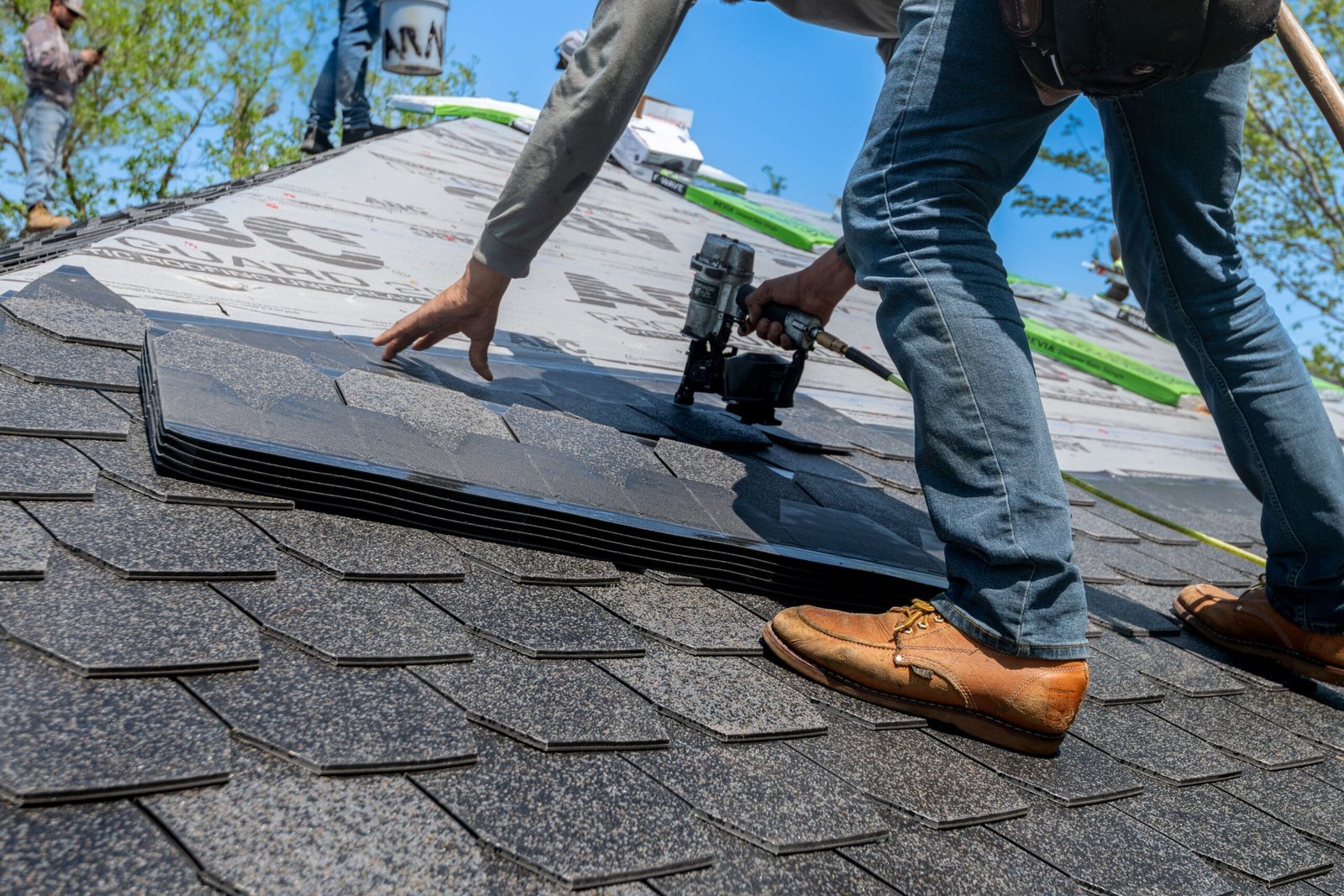

Why Hip and Ridge Shingles Are the Most Overlooked Part of Your Roof
Hip and ridge shingles are the specially designed caps that protect the peak lines of your roof — the exact spots where two roof faces meet and where leaks are most likely to start. When safeguarding your home, relying on a professional contractor like Total Foundation & Roofing Repair ensures these vulnerable areas are properly sealed against the elements.
Here’s a quick breakdown of what they are and why they matter:
- What they are: Pre-bent asphalt shingles made specifically to cover roof hips and ridges
- Why they’re different: Standard shingles can’t flex properly over peaks — factory-made ridge caps are engineered to bend and seal correctly
- Wind protection: Quality ridge caps are rated for 90–130 MPH winds depending on the product
- Coverage: One bundle covers roughly 20–33 lineal feet, depending on the brand and style
- Warranty: Factory-made ridge caps qualify for Lifetime Limited Warranties — cutting regular shingles for the same job typically limits you to a 20–25 year warranty
Most homeowners spend a lot of time picking the right field shingles for their roof. Then they treat the ridge as an afterthought. That’s a mistake. The ridge is one of the highest-stress areas on any residential roof. It takes the full force of wind, rain, and sun — every single day.
Before purpose-built ridge caps existed, roofers simply cut 3-tab shingles and bent them over the peak. It worked, but it left roofs exposed to blow-offs, cracking, and reduced warranty coverage. Today, every major manufacturer — GAF, Owens Corning, IKO, CertainTeed, and Malarkey — makes dedicated hip and ridge products built to perform where your roof is most vulnerable.
Whether you’re replacing a full roof or just patching a damaged peak, choosing the right ridge cap is one of the smartest decisions you can make for your home’s long-term protection. Our team at Total Foundation & Roofing is built around getting these details right.
I’m Daniel Sowell, owner of Total Foundation & Roofing Repair in Kerrville, Texas, with over 18 years of hands-on experience installing and specifying hip and ridge shingles across the Texas Hill Country. In that time, I’ve seen how the right ridge cap — properly installed — can be the difference between a roof that lasts decades and one that fails at the peak after the first major storm.
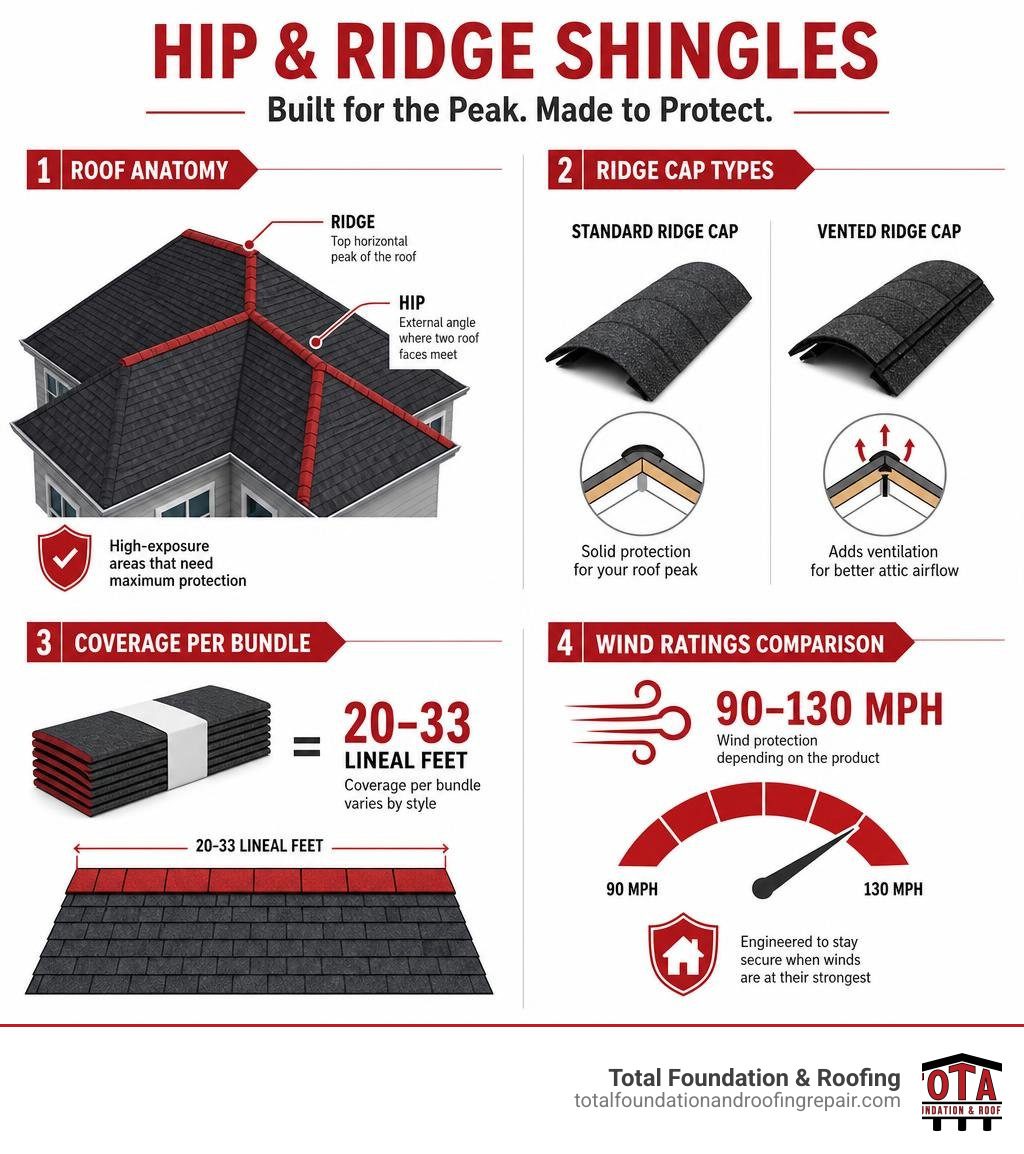
Easy hip and ridge shingles glossary:
The Complete Guide to Hip and Ridge Shingles
To truly protect your home, you must understand how individual roofing components work together. The hip and ridge areas represent the highest points of your roof’s architecture. They are critical for aesthetic appeal, weather protection, and structural integrity. Without a reliable, professionally installed ridge cap, even the most expensive field shingles cannot prevent water from entering your home.
What Are Hip and Ridge Shingles and Why Do They Matter?
Hip and ridge shingles are specialized protective caps engineered to seal the joints where opposing roof slopes meet. These high-stress areas are highly vulnerable to water intrusion and wind uplift because wind rushing up the roof slopes concentrates its force directly at the peaks.
Unlike flat roof surfaces, these joints cannot be protected by standard field shingles, which are designed to lay flat. When rain falls or wind drives moisture upward, the ridge line becomes the primary defense line. If water penetrates this joint, it bypasses the main shingle layers and leaks directly into the attic.
Furthermore, these shingles are essential if you want to achieve proper attic ventilation. Many homeowners install ridge vents to let hot air escape. To cover these vents while keeping rain out, you must use high-quality ridge caps. For more on this, read Why You Need Vented Ridge Cap Shingles for Your Home. Additionally, just as starter shingles protect the eave edges (as discussed in A Beginner’s Guide to Asphalt Starter Shingles and Why They Matter), hip and ridge caps provide the vital bookend protection at the very top of your home.
Key Differences: Standard Shingles vs. Hip and Ridge Shingles
The primary difference between standard shingles and hip and ridge shingles lies in their flexibility, thickness, and pre-bent design.
Standard architectural shingles are thick, multi-layered, and laminated. They are designed to lay completely flat on the roof deck. If you attempt to bend a standard architectural shingle over a sharp 90-degree ridge, it will crack, crease, or fail to adhere properly to the roof line.
Older 3-tab shingles were thinner and could be cut into three pieces to use as ridge caps. However, modern manufacturing standards have moved away from this practice because cut 3-tab shingles lack the durability, wind resistance, and aesthetic depth of modern ridge caps. To understand how composition materials have evolved, explore Everything You Need to Know About 20-Year Composition Shingles.
Dedicated hip and ridge caps are manufactured with a flexible asphalt chemistry—often using SBS-modified polymers—allowing them to bend smoothly over the ridge without cracking. They also feature a pre-bent design and tapered edges, providing a clean, layered look that frames the roof beautifully. This is a level of protection and polish you simply cannot get with metal roofing or standard shingles alone, which we cover in Choosing Your Crown: The Ultimate Guide to Asphalt vs Metal Roofing.
Top Styles, Materials, and Sizing for Ridge Caps
When choosing the right ridge cap, you will encounter three main styles:
- Low-Profile (Standard): These lie relatively flat against the ridge line. They offer excellent, cost-effective weather protection but provide minimal dimensional depth. Examples include GAF Seal-A-Ridge and Owens Corning ProEdge.
- High-Profile (Premium): These are multi-layered or folded to create a thick, heavy-shadowed look that mimics traditional wood shakes. They add incredible curb appeal and luxury styling. Examples include Owens Corning DecoRidge, DuraRidge, and CertainTeed Mountain Ridge.
- SBS-Modified / Impact-Resistant: These caps are engineered with rubberized polymers to resist hail impact and extreme temperature swings without cracking.
Sizing and material specifications vary by manufacturer. For instance, the DuraRidge Hip and Ridge Shingles Data Sheet outlines a 12-inch width and a generous 8-inch exposure, utilizing patented SureNail Technology for high-wind performance. Meanwhile, the CertainTeed Shadow Ridge 12 in. x 36 in. Hip & Ridge Accessory Shingle – Super Arbor features a three-piece perforated design with a 5-inch exposure.
Color matching is also simple. Manufacturers design their ridge caps to perfectly match the color blends of their field shingle lines, though some homeowners choose a slightly darker contrast color to frame the roofline. To find out what is currently available on the market, check out our Ridge Cap Shingles for Sale: A Buyer’s Guide.
Coverage, Bundles, and Estimating Your Roofing Project
Estimating how many bundles of hip and ridge shingles you need is different from estimating standard field shingles. Field shingles are measured in “squares” (100 square feet), while ridge caps are measured strictly in lineal feet.
To estimate your materials, you must measure the total length of all hips and ridges on your roof. Once you have the total lineal footage, you can determine the number of bundles required based on the product’s specific coverage.
Refer to the comparison table below to see how popular brands differ in coverage, piece counts, and wind ratings:
| Ridge Cap Product | Lineal Feet per Bundle/Box | Pieces per Bundle | Exposure | Wind Rating (Standard Installation) |
|---|---|---|---|---|
| GAF Seal-A-Ridge | 25 lin. ft. | 45 | 6-2/3 inches | 90 MPH (upgradable) |
| Owens Corning ProEdge | 33 lin. ft. | 66 | 6 inches | 110 MPH |
| GAF Timbertex | 20 lin. ft. | 30 | 8 inches | 110 MPH (upgradable to 130) |
| IKO Hip & Ridge Plus | 29.5 lin. ft. | 63 | 5-5/8 inches | High-wind resistant |
| Owens Corning DecoRidge (8″) | 20 lin. ft. | 30 | 8 inches | 110 MPH |
| Owens Corning DuraRidge | 20 lin. ft. | 30 | 8 inches | 130 MPH |
Understanding these numbers is key to accurate project budgeting. You can find a detailed breakdown of these material costs in our guide on Budgeting for the Top Ridge Cap Shingles Price Breakdown. If you are looking to source these materials yourself, you can browse options like the Hip & Ridge Roof Shingles for Finishing – Lowe’s catalog to compare retail pricing.
Step-by-Step Installation and Common Mistakes to Avoid
Proper installation of hip and ridge shingles requires precision. Even the best materials will fail if they are nailed incorrectly or misaligned.
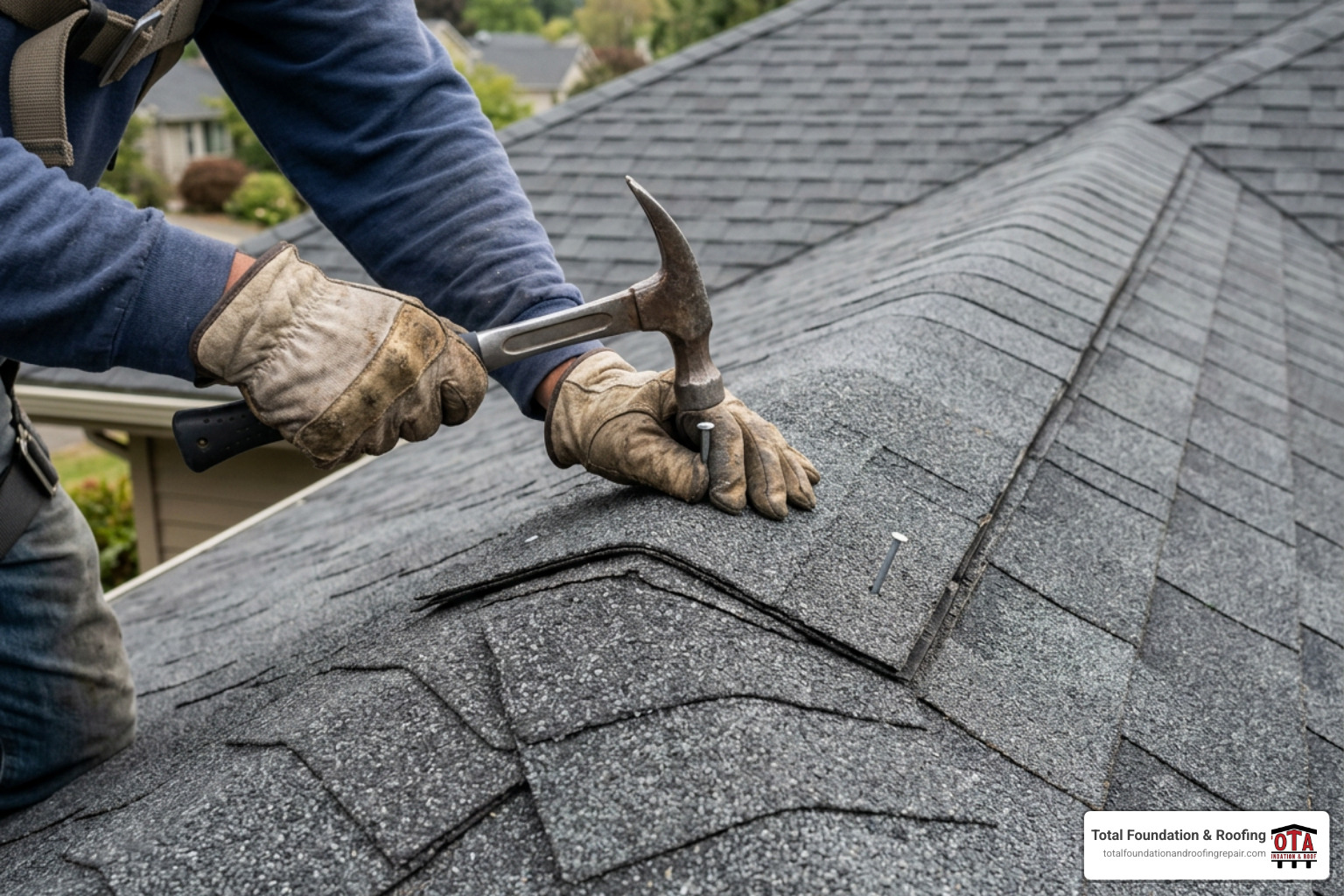
Step 1: Preparation and Chalk Lines
Always snap a clean chalk line along one side of the hip or ridge. This ensures your shingles are installed perfectly straight. A crooked ridge line is highly visible from the ground and ruins your home’s curb appeal.
Step 2: Create and Install the Starter Shingle
Cut the exposure portion off your first cap shingle to create a starter piece. Fasten this starter piece at the bottom of the hip, or at the end of the ridge opposite the prevailing wind direction. This prevents the wind from getting underneath the edges of the shingles and lifting them.
Step 3: Nailing and Overlap
Place each subsequent cap shingle over the previous one, maintaining the manufacturer’s specified exposure (typically 5 to 8 inches).
Crucial Nail Placement: Nails must be long enough—at least 2-inch roofing nails—to penetrate through the ridge cap, the field shingles, and at least 3/4 inch into the wood roof deck. Drive two nails per shingle, placed 1 inch in from each side and just behind the exposure line. Never nail into the self-sealing adhesive strip.
Step 4: Finishing the Ridge
When you reach the end of the ridge, the final shingle will have exposed nail heads. Seal these final nail heads with a high-grade asphalt roof cement to prevent leaks.
Common Mistakes to Avoid:
- Using short nails: Standard 1-1/4 inch nails are too short to penetrate the multiple layers at the ridge, leading to blow-offs.
- Installing in freezing weather: Asphalt shingles become brittle in the cold. If installing below 40°F, warm the bundles in a heated space first to prevent cracking when bending them over the ridge.
- Ignoring wind direction: Always start your ridge caps opposite the prevailing wind direction so the overlaps face away from oncoming wind.
Neglecting these steps can lead to premature wear and expensive repairs. To see what a failure in this area might cost you down the road, refer to our article on Roof Ridge Cap Repair Cost.
Warranty Benefits and Wind Resistance of Factory-Made Caps
One of the most compelling reasons to choose factory-made hip and ridge shingles over cut 3-tab shingles is the warranty protection.
Major manufacturers offer enhanced wind warranties—often up to 110 or 130 MPH—when you use their dedicated ridge caps as part of an integrated roofing system. If you cut standard 3-tab shingles to use as caps, manufacturers will typically limit your wind warranty to 90 MPH or void the wind coverage for the ridge entirely, leaving you with a basic 20-year pro-rated warranty.
Additionally, premium ridge caps often feature Class 4 impact resistance (UL 2218), which is crucial for homes in the Texas Hill Country that face severe hailstorms. Investing in factory-made caps ensures your entire roof qualifies for maximum protection terms, which you can read about in our 50-Year Asphalt Shingles Prices Guide and the Best 50-Year Roof Shingles Guide.
Conclusion: Secure Your Roof with Professional Installation
Your roof’s ridge is its crowning glory and its first line of defense. While it might be tempting to treat ridge caps as a minor detail, choosing the right hip and ridge shingles and ensuring they are installed correctly is vital to the lifespan of your home.
At Total Foundation & Roofing, we specialize in high-quality, certified workmanship tailored specifically to the hot summers, high winds, and sudden hailstorms of the Texas Hill Country. Whether you live in Kerrville, Fredericksburg, or Comfort, Texas, we bring local expertise and premium materials to every project.
Don’t let a poor ridge cap compromise your home. Explore our residential roofing services or contact us today for reliable roof replacement services.
Ready to protect your peak? Contact our team today to schedule your professional roof inspection!