
How Paint Creates a Protective Barrier Against Moisture
Does paint protect wood from moisture? The answer is a definitive yes. When applied correctly, paint forms a vital shield that guards wood against water and sunlight. This is crucial for preserving the structural integrity of your home and is a key part of how we help homeowners protect your property.
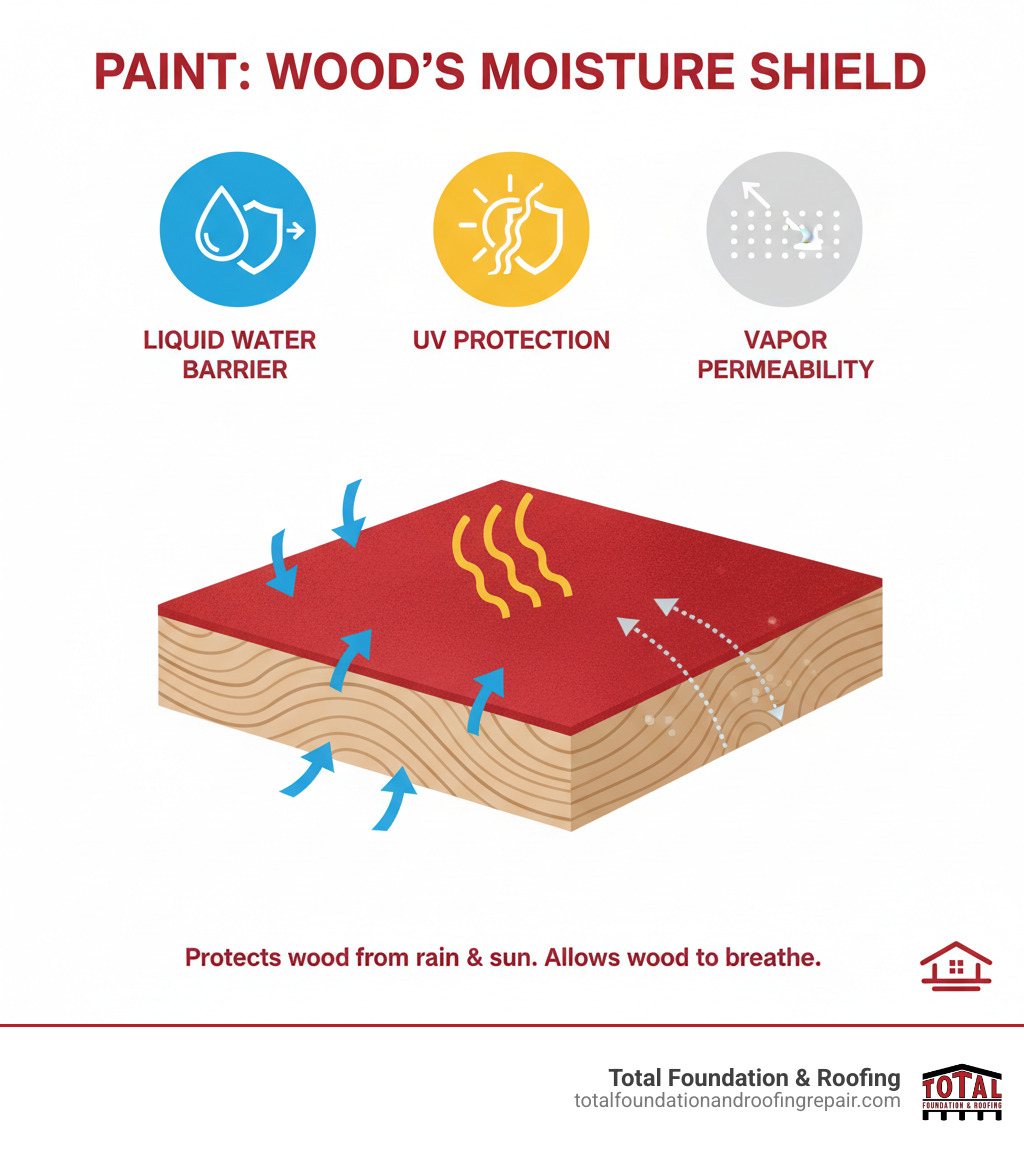
Paint’s power lies in its ability to form a continuous film over the wood. This barrier physically blocks liquid water, like rain, and contains pigments that shield the wood from damaging UV rays. However, most paints are moisture-resistant, not entirely waterproof. They are breathable, allowing a small amount of water vapor to pass through, which helps maintain the wood’s health.

The Science of Protection: How does paint protect wood from moisture?
Paint creates a multi-faceted protective barrier for wood. It primarily works by:
- Forming a Film Barrier: A painted surface creates a physical shield that “retards the penetration of exterior moisture,” as noted by Sherwin-Williams.
- Regulating Moisture Vapor: While paint is waterproof (blocking liquid water), it is not moisture-proof. It allows water vapor to transfer through, a characteristic known as permeability. This lets the wood “breathe” and release trapped moisture. For example, “Latex paint is flexible and highly moisture-permeable.”
- Blocking UV Degradation: Pigments in paint “protect the surface completely from damaging UV rays.” UV light breaks down wood’s structure, making it more vulnerable to moisture. Opaque finishes offer the best UV protection.
- Sealing Natural Resins: Paint seals in the wood’s natural oils and resins, preventing them from weathering away.
The overall effectiveness of a finish is its Moisture-Excluding Effectiveness (MEE). Scientific research on wood finishes shows that pigmented, solvent-borne finishes and specialized systems like two-component epoxies have very high MEE, which increases with the number of coats.
Paint vs. Other Finishes: A Moisture Protection Showdown
While paint offers excellent protection, other finishes like stains and varnishes have different properties. Wood finishes are either film-forming (like paint) or penetrating (like some stains). Film-forming finishes create a layer on the surface, while penetrating finishes soak into the wood fibers. Choosing the right one depends on your desired look and the level of protection needed.
Here’s a comparison of common wood finishes:
| Finish Type | Protection Level (Moisture & UV) | Durability (Typical) | Appearance | Maintenance |
|---|---|---|---|---|
| Paint | Highest protection against liquid water and UV degradation (opaque) | 7+ years | Opaque, completely covers wood grain and color, wide range of colors | Regular cleaning, scraping/sanding and repainting when peeling/fading (every 5-10 years) |
| Solid-Color Stain | High protection against liquid water and UV (opaque) | 3-7 years | Opaque, covers wood grain but may show some texture, fewer color options | Similar to paint, requires cleaning and reapplication when fading (every 3-7 years) |
| Semi-Transparent Stain | Good moisture resistance, pigments offer good UV protection, allows wood to “breathe” | 3-8 years | Allows wood grain and natural color to show through, tinted | Easier reapplication (brush-on, wipe off excess), no scraping needed, reapply when fading/drying (every 2-4 years) |
| Varnish | Poor UV resistance (clear), good liquid water barrier (film) | 2-3 years | Clear or translucent, improves natural wood grain, glossy finish | Frequent reapplication and sanding needed. “Varnishes require frequent maintenance because ultraviolet light breaks them down.” |
| Water Repellents/Preservatives | Primarily for moisture management and decay prevention, low UV (unless pigmented) | 6-12 months (WRP) | Clear or slightly tinted, penetrates, no film | Annual reapplication for water repellents; pigmented versions last longer. |
Acrylic latex paints are often preferred for exteriors due to their flexibility and breathability, often outlasting oil-based paints. Oil-based paints provide a hard finish but can become brittle and crack as wood expands and contracts.
Choosing the Right Shield: How Paint Type Affects Protection
The type of paint you choose significantly impacts its moisture-protective qualities.
- Latex vs. Oil-based: Latex paints (especially acrylic) are flexible and permeable, allowing them to expand with wood and let trapped vapor escape. This is a major advantage in humid climates. Oil-based paints form a harder, less permeable film, offering great initial water resistance but can become brittle and crack over time.
- Primer Importance: A high-quality primer is the foundation of an effective paint job. It ensures strong adhesion, seals the wood for a uniform finish, and adds an initial layer of moisture resistance. For woods like cedar, a stain-blocking primer is essential to prevent extractive bleeding. While paint-and-primer combos are convenient, a dedicated primer followed by a topcoat provides superior, long-lasting protection.
- Enamel Paint: This term typically refers to paint that dries to a hard, glossy finish. It offers good protection against casual splashing, making it suitable for high-touch surfaces.
Choosing a high-quality exterior paint is an investment in your home’s longevity, formulated to withstand UV radiation, temperature changes, and moisture. For comprehensive moisture management from the ground up, consider advanced solutions like our foundation waterproofing services.
Best Practices for Lasting Wood Protection
Lasting wood protection goes beyond just applying paint; it begins with meticulous preparation. Painting wood that is already wet is a critical mistake that guarantees premature paint failure and can trap moisture, accelerating decay. Following best practices is essential for creating a durable shield, especially in the humid climate of areas like Kerrville.
The Perils of Painting Wet Wood: What You Need to Know
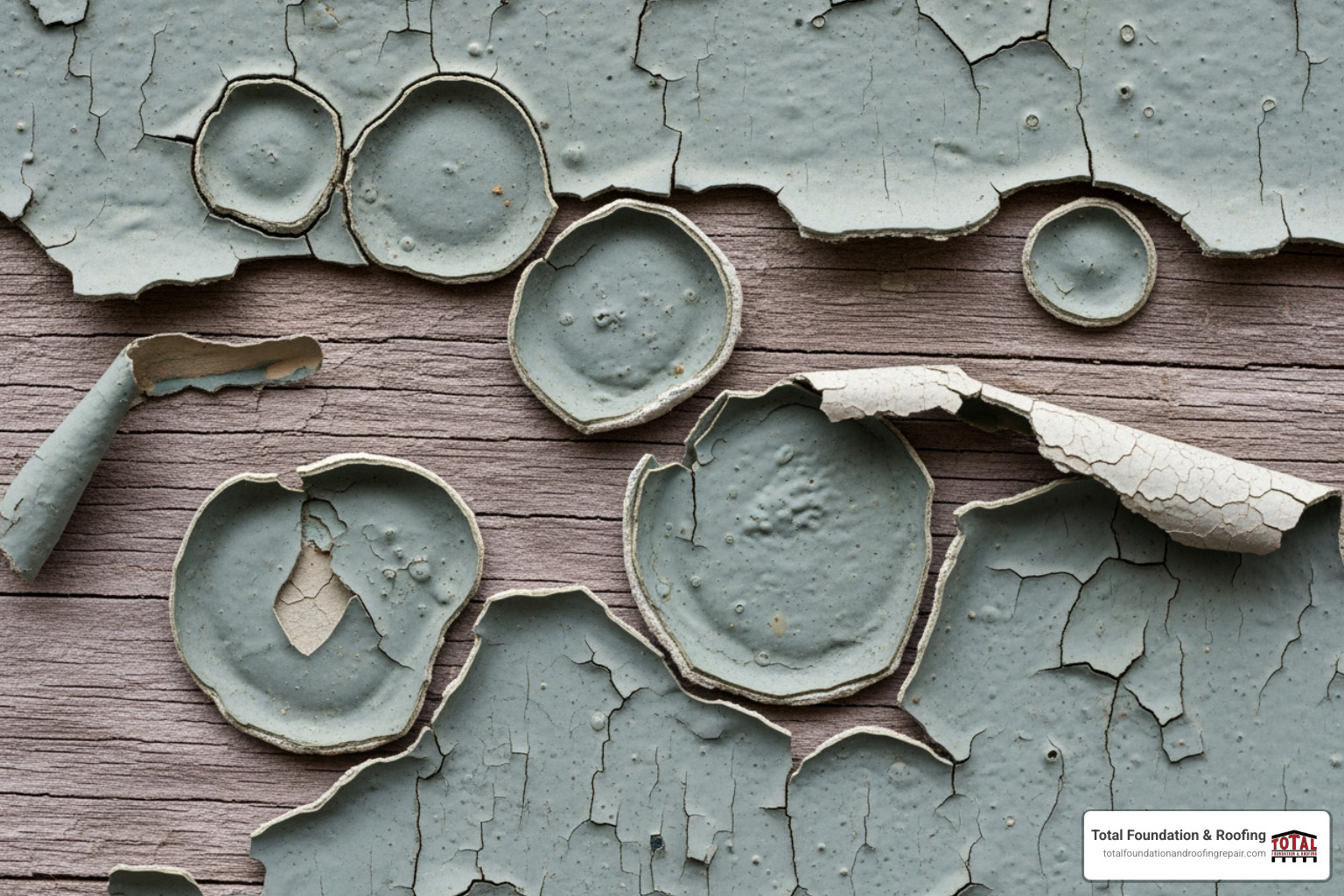
Painting over damp wood is a recipe for disaster. The primary consequence is paint adhesion failure, as the paint cannot bond correctly to a wet surface. This quickly leads to blistering and peeling when trapped moisture turns to vapor in the sun and pushes the paint away from the wood.
Beyond the cosmetic failure, this trapped moisture creates the perfect environment for wood degradation, including mold, mildew, and rot. The long-term effects are a frustrating cycle of scraping, re-prepping, and repainting. To avoid this, ensuring the wood is completely dry before painting is the single most important step.
Prepping for Success: Ensuring Optimal Moisture Protection
Proper preparation is non-negotiable for a paint job that effectively protects against moisture. Follow these essential steps:
- Clean Surfaces Thoroughly: Remove all dirt, grime, mildew, and loose paint from the wood. A good wash with soap and a stiff brush, followed by a rinse, is a great start.
- Sand for Adhesion: Sanding removes weathered wood fibers and slightly roughens the surface, giving the primer and paint a better grip.
- Ensure Wood is Dry: This is the most critical step. The wood must be dry before painting. For painting pressure-treated wood, which is sold wet, you may need to wait weeks or even months for it to dry completely. You can find more tips on handling this material from this source.
- Prime All Surfaces: Apply a high-quality primer to seal the wood, improve paint adhesion, and block stains. For maximum protection against warping, prime all six sides of a board whenever possible.
- Seal End Grains: The end grain of wood absorbs moisture like a straw. Pay special attention to thoroughly sealing these vulnerable areas to minimize water absorption.
The Impact of Environment and Trapped Moisture
Local climate conditions, like high humidity and temperature swings, significantly impact how well paint protects wood. In the Texas Hill Country, these factors increase the risk of trapped moisture, which can lead to wood rot and mold growth.
The benefits of permeability in paint are crucial here. A “breathable” paint like acrylic latex allows trapped water vapor to escape, preventing moisture buildup that leads to decay. However, paint is only one part of the defense.
Protecting wooden structures with a solid roof is your first and best line of defense. A leaking roof can saturate structural wood, overwhelming any paint barrier. If you suspect roof damage, addressing it quickly with professional help, such as emergency roof repair services, is essential to protect your entire home.
Conclusion: Your First Line of Defense
So, does paint protect wood from moisture? Absolutely—when applied correctly. Paint is a powerful tool for creating a resilient shield that preserves your home’s wooden elements. Success depends on choosing quality products, meticulous surface preparation, and never painting wet wood.
A well-executed paint job prevents costly damage from rain, humidity, and the Texas sun. Regular inspection and maintenance are key to this lasting protection. Look for early warning signs like peeling or blistering and address them quickly to avoid larger repairs.
When you spot signs of moisture damage, from failing paint to more serious issues like foundation cracks, it’s crucial to act fast. Moisture problems only escalate, and what starts small can lead to significant structural damage.
At Total Foundation & Roofing, we understand how moisture impacts every part of a home in the Texas Hill Country. If you’re concerned about moisture damage, don’t wait. Explore our comprehensive foundation repair services to see how we protect homes from the ground up and contact us for an expert assessment.