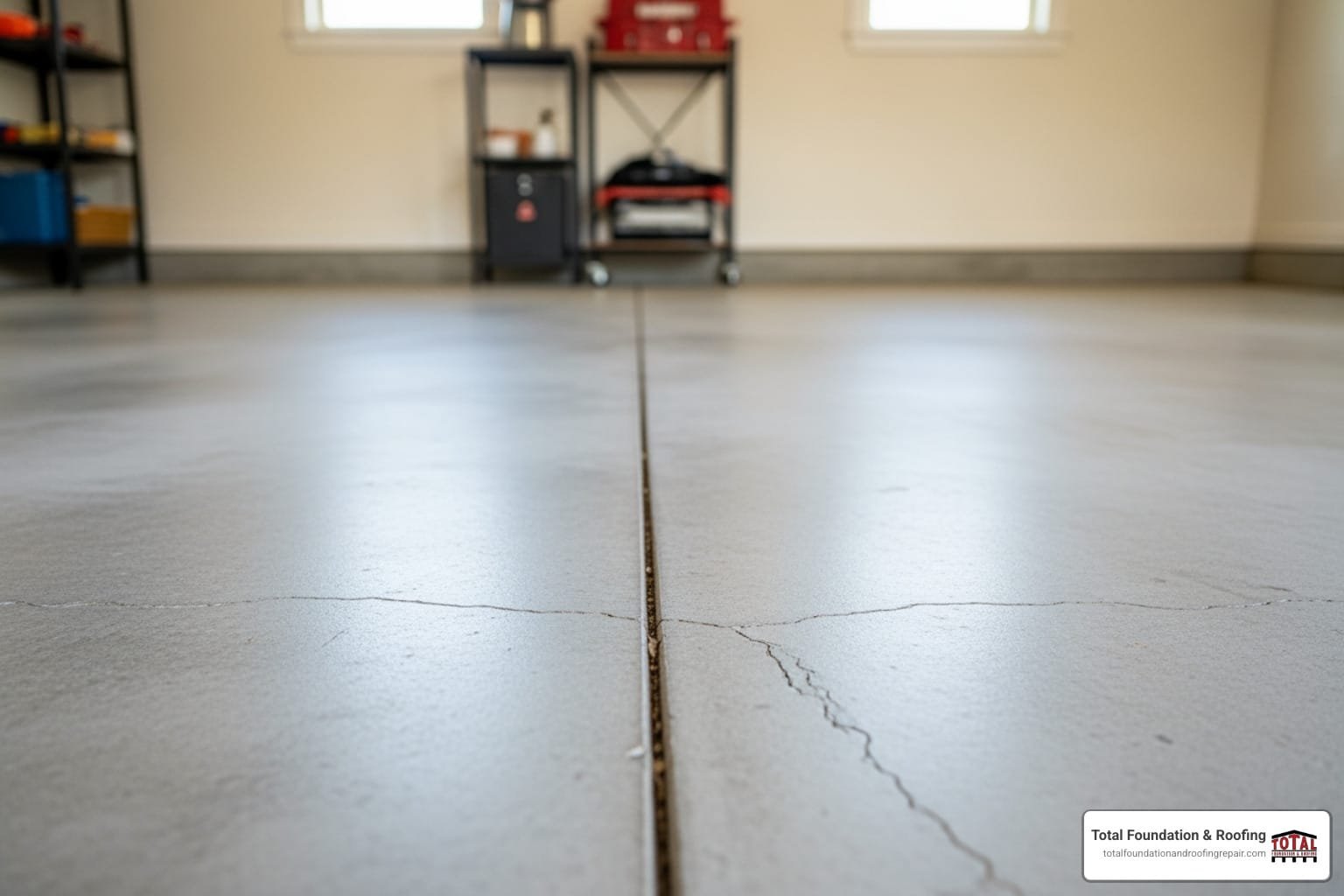

Why Cracked Cement Driveway Repair Matters for Texas Homeowners
Cracked cement driveway repair is a crucial task for maintaining your home’s value and safety, especially in Texas. While it may seem overwhelming, understanding the basics makes it manageable. At Total Foundation & Roofing, we know that small cracks can quickly lead to expensive structural problems due to our region’s unique soil and weather patterns. This guide provides the expert insights you need.
Quick Answer: How to Repair Your Cracked Driveway
- Small cracks (under 1/4 inch): Clean the crack, apply flexible polyurethane caulk, smooth it, and let it cure for 24-48 hours.
- Wide cracks (over 1/4 inch): Undercut the edges, insert a backer rod, fill with a concrete patching compound, and smooth it level with the surface.
- Deep or uneven cracks: Consult a professional, as these often indicate underlying foundation or soil settlement issues.
- Cost: DIY repairs typically cost $20-$100 for materials, while professional repairs average $500-$1,500.
A cracked driveway is more than a cosmetic issue; it’s an entry point for water that can destabilize the soil beneath the slab. In Texas, where freeze-thaw cycles and shifting clay soils are common, this damage can accelerate. While most homeowners can handle minor repairs, cracks wider than 1/4 inch or any uneven sections warrant professional attention to address the root cause.
As Daniel Sowell, owner of Total Foundation & Roofing Repair, I’ve spent over 18 years performing cracked cement driveway repair across the Texas Hill Country. We understand how to deliver lasting solutions, whether you choose a DIY approach or require our professional assistance.
Your Complete Guide to Cracked Cement Driveway Repair
A well-maintained concrete driveway can last 20-30 years. This guide covers everything from identifying damage to performing repairs and preventing future issues, ensuring your driveway stands the test of time.
Understanding the Damage: Causes and Types of Cracks
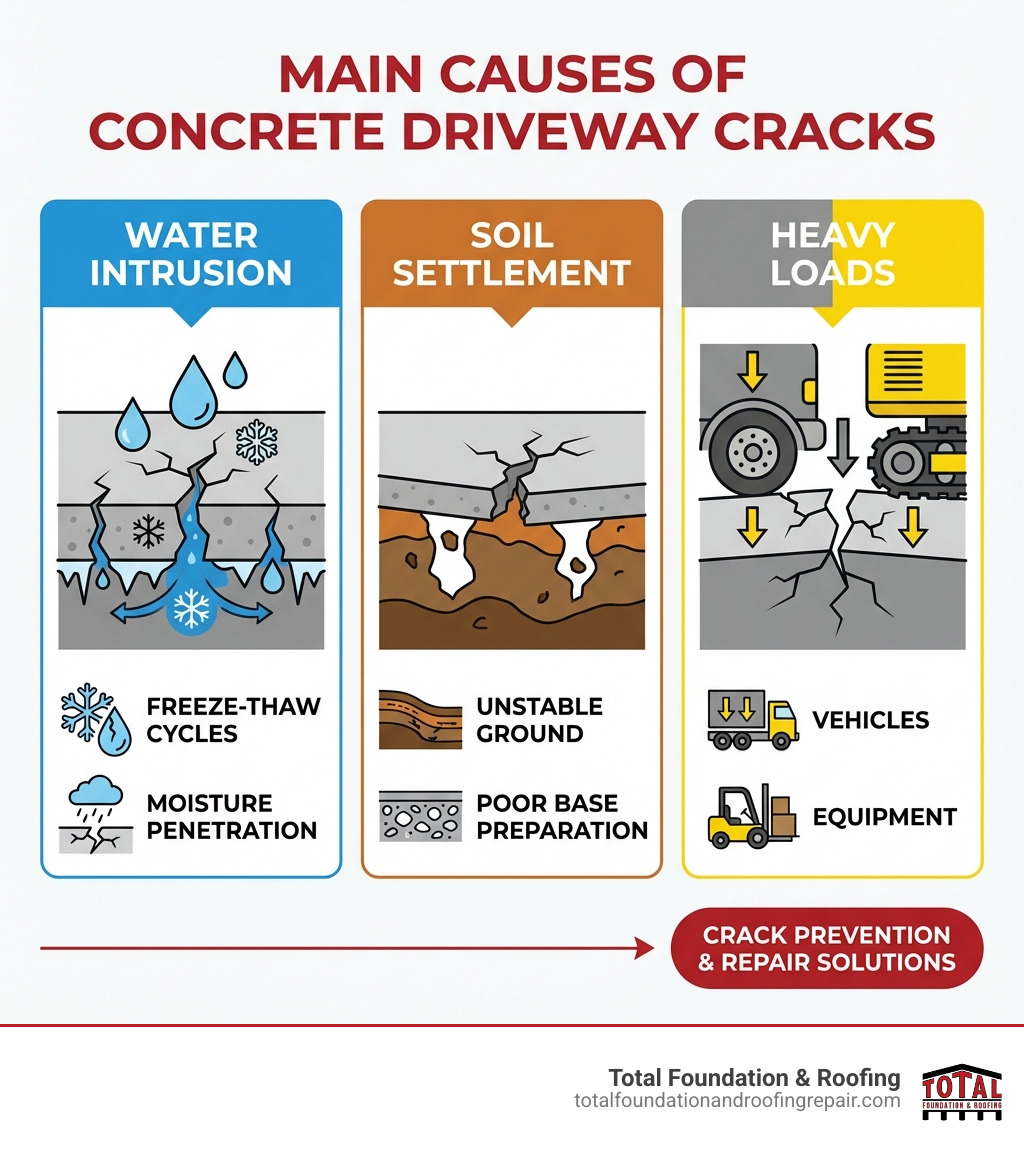
Before starting a cracked cement driveway repair, you must identify the cause and type of crack. Water intrusion is the primary culprit, leading to freeze-thaw damage and soil destabilization, a problem often magnified by the expansive clay soils in the Texas Hill Country.
Common Causes of Driveway Cracks:
- Water Intrusion & Freeze-Thaw Cycles: Water seeps into cracks, freezes, expands, and widens the damage. This occurs even in the milder winters of areas like Kerrville.
- Soil Settlement: Poorly compacted soil, erosion, or natural soil movement can cause the ground beneath the slab to settle unevenly, leading to cracks.
- Tree Root Growth: Growing roots can exert immense pressure, pushing up and cracking concrete slabs.
- Improper Installation: A weak concrete mix, a poorly prepared base, or insufficient control joints can make a driveway prone to cracking. Following standards set by organizations like the American Concrete Institute (ACI) is crucial for long-term durability.
- Heavy Loads: Consistently parking oversized vehicles like RVs or commercial trucks can cause stress cracks.
Different Types of Concrete Driveway Damage:
- Hairline Cracks (Crazing): Fine, shallow surface cracks, usually cosmetic but can allow water entry.
- Wider Structural Cracks: Deeper cracks (over 1/4 inch) that often signal underlying issues like soil settlement.
- Heaving Concrete Cracks: Occur when a slab section is pushed upward by tree roots or expansive soil. Learn more about Heaving concrete cracks.
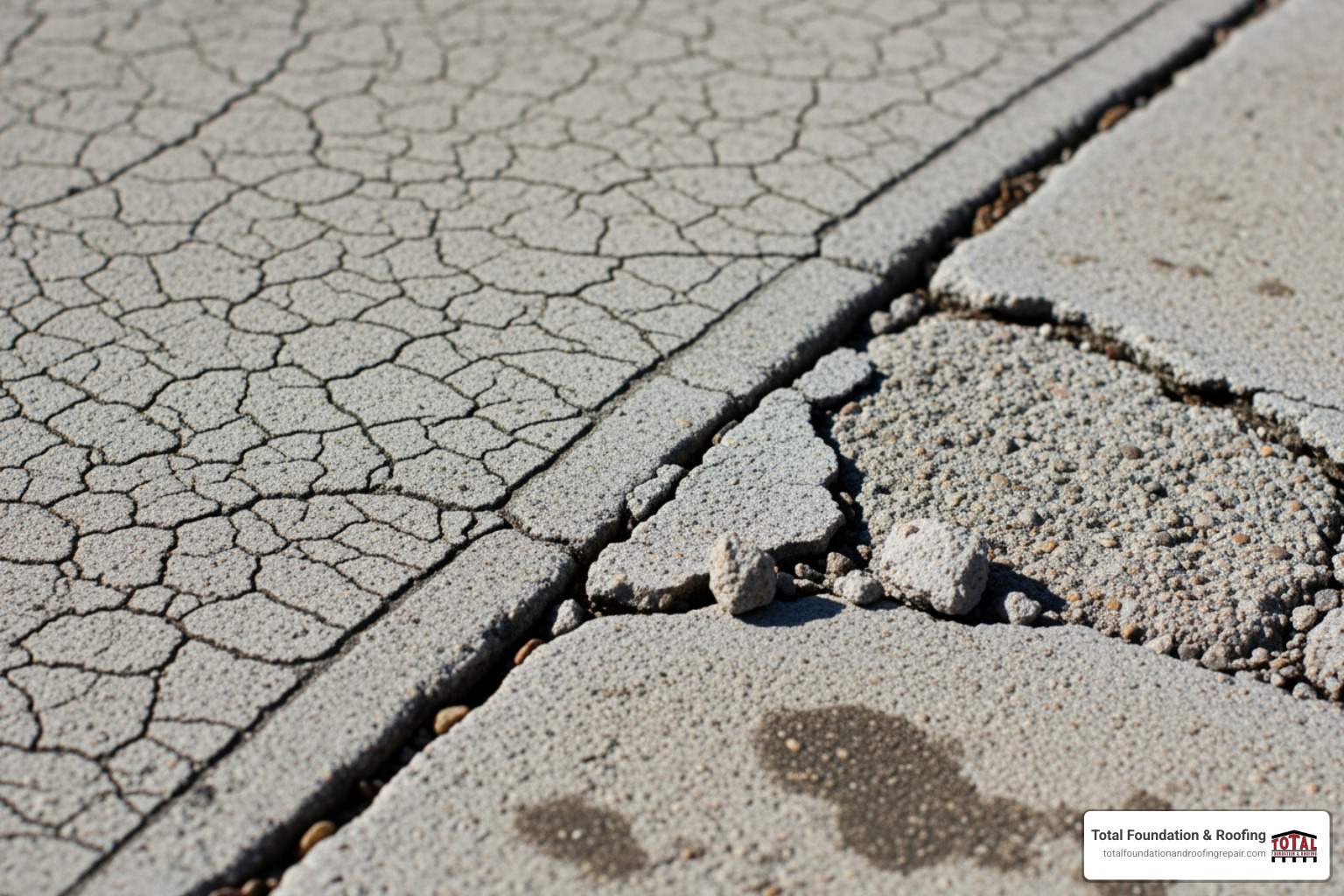
- Spalling or Crumbling: Flaking or chipping of the concrete surface, often caused by freeze-thaw cycles or poor-quality concrete.
- Uneven Driveway: Sunken sections that indicate soil settlement or erosion, which causes stress and further cracking.
DIY Repair vs. Professional Help: When to Make the Call
Deciding whether to DIY or hire a pro for cracked cement driveway repair depends on the damage severity. Ignoring small cracks allows water intrusion, leading to bigger problems.
When to DIY:
- Cracks under 1/4-inch wide: These are ideal for DIY repair using flexible caulk or patching compounds. DIY kits typically cost $20-$100.
- Cosmetic Issues: Hairline cracks and minor surface flaws can be addressed with resurfacers or sealants.
When to Hire a Pro:
A professional assessment is needed for cracks wider than 1/4 inch or those with vertical displacement, as these suggest deeper problems.
- Cracks over 1/4-inch wide: Often indicate structural issues with the sub-base that require a professional diagnosis.
- Uneven or Sunken Slabs: A clear sign of soil instability. This requires specialized techniques like slabjacking. For issues in the Kerrville area, professional Concrete Leveling Services are essential.
- Widespread “Alligator” Cracking: This interconnected pattern points to severe sub-base failure and requires professional intervention.
- Recurring Cracks: If DIY repairs fail, a pro can identify and fix the underlying cause.
For significant damage, our team at Total Foundation & Roofing has the expertise for a durable cracked cement driveway repair.
Essential Tools and Materials for Cracked Cement Driveway Repair
The right tools and materials are key to a lasting cracked cement driveway repair.
Essential Tools:
- Safety Glasses & Gloves
- Wire Brush
- Hammer & Masonry Chisel
- Shop Vacuum or Leaf Blower
- Caulk Gun
- Pointing Trowel & Finishing Trowel
- Bucket & Mixer Paddle
- Pressure Washer
Necessary Materials:
- Concrete Crack Filler (Flexible Polyurethane Caulk): Best for most cracks, as it flexes with concrete movement.
- Concrete Patching Compound: For wider cracks and spalled areas needing a structural fill.
- Bonding Agent: Helps new patch material adhere to old concrete.
- Backer Rod: A foam rod for filling deep or wide cracks before caulking. Find it at hardware stores like Home Depot.
- Sand: Can be used to fill deep voids or add texture to repairs.
- Concrete Sealer: Recommended after repairs to protect the entire driveway.
Step-by-Step Guide to Fixing Driveway Cracks
Preparation is 90% of a successful cracked cement driveway repair. Work on a dry day when temperatures are above 50°F (10°C).
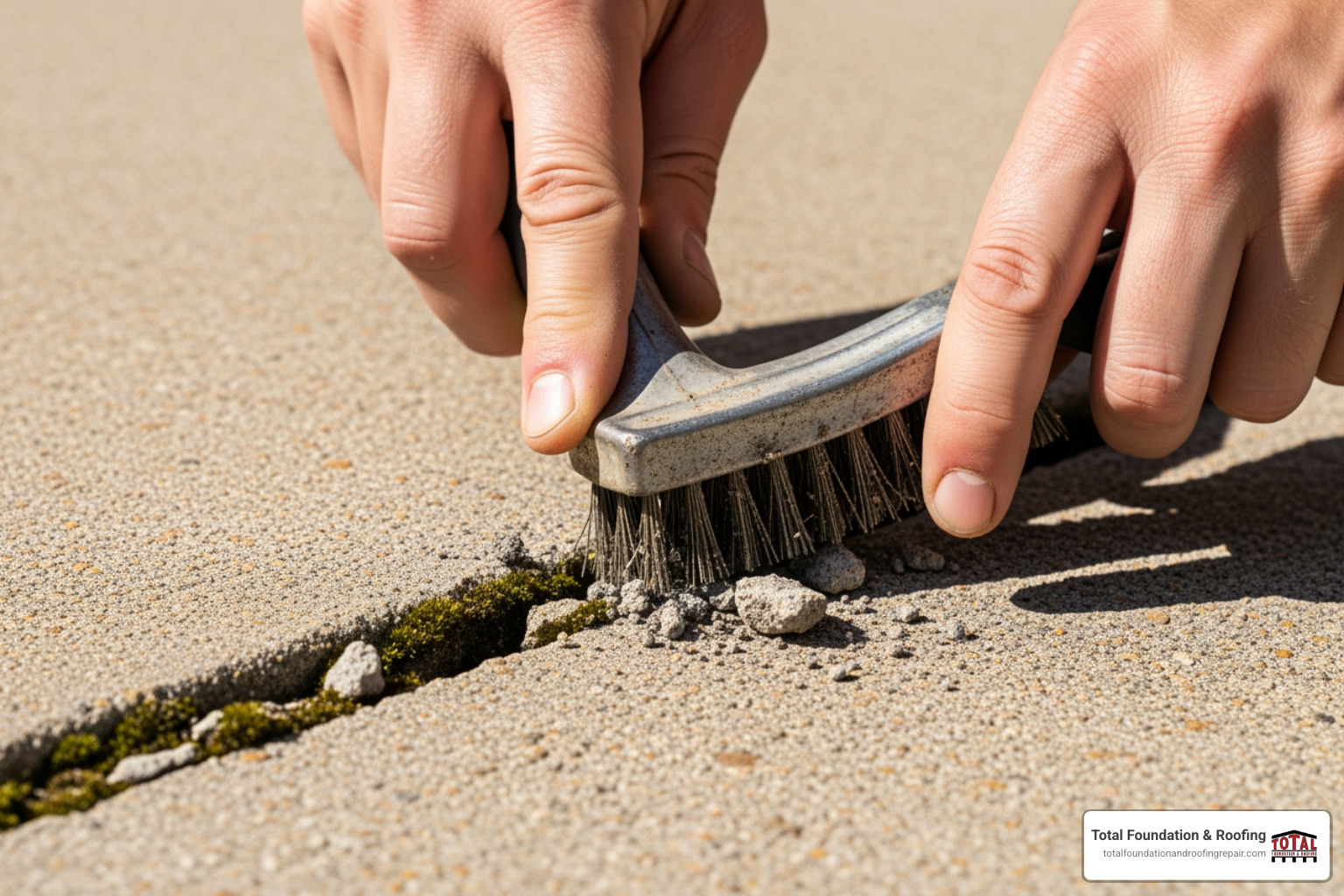
Step 1: Clean the Crack
Remove all loose debris, dirt, and vegetation. Use a chisel or screwdriver to clear loose concrete, scrub vigorously with a wire brush, and then use a shop vacuum or leaf blower to remove all dust.
Step 2: Widen the Crack (Undercutting)
For better adhesion, use a hammer and chisel to widen the crack into an inverted “V” shape. This gives the filler a stronger grip. Clean out the new debris.
Step 3: Insert Backer Rod for Wide Cracks
For cracks wider or deeper than 1/2 inch, push a backer rod into the crack until it’s about 1/2 inch below the surface. This saves filler and provides a solid base for the repair.
Step 4: Apply Filler or Patch
- Narrow Cracks: Apply a steady bead of flexible polyurethane caulk, ensuring it fills the void.
- Wide Cracks: After applying a bonding agent (if needed), press concrete patching compound firmly into the crack with a trowel.
Step 5: Smooth and Texture the Repair
Smooth the filler flush with the driveway surface using a trowel or a gloved, soapy finger for caulk. While wet, you can sprinkle sand or brush the patch with a broom to match the existing concrete texture. For more details, see our guide on Patching Cracks in Concrete.
Choosing the Right Filler and Ensuring a Lasting Repair
Using the right material is critical. Flexible polyurethane sealants are superior for active cracks because they accommodate movement.
- Self-Leveling Caulk: A thin liquid ideal for flat, horizontal cracks. It flows and settles on its own.
- Non-Sag Caulk: A thick paste for vertical surfaces or sloped cracks. It holds its shape and requires tooling.
Comparing Concrete Fillers:
| Filler Type | Durability & Flexibility | Cost (DIY Kit) | Best Use Case |
|---|---|---|---|
| Latex-based | Low flexibility, short lifespan. | $20-$40 | Small, inactive hairline cracks. |
| Polyurethane-based | High flexibility, very durable. | $30-$60 | Recommended for most driveway cracks. |
| Epoxy-based | Very strong but rigid. | $40-$100 | Stable, structural cracks that won’t move. |
| Cement-based Patch | Rigid, can re-crack. | $20-$50 | Filling holes or wide, stable spalled areas. |
For more product details, see our overview of Concrete Crack Solutions.
Pro Tips for Lasting Repairs:
- Level First: If a slab is sunken, level it before caulking.
- Use Flexible Sealants: For active cracks, avoid rigid patches that will just crack again.
- Clean Thoroughly: A pristine crack surface is the secret to a strong bond.
- Check the Weather: Work in dry conditions with temperatures above 50°F.
Preventing Future Cracks in Your Driveway
Proactive maintenance is the best way to avoid future cracked cement driveway repair.
- Seal the Driveway Every 3-5 Years: A quality sealer blocks moisture and prevents damage. Learn more in our Concrete Driveway Refinishing Complete Guide.
- Ensure Proper Drainage: Slope landscaping away from the driveway and keep gutters clear to prevent water from saturating the soil base.
- Manage Tree Roots: Consider installing root barriers or consulting an arborist for large trees near the driveway.
- Avoid Rock Salt: Use concrete-safe de-icing agents instead of corrosive rock salt in winter.
- Distribute Heavy Loads: Avoid parking heavy vehicles in the same spot repeatedly.
Protect Your Investment with Professional Concrete Services
While DIY repairs are suitable for small cracks, significant damage often signals deeper problems like soil settlement that require an expert eye. In the Texas Hill Country, ignoring wide, deep, or uneven cracks can lead to more extensive and expensive issues, compromising your property’s structural integrity.
The team at Total Foundation & Roofing doesn’t just patch cracks; we diagnose the root cause—from soil instability in the Texas Hill Country to drainage issues—and provide durable solutions. For a comprehensive assessment and a lasting cracked cement driveway repair that protects your property’s value, trust a professional.
Request a Free Estimate today from a trusted Concrete Contractor.