

Understanding the Threat to Your Foundation
Concrete heaving repair addresses the upward movement of foundations and slabs caused by expanding soils. This serious issue requires prompt attention from a team of experts like Total Foundation & Roofing Repair to prevent escalating damage and costly repairs. Unlike foundation settling, heaving pushes your foundation upward as soil expands from moisture, freezing, or expansive clay. The clay-rich soils of the Texas Hill Country are particularly susceptible to this phenomenon.
Quick Answer: Key Concrete Heaving Repair Methods
- Polyurethane Foam Injection – Stabilizes soil and fills voids beneath slabs.
- Underpinning Systems – Uses helical or push piers to support and stabilize foundations.
- Soil Stabilization – Controls moisture to prevent future expansion.
- Slab Replacement – Complete reconstruction for severely damaged sections.
- Concrete Grinding – Addresses minor surface height differences.
Ignoring the warning signs—diagonal cracks, sloping floors, and sticking doors—can lead to repair costs from $10,000 to $100,000 or more. With over 18 years of experience in the Texas Hill Country, our team specializes in diagnosing and performing concrete heaving repair for both homes and businesses, delivering lasting solutions that address the root cause.
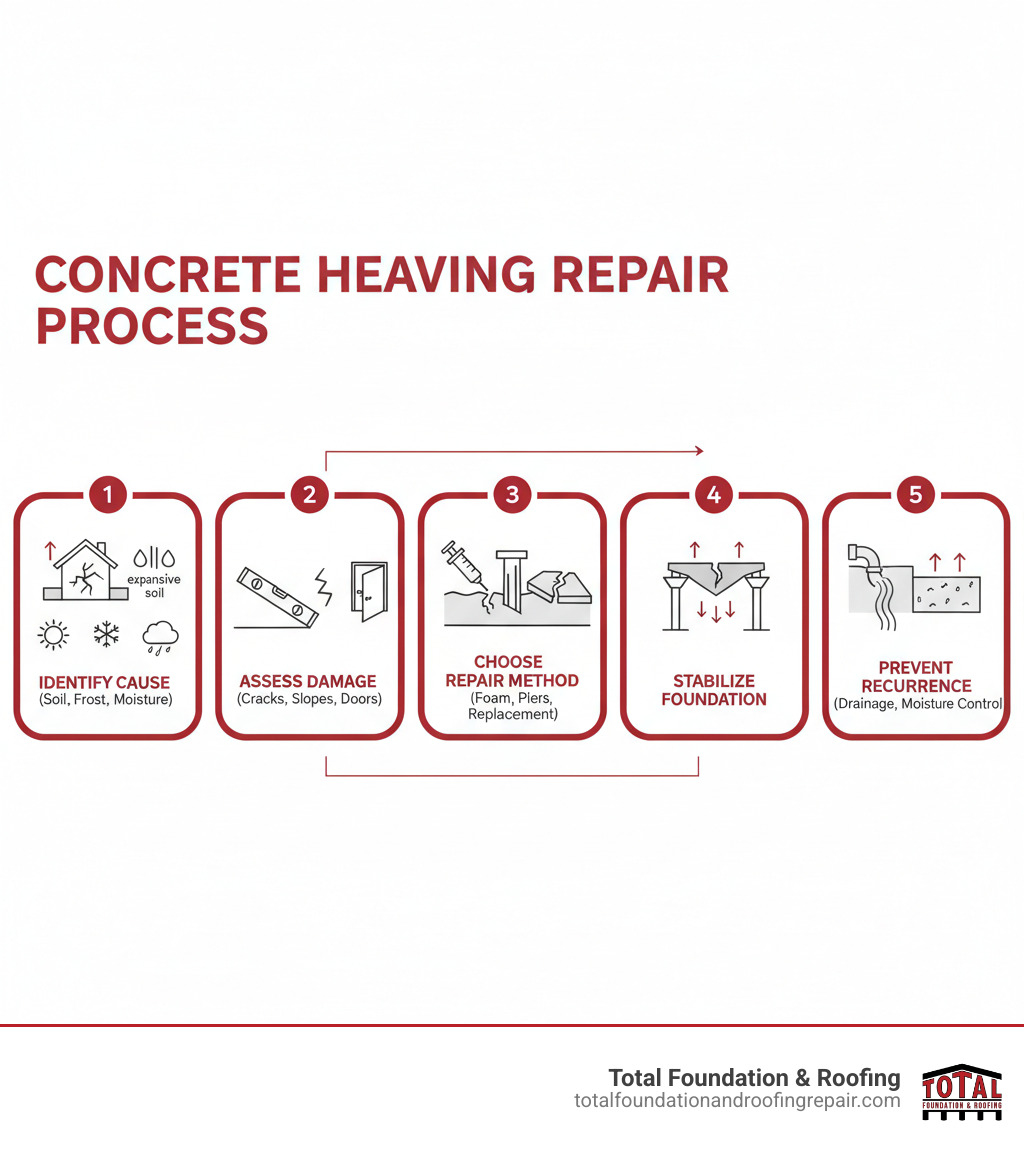
Concrete heaving repair terms to know:
Heaving vs. Settling: A Critical Distinction
Foundation problems are often categorized as heaving or settling. While both cause cracks and damage, they are opposite phenomena. Concrete heaving is the upward movement of a foundation caused by expanding soil, while concrete settling is the downward sinking of a foundation due to soil compaction or erosion. Misdiagnosing the issue leads to ineffective repairs, which is why professional assessment is critical. You can find more info about foundation issues on our blog.
Here’s a quick comparison:
| Feature | Concrete Heaving | Concrete Settling |
|---|---|---|
| Movement | Upward | Downward |
| Primary Cause | Soil expansion (moisture, frost) | Soil compression, erosion, or voids |
| Cracks | Often vertical, diagonal, or “spiderweb” patterns | Often horizontal, stair-step, or wider at the top |
| Directional Force | Upward pressure | Downward pull |
| Affected Areas | Can be localized; more common in slabs | Can be localized or widespread; common in foundations |
| Soil State | Saturated, frozen, or expansive clay | Dry, compacting, or washed away |
The Primary Causes of Upward Foundation Movement
Effective concrete heaving repair starts with understanding the cause. The culprits are almost always related to soil and moisture changes.
- Expansive Soils: Clay-rich soil, common in our region, expands significantly when it absorbs water. This volume increase creates immense upward pressure on foundations and slabs.
- Frost Heave: When water in the soil freezes, it expands by nearly 10%, creating powerful upward forces that can lift concrete. While less common in warmer parts of Texas, it can occur during freezing temperatures, causing uneven lifting and subsequent cracking when the ground thaws.
- Plumbing Leaks: A hidden pipe leak beneath a slab can continuously saturate the soil in one area. This constant moisture causes expansive clays to swell, pushing up that section of the foundation.
- Poor Drainage: Improper grading or clogged gutters can cause water to pool near the foundation. This saturates the soil, leading to expansion and heaving.
- Tree Root Intrusion: Large tree roots growing under a slab can exert physical upward pressure. They also alter soil moisture levels, contributing to cycles of soil shrinkage and expansion.
Addressing these underlying causes is crucial for a permanent fix. For more insights, learn about our concrete leveling services or consult scientific research from institutions like the American Concrete Institute.
Identifying and Addressing the Damage: A Guide to Concrete Heaving Repair
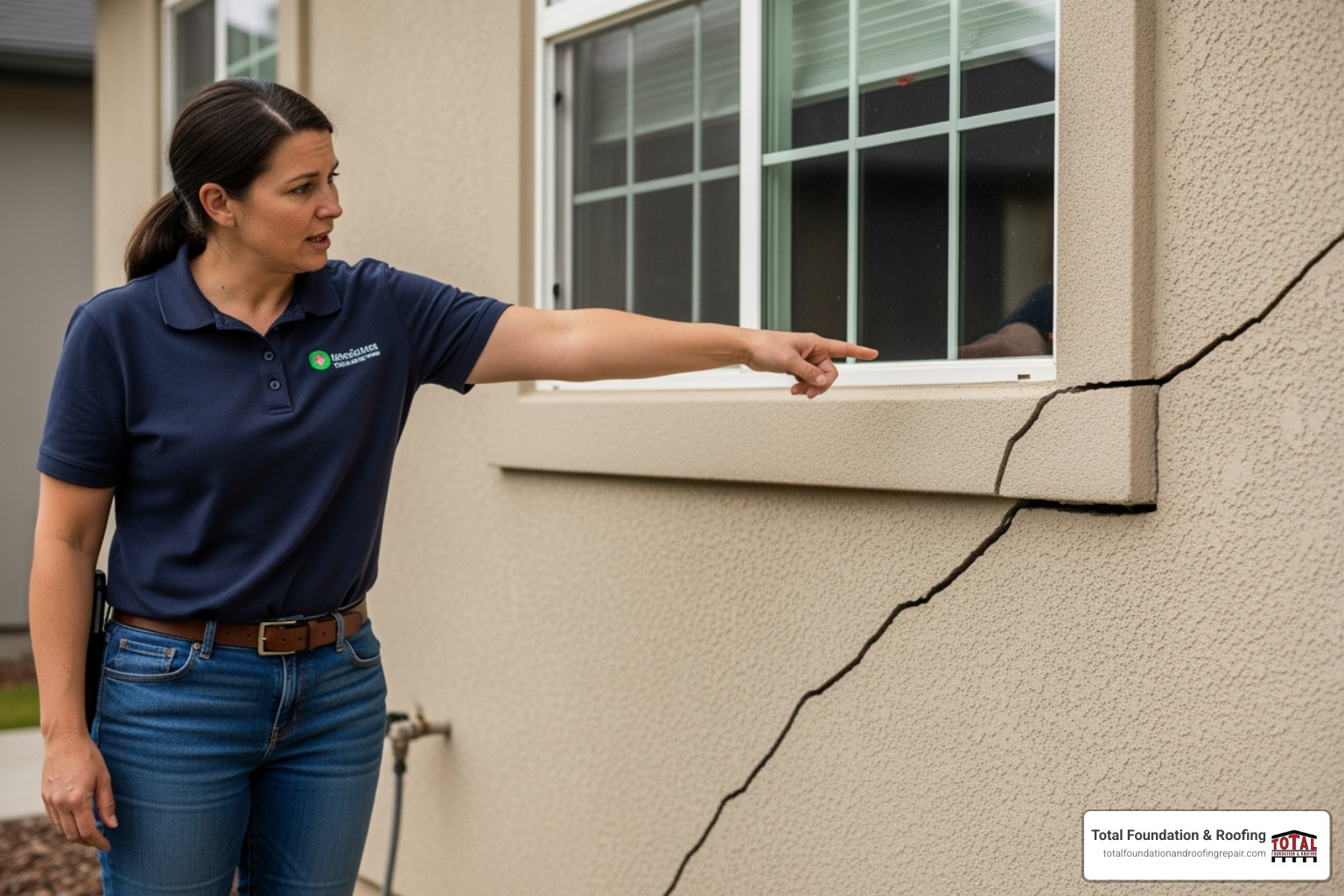
Spotting the need for concrete heaving repair early can be the difference between a manageable fix and a financial nightmare. Foundation heaving leaves clear clues, and once identified, proven methods can fix the problem for good.
Telltale Signs Your Foundation is Heaving
Foundation heave creates stress points that manifest in predictable ways. Look for these definitive signs:
- Uneven or Sloping Floors: A feeling of walking uphill or furniture that suddenly rocks indicates sections of the slab are being pushed upward.
- Distinctive Floor Cracks: Heaving creates unique spiderweb patterns or cracks that form an enclosed loop, which differ from typical settlement cracks. Our concrete crack solutions begin by identifying the crack’s origin.
- Wall and Ceiling Cracks: Diagonal cracks radiating from window and door corners are a classic sign. Vertical cracks and gaps where walls meet the ceiling also point to upward movement.
- Sticking Doors and Windows: When a foundation shifts, it distorts the frames throughout your home, causing doors and windows to jam or become misaligned.

- Plumbing Problems: Sudden clogs or leaks can mean pipes have been bent or broken by the shifting foundation.
- Visible Gaps: Gaps between walls and ceilings or where baseboards pull away from the floor are clear indicators that parts of your home are being lifted.
Early detection is key to protecting your home’s structural integrity. If you see these signs, it’s time for a professional inspection.
Professional Solutions for Concrete Heaving Repair
Once heaving is confirmed, our team at Total Foundation & Roofing implements a solution that addresses the root cause. Our approach goes beyond surface fixes to ensure a lasting repair.
Polyurethane Foam Injection is a primary tool for soil stabilization. We inject an expanding polymer foam beneath the slab, which fills voids, compacts soil, and lifts the concrete back to level. This minimally invasive process also creates a moisture barrier to prevent future expansion. Learn more in our guide to concrete lifting with foam injection.
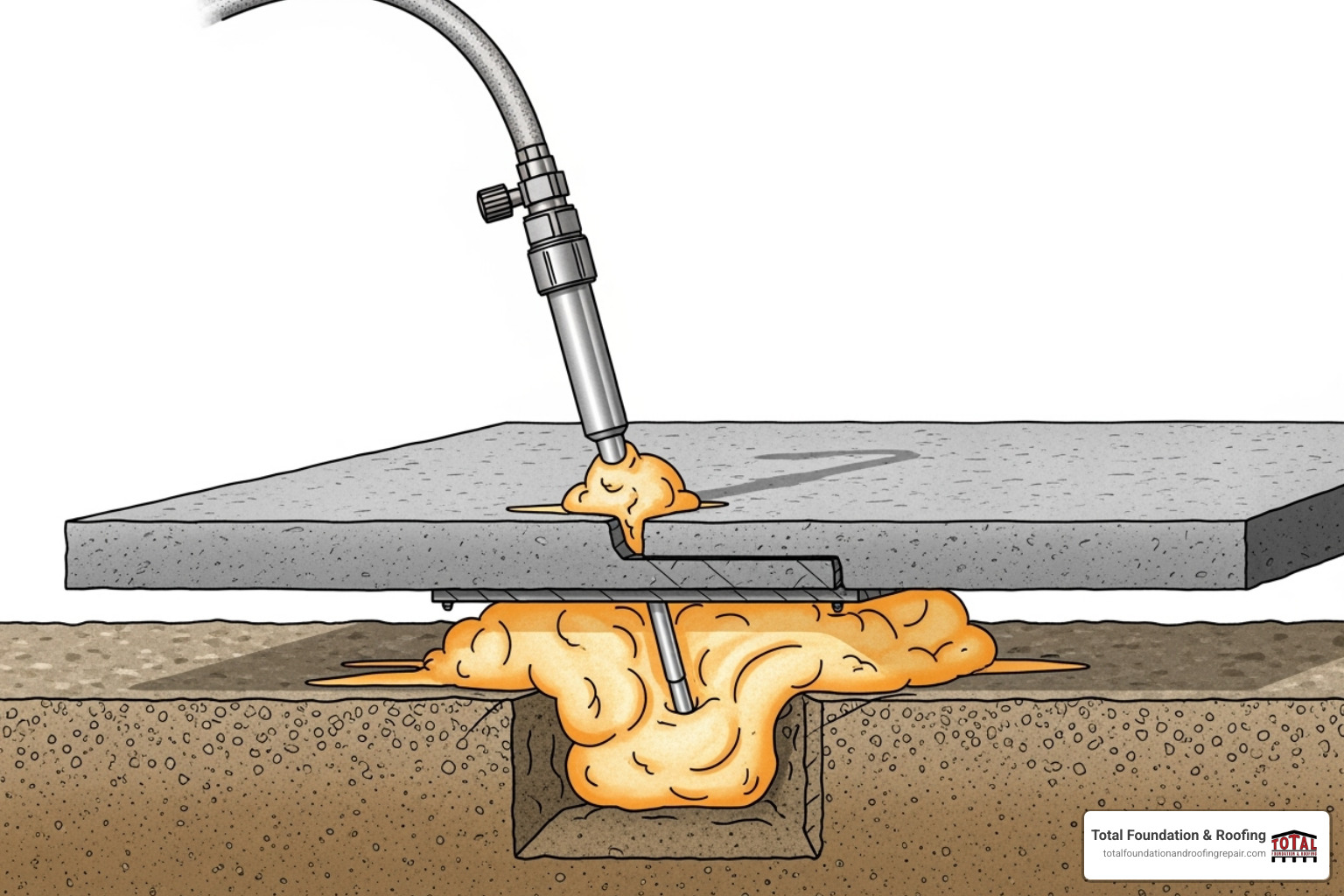
For more significant structural issues, Underpinning Systems provide robust support.
- Helical Piers: These steel shafts are screwed deep into stable soil or bedrock. Brackets are attached to the foundation, transferring the structure’s weight to the piers and anchoring it against upward forces.
- Push Piers: These steel posts are driven hydraulically into load-bearing soil, achieving the same anchoring effect as helical piers.
In severe cases where a slab is shattered, Slab Replacement is the necessary, albeit more disruptive, solution. A new, properly installed slab with built-in preventative measures is a smart long-term investment.
For minor trip hazards on sidewalks or patios, Concrete Grinding can level high spots. However, this is a cosmetic fix that does not address the underlying cause of the heaving.
The right concrete heaving repair method depends on the extent of the damage, soil conditions, and the affected structure. We provide customized solutions custom to your home’s specific needs and your budget.
Protecting Your Investment: Prevention and Professional Help
Preventing concrete heaving is far less expensive than dealing with extensive structural damage. Proactive maintenance and timely intervention are key to protecting your property’s value and safety. Our goal is to provide solutions that give you peace of mind and protect your home for years to come.
How to Prevent Concrete Heaving
Preventing concrete heaving revolves around effective water management and soil moisture control. Here are essential tips for homeowners, especially in the Texas Hill Country:
- Improve Drainage: Ensure gutters are clean and extend downspouts 5-10 feet away from the foundation. The ground should slope away from your home (at least 6 inches over 10 feet) to direct water away.
- Manage Soil Moisture: During dry spells, use a soaker hose system to maintain consistent, moderate moisture in the expansive clay soil around your foundation. This prevents the drastic swelling and shrinking cycles that cause heaving.
- Control Vegetation: Plant large trees and shrubs a safe distance from your foundation. Consider installing root barriers to prevent roots from growing underneath and altering soil moisture. For guidance, seek professional advice on concrete leveling in the Hill Country.
- Inspect Plumbing: Regularly check for and repair any plumbing leaks. A small, slow leak can saturate the soil and cause significant localized heaving over time.
The Financial Risks of Delaying Repairs and When to Call an Expert
Ignoring concrete heaving inevitably leads to bigger, more expensive problems. What starts as a minor issue can escalate into major structural damage, with repair costs ranging from $10,000 to over $100,000.
Delaying repairs can cause a domino effect of damage, including shifted walls, misaligned roofs, and compromised plumbing and electrical systems, creating safety hazards like trips, leaks, and fire risks. Furthermore, a home with known foundation issues will see a significant drop in its market value, making it difficult to sell or refinance.
When should you call a professional? The answer is simple: as soon as you suspect a problem. If you notice uneven floors, new cracks, or sticking doors, it’s time to call an expert.
A professional contractor like our team at Total Foundation & Roofing has the specialized equipment to accurately diagnose the problem, differentiate between heaving and settling, and recommend the correct solution. We develop customized repair plans—from polyurethane foam injection to underpinning with piers—that address your home’s unique needs.
Don’t let a heaving foundation compromise your home or finances. For a comprehensive assessment in the Kerrville, TX area, contact us at (830) 228-4447. We’re ready to help you get your foundation back on solid ground. Get a quote for your concrete repair today!