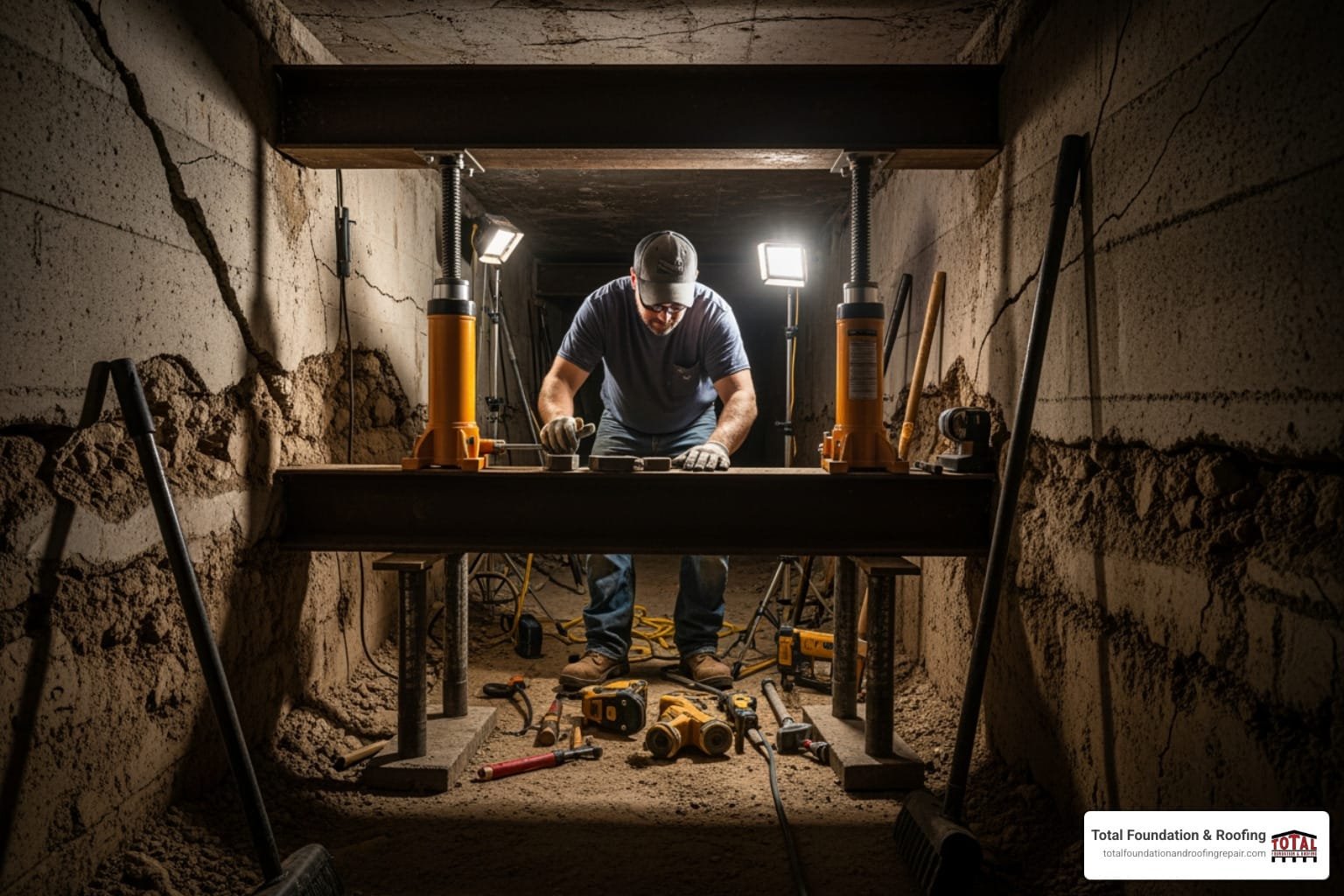

Introduction: Decoding the Cracks in Your Cinder Block Wall
Spotting a crack in your cinder block wall can be alarming, but not all cracks signal a disaster. While some are minor cosmetic issues, others point to serious structural problems like foundation settlement or hydrostatic pressure. For homeowners in the Texas Hill Country, challenges like expansive soil foundation movement are common culprits. For expert cement block wall crack repair, our team provides comprehensive foundation and concrete services to address these unique regional challenges.
This guide will help you identify different types of cracks, select the right products for DIY fixes, and recognize when to call a professional for structural repairs. Key indicators include:
- Minor Cracks: Often treatable with masonry crack filler.
- Bowing Walls: May require carbon fiber straps for reinforcement.
- Serious Cracks: Horizontal, stair-step, or cracks wider than 1/8 inch need a professional inspection.
I’m Daniel Sowell, owner of Total Foundation & Roofing Repair. With over 18 years of experience, my team specializes in high-quality foundation solutions for the Texas Hill Country.
A Homeowner’s Guide to Cement Block Wall Crack Repair
Your home’s cinder block wall is a structural workhorse, but even the strongest walls can crack. Understanding the cause and type of crack is the key to a successful cement block wall crack repair.
How to Identify the Type and Severity of Wall Cracks
Identifying the type of crack in your cinder block wall is the first step to a proper repair. The crack’s direction, size, and location provide critical clues about its cause and severity.
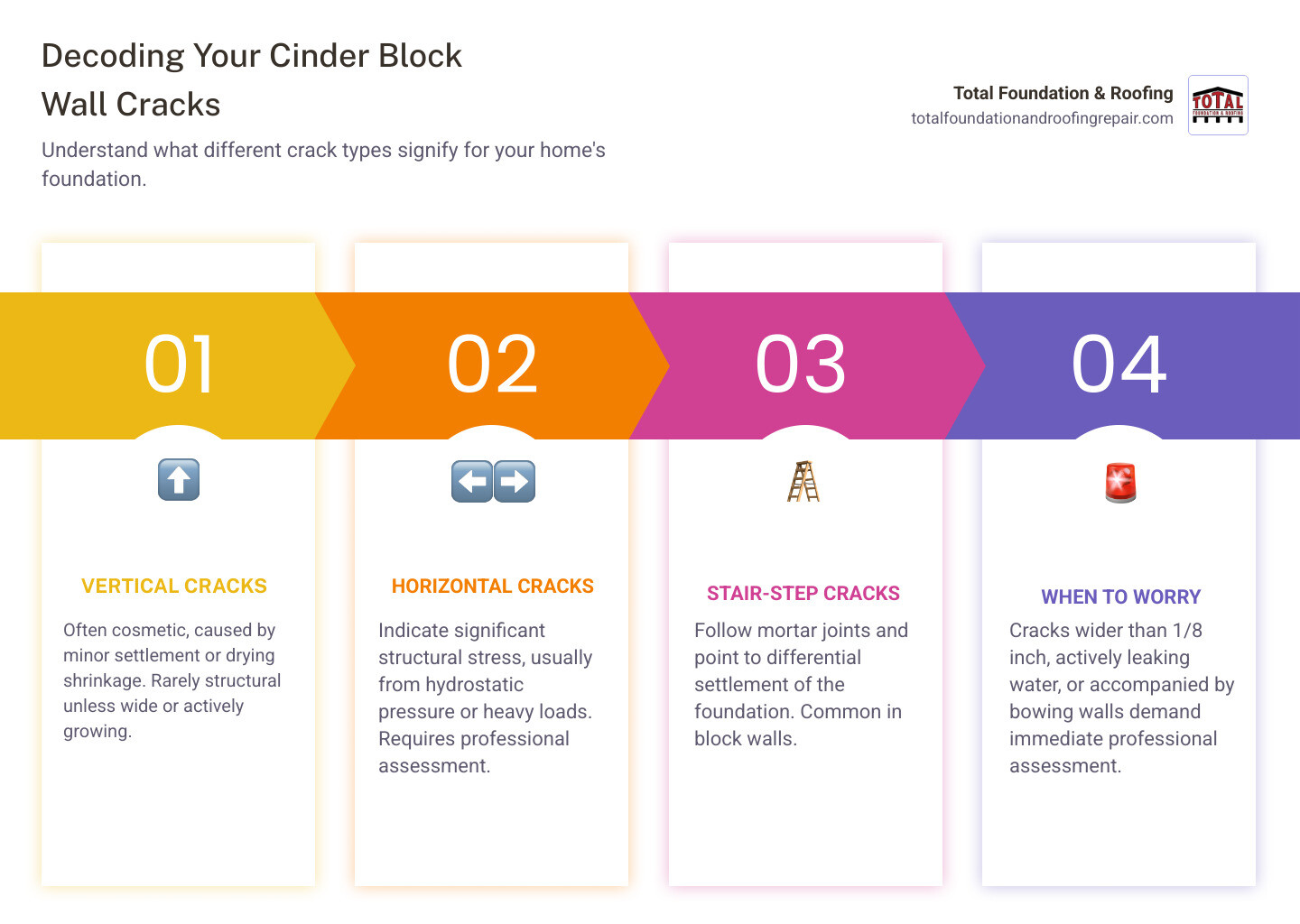
Common Crack Types and What They Mean:
- Vertical Cracks: These run up and down the wall. Thin, hairline vertical cracks are often caused by concrete shrinkage or minor foundation settling and are usually cosmetic. However, if they widen over time, they may indicate a more significant issue.
- Diagonal (Stair-Step) Cracks: These follow the mortar joints in a zigzag pattern. Stair-step cracks are a strong indicator of differential foundation settlement, meaning one part of the foundation is moving more than another.
- Horizontal Cracks: A horizontal crack is the most serious warning sign. It indicates that the wall is bowing or buckling inward due to immense external pressure, typically from water-saturated soil (hydrostatic pressure). This is a major structural concern requiring immediate expert attention. You can learn more about these issues by reading about common home foundation problems.
Assessing Severity: Cosmetic vs. Structural
A simple way to gauge severity is to measure the crack’s width. Any crack wider than 1/8 inch is considered structurally significant. If you can fit a nickel into the crack, it’s time to call a professional. Other signs of a structural problem include actively leaking water or any visible bowing or bulging of the wall. For a definitive assessment in our service area, we recommend a professional foundation inspection in Kerrville, TX.
DIY Cement Block Wall Crack Repair for Minor Issues
For small, non-structural hairline cracks (less than 1/8 inch wide) that are not leaking, a DIY repair is often sufficient. This approach is for cosmetic fixes, not structural reinforcement.
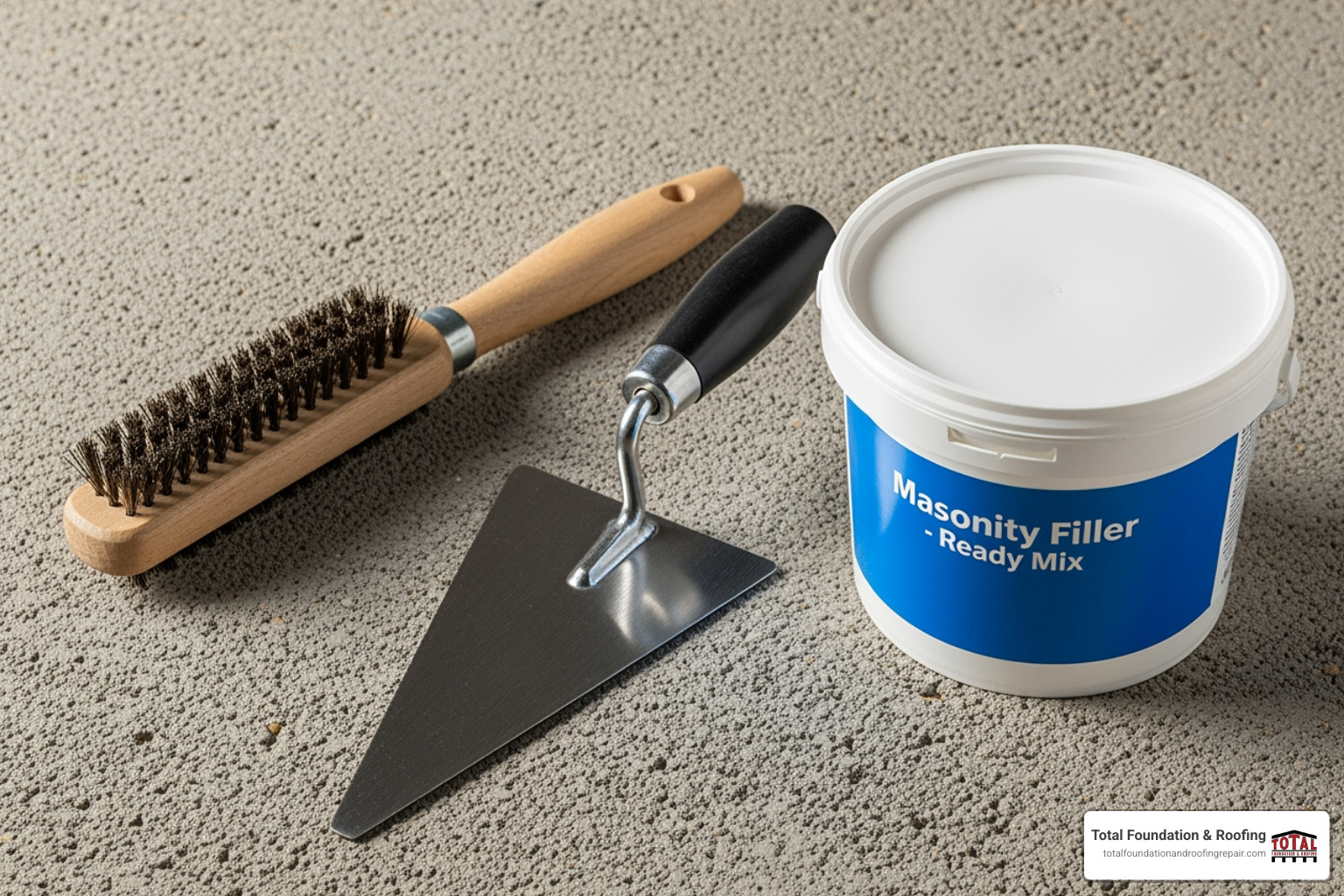
Follow these steps for a durable repair:
- Surface Preparation: Clean the crack thoroughly with a wire brush to remove loose debris, dirt, and paint. Use a shop vacuum to clear out all dust. The surface must be completely clean and dry for the filler to adhere properly.
- Choose Your Material: For minor, stable cracks, a flexible masonry crack filler is suitable. If you have a minor active leak, hydraulic cement is effective because it expands as it cures. For hollow cinder blocks, an epoxy-sand mixture is the best choice. Mix epoxy resin with dry sand to create a thick, mortar-like consistency that won’t run into the block’s hollow core.
- Application and Curing: Always follow the product’s instructions. Press the material firmly into the crack with a putty knife or trowel. Smooth the surface flush with the wall. Allow the patch to cure undisturbed for the time specified by the manufacturer, typically 24-48 hours. For more tips, see our guide on patching concrete surfaces.
Choosing the Right Filler for Your Cinder Block Wall
Picking the right material is critical for a lasting cement block wall crack repair, especially given the hollow nature of cinder blocks.
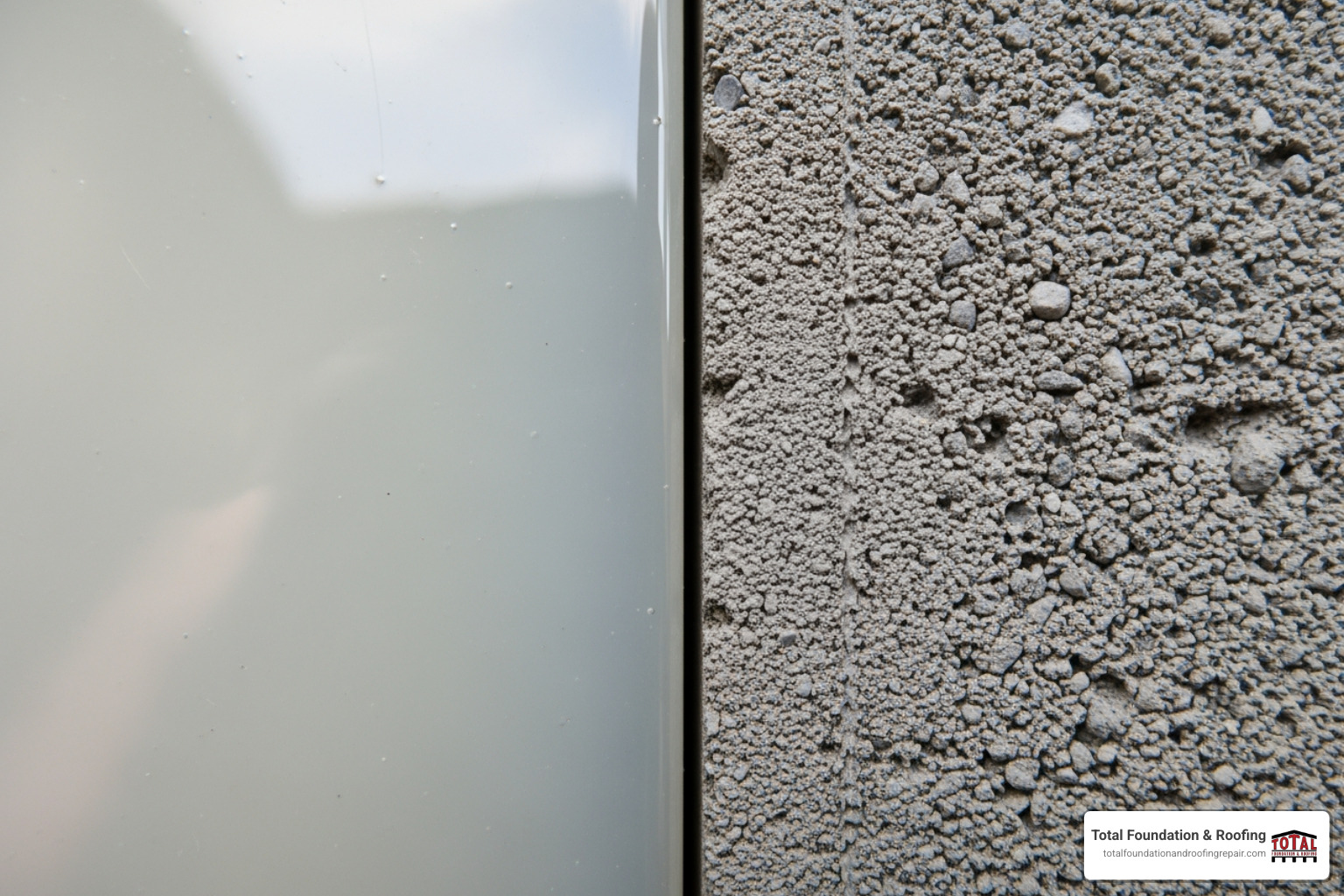
Here’s a comparison of common fillers:
- Epoxy-Sand Mixture: This is the recommended solution for hollow cinder blocks. A standard epoxy injection is designed for solid poured concrete and will fail in hollow blocks. By mixing epoxy resin with sand, you create a thick, mortar-like paste that bridges the crack effectively without filling the core.
- Hydraulic Cement: Best for stopping active water leaks in small cracks due to its rapid-setting and expansive properties. However, it is rigid and may re-crack if the wall continues to move.
- Cementitious Grout: A mortar-like material suitable for filling larger gaps or replacing missing mortar between blocks.
- Polyurethane Sealants: These are flexible sealants for non-structural cracks where slight movement is expected. Like thin epoxies, they are not ideal for filling cracks in hollow blocks.
For a structural fix that stays in place, a thick, mortar-like consistency is essential for any effective basement crack repair in a cinder block wall.
When to Call a Professional for Cement Block Wall Crack Repair
While DIY repairs work for minor issues, certain signs indicate a structural problem that requires a professional. Ignoring these red flags can lead to more extensive damage and costly repairs.
The biggest reason to call a professional is when cracks point to structural problems. Call a foundation specialist immediately if you observe any of the following:
- Bowing or Bulging Walls: Any visible inward or outward curve in the wall signals extreme external pressure and potential wall failure.
- Large Horizontal Cracks: These are a direct result of bowing and indicate a severe structural compromise.
- Widening Stair-Step Cracks: Multiple or growing diagonal cracks suggest significant, ongoing foundation settlement.
- Cracks Wider Than 1/8 Inch: A crack large enough to fit a nickel is a clear sign it needs professional evaluation.
- Active Water Leaks: Water seeping through cracks points to hydrostatic pressure and a breach in your foundation’s waterproofing.
Attempting to fix these issues yourself is risky. Structural repairs must meet specific safety and engineering standards, as outlined by authorities like the American Concrete Institute, to ensure a safe, long-term solution.
Professional Solutions for Structural Wall Cracks
Professional solutions address the underlying causes of structural cracks, stabilizing the wall to ensure your home’s long-term safety. These methods go far beyond a simple surface patch.
- Carbon Fiber Reinforcement: For bowing or cracked cement block walls, carbon fiber straps are a modern, minimally invasive solution. These ultra-strong straps are bonded vertically to the interior wall surface with epoxy, counteracting external pressure and preventing further movement.
- Wall Anchors and Helical Tiebacks: For walls with severe bowing, these systems provide robust stabilization. Wall anchors use an interior plate connected by a steel rod to an anchor in stable soil outside, transferring the load away from the foundation.
- Epoxy Injection: This method is highly effective for poured concrete walls but is not recommended for hollow cinder blocks.
- Wall Rebuilding: In extreme cases of widespread damage or structural failure, the only safe option may be to rebuild the affected portion of the wall.
Professional repairs are designed to be permanent solutions. Learn more about the average costs of these solutions to help you plan.
Preventing Future Cracks in Your Foundation Walls
Preventing cracks is always better than repairing them. Most preventative strategies focus on managing water around your foundation—a primary cause of cracks in the Texas Hill Country.
- Manage Drainage: Ensure your gutters are clean and downspouts extend at least 5-10 feet away from your home. The ground should slope away from the foundation to prevent water from pooling.
- Control Hydrostatic Pressure: Reducing soil saturation is key. In basements, a sump pump can remove collected groundwater, while a dehumidifier helps control interior moisture.
- Perform Regular Maintenance: Periodically inspect your foundation for new cracks. Avoid planting large trees too close to the house, as their roots can exert pressure on foundation walls.
A comprehensive foundation waterproofing system is the most effective defense against water intrusion and the cracks it causes.
Secure Your Foundation for the Long Term
Promptly and correctly addressing a cement block wall crack repair is crucial for your home’s structural integrity and value. While minor cosmetic cracks can be a DIY project, structural issues demand professional expertise.
Ignoring problems like bowing walls, horizontal cracks, or widening stair-step cracks is a significant risk. An improper repair can lead to further damage and more expensive fixes later. When your home’s foundation is at stake, don’t guess.
For homeowners in Kerrville and the surrounding Texas Hill Country, Total Foundation & Roofing offers certified solutions custom to our region’s unique soil and climate. Our team provides high-quality workmanship to stabilize your foundation, whether with carbon fiber straps, wall anchors, or other proven methods.
Don’t let a small crack become a major problem. If you’re unsure about a crack or know you’re facing a structural issue, schedule your expert foundation crack repair service online. Let’s secure your foundation for the long term.