
Why Ceiling Water Stains Demand Immediate Attention
A brownish stain on your ceiling is a critical warning sign of water infiltration. Ignoring it can lead to mold growth, rotted framing, and repairs costing upwards of $3,000. Whether it’s a leaking roof after a Texas thunderstorm, a faulty pipe, or HVAC condensation, that discoloration signals a problem that requires immediate attention. For homeowners in the Texas Hill Country, prompt ceiling water stain repair is essential to protect your property value, and our expert team at Total Foundation & Roofing is here to help.
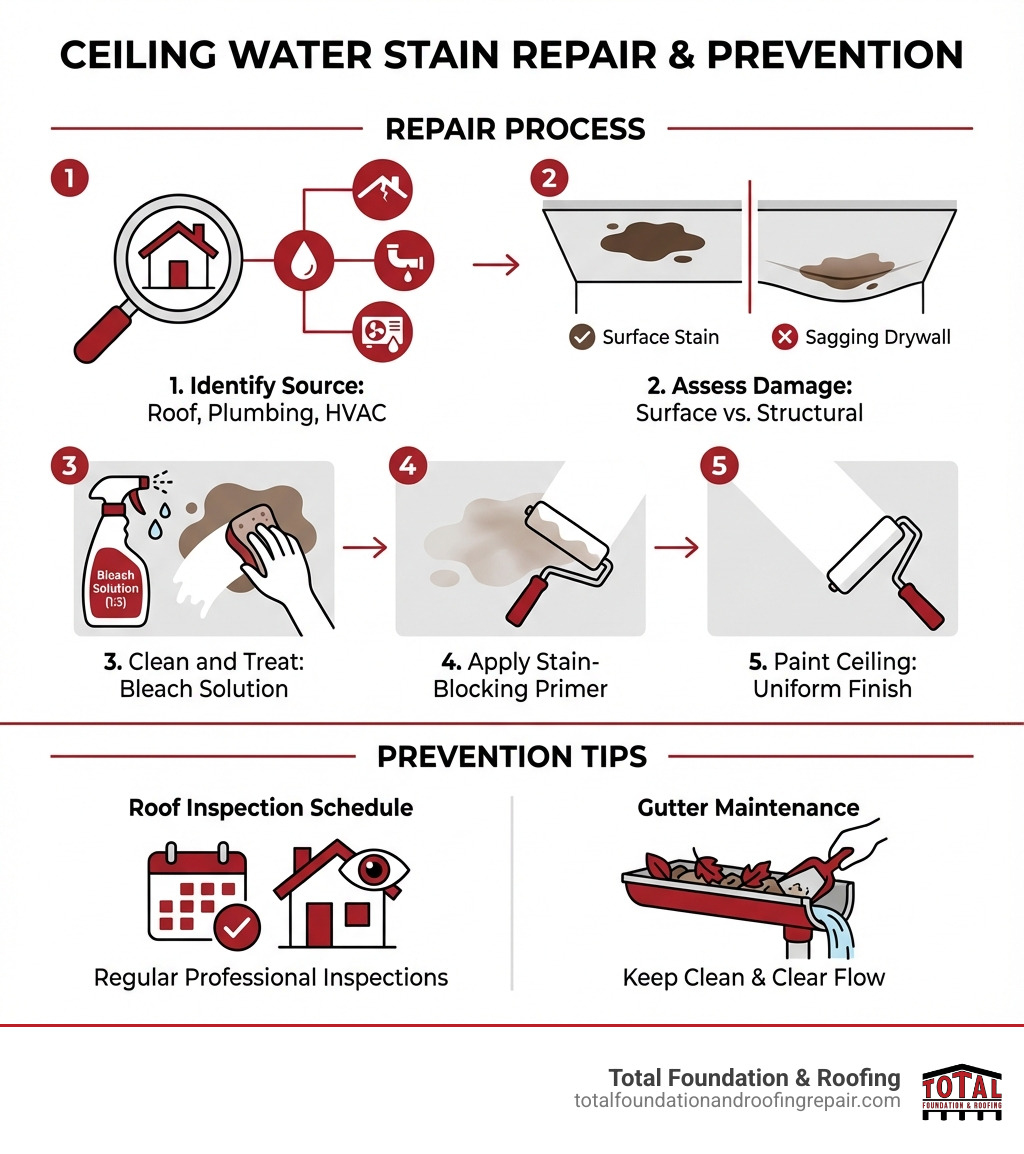
The biggest mistake is painting over the stain without fixing the source. This only hides the issue while water damage worsens. A proper repair involves a systematic approach:
- Find and fix the leak source: Check your roof, plumbing, and HVAC system.
- Assess the damage: Determine if it’s a surface stain or if the drywall is compromised.
- Clean and treat the area: Use a bleach solution to kill any mold or mildew.
- Prime with a stain-blocker: Apply an oil-based primer to prevent the stain from bleeding through.
- Paint to match: Finish with ceiling paint, potentially painting the entire ceiling for a uniform look.
Mold can grow on damp surfaces in as little as 24 hours, creating health hazards and structural concerns. This guide provides the definitive steps to tackle this problem correctly, preventing minor leaks from becoming major disasters.
Your Guide to a Spotless Ceiling

A water stain on a ceiling is more than a cosmetic issue; it is a clear warning sign of a moisture problem that can compromise your home’s structural integrity and indoor air quality. Homeowners in the Texas Hill Country benefit most when they treat stains as early indicators and schedule prompt ceiling water stain repair rather than waiting for visible leaks or sagging drywall. For a reliable starting point on protecting your home as a system, the EPA’s Brief Guide to Mold, Moisture and Your Home is an essential reference.
Addressing these issues quickly is also one of the most cost‑effective ways to preserve your property’s value and avoid full‑scale remediation. Partnering with a certified local contractor that understands regional weather, like the team at Total Foundation & Roofing, ensures that repairs are custom to Texas Hill Country conditions and integrated with broader roofing services. Ignoring a stain can lead to widespread mold growth, rotted framing, and costly future repairs. This guide provides definitive, actionable steps to diagnose the source, repair the damage, and prevent it from happening again.
Your Step-by-Step Guide to Ceiling Water Stain Repair
Water damage repair costs can range from a minor DIY fix under $150 to upwards of $3,000 for extensive issues. The first and most important step in any ceiling water stain repair is to locate and fix the source of the moisture. Painting over an active leak only hides a growing problem.
How to Identify the Source of the Ceiling Water Stain
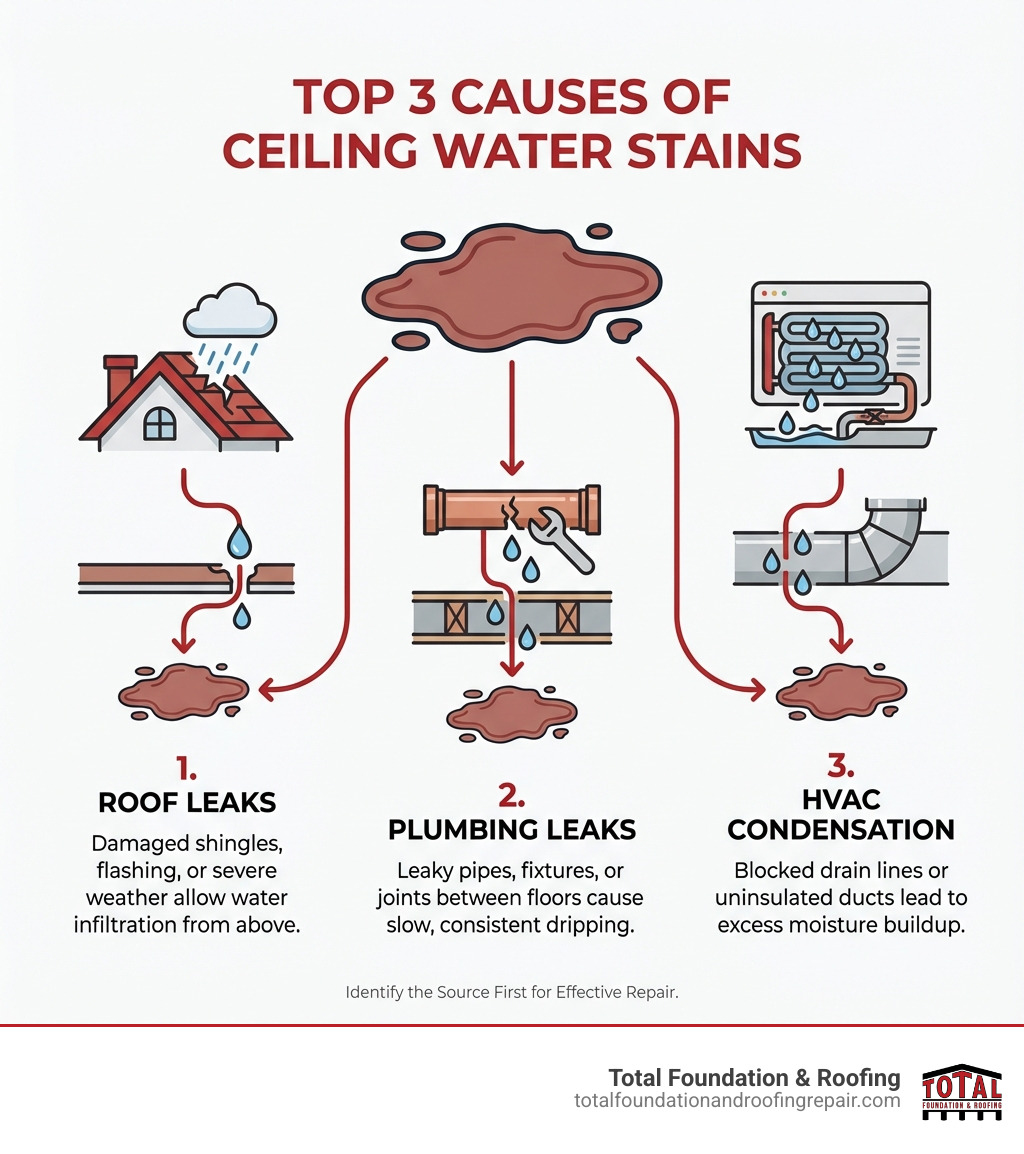
The stain’s location and appearance offer vital clues to its origin. A visual inspection is the first step. Here are the most common culprits:
- Roof Leaks: Stains on the top floor, especially after rain, often point to a roof leak. Look for damaged shingles or flashing. Stains near the ceiling’s edge could indicate clogged gutters. If you can’t find the source, a professional roof leak detection service is your best bet. For active drips, you may need an emergency roof leak fix.
- Plumbing Issues: A stain below a bathroom, kitchen, or laundry room strongly suggests a plumbing leak from a pipe, drain, or fixture. Check for deteriorating caulk or grout around tubs and showers.
- HVAC Condensation: An HVAC unit in the attic can cause stains if its condensate drain line is clogged or the drip pan overflows. These stains may follow the path of the ductwork. Poor attic ventilation can worsen this problem, leading to an attic water leak.
- Poor Ventilation: In rooms like bathrooms and kitchens, high humidity can condense on cool ceiling surfaces, causing stains over time. This indicates a need for better ventilation, such as an exhaust fan.
The stain’s color can also help. Dark brown or yellow rings often suggest a slow leak, while lighter stains might point to condensation.
Assessing Damage and Preparing for Repair
After fixing the leak, you must assess the ceiling. Ensure the area is completely dry before proceeding. This may take several days.
- Check Severity: Gently press on the stain. If the drywall is firm, you can likely clean and paint it. If it’s soft, sagging, or crumbling, the section of drywall must be replaced.
- Gather Supplies: Protect your space with drop cloths. You will need safety goggles, gloves, a spray bottle, bleach, an oil-based stain-blocking primer, and matching ceiling paint. For drywall repair, you’ll also need a utility knife, putty knife, drywall tape, and joint compound.
- Prioritize Safety: Always wear protective gear when handling bleach and ensure the room is well-ventilated. Never mix bleach with other cleaners.
The DIY Ceiling Water Stain Repair Process: From Cleaning to Painting
With the leak fixed and the area prepped, you can begin the cosmetic repair. Follow these steps for a flawless finish.
- Clean the Stain: Once the ceiling is completely dry, treat the stain to kill any surface mold. Spray the area with a solution of one part bleach to three parts warm water. Be careful not to oversaturate the drywall. Gently dab, especially on textured ceilings, and let it dry completely. For safety, follow CDC guidelines on Cleaning and Sanitizing with Bleach after an Emergency.
- Repair Damaged Drywall (If Necessary): If the drywall is soft or a seam tape is loose, you’ll need to perform a patch. Cut away the damaged section, apply new paper drywall tape with joint compound, and smooth it out. This may require multiple thin layers with sanding in between to create a seamless surface.
- Apply Stain-Blocking Primer: This is the most critical step. Use an oil-based, stain-blocking primer to seal the stain and prevent it from bleeding through the new paint. A standard latex primer will not work. Apply one or two coats, covering the entire stained area, and allow it to dry completely.
- Paint the Ceiling: Apply a flat, white ceiling paint over the primed area. Feather the edges to blend it in. For a perfect, uniform finish, it is often best to paint the entire ceiling, as matching an existing paint color is difficult.
Handling Severe Damage and Potential Mold
If the damage is more than a simple stain, a DIY approach may not be sufficient.
- Extensive Drywall Damage: If the drywall is sagging, soft, or crumbling, the entire affected section must be cut out and replaced to restore structural integrity.
- Mold Remediation: Mold can grow in as little as 24-48 hours and poses a health risk. While a bleach solution handles surface mildew, widespread mold requires professional remediation. For significant mold, it’s safest to contact a storm damage restoration service.
- Structural Damage: If you suspect the water has damaged framing, insulation, or electrical wiring (indicated by warped joists or flickering lights), stop immediately and call a professional. These issues require expert assessment. Our team can evaluate the situation and recommend a course of action for complete storm damage repair.
Preventing Future Stains and When to Call the Experts
Proactive maintenance is the most effective way to prevent water damage and avoid the headache of ceiling water stain repair. Regularly inspecting your home’s key systems creates a first line of defense against leaks, and homeowners who follow a documented maintenance schedule experience fewer emergency repairs over the life of their roof and plumbing systems.
Best Practices for Preventing Future Water Stains
Prevention is always better (and cheaper) than cure. Here are top, field-tested practices for keeping your ceilings spotless in the Texas Hill Country:
- Roof Maintenance: Inspect your roof twice a year and after major storms. Address missing shingles, hail damage, or compromised flashing promptly to prevent leaks. A professional assessment can determine if you need a targeted roof repair or full roof replacement. For budgeting and planning, the roof repair cost complete guide provides detailed cost ranges based on real repair scenarios.
- Gutter Cleaning: Keep gutters and downspouts clear of debris to prevent water from overflowing and seeping into your eaves. Industry guidance from manufacturers like GAF emphasizes gutter performance as a critical component of roof drainage and leak prevention.
- Pipe Insulation: Insulate pipes in unheated areas like attics and crawl spaces to prevent them from bursting in cold weather. Burst supply lines are one of the most common sources of sudden ceiling leaks in winter and during Arctic cold snaps.
- Attic Ventilation: Ensure your attic is well-ventilated and properly insulated to prevent moisture buildup from condensation. Proper ventilation also extends roof life and reduces the risk of attic water leak issues caused by trapped humid air.
- HVAC Maintenance: Have your HVAC system serviced annually to ensure the condensate line is clear and functioning correctly, and confirm that overflow pans and safety shutoffs are in good condition.
- Check for Interior Leaks: Regularly inspect caulk and grout in bathrooms and kitchens, and fix leaky faucets, supply lines, or toilets immediately. Simple fixture maintenance often prevents the ceiling damage that later shows up as brown rings or peeling paint.
Why Professional Help is Your Best Bet for Lasting Results
While some minor stains are suitable for a DIY fix, complex leaks or extensive damage require professional expertise to avoid greater problems and safety hazards. Licensed roofing and restoration professionals use tools such as moisture meters, thermal imaging, and attic inspections to locate leak paths that are invisible from the living space.
- Accurate Diagnosis: Professionals use specialized equipment to find the true source of a leak, which can be far from the visible stain. Infrared imaging and controlled water testing help pinpoint entry points at roof penetrations, valleys, and flashing details. Our roof leak detection services are designed to identify these hidden vulnerabilities before they trigger larger structural issues.
- Comprehensive Repair: A professional addresses the root cause and any hidden damage to framing, insulation, or roof decking, ensuring a lasting solution that prevents the stain from returning. When storms are involved, integrated storm damage repair can coordinate roofing, gutters, and related structural fixes in one scope of work.
- Safety and Local Expertise: Certified technicians manage repairs involving potential mold, electrical hazards, and steep-slope roofing conditions in compliance with Texas building codes and best practices outlined by organizations such as the Roofing Contractors Association of Texas. For homeowners in Kerrville, TX, Fredericksburg, Comfort, and the wider Texas Hill Country, our team provides region-specific solutions that account for intense sun, hail, and sudden downpours.
Do not let a small stain evolve into structural damage or indoor air quality problems. If you are unsure about the cause, suspect significant damage, or prefer an expert solution backed by certified workmanship, you can request a professional roof leak detection service online and get a custom plan to restore and protect your home.