
The Mechanics of Flat Roof Seam Repair
Flat roof seam repair involves resealing the joints where membrane sheets meet. As a provider of Total Foundation & Roofing Repair, we know that seam integrity determines the lifespan of your structure. Whether for a commercial warehouse or a residential garage, seams are the primary vulnerability. According to Owens Corning, a roofing system is only as strong as its weakest link–which is almost always the seam. In the Texas Hill Country, where temperatures can fluctuate wildly in a single day, the expansion and contraction of roofing materials put immense pressure on these joints. When the adhesive or weld fails, the entire building is at risk of moisture intrusion.
How to repair flat roof seams:
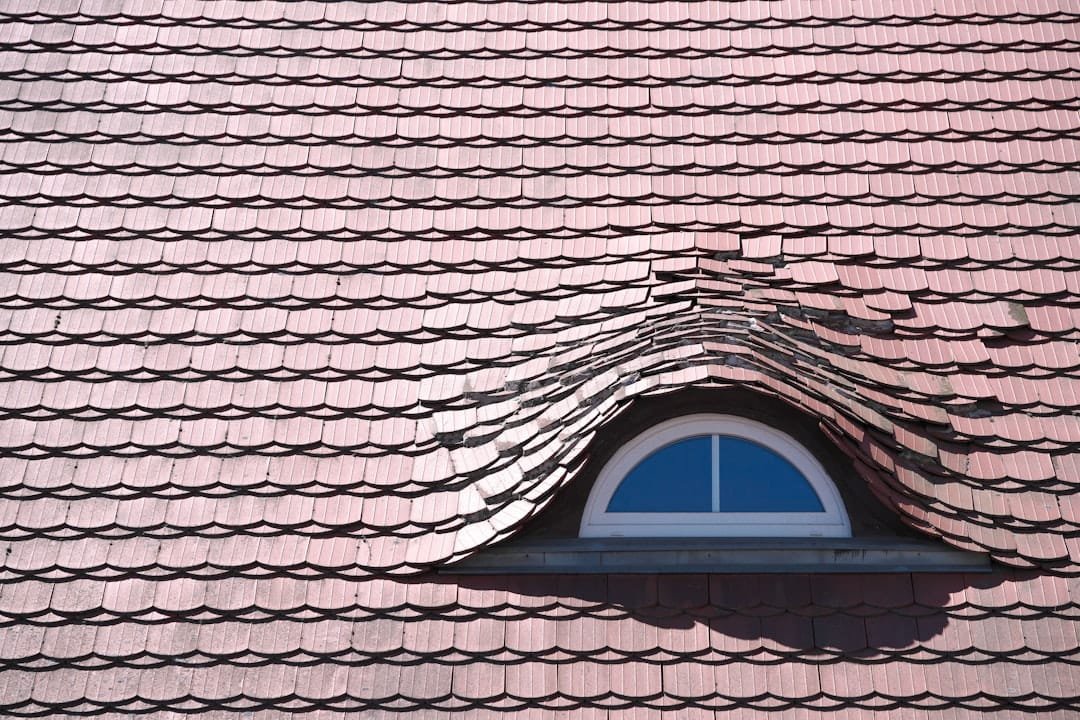
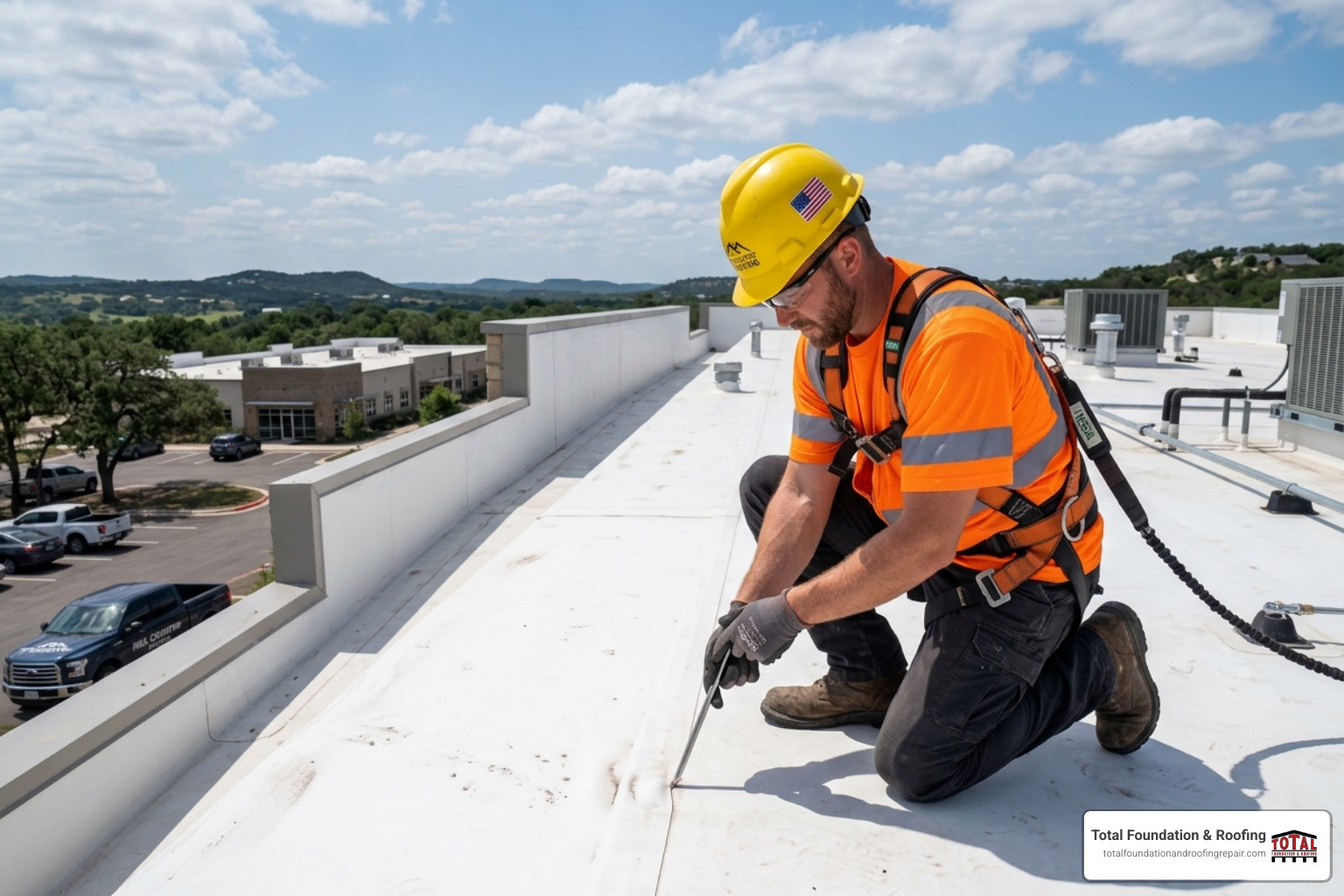
- Identify damage — Look for separation, “fish-mouthing” (where the edge curls up), blistering, or water stains. Use a specialized probing tool to check for hidden gaps that aren’t visible to the naked eye.
- Clean the area — Remove debris, dirt, and old sealant. For EPDM, use a weathered membrane cleaner. For TPO, ensure all oxidation is scrubbed away to reveal a fresh surface for bonding.
- Prime the surface — Apply a compatible primer for your specific membrane. This is a critical step that creates a molecular bond between the old roof and the new repair material.
- Apply repair material — Depending on the system, use seam tape, roofing cement, or a hot-air heat welder. Ensure the patch extends at least 3 to 6 inches beyond the damaged area in all directions.
- Roll and seal — Use a heavy silicone or steel seam roller to eliminate air pockets and ensure 100% contact. For many systems, a final bead of lap sealant is applied to the edge of the patch for extra protection.
Industry data shows that 80% of flat roof leaks stem from seam failure caused by aging, thermal movement, or UV exposure. Seams are the “zippers” of your roof; when they fail, water migrates through insulation, often appearing far from the entry point. I’m Daniel Sowell, owner of Total Foundation & Roofing Repair. With 18 years of experience in the Texas Hill Country, I’ve handled hundreds of flat roof seam repair jobs. This guide explains how to fix these issues before they require a full roof replacement.
Related resources:
Why Seams Fail
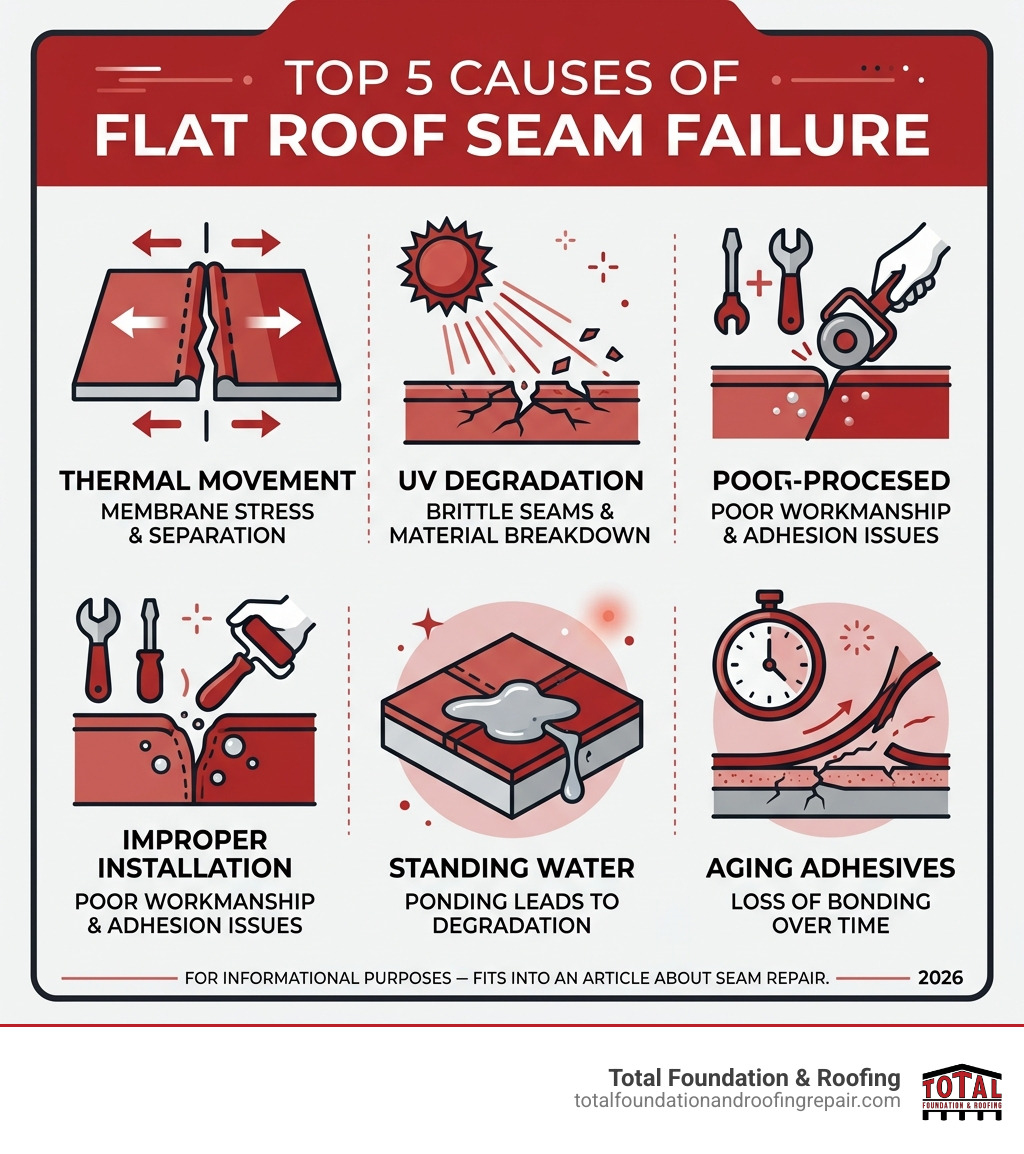
In the Texas Hill Country, extreme thermal movement stresses adhesives. Specific enemies include:
- Ponding Water: Standing water is the primary catalyst for seam degradation. It creates hydrostatic pressure that forces moisture into microscopic gaps and breaks down the chemical bonds of adhesives over time.
- Freeze-Thaw Cycles: Even in Texas, winter moisture in gaps expands when frozen, prying seams apart via “ice wedging.” This mechanical force can turn a tiny pinhole into a major leak in a single season.
- Improper Installation: Contaminants like dust, pollen, or moisture during the initial build prevent proper bonding. If the contractor didn’t use a seam roller during installation, the bond is likely insufficient.
- UV Exposure: Constant sun exposure makes membranes brittle. As the plasticizers in the material evaporate, the membrane loses its ability to stretch, leading to cracking at the most stressed points: the seams.
Research suggests 90% of leaks originate from failed flashing or seams. Check our guide on Flat Roof Leak Repair for internal signs of failure. RoofingCalc also offers technical breakdowns of these structures.
Material-Specific Repair Techniques
Material compatibility is the “cardinal rule” of the National Roofing Contractors Association. Using the wrong primer or adhesive can cause a chemical reaction that melts the membrane.
EPDM (Rubber Roofing)
- The Fix: Clean with weathered membrane cleaner, apply EPDM primer, and use “Peel & Stick” seam tape. EPDM is a thermoset material, meaning it cannot be welded; it relies entirely on high-quality adhesives.
- Pro Tip: Never use asphalt-based products or “wet-patch” on EPDM; the petroleum distillates will cause the rubber to dissolve and swell.
TPO and PVC (Thermoplastics)
- The Fix: Use a hot-air welder to fuse sheets. For older membranes that have lost their weldability, use pressure-sensitive cover strips after deep cleaning and priming.
- Insight: TPO is a commercial standard because welded seams are physically stronger than the membrane itself, creating a monolithic sheet.
Modified Bitumen (Mod-Bit)
- The Fix: Use a “three-course” method with roofing cement and fabric mesh, or liquid rubber sealing for a flexible patch. Mod-bit seams often fail due to “bleed out” issues during the torching process.
If your roof is holding water, learn how to repair wet flat roofs using moisture-tolerant materials.
Essential Tools
Preparation is 90% of the job. Consider the cost differences between flat roofs and garage roofs before DIYing.
- Seam Roller: Ensures 100% contact between adhesive and membrane. Without this, the bond will fail within months.
- Cleaner & Primer: Strips oxidation for a molecular bond. This is the most skipped step in DIY repairs.
- Probing Tool: A dull metal hook used to find hidden “fish-mouths” or small openings that haven’t fully opened yet.
- Heat Gun: Essential for TPO/PVC welding. Professional models allow for precise temperature control to avoid burning the membrane.
- Utility Knife: Use rounded blades to prevent corner peeling and accidental punctures during the cutting process.
Professional Maintenance and Replacement Strategies
Proactive maintenance can extend roof life by 15 years. However, you must know when flat roof seam repair is no longer sufficient. A roof that requires constant patching is often a sign of systemic failure rather than localized damage.
The “25% Rule” and the “50% Threshold”
- The 25% Saturation Rule: If over 25% of the roof’s insulation is saturated (detected via infrared thermography or moisture probing), localized repair is ineffective. Trapped moisture will rot the deck and lead to mold growth inside the building.
- The 50% Wear Threshold: If over 50% of the seams across the entire roof surface are failing, curling, or showing signs of “alligatoring,” the system has reached its end of life. At this point, the labor cost of patching becomes more expensive than a full replacement.
See The Flat Truth About Roof Repair and Replacement Expenses for financial details and budgeting advice.
Repair vs. Replacement Cost (2026 Data)
| Service Type | Estimated Cost (Per Sq. Ft.) | Expected Lifespan |
|---|---|---|
| Localized Seam Repair | $12.00 – $20.00 | 3 – 5 Years |
| Silicone Roof Coating | $3.00 – $5.00 | 10 – 20 Years |
| Full TPO Replacement | $7.50 – $12.50 | 20 – 30 Years |
| Full EPDM Replacement | $8.00 – $14.50 | 25 – 35 Years |
Note: GAF provides detailed specifications on when tear-offs are required to maintain manufacturer warranties. Always consult a certified professional before deciding on a major overhaul.
When to Hire a Professional
In Kerrville or Fredericksburg, professional service ensures your investment is protected against the harsh Texas sun. Professional contractors provide:
- Warranty Protection: Certified contractors keep manufacturer warranties valid. DIY repairs often void these protections immediately.
- Advanced Equipment: We use robotic welders for consistency on large TPO projects, ensuring every inch of the seam is fused perfectly.
- Safety Protocols: We manage the risks of high-heat equipment, heavy materials, and roof edges, which are the leading causes of accidents in the industry.
- Insurance Documentation: We provide the necessary documentation and photo evidence for storm damage claims, helping you navigate the insurance process.
Our emergency roof repair team provides temporary dry-ins during storms to prevent interior damage while waiting for a permanent fix.
The Role of Coatings
Silicone coatings are an excellent alternative to replacement when the substrate is still in good condition. These coatings eliminate seams entirely by creating a monolithic, seamless barrier over the existing roof. They reflect up to 85% of sunlight, significantly reducing UV degradation and lowering cooling costs by up to 25%. Consult our Flat Roof Water Damage Guide before applying any coating to ensure the underlying insulation is completely dry.
Conclusion and Next Steps
Roof seams are your first line of defense against the elements. Ignoring a small separation today can lead to catastrophic structural failure tomorrow. Whether you are managing a large retail center in Kerrville or a residential garage in Comfort, regular inspections and timely flat roof seam repair are vital for protecting your property value.
Total Foundation & Roofing specializes in certified workmanship for the Texas Hill Country. We provide engineered solutions for EPDM, TPO, and Modified Bitumen systems that exceed industry standards and withstand the unique challenges of our local climate.
Frequently Asked Questions
How long does a flat roof seam repair last? A professional repair using high-quality tapes or heat welding can last 5 to 10 years, depending on the condition of the surrounding membrane. However, if the rest of the roof is aging, new leaks may develop nearby.
Can I use silicone caulk to fix a roof seam? No. Standard silicone caulk does not have the expansion and contraction capabilities required for roofing. It will quickly peel away. Always use specialized lap sealants or seam tapes designed for roofing membranes.
What is the best temperature for seam repair? Most adhesives and primers require temperatures above 40°F (4°C) to cure properly. For TPO welding, ambient temperature and humidity must be monitored to adjust the heat gun settings for a perfect fuse.
Ready to secure your roof?
- Schedule an Inspection: Our experts use diagnostic tools to probe your seams and identify hidden moisture.
- Get a Repair Quote: We provide fast, transparent pricing for all membrane types.
- Explore Replacement: If repairs are no longer viable, we offer top-tier TPO and EPDM installations with industry-leading warranties.
Contact us today for expert flat roof repair services and ensure your property stays dry. Visit our office in Kerrville, TX to discuss your project with a specialist.