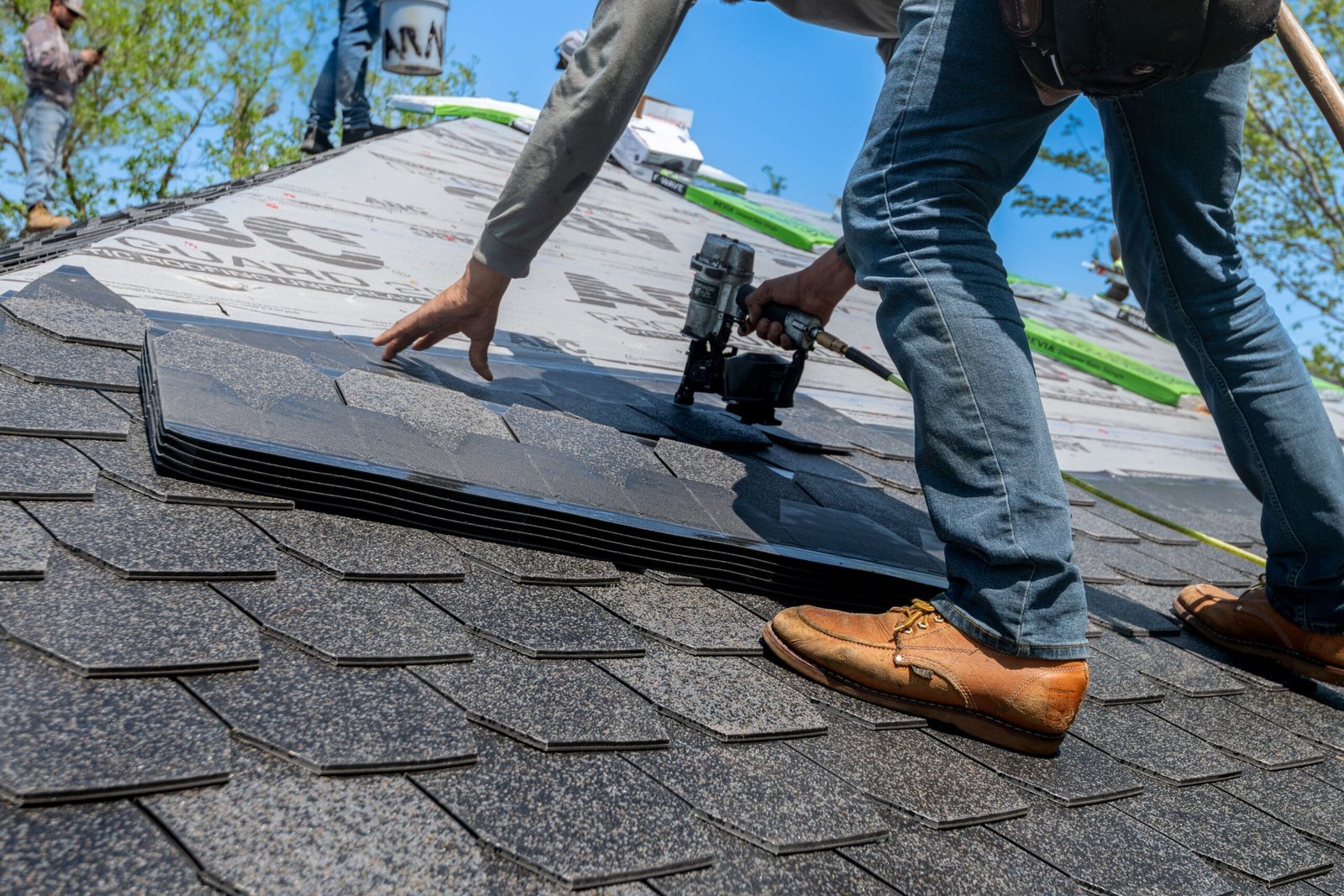

The Structural Process of Changing Conservatory into Extension
Changing conservatory into extension is one of the most cost-effective ways to add livable, year-round space to your home — but only if you do it right.
Here’s a quick answer to the core question:
| Option | Typical Cost | Build Time | Best For |
|---|---|---|---|
| Roof replacement only | £4,000–£10,000 | Less than 1 week | Budget upgrades |
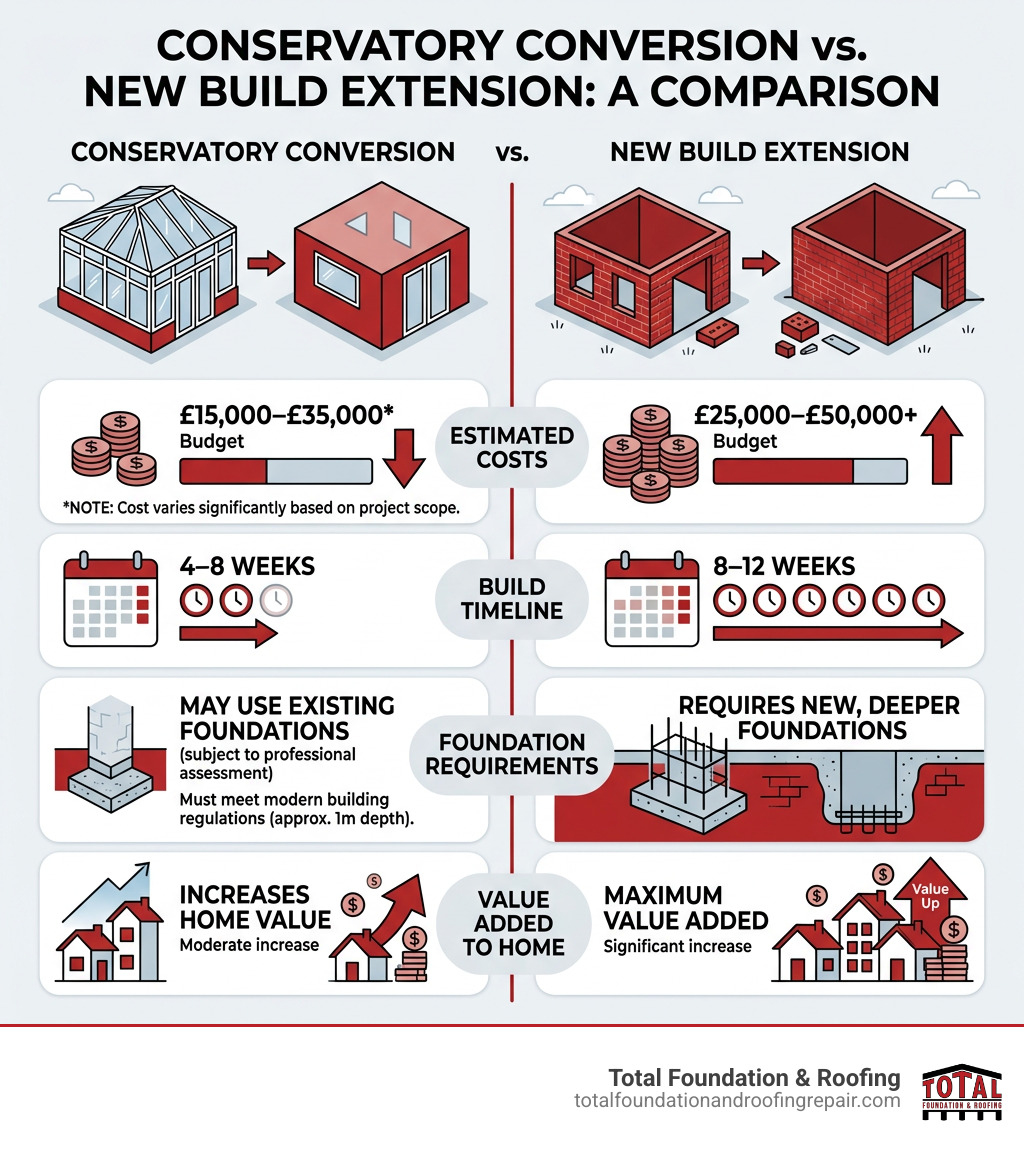
| Full conservatory conversion | £15,000–£35,000 | 4–8 weeks | Year-round living space |
| Full new extension (rebuild) | £25,000–£50,000+ | 8–12 weeks | Maximum value and flexibility |
The short answer: Converting an existing conservatory is almost always cheaper than a full new build — but only if the existing foundations meet building regulations (at least 1 metre deep and 60cm wide). If they don’t, costs rise fast.
Many homeowners inherit outdated conservatories that are too hot in summer and freezing in winter. Instead of tearing everything down, a smart conversion can transform that wasted space into a functional room — without starting from scratch.
That said, the process involves real structural decisions: foundations, roof systems, building regulations, and thermal performance all need to be addressed correctly. Skip any of those, and you’ll pay for it later.
At Total Foundation & Roofing, we’ve spent over 18 years helping homeowners make sound structural decisions — from foundation assessments to roof replacements. I’m Daniel Sowell, and my background in foundation construction and roofing gives me a clear-eyed view of what it truly takes when changing conservatory into extension projects go from concept to reality. Let’s walk through exactly what’s involved so you can make the right call for your home and budget.
Related content about changing conservatory into extension:
When we talk about changing conservatory into extension, we aren’t just swapping glass for bricks. It is a fundamental shift in how the building functions. A conservatory is traditionally a temporary-style structure bolted to the side of a house, whereas an extension is a permanent, thermally efficient part of the primary dwelling.
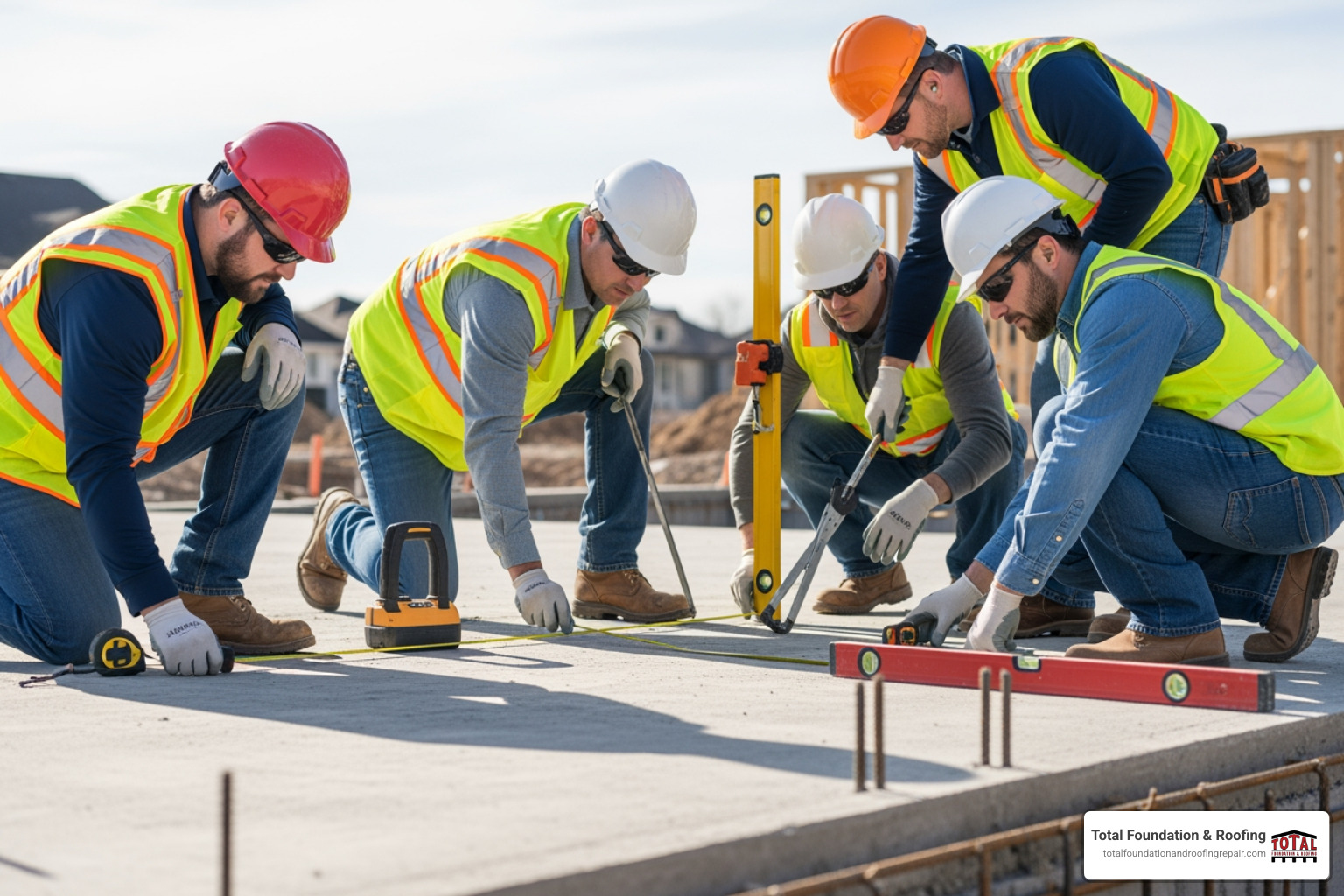
The first step in our process is always an inspection of the current structure. We look for signs of movement, moisture ingress, and the quality of the original build. According to experts at Replacing a Conservatory With an Extension: Your Questions Answered!, many older conservatories fail because they lack proper thermal barriers between the floor and the walls.
To achieve a true extension feel, we must ensure:
- Structural Integrity: Can the existing walls support a heavier solid roof?
- Load-Bearing Capacity: Is the concrete slab thick enough to handle furniture and internal wall finishes?
- Moisture Protection: Is there a functioning Damp Proof Course (DPC) to prevent Texas Hill Country humidity from seeping into your new living room?
Assessing Foundations for Changing Conservatory into Extension
Foundations are the literal “make or break” point of this project. In many cases, conservatory footings were never designed to carry the weight of a tiled roof or brick walls. To determine if your current base is suitable, we perform “trial holes.” This involves digging alongside the existing base to measure its depth and width.
For a single-story extension to meet modern building standards, foundations typically need to be at least 1 metre deep and 60cm wide. If your conservatory sits on a shallow “raft” foundation or a thin dwarf wall, it may require foundation crack repair or underpinning before any further work begins.
Soil mechanics also play a huge role. In areas like Fredericksburg and Kerrville, we often deal with rocky terrain or clay-heavy soils that expand and contract. A structural survey is essential to ensure that adding weight won’t cause the structure to pull away from the main house over time.
Roof Systems and Thermal Efficiency
The most common reason for changing conservatory into extension is the “greenhouse effect.” Standard polycarbonate or glass roofs are terrible at regulating temperature. To fix this, we look at high-performance roof replacement services.
Modern options include:
- Solid Tiled Roofs: These provide the best insulation and make the room look like an original part of the house.
- Lightweight Composite Shingles: These offer the aesthetic of slate or clay without the massive weight of traditional materials.
- Hybrid Roofs: Combining solid panels with high-performance glass sections to maintain natural light while improving U-values.
As noted in Converting Your Conservatory Into a Seamless Extension, a vaulted ceiling with internal plastering and LED downlighters can completely change the atmosphere of the space. By adding layers of high-grade rigid foam insulation, we can reduce solar gain in the summer and retain heat in the winter, making the room comfortable year-round.
Building Regulations and Permitted Development
In many instances, changing conservatory into extension can be done under “Permitted Development” rights, meaning you might not need full planning permission. However, Building Regulations approval is mandatory.
Building control officers will inspect the site to ensure:
- Structural Safety: The new roof and walls won’t collapse.
- Ventilation: There is adequate airflow to prevent mold.
- Fire Safety: Especially if the room is intended for use as a bedroom.
- Energy Performance: The insulation must meet specific targets to ensure the house remains efficient.
If you are knocking through a wall to create an open-plan space, you’ll also need to consider emergency roof repair standards for the junction where the new and old roofs meet. We always recommend checking with local authorities in Kerrville or Fredericksburg before swinging a sledgehammer.
Costs, Timelines, and Value of Conversion
Budgeting for a conversion requires a clear understanding of what you are keeping and what you are replacing. While reusing the base saves money, the internal fit-out—plastering, flooring, and electrics—can add up.
Comparing Costs: Changing Conservatory into Extension vs. New Build
Is it actually cheaper? Usually, yes. By utilizing the existing groundwork and drainage, you can save thousands on excavation and concrete pouring. However, if the foundations are found to be inadequate, the cost gap between a conversion and a new build narrows significantly.
| Expense Item | Conversion (Reuse Base) | New Build (Full Rebuild) |
|---|---|---|
| Groundwork & Excavation | £0 – £2,000 | £5,000 – £10,000 |
| Structural Walls | £3,000 – £7,000 | £8,000 – £15,000 |
| Roof System | £5,000 – £12,000 | £7,000 – £15,000 |
| Windows & Doors | £3,000 – £8,000 | £5,000 – £10,000 |
| Estimated Total | £15,000 – £35,000 | £25,000 – £50,000+ |
When selecting materials from our roofing services, the cheapest option isn’t always the best for long-term ROI. High-quality insulation and durable roofing materials like those from GAF or Owens Corning provide better energy savings over the life of the home.
Project Timelines and Property Value
A typical project for changing conservatory into extension takes between 4 and 12 weeks. A simple roof replacement might be done in a few days, but a full conversion involving new walls, windows, and internal finishes requires more time for inspections and drying out plaster.
From a value perspective, the impact is significant. Home improvements that add usable floor area can increase property value by up to 25%. In the Kerrville, Texas market, buyers are often wary of “glass boxes” that are unusable for half the year. An insulated, permanent extension has much higher market appeal.
Adapting to the Texas Hill Country climate means focusing on cooling efficiency. By replacing a glass roof with a solid, insulated one, you reduce the strain on your HVAC system, which is a major selling point for future owners.
Conclusion: Expert Guidance for Your Home
Changing conservatory into extension is a brilliant way to reclaim underused space without the massive upheaval of a traditional new build. However, the success of the project hinges on the quality of the foundations and the thermal performance of the new roof.
At Total Foundation & Roofing, we pride ourselves on providing certified, high-quality workmanship tailored to the unique conditions of the Texas Hill Country. Whether you need a structural assessment of your current base or a full roof replacement, our team is here to ensure your home remains safe, efficient, and beautiful.
Don’t let a “glorified greenhouse” waste your property’s potential. If you’re ready to transform your space, contact us today for a professional consultation.
Call us at 830-257-1111 for a free quote and let’s get started on your home transformation.