
What is Minor Hail Damage and Why Does It Matter?
Minor hail damage roof issues are often hard to spot but pose a serious threat to your home’s long-term protection. For homeowners, understanding what constitutes minor damage can save thousands in future repairs and help file a successful insurance claim. At Total Foundation & Roofing, we believe an informed homeowner is an empowered one, and this guide will walk you through everything you need to know about identifying and addressing hail’s hidden impact.
Quick Answer: What is Minor Hail Damage?
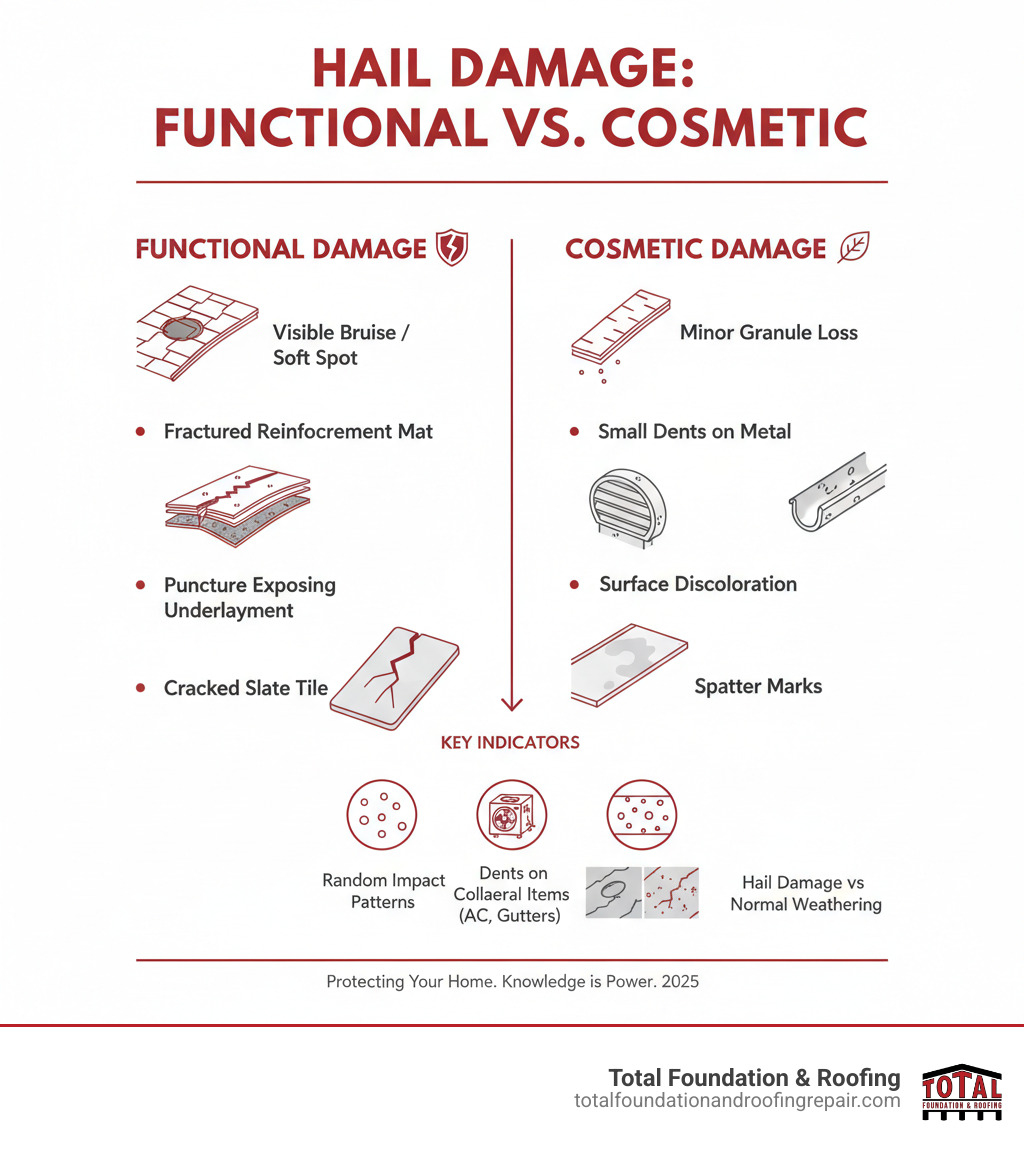
- Functional Damage: Bruises, fractures, or punctures on shingles that compromise water-shedding ability.
- Cosmetic Damage: Minor granule loss or small dents on metal that don’t affect roof lifespan.
- Key Indicators: Random impact patterns, dents on gutters/AC units, granules in downspouts.
- Threshold: Hail as small as 1 inch can damage asphalt shingles; smaller hail causes cumulative damage over time.
Even pea-sized hail can cause problems for homeowners in the Texas Hill Country. While one storm with small hail might only cause cosmetic issues, frequent exposure leads to cracks and deterioration. Insurance companies typically only cover functional damage—damage that affects your roof’s ability to shed water or reduces its service life. A bruise signaling a fracture is functional, while minor granule loss is often cosmetic.
At Total Foundation & Roofing, we know that not all storm damage is obvious, making a professional inspection crucial. Ignoring minor hail damage can lead to water infiltration, wood rot, and structural issues costing tens of thousands to repair. With over 18 years of experience, our team helps homeowners distinguish between urgent repairs and normal wear, ensuring you make informed decisions.
Glossary for minor hail damage roof:
What Constitutes Minor Hail Damage to a Roof?
Minor hail damage refers to impacts that don’t cause immediate failure but can shorten your roof’s lifespan and lead to major issues if ignored. It falls between cosmetic blemishes and obvious structural breaches.
On asphalt shingles, minor hail damage roof often appears as localized granule loss—small, dark spots exposing the asphalt coating. If an impact is strong enough to dislodge granules, it can fracture the shingle’s reinforcement mat, creating a “bruise.” This is functional damage because it compromises the shingle’s ability to protect against UV rays and water.
Dents on metal vents, gutters, and flashing are also common signs. While often cosmetic, these dents indicate your roof likely sustained impacts, making a professional inspection critical.
Even pea-sized hail can cause cumulative damage over time, especially with frequent storms in the Texas Hill Country. Repeated impacts lead to cracks and deterioration, particularly on older roofs. The age and condition of a roof are key factors; an older roof is more susceptible to damage from small hailstones. For comprehensive information on maintaining your roof, explore our roofing services.
Distinguishing Functional Damage from Normal Wear and Tear
Differentiating hail damage from normal wear and tear is a common challenge. The key is recognizing the unique characteristics of hail impacts.
Hail damage appears in a random pattern, unlike uniform weathering. Impacts are scattered and irregular, not aligned with shingle rows.
On asphalt shingles, the difference between granule loss and a “bruise” is critical. Minor granule loss alone may be cosmetic. However, if a hailstone fractures the shingle’s reinforcement, it creates a bruise—a soft spot you can feel. This signifies functional damage because it shortens the shingle’s lifespan and reduces its protective capabilities.
Hail damage is also distinct from other common roof issues:
- Blistering vs. Hail Bruises: Blisters are raised circles from moisture or defects; hail bruises are indentations with an underlying fracture.
- Algae Stains vs. Impact Marks: Algae causes dark streaks, while hail marks are physical indentations.
- Thermal Splitting vs. Hail-Caused Cracks: Thermal splits are linear from expansion/contraction; hail cracks radiate from a specific impact point.
- Manufacturer Defects/Installation Errors: These can mimic hail damage, but a professional can spot issues like improper nailing or alignment.
Understanding these differences is vital. For a deeper dive, review this expert guide on identifying hail damage. Our team can help distinguish various types of storm damage after a storm.
Signs of Damage on Flat and Slate Roofs
While asphalt shingles are common, homeowners with flat or slate roofs must also be vigilant after a hailstorm, as these materials show minor hail damage roof issues differently.
Slate Roof Damage: Though durable, slate is brittle. Hail damage appears as:
- Cracks and Chips: Hail can crack slate tiles, with fractures often radiating from the impact point.
- Fractures at Corners: Edges and corners are especially vulnerable to chipping.
- Punctures: Large, sharp hail can puncture slate, exposing the underlayment.
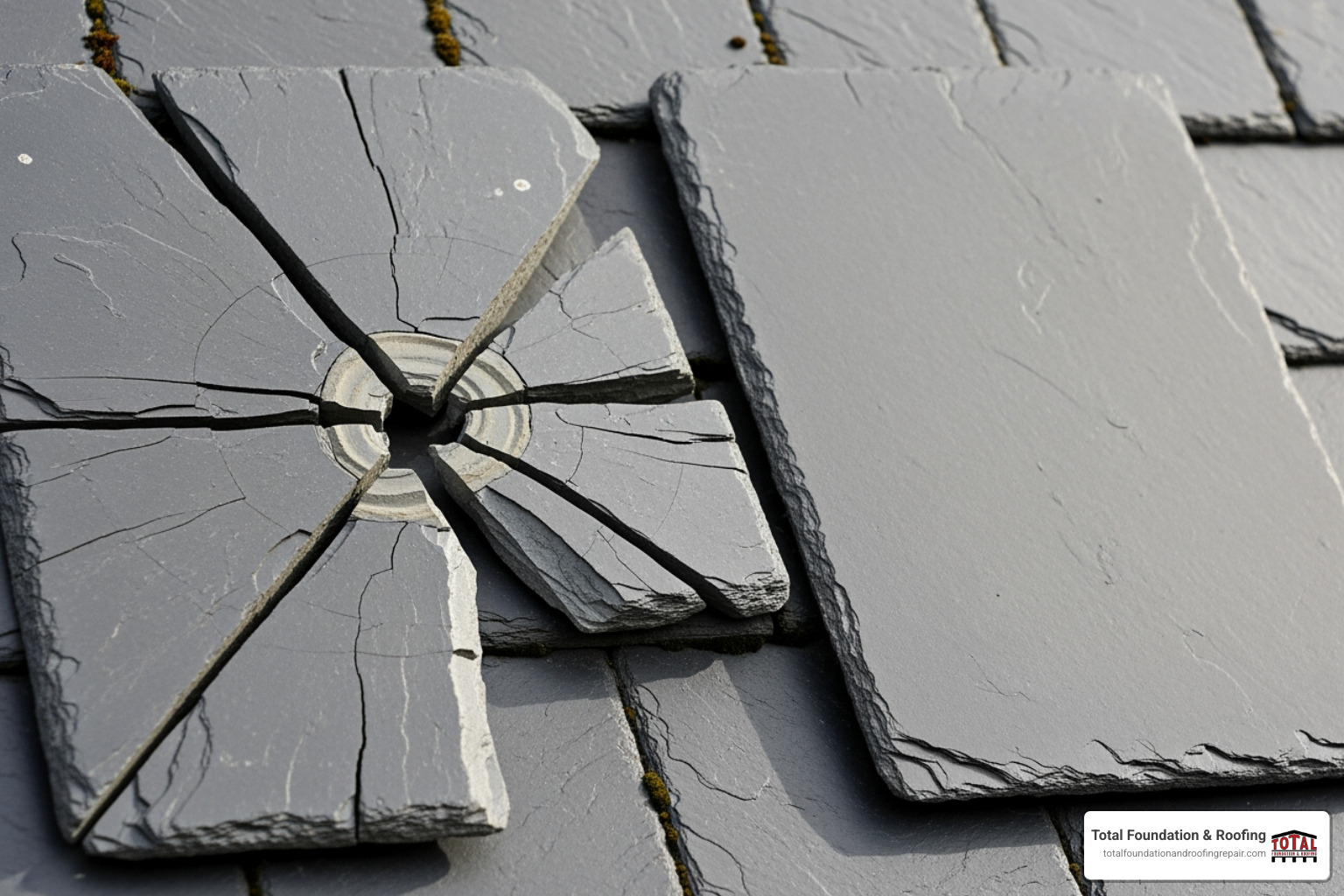
It’s important to distinguish hail-caused fractures (localized, irregular) from foot traffic damage (linear). Functional damage occurs when fractures expose the underlayment or compromise water-shedding.
Flat Roof Damage (TPO, Modified Bitumen): Hail damage on flat roof materials like TPO or Modified Bitumen can be subtle. Look for:
- Punctures: Hail can create direct punctures or indentations in the membrane, allowing water entry.
- Membrane Fractures: Older membranes can develop cracks or “crow’s feet” around impact points.
- Ponding Water: This isn’t direct damage, but it severely worsens minor punctures, quickly turning them into major leaks.

On tar and gravel roofs, hail displaces gravel, exposing the membrane to UV rays. Prompt identification is crucial for any roof type. If you need an expert assessment, find local roofing contractors like us who specialize in these inspections.
Your Action Plan for Minor Hail Damage Roof Issues
After a hailstorm rolls through Kerrville, Fredericksburg, or Comfort, TX, the most critical step is a prompt and thorough inspection to prevent minor issues from escalating into major structural problems. This practical action plan will help you address minor hail damage roof issues and protect your home for years to come.
At Total Foundation & Roofing, we’ve guided hundreds of homeowners through this process, and we’re here to walk you through each step with clarity and confidence.
How to Safely Inspect for Damage from the Ground
Your safety is the top priority, so avoid climbing on your roof. Post-storm surfaces can be wet, loose, and dangerous. Fortunately, many signs of hail damage are visible from the ground with binoculars or a phone’s zoom.
Look for these indicators:
- Dents on gutters and downspouts: These lightweight metal parts show impacts clearly.
- Damaged siding and window screens: Check for cracks, tears, or splatter marks.
- Dents on your A/C unit: The fins dent easily. A dent’s width is about 80% of the hailstone’s diameter, helping you estimate hail size.
- Granules in downspouts: An unusual accumulation signals shingle damage.
- Collateral damage: Inspect shredded plants, dented mailboxes, or outdoor furniture.
Also, check inside for water stains on ceilings or bubbling paint, which indicate a leak and demand immediate professional attention. For a detailed look at repair costs, explore our complete roof repair estimate guide.
Navigating Repairs and Insurance Claims for Minor Hail Damage
Navigating insurance for minor hail damage roof issues can be straightforward with the right approach.
First, document everything with clear photos and videos of all visible damage. This evidence is crucial for your claim. Next, contact your insurance agent immediately to start the process.
Understanding functional vs. cosmetic damage is key. Insurance typically covers functional damage that impairs your roof’s water-shedding ability or shortens its lifespan. Cosmetic damage, like minor dents, may not be covered, though some policies and state laws make exceptions. The distinction can be complex, as detailed in this guide on hail damage claims.
A professional roofing contractor is invaluable here. We provide thorough assessments distinguishing functional from cosmetic damage and work with your adjuster to ensure a fair evaluation. Our expertise helps streamline the claims process.
Typical repairs involve replacing damaged shingles or patching punctures. However, if damage is widespread, a full roof replacement may be more cost-effective than numerous small repairs, especially on an older roof. When repairs cost thousands, a replacement is often the smarter long-term investment. Our experts can help you decide which path offers the best value. Learn more in our home roof replacement ultimate guide.
When to Call a Professional and How to Prevent Future Damage
Ignoring minor hail damage roof issues is a costly gamble. Small punctures lead to water infiltration, causing wood rot, structural compromise, and mold growth. Granule loss also accelerates deterioration from UV exposure, shortening your roof’s lifespan.
We recommend calling a professional immediately after any hailstorm in the Kerrville, TX area, even if you only suspect damage. A prompt, expert inspection can identify issues homeowners miss and prevent them from escalating. For active leaks, our emergency roof repair team can respond quickly to mitigate damage.
To prevent future damage, consider upgrading to Class 4 impact-resistant roofing materials for your next replacement. Top manufacturers like GAF offer shingles specifically engineered to withstand hail. These materials meet the rigorous UL 2218 standard, the highest rating for impact resistance, and may even qualify you for discounts on your homeowner’s insurance policy. Regular maintenance, like clearing gutters and trimming branches, also keeps your roof in optimal condition.
If you suspect your property has sustained hail damage, don’t wait for a small problem to become a big one. Contact our certified experts for a comprehensive inspection and a free estimate to protect your investment. We are your trusted partners for all storm damage repair services in the Texas Hill Country.