
Why Foundation Stability Matters for Your Home
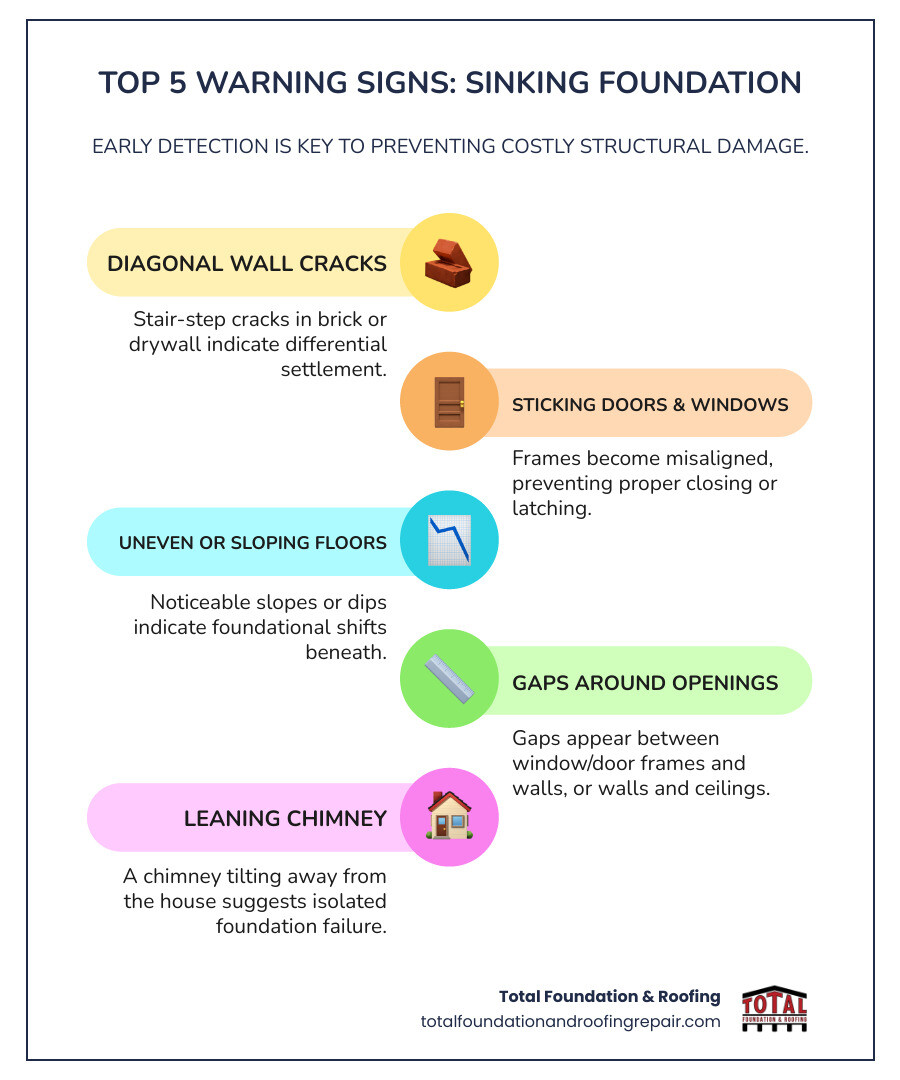
Foundation sinking is one of the most serious structural problems a home can face, and homeowners who want to fix a sinking house need to act quickly with professional help from a trusted local contractor such as Total Foundation & Roofing in the Texas Hill Country. When the soil beneath your house shifts or fails, it can cause parts of your foundation to drop, leading to tell-tale warning signs like wall cracks, sticking doors, and uneven floors. Ignoring these issues can lead to exponentially higher repair costs. To fix a sinking house the right way, you need engineered underpinning methods like push piers, helical piers, or polyjacking to stabilize the structure.
Here in the Texas Hill Country, our expansive clay soils and dramatic wet-dry weather cycles create a perfect storm for foundation problems. The soil swells when wet and shrinks when dry, putting constant stress on your home. Understanding the cause of a sinking foundation is the first step to protecting your biggest investment.
I’m Daniel Sowell, owner of Total Foundation & Roofing, and with over 18 years of experience providing professional foundation repair in the Hill Country, I’ve seen how crucial early detection is. This guide will walk you through identifying foundation issues and understanding your repair options. For more detailed foundation repair advice, it’s important to recognize common home foundation problems and understand different foundation types, such as pier and beam foundations.
How to Fix a Sinking House: Causes and Professional Solutions
Foundation settlement occurs when the soil beneath your home shifts or can no longer support the structure. The most reliable way to fix a sinking house is to stabilize the foundation with engineered underpinning systems installed by experienced professionals. Understanding the root causes is the first step toward a lasting solution.
Understanding Why Your Foundation is Sinking
The ground beneath our homes is dynamic, especially in the Texas Hill Country.
Soil Problems: The primary culprit is often the soil itself.
- Expansive Clay Soil in Texas: Our region’s expansive clay soils swell when wet and shrink when dry. This constant cycle puts immense pressure on foundations, causing them to shift and sink. Approximately 60% of homes on expansive soils face this issue. The U.S. Geological Survey notes that expansive clays are one of the leading causes of non‑earthquake structural damage in the United States.
- Soil Erosion: Water can wash away soil from under the foundation, creating voids that cause unsupported sections to sink.
- Poor Soil Compaction: If the soil wasn’t properly compacted during construction, it can compress unevenly under your home’s weight over time, leading to settlement.
Water Issues: Water management is critical for foundation stability.
- Poor Drainage: Pooled rainwater near the foundation saturates the soil, worsening erosion and issues with expansive clay. Integrating proper gutters and grading, as recommended by resources from the International Association of Certified Home Inspectors, reduces this risk.
- Plumbing Leaks: Undetected leaks beneath a slab can soften the soil, leading to settlement.
- Drought Cycles: Prolonged droughts cause clay soil to shrink and pull away from the foundation, resulting in a loss of support.
Poor Initial Construction: Sometimes, the problem originates with the build.
- Inadequate Foundation Design: Older homes may not meet modern foundation requirements, with foundations that aren’t robust enough for local soil conditions. A detailed inspection and repair plan from a licensed contractor, supported by professional foundation repair services, is essential in these cases.
Professional Methods to Fix a Sinking House
Fixing a sinking foundation is not a DIY job; it requires professional expertise. The core principle is underpinning, which strengthens the foundation by extending it to more stable soil or bedrock, effectively transferring the home’s weight.
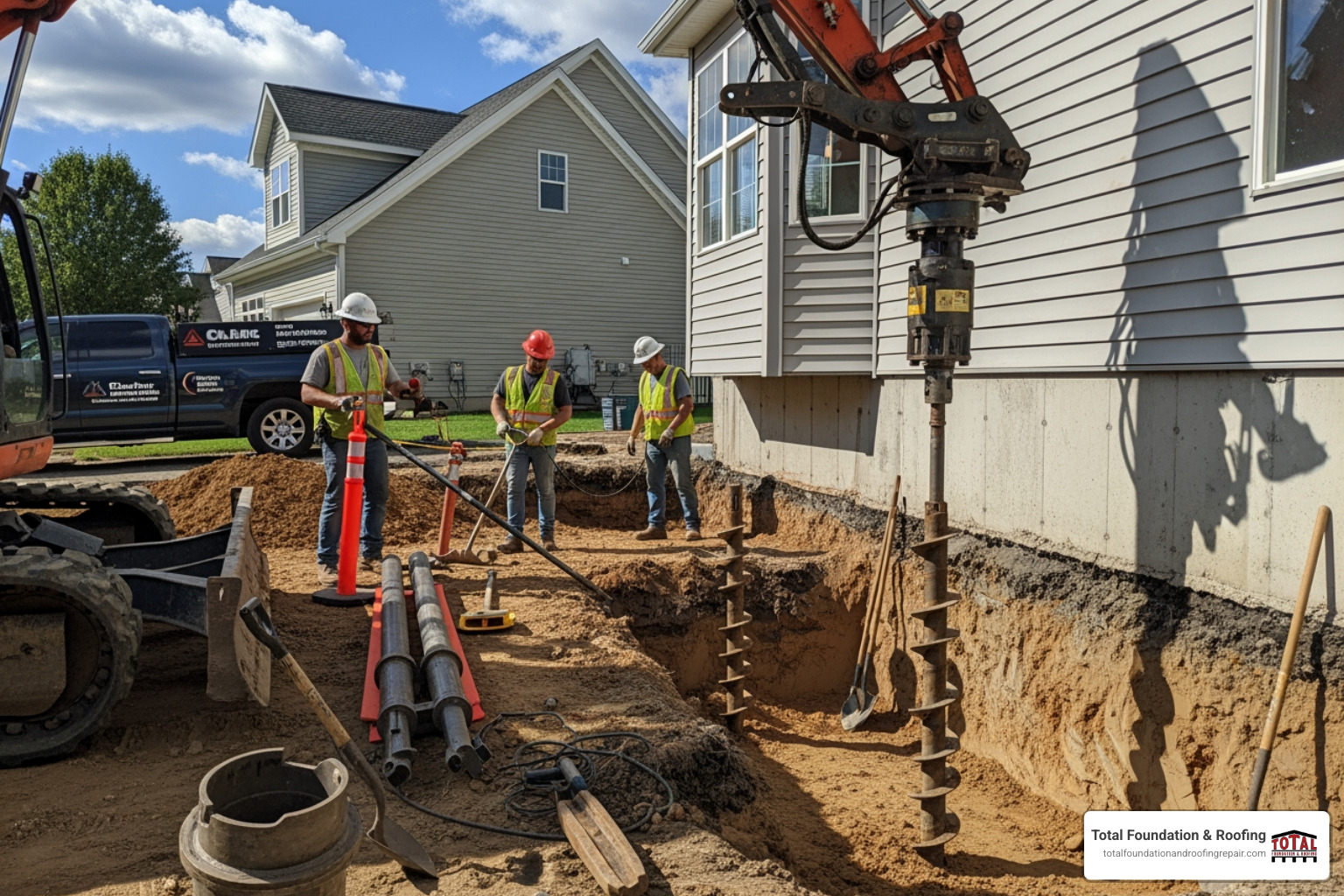
Here are the most common and effective professional methods:
- Push Piers (Steel Piering): These heavy-duty steel pipes are hydraulically driven deep into the ground to reach stable soil or bedrock. Brackets attached to the foundation transfer the home’s weight to the piers. This method is excellent for heavy homes, providing maximum support and the potential to lift the structure. Homeowners can learn more about this option in our dedicated steel pier foundation repair service overview.
- Helical Piers: Resembling giant screws, helical piers are twisted into the ground to a stable depth. They are ideal for lighter structures, varied soil types, and sites with limited access, providing immediate anchoring strength. Installation standards often follow guidelines similar to those published by the Deep Foundations Institute.
- Slabjacking (Mudjacking): This method involves pumping a cement-based slurry under a sunken concrete slab to lift it. While effective for smaller jobs, the slurry can degrade, and repairs may need to be repeated within a few years.
- Polyjacking (Polyurethane Foam Jacking): A modern alternative to mudjacking, polyjacking uses expanding polyurethane foam injected under a slab. The foam is lightweight, waterproof, and cures quickly, making it a durable and efficient solution for lifting concrete. For patios, driveways, and walkways, pairing polyjacking with routine concrete repair and maintenance helps extend service life.
The best method depends on your foundation type, soil conditions, and the extent of the damage.
| Feature | Push Piers | Helical Piers |
|---|---|---|
| Best Use Case | Heavy structures, significant settlement, deep load-bearing strata | Lighter structures (porches, additions), varying soil conditions, limited access |
| Soil Suitability | Requires hard soil or bedrock for maximum effectiveness | Suitable for less compact soil, provides immediate load-bearing capacity |
| Relative Cost | $15,000-$25,000 (average for professional hydraulic piering) | $24,000+ (average for residential) |
| Installation | Hydraulically driven deep into the ground, uses brackets & jacks | Screwed into the ground, resembles a corkscrew, uses brackets & jacks |
| Lifting Potential | High potential to lift and level the structure | Good potential to lift and level, especially for lighter loads |
The Risks of Ignoring Foundation Problems
A sinking foundation will never fix itself and only becomes more dangerous and expensive to repair over time. The consequences of neglect are severe:
- Progressive Structural Damage: Minor cracks will widen, and floors will become more uneven, compromising your home’s structural integrity.
- Safety Hazards: A severely compromised foundation can create unsafe living conditions.
- Decreased Home Value: Foundation issues drastically reduce a home’s market value and make it difficult to sell.
- Broken Plumbing & Water Intrusion: Shifting can break pipes and create gaps for water to enter, leading to mold and rot.
- Exponentially Higher Repair Costs: The longer you wait, the more extensive and costly the repairs become.
- Risk of Foundation Failure: In extreme cases, a neglected foundation can lead to a partial or total collapse.
DIY vs. Professional Foundation Repair
While many home projects are suitable for DIY, fixing a sinking house is not one of them. Professional help is essential for several reasons:
- Specialized Equipment: Professionals use heavy-duty equipment like hydraulic piering systems that are not available for rent.
- Structural Engineering Knowledge: Proper repair requires an expert understanding of soil mechanics and structural loads to avoid causing more damage. Guidelines from the American Society of Civil Engineers emphasize the importance of geotechnical evaluation in settlement repairs.
- Permanent Solutions: DIY patches for cracks are temporary cosmetic fixes. Professionals provide permanent, engineered solutions like foundation crack repair that address the root cause.
- Safety and Integrity: Foundation work impacts your entire home’s structure. Mistakes can be catastrophic and costly. For anything beyond minor cosmetic cracks, it’s time to call an expert and schedule a full home foundation inspection.
Navigating the Foundation Repair Process in Texas
Once you’ve identified the signs and decided to call in professionals, it’s helpful to know what to expect from the repair process, especially in the Texas Hill Country. A clear, step-by-step plan allows homeowners to compare contractors and select the best path to fix a sinking house with long-term results.
What to Expect: Cost, Timeline, and Choosing a Contractor
Starting foundation repair can feel overwhelming, but understanding the key components can ease your mind.
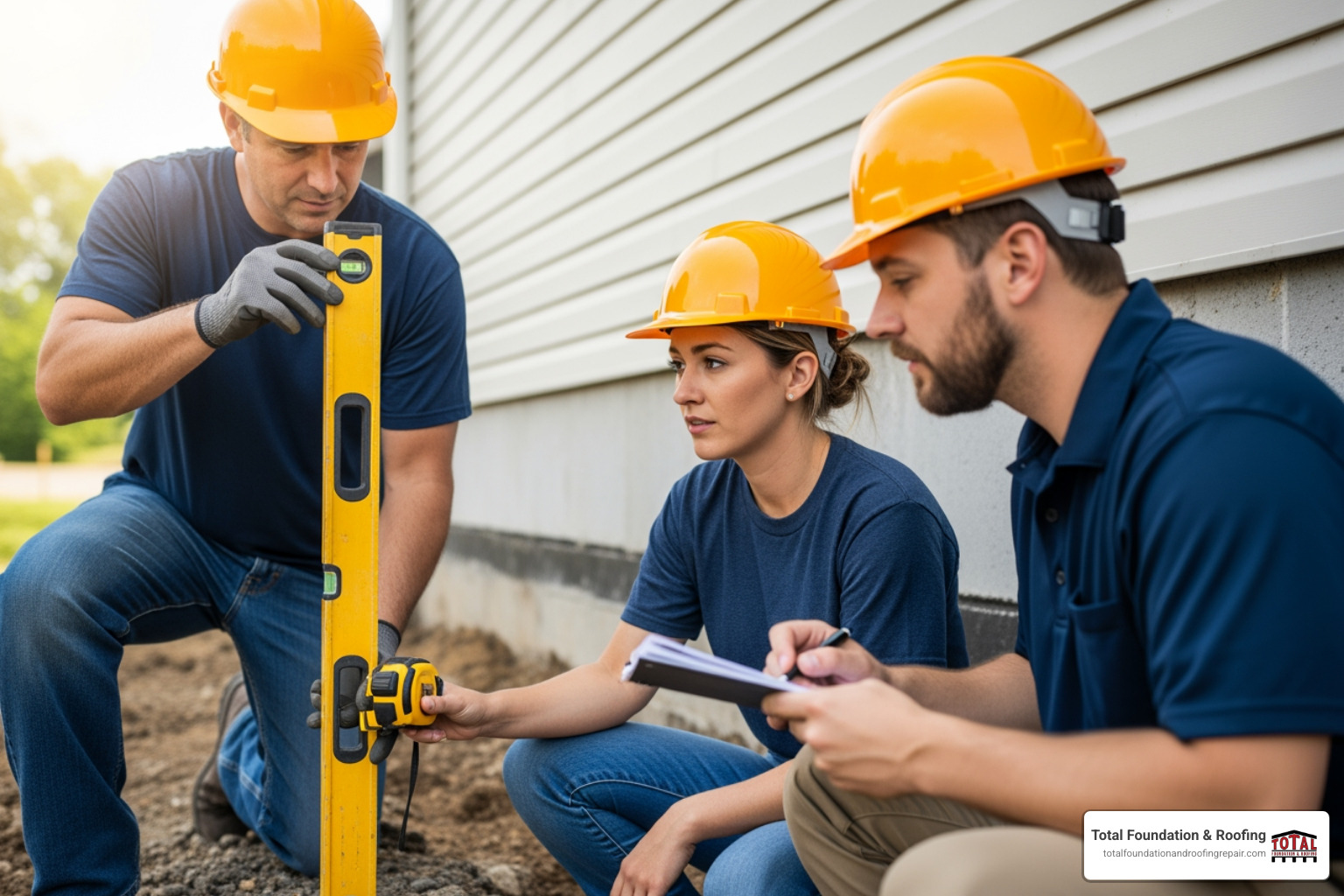
Foundation Repair Costs: The cost to fix a sinking house varies based on the damage, repair method, and home size.
- Average Repair Cost: Most foundation repairs cost between $2,171 and $7,811, with a national average of $4,990.
- Piering Projects: More extensive underpinning with push or helical piers typically averages between $15,000 and $25,000. A steel piering job for a 2,500 sq. ft. home can be around $20,000, while helical piering may start at $24,000.
- Slab Lifting: Polyjacking ranges from $900 to $7,500, while traditional mudjacking can cost up to $3,200 for a large driveway.
- Additional Costs: Factor in potential costs for permits, structural reports, and landscaping repairs. Ask contractors about a “depth clause” for piers, as extra depth can increase costs. Reviewing independent resources from organizations like the Foundation Repair Association can help you understand typical pricing structures.
Repair Timeline:
- Many residential underpinning jobs can be completed by an efficient crew in just a few days to a week. The process includes an initial inspection, planning, excavation, installation, and site restoration.
Hiring a Qualified Contractor: This is the most critical step in the process.
- Get Multiple Proposals: Always get at least three detailed assessments.
- Verify Credentials: Ensure any contractor is licensed and fully insured. In Texas, you can reference standards promoted by the Roofing Contractors Association of Texas as a benchmark for professionalism and consumer protection, even when evaluating foundation and structural services.
- Check for ICC-ES Evaluation: Use contractors whose repair systems are evaluated by ICC-ES (International Code Council Evaluation Services) to ensure they meet building code standards.
- Understand Warranties: A warranty is only as good as the company that backs it, so review the terms carefully. Ask whether the warranty transfers to future owners and whether specific components of your foundation repair services are covered.
How to Fix a Sinking House in the Texas Hill Country
Our expertise is honed by the unique challenges of the Texas Hill Country. We live and work here, so we understand the local geology.
Texas Soil and Weather: The expansive clay soils throughout Texas, combined with our region’s intense wet-dry cycles, put constant stress on foundations. The soil expands with rain and contracts during drought, causing movement that leads to damage over time.
Importance of Local Expertise: Addressing these issues requires a deep understanding of local soil behavior, weather patterns, and building codes in areas like Kerrville, Fredericksburg, and Comfort. At Total Foundation & Roofing, we specialize in solutions customized for the Hill Country’s geology. Our certified team provides high-quality workmanship and reliable service, and we offer dedicated foundation repair in Kerrville and the surrounding Hill Country.
If you suspect your home has a problem, don’t wait. The sooner you address a sinking foundation, the less extensive and costly the repairs will be. Contact our team for a comprehensive, no-obligation inspection and learn how our full foundation repair services can restore your home’s stability and value.