
Why Flat Top Roof Repair Matters for Texas Hill Country Homeowners
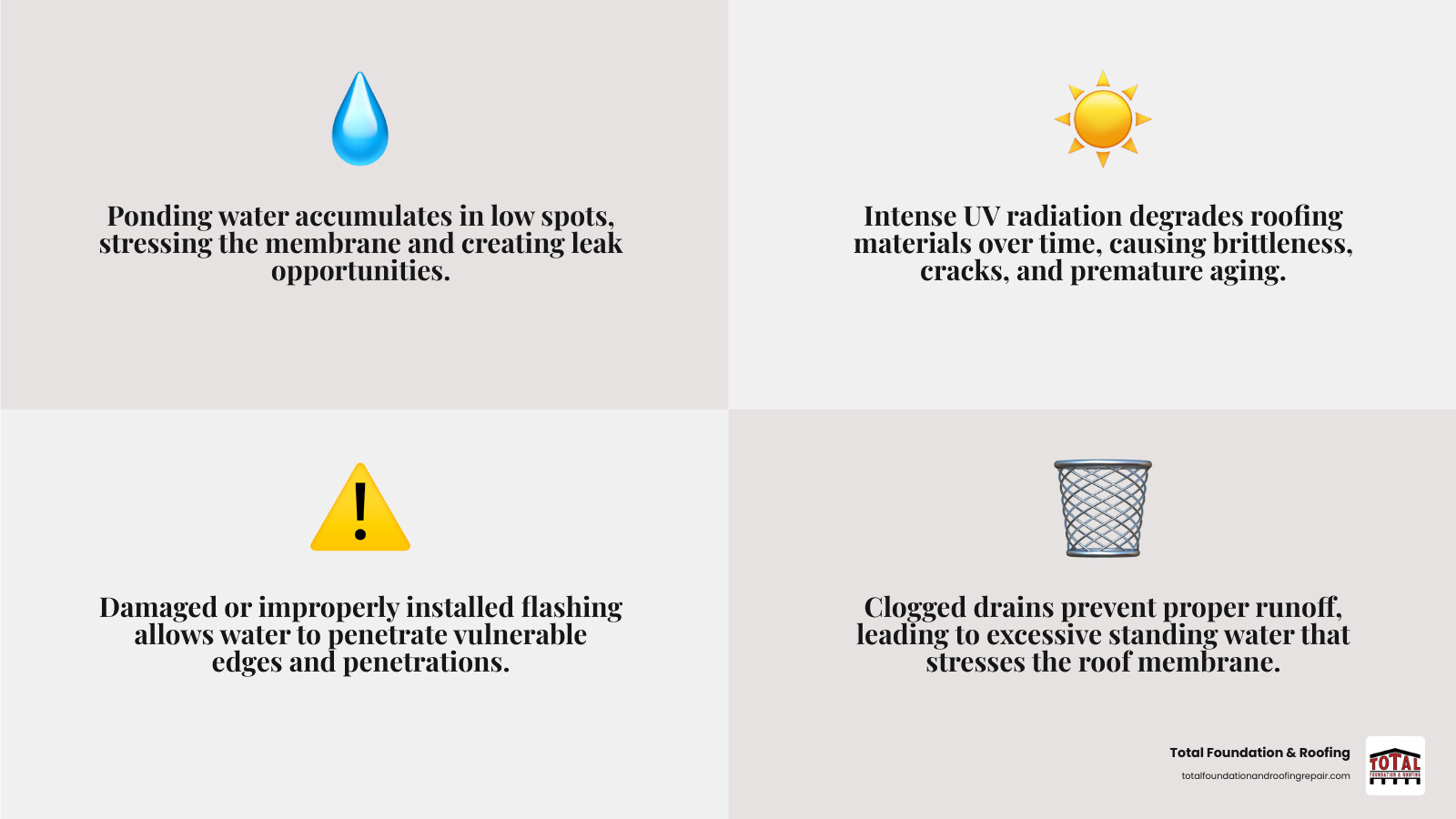
Flat top roof repair is one of the highest‑ROI maintenance tasks a Texas Hill Country homeowner can perform to prevent interior water damage and structural deterioration. Homeowners who schedule regular professional flat roof repair services through a trusted Texas Hill Country roofing contractor consistently report longer roof lifespans and lower emergency repair costs. Flat roofs face unique challenges from intense UV radiation, thermal shock, and hailstorms, which can degrade materials quickly. The most common issue is ponding water—water that doesn’t drain within 48 hours—which stresses the roof membrane and causes leaks.
Industry field surveys show that over 60% of flat roof failures start with small issues like cracked seals and neglected penetrations. Proactive maintenance can help a flat roof last 20–25 years, but neglect can cut that lifespan in half. Understanding the repair process helps you make smart decisions, whether it’s a DIY fix or calling the experts at Total Foundation & Roofing to prevent costly emergency repairs.
I’m Daniel Sowell, owner of Total Foundation & Roofing Repair. With 18 years of experience, I’ve seen how proactive flat top roof repair prevents catastrophic damage. Our team has helped hundreds of homeowners in Kerrville and beyond protect their investments with quality work.
Flat top roof repair terms made easy:
- estimate for roof repair
- roofer company near me
- changing a flat roof to a pitched roof
- roof replacement services
- emergency roof repair services
For technical standards on low-slope roofing systems, see the National Roofing Contractors Association low-slope roofing manual, which is a primary reference for professional roofing contractors.
First Steps: Identifying and Preparing for Flat Roof Repair
Before starting any flat top roof repair, you must identify your roof type and the signs of damage. Flat roofs have a slight pitch (1–10 degrees) for drainage and come in several common materials in the Texas Hill Country:
- Built-Up Roofing (BUR): A traditional system of layered asphalt and felt, topped with gravel for UV protection. BUR performance guidelines are standardized by the National Roofing Contractors Association and used by most commercial contractors.
- Modified Bitumen (MBR): An asphalt-based material modified with rubber or plastic for flexibility, applied in rolls.
- EPDM Rubber Membrane: A durable synthetic rubber membrane, similar to an inner tube, that is flexible and resistant to temperature extremes.
- TPO (Thermoplastic Olefin): A single-ply, reflective membrane known for energy efficiency and strong, heat-welded seams. Major manufacturers like GAF provide detailed TPO system specifications.
- PVC (Polyvinyl Chloride): Another durable single-ply membrane with excellent resistance to fire, chemicals, and punctures.
Signs Your Flat Roof Needs Attention
A well-maintained flat roof can last 20–25 years, but ignoring early warning signs can lead to premature failure. Look for these key indicators:
- Ponding Water: Standing water that remains for more than 48 hours.
- Water Stains on Ceilings: Dark spots or peeling paint inside your home. Learn more about what ceiling water stains explained.
- Cracks and Blisters: Cracks from UV damage or bubbles from trapped moisture.
- Alligatoring: A pattern of cracks on asphalt roofs resembling alligator skin, indicating advanced aging.
- Sagging Spots: Dips in the roof that suggest structural weakness or water damage.
- Damaged Flashing: Separated or cracked seals around vents, chimneys, and roof edges.
- Musty Odors: A sign of hidden moisture and potential mold growth from a slow leak.
For homeowners comparing repair vs. new installation, this guide pairs well with our resource on how long a roof replacement takes, which explains project timelines in detail.
Common Causes of Damage in the Texas Hill Country
The Texas climate accelerates roof degradation. Key causes include:
- Intense UV Radiation: Breaks down roofing materials, causing cracks and brittleness.
- Thermal Shock: Rapid temperature swings cause materials to expand and contract, leading to fatigue and seam separation.
- Hail Damage: Can puncture or bruise roof membranes. Our hail damage repair guide offers more details, and manufacturers such as Owens Corning provide additional hail-damage identification resources.
- Clogged Drains: Debris accumulation leads to ponding water.
- Improper Installation: Poorly sealed seams or flashing are common sources of premature failure.
Essential Tools and Safety for DIY Flat Top Roof Repair
Safety is paramount. Never work on a wet roof and always have a spotter.
- Safety Gear: Sturdy non-slip shoes, work gloves, safety glasses, and a fall prevention harness if near the edge.
- Tools & Materials: A sturdy ladder, utility knife, stiff brush, trowel, caulking gun, measuring tape, clean rags, and a hand roller. You will also need repair materials compatible with your roof type, such as roofing cement, sealant, a patch kit, and fiberglass mesh. For more on safety, review roofing safety best practices and consider scheduling a professional roof inspection if you’re unsure about working at height.
A Step-by-Step Guide to Flat Top Roof Repair
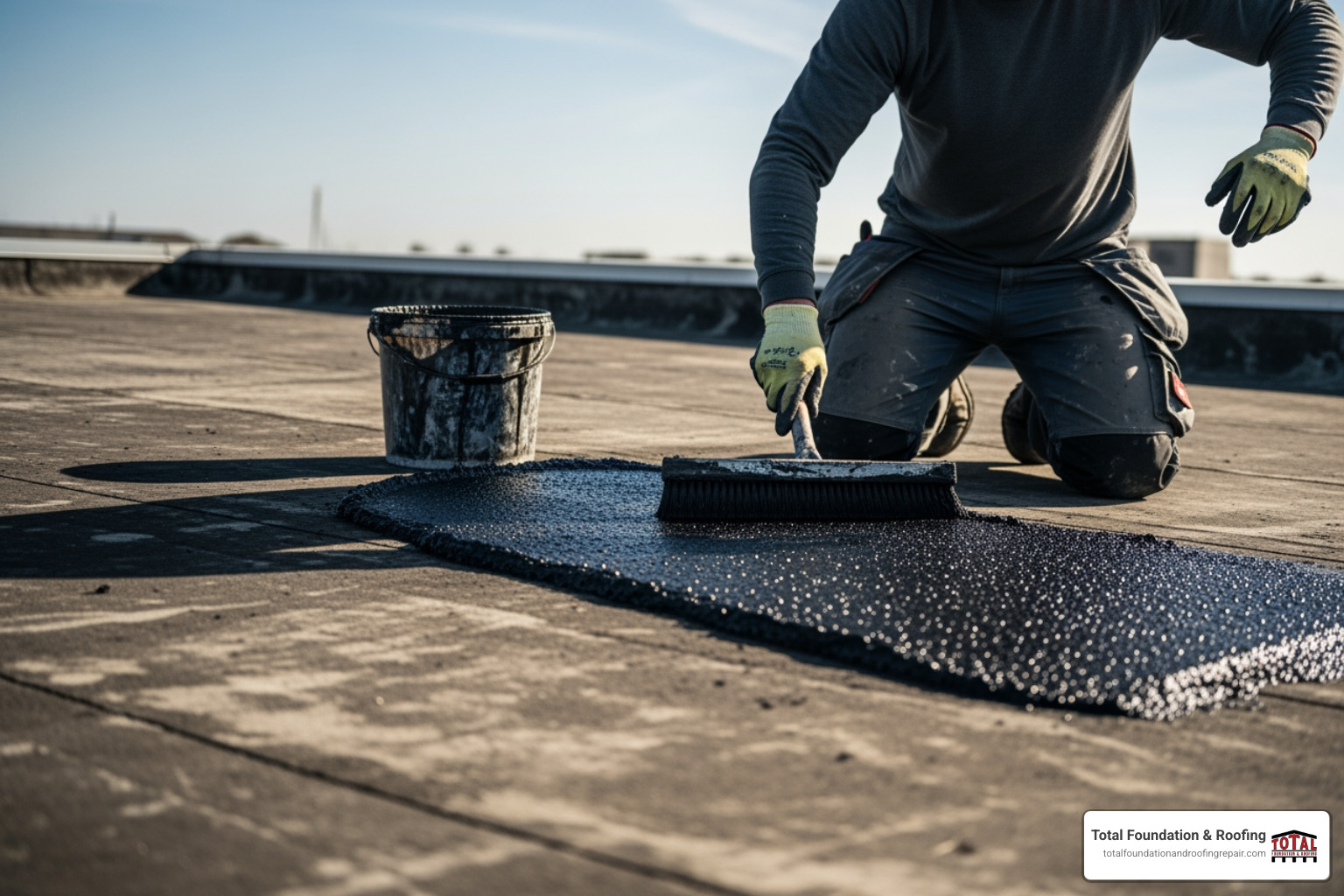
A timely repair can prevent thousands in water damage. While these steps are great for DIY fixes, widespread leaks may mean a roof replacement is the more cost-effective solution. Our detailed breakdown of roof repair costs vs. replacement costs explains when each option makes financial sense in the Texas Hill Country.
Locating the Elusive Leak
Water on a flat roof can travel far from its entry point. Here’s how to find the source:
- Measure Inside: Note the location of interior water stains relative to the nearest walls.
- Map Outside: Transfer those measurements to the roof’s exterior to define a search area.
- Inspect Upslope: Water flows downhill. Check areas “upslope” from your search area.
- Check Penetrations & Seams: Closely examine flashing around vents, pipes, and skylights, as well as all roof seams. These are common failure points.
- Use a Water Test (With Caution): On a dry day, have a spotter inside while you gently wet suspected areas with a hose, starting low and moving upslope, to see where water enters. For hidden leaks, professionals use thermal imaging services to find moisture without destructive testing.
Independent trade organizations such as the Roofing Contractors Association of Texas recommend leak tracing protocols similar to this sequence for low-slope roofing systems.
How to Fix Small Cracks and Patch Holes
This process is for small cracks, punctures, or blisters.
- Clean and Dry: Sweep away all debris and ensure the repair area is completely dry.
- Prepare the Damage: For blisters, cut an “X” through the center, dry the area underneath, and apply roofing cement before pressing the flaps down. For tears, trim away any loose material.
- Apply Cement & Mesh: Spread a layer of roofing cement about 1/8-inch thick, extending 6 inches beyond the damage. Press a piece of fiberglass mesh firmly into the wet cement.
- Apply Second Cement Layer: Cover the mesh completely with another layer of cement, feathering the edges.
- Patch Larger Holes: For larger holes, cut a patch of compatible membrane to overlap the hole by at least 2 inches. Apply cement, press the patch down firmly with a hand roller, and seal all edges thoroughly with a compatible sealant. For extra protection, a second, larger patch can be applied over the first.
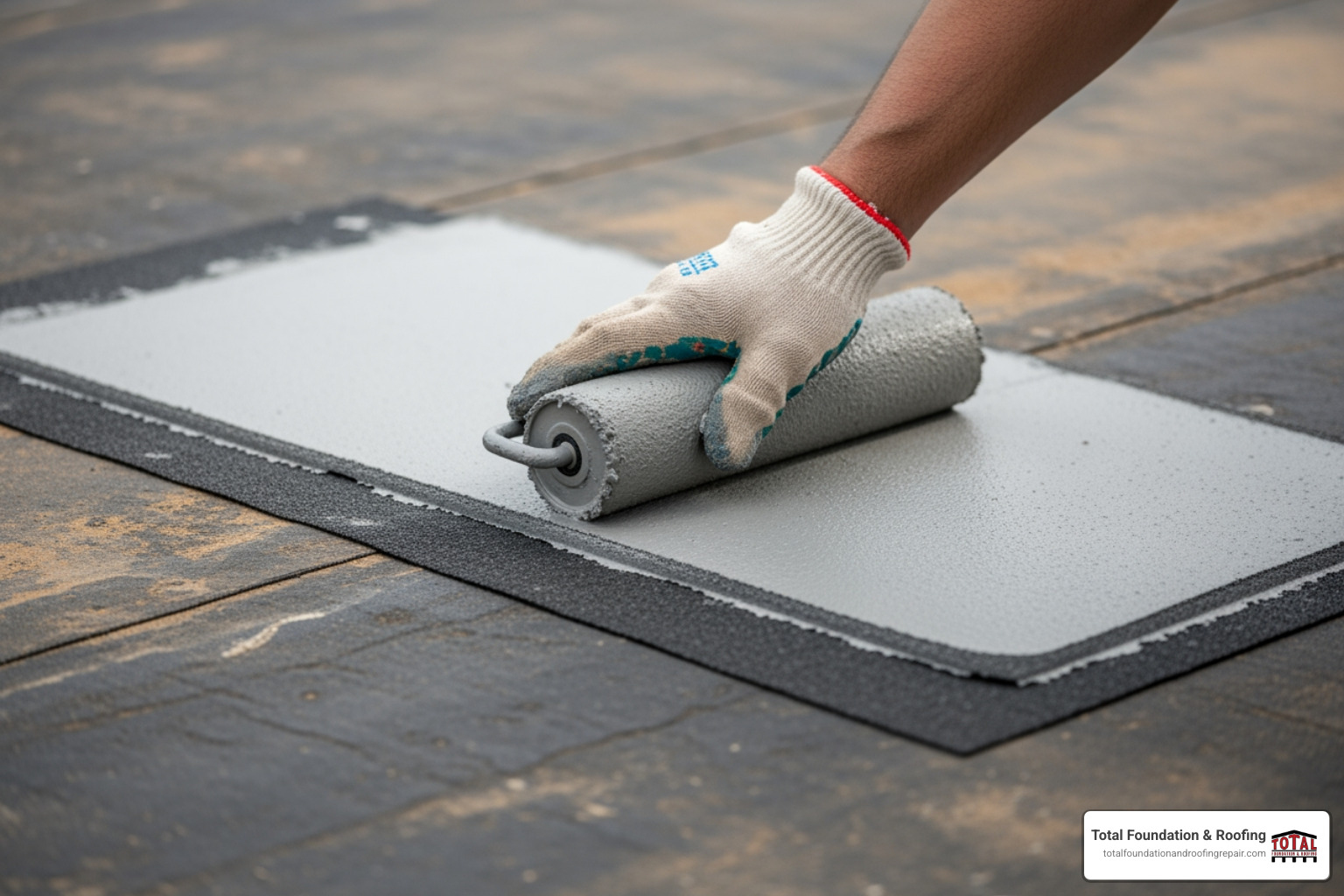
For widespread issues, a professional roof repair service provides a durable, warrantied solution. Homeowners planning a long-term upgrade can also explore converting a flat roof to a pitched roof for improved drainage and resale value.
When to Reseal, Repair, or Replace Your Flat Roof
Deciding between repair and replacement depends on age, damage extent, and cost. Resealing an entire roof can extend its life by a few years but is often a temporary fix. A full replacement is a larger investment but offers long-term peace of mind and a new warranty. According to the National Roofing Contractors Association (NRCA), up to 80% of roofs are replaced prematurely, so a professional assessment is crucial before committing to a full roof replacement.
| Feature | Repair | Replacement |
|---|---|---|
| Cost | Lower upfront cost | Higher upfront cost |
| Longevity | Short-term (1–10 years) | Long-term (15–30+ years) |
| Warranty | Limited or none | Comprehensive manufacturer & workmanship |
| Best For | Isolated damage (<25% of roof) on a younger roof | Widespread damage, old roof, or structural issues |
General Lifespans:
- BUR/Tar and Gravel: 20–30 years
- Modified Bitumen: 10–20 years
- EPDM/TPO/PVC: 15–30 years
If a roof under 15 years old develops leaks, a repair is often sufficient. If leaks appear on a roof approaching 20 years, replacement is likely the smarter long-term investment. Our companion guide on how to choose a roofing contractor explains how to vet companies for major flat roof projects.
Knowing When to Call a Professional
DIY flat top roof repair is great for small issues, but professional help is essential in many cases to avoid bigger problems and ensure safety.
It’s time to call a professional when you see:
- Extensive Damage: Damage covering more than 10–25% of the roof, or multiple leaks.
- Structural Concerns: Any sagging or soft spots in the roof deck.
- An Unfound Leak: If you can’t pinpoint the source of the water.
- An Aging Roof: If the roof is near the end of its typical lifespan, repairs are often just temporary fixes.
- Recurring Leaks: A leak that returns after a DIY repair signals a deeper problem.
- Safety Concerns: If you are uncomfortable with heights or the roof is too steep.
The Benefits of Hiring a Certified Roofer
Trusting a certified professional offers significant advantages:
- Local Climate Expertise: A pro understands how the Texas Hill Country climate affects roofing materials.
- Correct Materials & Tools: They use high-quality, commercial-grade materials and specialized equipment for a durable repair.
- Warranties: Professional repairs and replacements come with workmanship and manufacturer warranties, protecting your investment.
- Insurance Claim Assistance: They can provide documentation and guidance for storm damage claims. Learn more about navigating roof insurance claims.
- Safety and Compliance: Professionals adhere to strict safety standards and building codes, often following best practices endorsed by organizations such as the Roofing Contractors Association of Texas.
Your Trusted Partner for Flat Roof Solutions
If you’re facing flat roof issues in Kerrville, Fredericksburg, or the surrounding Texas Hill Country, don’t wait for a small leak to become a major disaster. The certified team at Total Foundation & Roofing has the local expertise to diagnose your roof’s condition and recommend the most effective solution, from a simple flat roof repair to a full roof replacement. We also provide integrated foundation repair services when roof leaks have contributed to structural movement.
Protect your investment and gain peace of mind by scheduling a free, no-obligation estimate today. Call us at (830) 407-0302 or contact us online to learn more about our comprehensive roofing services.